

Frybread, made with lard (Apache)
Whole food · American Indian/Alaska Native Foods

Photo: Wikipedia
Frybread is a golden, puffy, and tender bread made from a simple dough fried in lard, resulting in a crisp exterior and a soft, airy interior. Its flavor is subtly savory and rich, with a distinctive, satisfying chew that comes from the lard. Nutritionally, it is a dense source of energy, providing significant calories and carbohydrates with a notable fat content from the frying process.
Calorie split: 11% protein · 60% carbs · 30% fat
↓ Full nutrition💚 Why it's loved
People love frybread for its comforting, rich flavor and its incredible versatility—it can be the foundation for a savory meal like a taco or a sweet treat with honey. It holds deep cultural significance, often representing resilience and community at gatherings and powwows.
⚠️ Watch-outs & how to enjoy it better
Due to being fried in lard, it is high in saturated fat and calories, which can contribute to blood-sugar spikes and is a consideration for those managing heart health or diabetes. To counteract this, pair it with protein (like beans or meat) and fiber-rich toppings (like vegetables or salad) to slow digestion, and practice portion control by enjoying a smaller piece as part of a balanced meal.
Key benefits
- Provides quick, dense energy from carbohydrates and fats
- A traditional, culturally significant food for many Native American communities
- Simple ingredients make it accessible for home preparation
- Serves as a versatile base for both sweet and savory toppings
🍽️ Popular dishes
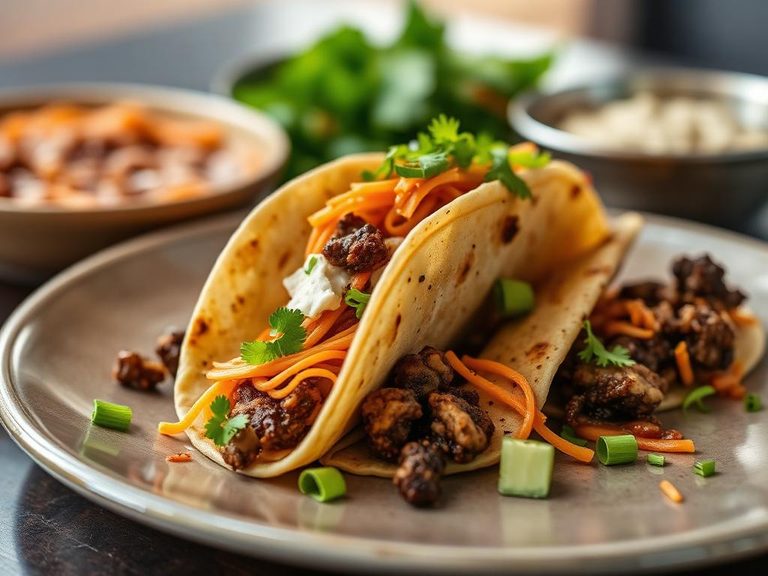
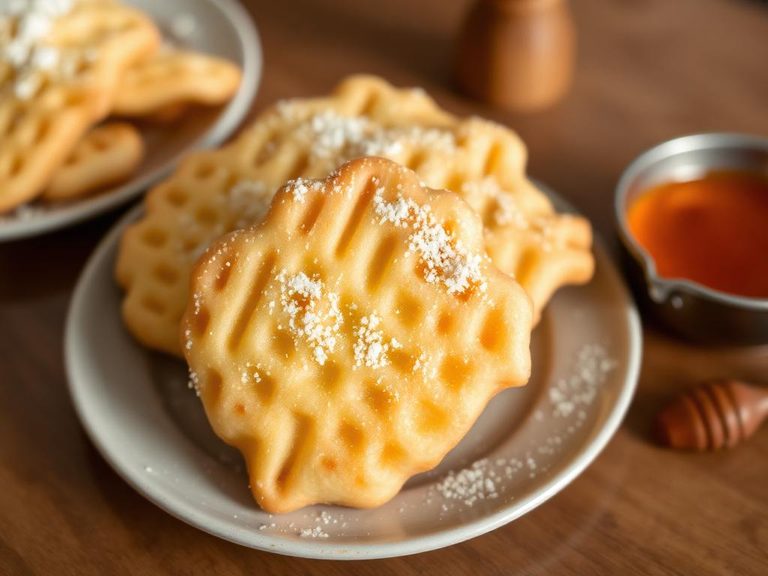
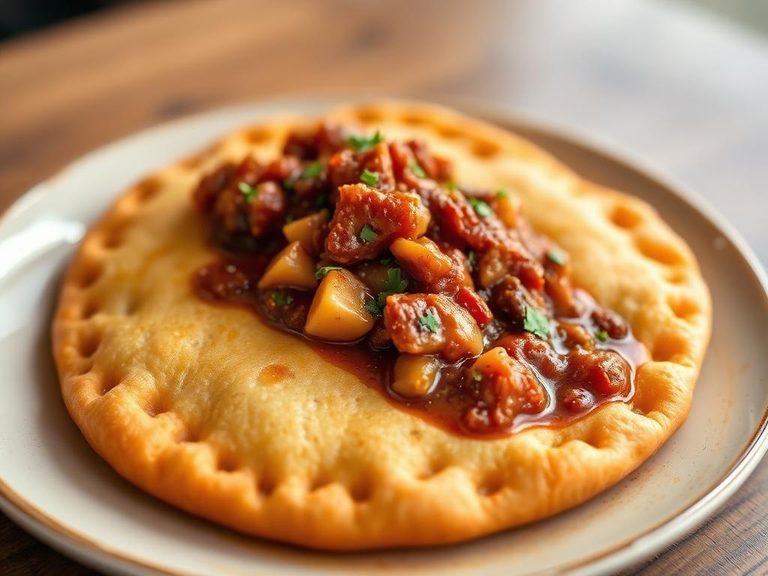
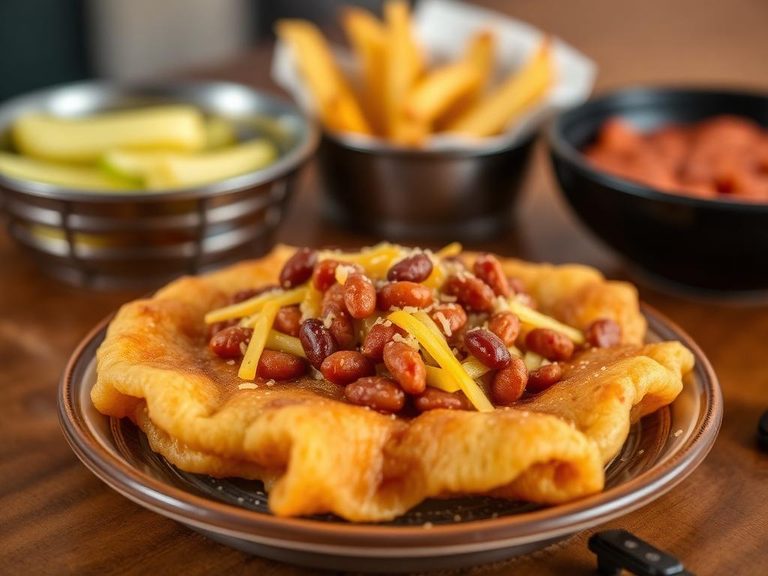

🌍 Where it's eaten
💡 Did you know?
The modern form of frybread is often traced to the 19th-century forced relocations of Native American tribes, where it was created from government-issued commodity rations like white flour, lard, and sugar.
Full nutrition (USDA data · scales with serving)
| Water | 33.1 g |
| Energy | 309 kcal |
| Energy | 1292 kj |
| Protein | 8.4 g |
| Total lipid (fat) | 10.1 g |
| Ash | 2.4 g |
| Carbohydrate, by difference | 46.0 g |
| Fiber, total dietary | 1.7 g |
| Total Sugars | 1.5 g |
| Sucrose | 0.22 g |
| Glucose | 0.09 g |
| Fructose | 0.00 g |
| Lactose | 0.00 g |
| Maltose | 1.2 g |
| Galactose | 0.00 g |
| Starch | 43.3 g |
| Calcium, Ca | 52.0 mg |
| Iron, Fe | 3.4 mg |
| Magnesium, Mg | 19.0 mg |
| Phosphorus, P | 112 mg |
| Potassium, K | 75.0 mg |
| Sodium, Na | 671 mg |
| Zinc, Zn | 0.47 mg |
| Copper, Cu | 0.10 mg |
| Manganese, Mn | 0.41 mg |
| Selenium, Se | 6.5 ug |
| Thiamin | 0.53 mg |
| Riboflavin | 0.26 mg |
| Niacin | 4.3 mg |
| Vitamin B-6 | 0.07 mg |
| Folate, total | 112 ug |
| Folic acid | 93.0 ug |
| Folate, food | 19.0 ug |
| Folate, DFE | 177 ug |
| Vitamin B-12 | 0.00 ug |
| Vitamin E (alpha-tocopherol) | 0.09 mg |
| Tocopherol, beta | 0.03 mg |
| Tocopherol, gamma | 0.59 mg |
| Tocopherol, delta | 0.12 mg |
| Tocotrienol, alpha | 0.02 mg |
| Tocotrienol, beta | 0.00 mg |
| Tocotrienol, gamma | 0.00 mg |
| Tocotrienol, delta | 0.00 mg |
| Vitamin K (phylloquinone) | 0.00 ug |
| Vitamin K (Dihydrophylloquinone) | 0.00 ug |
| Vitamin K (Menaquinone-4) | 0.00 ug |
Fat & fatty acid profile (per 100g)
| Fatty acids, total saturated | 3.6 g |
| SFA 8:0 | 0.00 g |
| SFA 10:0 | 0.00 g |
| SFA 12:0 | 0.00 g |
| SFA 14:0 | 0.17 g |
| SFA 15:0 | 0.02 g |
| SFA 16:0 | 2.1 g |
| SFA 17:0 | 0.06 g |
| SFA 18:0 | 1.3 g |
| SFA 20:0 | 0.02 g |
| SFA 22:0 | 0.01 g |
| Fatty acids, total monounsaturated | 3.5 g |
| MUFA 14:1 | 0.02 g |
| MUFA 15:1 | 0.00 g |
| MUFA 16:1 | 0.17 g |
| MUFA 17:1 | 0.00 g |
| MUFA 18:1 | 3.3 g |
| MUFA 20:1 | 0.06 g |
| Fatty acids, total polyunsaturated | 1.3 g |
| PUFA 18:2 | 1.2 g |
| PUFA 18:3 | 0.07 g |
| PUFA 18:3 n-3 c,c,c (ALA) | 0.07 g |
| PUFA 18:3 n-6 c,c,c | 0.00 g |
| PUFA 20:2 n-6 c,c | 0.02 g |
| PUFA 20:3 | 0.00 g |
| PUFA 20:4 | 0.00 g |
| Cholesterol | 4.0 mg |
FAQ
What is the difference between frybread and a doughnut?
While both are fried doughs, frybread is typically savory, unleavened or lightly leavened, and shaped into a flat disc, whereas doughnuts are sweet, often leavened with yeast or baking powder, and commonly ring-shaped or filled.
Can frybread be baked instead of fried?
Baking will produce a different texture—more like a flatbread or biscuit—and will lack the characteristic crispy, golden crust and rich flavor imparted by frying in lard or oil.
Is frybread gluten-free?
Traditional frybread is made with wheat flour and is not gluten-free. Gluten-free versions can be made using alternative flour blends, but they will have a different texture.
Nutrient density (calculated · NRF9.3)
Nutrient Rich Foods index: beneficial nutrients (protein, fiber, vitamins, minerals) minus saturated fat, added sugar & sodium, per 100 kcal.
NRF9.3 index — Fulgoni, Keast & Drewnowski, 2009. Computed from USDA nutrients.
Weight-loss friendliness (composite index)
Energy density 3.09 kcal/g · 11% calories from protein · 1.7 g fiber · 1.5 g sugar per 100 g.
Composite of energy density (Rolls et al., 1999), protein & fiber satiety, minus sugar. A calculated heuristic — ranks satiety-per-calorie, not a clinical measure.
Dietary load (calculated from USDA values)
Potential renal acid load. Positive = acid-forming, negative = alkaline-forming.
Sodium-to-potassium ratio: 8.95 (lower is better — aim for ≤ 1)
Sodium:potassium per WHO potassium guidance. Computed from USDA nutrients.