

Fish, wolffish, Atlantic, raw
Whole food · Finfish and Shellfish Products

Photo: Wikipedia
Atlantic wolffish is a firm, white-fleshed cold-water fish prized for its clean, sweet flavor and a dense, almost meaty texture that holds up beautifully in cooking. Nutritionally, it's a lean powerhouse, delivering a hefty 17.5 grams of high-quality protein per 100 grams with virtually no fat or carbohydrates. Its mild taste makes it a versatile canvas for a variety of culinary preparations.
Calorie split: 76% protein · 0% carbs · 24% fat
↓ Full nutrition💚 Why it's loved
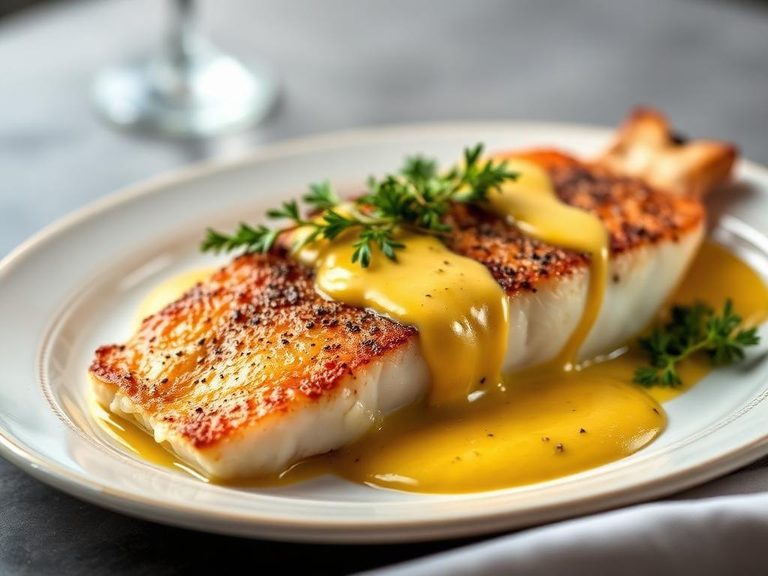
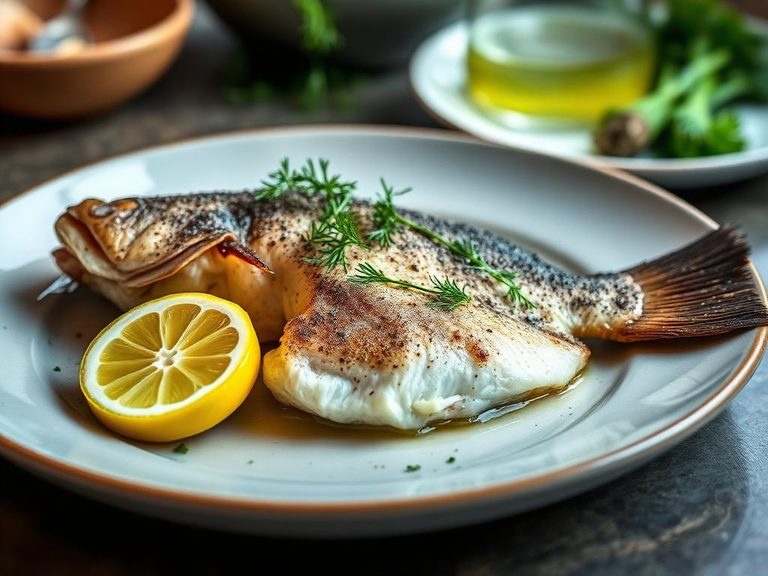
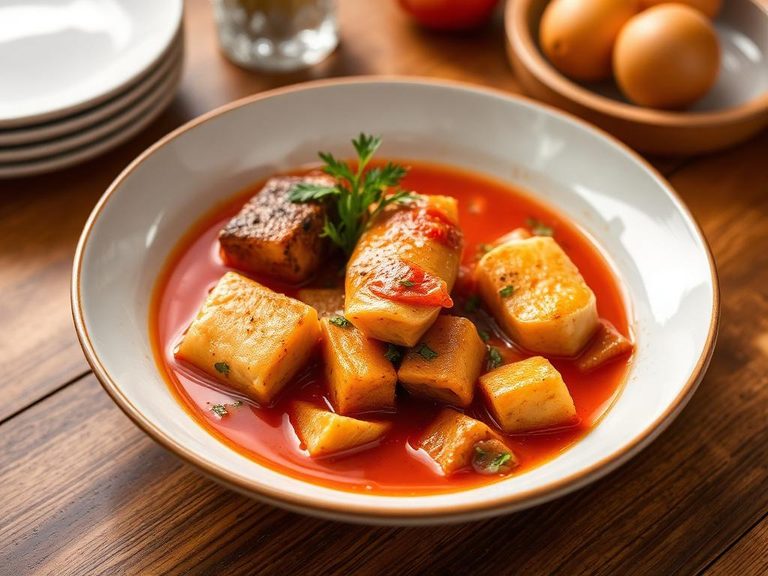
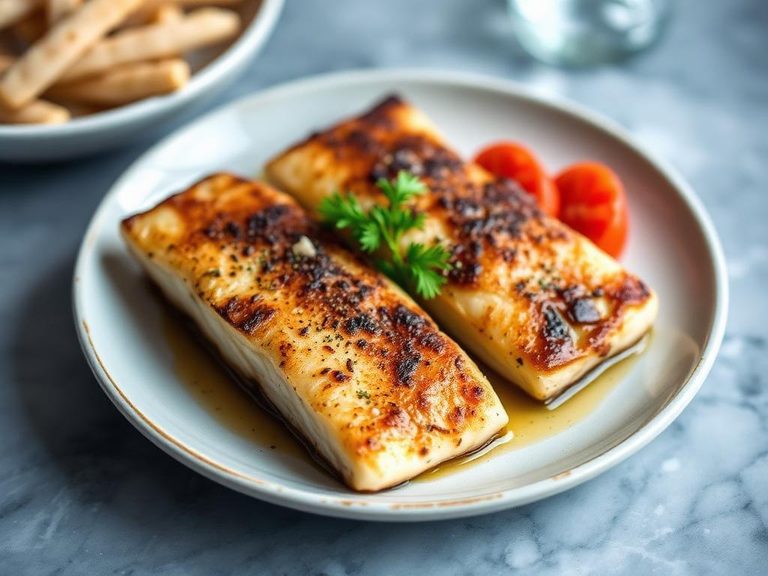
Chefs and home cooks adore it for its robust texture that doesn't flake apart, making it ideal for stews, grilling, or pan-searing. Its mild, sweet flavor is approachable and pairs well with bold sauces, herbs, and citrus.
⚠️ Watch-outs & how to enjoy it better
As a bottom-dwelling marine fish, it can contain higher levels of certain heavy metals like mercury compared to smaller species, so consumption should be moderate, especially for pregnant women and young children. To mitigate this, choose smaller, younger fish and vary your seafood sources. Its firm texture can become tough if overcooked, so precise timing is key.
Key benefits
- Excellent source of lean, complete protein
- Naturally low in fat and calories
- Contains beneficial omega-3 fatty acids
- Good source of selenium and vitamin B12
- Zero carbohydrates, suitable for low-carb diets
🍽️ Popular dishes
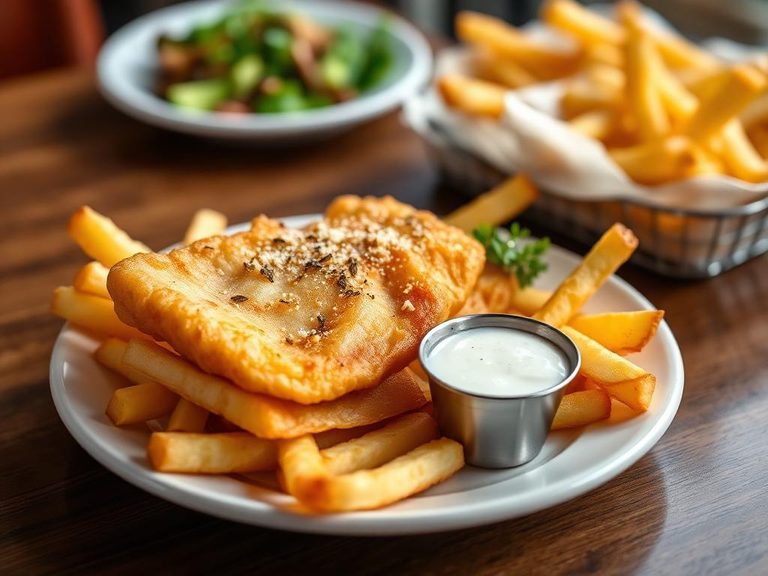
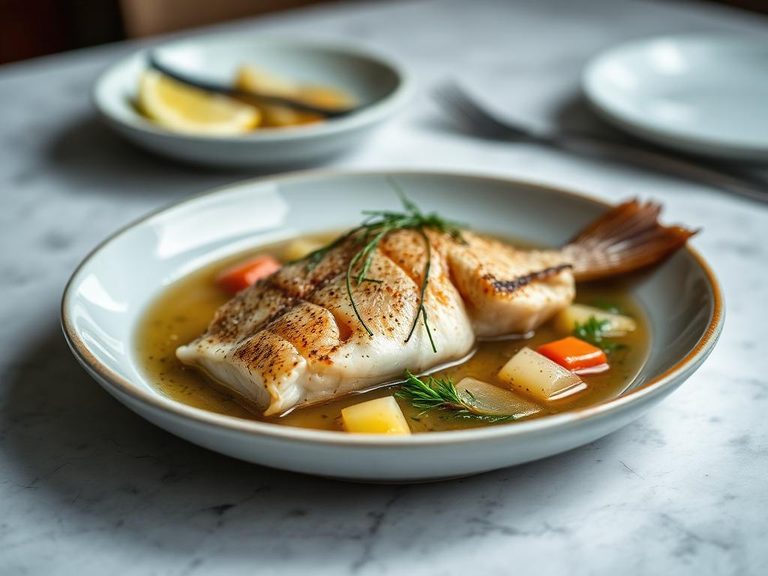
🌍 Where it's eaten
💡 Did you know?
Despite its fierce name, the Atlantic wolffish isn't a true wolffish (Anarhichadidae family) but is often called rockfish or sea wolf, and it gets its name from its powerful jaws and canine-like teeth used to crush shellfish.
Full nutrition (USDA data · scales with serving)
| Water | 79.9 g |
| Energy | 96.0 kcal |
| Energy | 402 kj |
| Protein | 17.5 g |
| Total lipid (fat) | 2.4 g |
| Ash | 1.2 g |
| Carbohydrate, by difference | 0.00 g |
| Fiber, total dietary | 0.00 g |
| Calcium, Ca | 6.0 mg |
| Iron, Fe | 0.09 mg |
| Magnesium, Mg | 30.0 mg |
| Phosphorus, P | 200 mg |
| Potassium, K | 300 mg |
| Sodium, Na | 85.0 mg |
| Zinc, Zn | 0.78 mg |
| Copper, Cu | 0.03 mg |
| Manganese, Mn | 0.01 mg |
| Selenium, Se | 36.5 ug |
| Vitamin C, total ascorbic acid | 0.00 mg |
| Thiamin | 0.18 mg |
| Riboflavin | 0.08 mg |
| Niacin | 2.1 mg |
| Pantothenic acid | 0.57 mg |
| Vitamin B-6 | 0.40 mg |
| Folate, total | 5.0 ug |
| Folic acid | 0.00 ug |
| Folate, food | 5.0 ug |
| Folate, DFE | 5.0 ug |
| Vitamin B-12 | 2.0 ug |
| Vitamin A, RAE | 113 ug |
| Retinol | 113 ug |
| Vitamin A, IU | 375 iu |
Fat & fatty acid profile (per 100g)
| Fatty acids, total saturated | 0.36 g |
| SFA 14:0 | 0.07 g |
| SFA 16:0 | 0.25 g |
| SFA 18:0 | 0.05 g |
| Fatty acids, total monounsaturated | 0.84 g |
| MUFA 16:1 | 0.19 g |
| MUFA 18:1 | 0.52 g |
| MUFA 20:1 | 0.11 g |
| MUFA 22:1 | 0.02 g |
| Fatty acids, total polyunsaturated | 0.84 g |
| PUFA 18:2 | 0.02 g |
| PUFA 18:3 | 0.01 g |
| PUFA 18:4 | 0.06 g |
| PUFA 20:4 | 0.09 g |
| PUFA 20:5 n-3 (EPA) | 0.31 g |
| PUFA 22:5 n-3 (DPA) | 0.04 g |
| PUFA 22:6 n-3 (DHA) | 0.32 g |
| Cholesterol | 46.0 mg |
Amino acid profile (per 100g)
| Tryptophan | 0.20 g |
| Threonine | 0.77 g |
| Isoleucine | 0.81 g |
| Leucine | 1.4 g |
| Lysine | 1.6 g |
| Methionine | 0.52 g |
| Cystine | 0.19 g |
| Phenylalanine | 0.68 g |
| Tyrosine | 0.59 g |
| Valine | 0.90 g |
| Arginine | 1.0 g |
| Histidine | 0.52 g |
| Alanine | 1.1 g |
| Aspartic acid | 1.8 g |
| Glutamic acid | 2.6 g |
| Glycine | 0.84 g |
| Proline | 0.62 g |
| Serine | 0.71 g |
FAQ
What does Atlantic wolffish taste like?
It has a mild, sweet flavor often compared to monkfish or lobster, with a firm, dense, and meaty texture that is less flaky than cod or haddock.
Is wolffish a sustainable seafood choice?
Sustainability varies by region and fishery. Look for certifications like MSC (Marine Stewardship Council) or consult guides like the Monterey Bay Aquarium Seafood Watch for the most current recommendations on Atlantic wolffish.
How should I cook wolffish to avoid it becoming tough?
Because of its low fat content, it can dry out if overcooked. Methods like baking, poaching, or pan-searing with a quick finish in the oven work best. Cook just until the flesh is opaque and flakes easily with a fork.
Nutrient density (calculated · NRF9.3)
Nutrient Rich Foods index: beneficial nutrients (protein, fiber, vitamins, minerals) minus saturated fat, added sugar & sodium, per 100 kcal.
NRF9.3 index — Fulgoni, Keast & Drewnowski, 2009. Computed from USDA nutrients.
Weight-loss friendliness (composite index)
Energy density 0.96 kcal/g · 73% calories from protein · 0.0 g fiber · 0.0 g sugar per 100 g.
Composite of energy density (Rolls et al., 1999), protein & fiber satiety, minus sugar. A calculated heuristic — ranks satiety-per-calorie, not a clinical measure.
Dietary load (calculated from USDA values)
Potential renal acid load. Positive = acid-forming, negative = alkaline-forming.
Sodium-to-potassium ratio: 0.28 (lower is better — aim for ≤ 1)
Sodium:potassium per WHO potassium guidance. Computed from USDA nutrients.