

Fish, wolffish, Atlantic, cooked, dry heat
Whole food · Finfish and Shellfish Products
Atlantic wolffish is a firm, lean white fish with a distinctively sweet, lobster-like flavor and a satisfying, meaty texture that holds up beautifully to dry-heat cooking. Its snow-white, large-flaked flesh is a nutritional powerhouse, delivering an exceptional 22.4 grams of protein per 100g with virtually no fat or carbohydrates.
Calorie split: 77% protein · 0% carbs · 23% fat
↓ Full nutrition💚 Why it's loved
People cherish it for its unique, sweet flavor that elevates simple preparations and its firm texture that doesn't fall apart, making it a chef's favorite for elegant presentations. Its mildness also makes it a versatile canvas for a wide range of seasonings and sauces.
⚠️ Watch-outs & how to enjoy it better
The primary caution is for individuals with a fish or seafood allergy, as wolffish is a common allergen. To mitigate any potential 'fishy' taste, which can be stronger in some specimens, marinating briefly in lemon juice or buttermilk before cooking can help brighten the flavor and tenderize the flesh.
Key benefits
- Excellent source of high-quality, complete protein for muscle maintenance.
- Very low in fat and calories, making it ideal for lean diets.
- Contains important nutrients like selenium and vitamin B12.
- Naturally free of carbohydrates and sugars.
- Provides omega-3 fatty acids, though in moderate amounts.
🍽️ Popular dishes
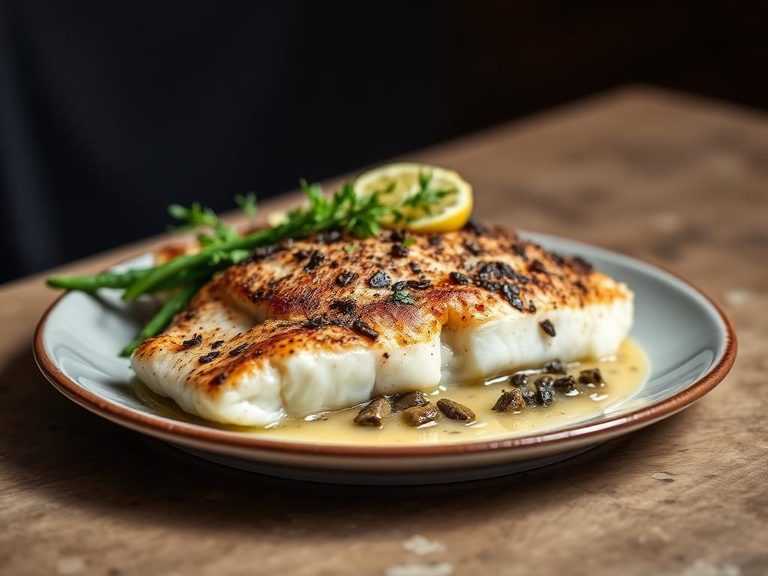
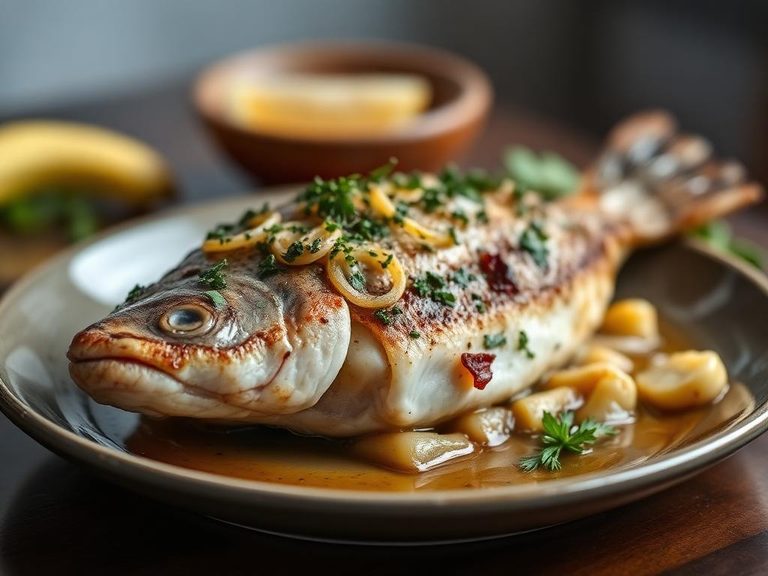
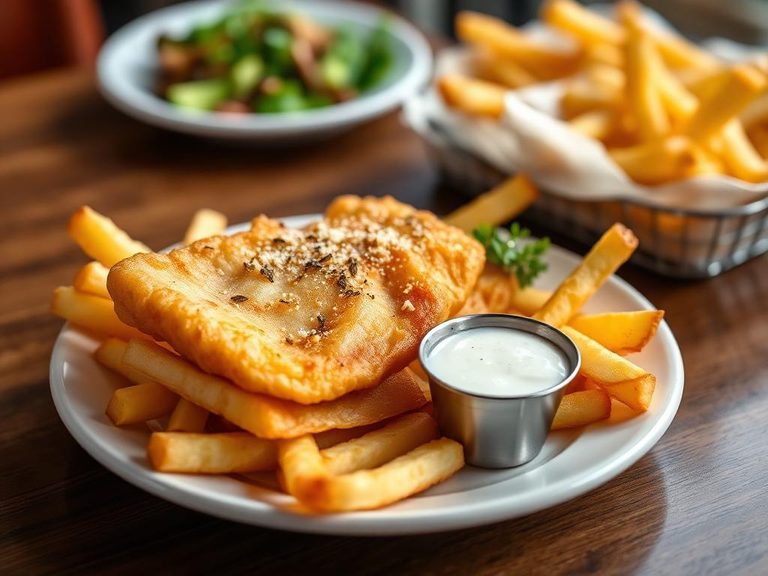
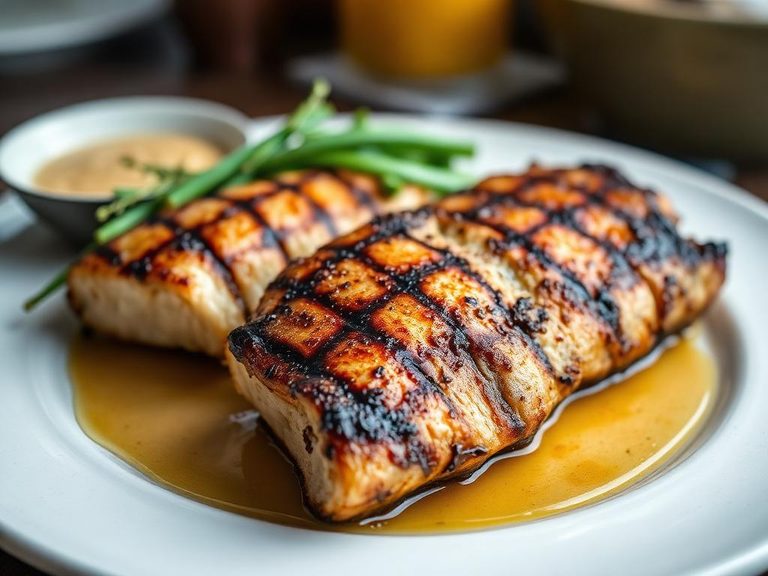
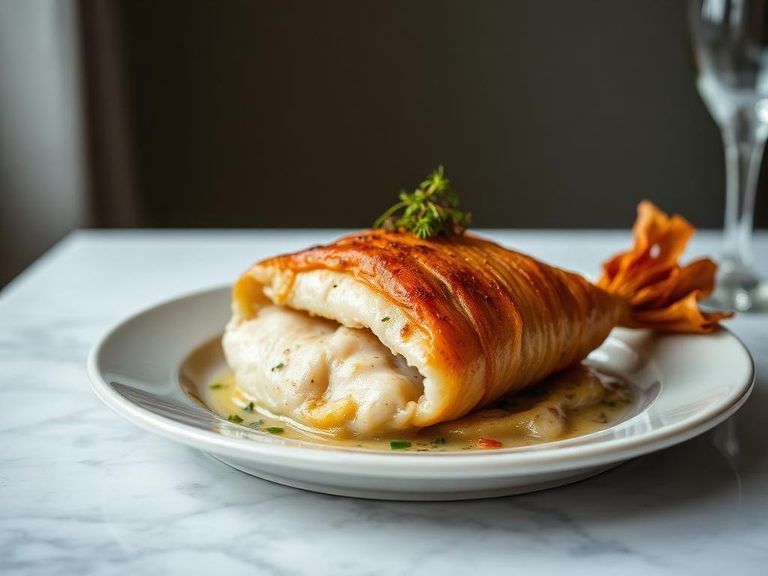
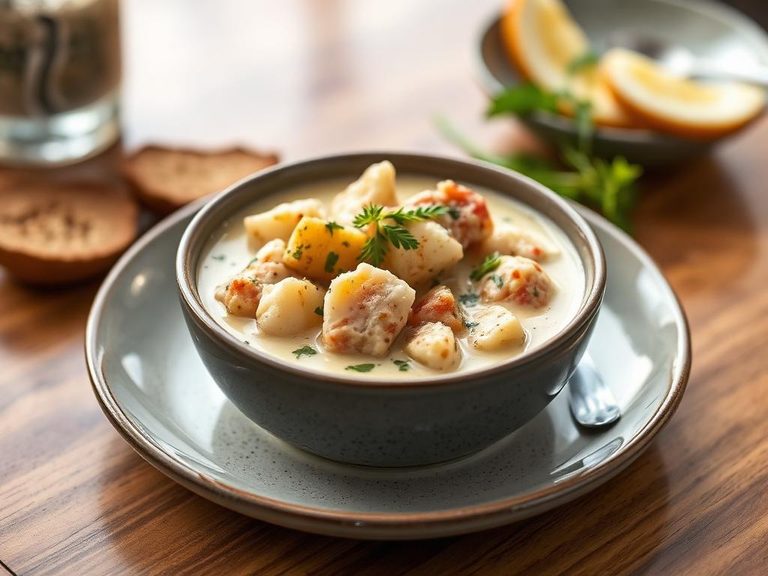
🌍 Where it's eaten
💡 Did you know?
Despite its fierce name and appearance, the Atlantic wolffish is a docile, bottom-dwelling fish that uses its powerful jaws not for hunting, but to crush hard-shelled prey like sea urchins, crabs, and clams.
Full nutrition (USDA data · scales with serving)
| Water | 74.2 g |
| Energy | 123 kcal |
| Energy | 515 kj |
| Protein | 22.4 g |
| Total lipid (fat) | 3.1 g |
| Ash | 1.5 g |
| Carbohydrate, by difference | 0.00 g |
| Fiber, total dietary | 0.00 g |
| Calcium, Ca | 8.0 mg |
| Iron, Fe | 0.12 mg |
| Magnesium, Mg | 38.0 mg |
| Phosphorus, P | 256 mg |
| Potassium, K | 385 mg |
| Sodium, Na | 109 mg |
| Zinc, Zn | 1.0 mg |
| Copper, Cu | 0.04 mg |
| Manganese, Mn | 0.02 mg |
| Selenium, Se | 46.8 ug |
| Vitamin C, total ascorbic acid | 0.00 mg |
| Thiamin | 0.21 mg |
| Riboflavin | 0.10 mg |
| Niacin | 2.6 mg |
| Pantothenic acid | 0.66 mg |
| Vitamin B-6 | 0.46 mg |
| Folate, total | 6.0 ug |
| Folic acid | 0.00 ug |
| Folate, food | 6.0 ug |
| Folate, DFE | 6.0 ug |
| Vitamin B-12 | 2.4 ug |
| Vitamin A, RAE | 130 ug |
| Retinol | 130 ug |
| Vitamin A, IU | 433 iu |
Fat & fatty acid profile (per 100g)
| Fatty acids, total saturated | 0.47 g |
| SFA 14:0 | 0.09 g |
| SFA 16:0 | 0.32 g |
| SFA 18:0 | 0.06 g |
| Fatty acids, total monounsaturated | 1.1 g |
| MUFA 16:1 | 0.24 g |
| MUFA 18:1 | 0.66 g |
| MUFA 20:1 | 0.15 g |
| MUFA 22:1 | 0.02 g |
| Fatty acids, total polyunsaturated | 1.1 g |
| PUFA 18:2 | 0.03 g |
| PUFA 18:3 | 0.01 g |
| PUFA 18:4 | 0.08 g |
| PUFA 20:4 | 0.11 g |
| PUFA 20:5 n-3 (EPA) | 0.39 g |
| PUFA 22:5 n-3 (DPA) | 0.06 g |
| PUFA 22:6 n-3 (DHA) | 0.41 g |
| Cholesterol | 59.0 mg |
Amino acid profile (per 100g)
| Tryptophan | 0.25 g |
| Threonine | 0.98 g |
| Isoleucine | 1.0 g |
| Leucine | 1.8 g |
| Lysine | 2.1 g |
| Methionine | 0.66 g |
| Cystine | 0.24 g |
| Phenylalanine | 0.88 g |
| Tyrosine | 0.76 g |
| Valine | 1.2 g |
| Arginine | 1.3 g |
| Histidine | 0.66 g |
| Alanine | 1.4 g |
| Aspartic acid | 2.3 g |
| Glutamic acid | 3.3 g |
| Glycine | 1.1 g |
| Proline | 0.79 g |
| Serine | 0.92 g |
FAQ
How is the taste of wolffish different from cod or haddock?
Wolffish has a sweeter, more pronounced flavor often compared to lobster or crab, with a firmer, meatier texture. Cod and milder white fish have a more delicate, flaky texture and a subtler taste.
What's the best way to cook wolffish to keep it moist?
Due to its low fat content, dry-heat methods like baking, broiling, or pan-searing are ideal. Cook it just until it turns opaque and flakes easily—overcooking can make it tough. A quick sear followed by a short bake works perfectly.
Is wolffish a sustainable seafood choice?
Sustainability varies by region and fishery. Look for wolffish certified by the Marine Stewardship Council (MSC) or check the Monterey Bay Aquarium Seafood Watch guide for the most current recommendations specific to the North Atlantic.
Nutrient density (calculated · NRF9.3)
Nutrient Rich Foods index: beneficial nutrients (protein, fiber, vitamins, minerals) minus saturated fat, added sugar & sodium, per 100 kcal.
NRF9.3 index — Fulgoni, Keast & Drewnowski, 2009. Computed from USDA nutrients.
Weight-loss friendliness (composite index)
Energy density 1.23 kcal/g · 73% calories from protein · 0.0 g fiber · 0.0 g sugar per 100 g.
Composite of energy density (Rolls et al., 1999), protein & fiber satiety, minus sugar. A calculated heuristic — ranks satiety-per-calorie, not a clinical measure.
Dietary load (calculated from USDA values)
Potential renal acid load. Positive = acid-forming, negative = alkaline-forming.
Sodium-to-potassium ratio: 0.28 (lower is better — aim for ≤ 1)
Sodium:potassium per WHO potassium guidance. Computed from USDA nutrients.