

Fish, tuna, skipjack, fresh, cooked, dry heat
Whole food · Finfish and Shellfish Products
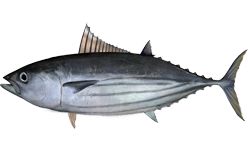
Photo: Wikipedia
Skipjack tuna, cooked with dry heat, is a lean, firm, and flaky fish with a robust, meaty flavor that stands up to bold seasonings. Its texture is dense and satisfying, making it a staple for those seeking a high-protein, low-fat meal. With a remarkable 28 grams of protein per 100g and virtually no fat or carbs, it's a nutritional powerhouse for muscle maintenance and satiety.
Calorie split: 91% protein · 0% carbs · 9% fat
↓ Full nutrition💚 Why it's loved
People love its versatility and clean, savory taste that absorbs marinades and sauces beautifully, making it a go-to for quick, healthy meals. Its cultural significance in canned and fresh forms, from Japanese sushi to American salads, cements its status as a global pantry staple.
⚠️ Watch-outs & how to enjoy it better
As a large predatory fish, skipjack can contain higher levels of mercury than smaller species, so pregnant women and young children should limit intake. It can also be dry if overcooked, so it benefits from careful preparation or pairing with moist ingredients like a vinaigrette or avocado.
Key benefits
- Excellent source of complete protein for muscle repair and growth
- Very low in fat and calories, supporting weight management
- Rich in selenium, an important antioxidant mineral
- Provides B vitamins like niacin and B12 for energy metabolism
- Contains omega-3 fatty acids, though less than fattier fish
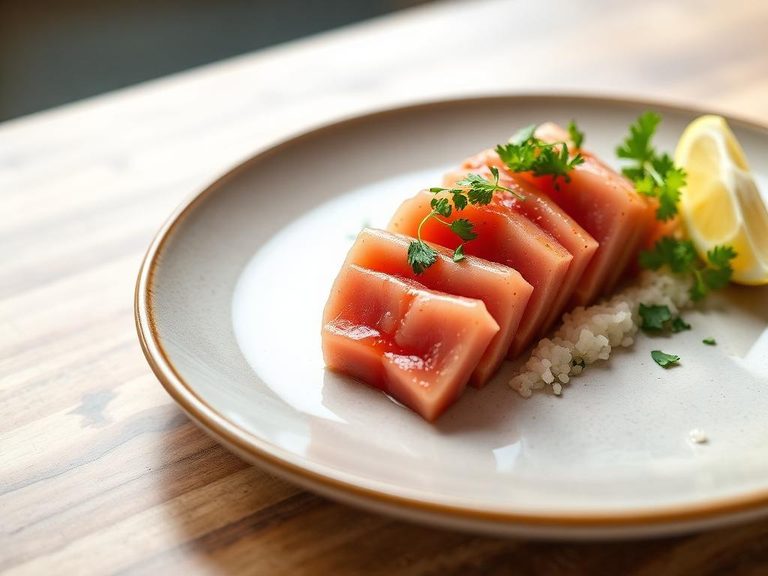
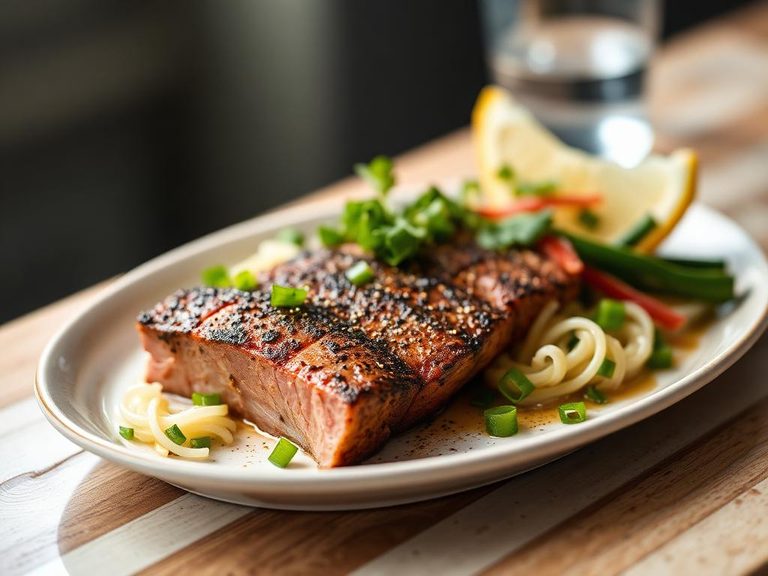
🍽️ Popular dishes
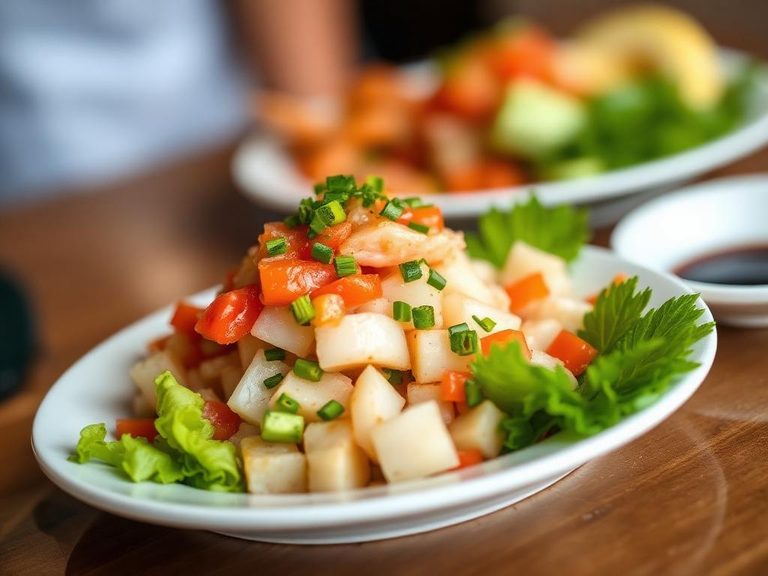
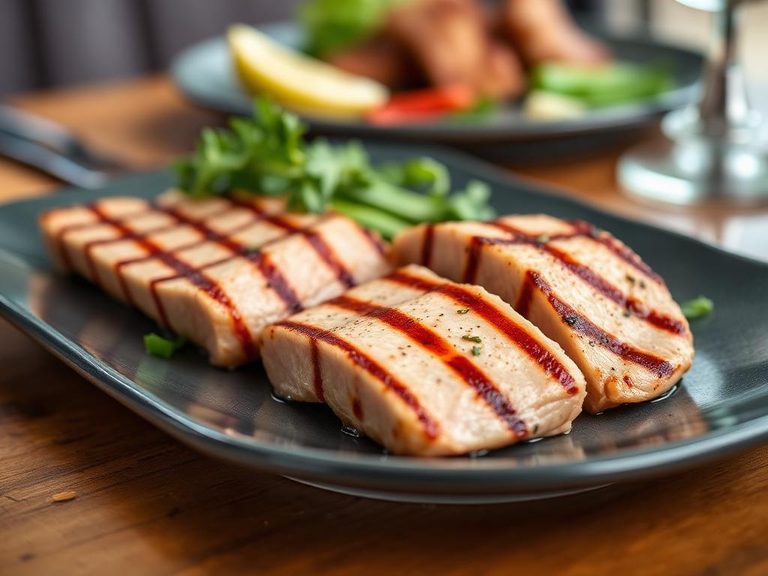
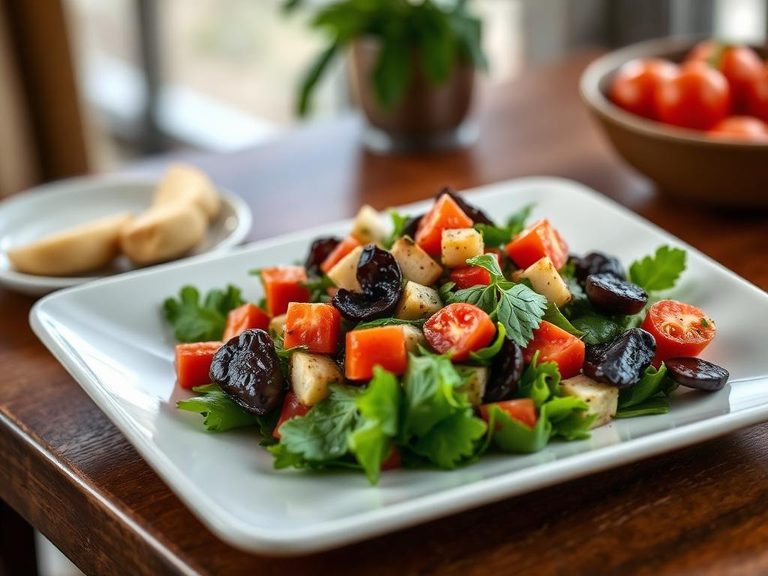
🌍 Where it's eaten
💡 Did you know?
Skipjack is the most commonly canned tuna in the world, often labeled as 'light' tuna, and its distinctive dark lateral stripes on the belly are why it's sometimes called 'striped tuna'.
Full nutrition (USDA data · scales with serving)
| Water | 62.3 g |
| Energy | 132 kcal |
| Energy | 552 kj |
| Protein | 28.2 g |
| Total lipid (fat) | 1.3 g |
| Ash | 1.7 g |
| Carbohydrate, by difference | 0.00 g |
| Fiber, total dietary | 0.00 g |
| Calcium, Ca | 37.0 mg |
| Iron, Fe | 1.6 mg |
| Magnesium, Mg | 44.0 mg |
| Phosphorus, P | 285 mg |
| Potassium, K | 522 mg |
| Sodium, Na | 47.0 mg |
| Zinc, Zn | 1.1 mg |
| Copper, Cu | 0.11 mg |
| Manganese, Mn | 0.02 mg |
| Selenium, Se | 46.8 ug |
| Vitamin C, total ascorbic acid | 1.0 mg |
| Thiamin | 0.04 mg |
| Riboflavin | 0.12 mg |
| Niacin | 18.8 mg |
| Pantothenic acid | 0.48 mg |
| Vitamin B-6 | 0.98 mg |
| Folate, total | 10.0 ug |
| Folic acid | 0.00 ug |
| Folate, food | 10.0 ug |
| Folate, DFE | 10.0 ug |
| Vitamin B-12 | 2.2 ug |
| Vitamin A, RAE | 18.0 ug |
| Retinol | 18.0 ug |
| Vitamin A, IU | 60.0 iu |
Fat & fatty acid profile (per 100g)
| Fatty acids, total saturated | 0.42 g |
| SFA 14:0 | 0.05 g |
| SFA 16:0 | 0.30 g |
| SFA 18:0 | 0.07 g |
| Fatty acids, total monounsaturated | 0.24 g |
| MUFA 16:1 | 0.05 g |
| MUFA 18:1 | 0.17 g |
| MUFA 20:1 | 0.02 g |
| MUFA 22:1 | 0.01 g |
| Fatty acids, total polyunsaturated | 0.40 g |
| PUFA 18:2 | 0.02 g |
| PUFA 18:4 | 0.01 g |
| PUFA 20:4 | 0.03 g |
| PUFA 20:5 n-3 (EPA) | 0.09 g |
| PUFA 22:5 n-3 (DPA) | 0.02 g |
| PUFA 22:6 n-3 (DHA) | 0.24 g |
| Cholesterol | 60.0 mg |
Amino acid profile (per 100g)
| Tryptophan | 0.32 g |
| Threonine | 1.2 g |
| Isoleucine | 1.3 g |
| Leucine | 2.3 g |
| Lysine | 2.6 g |
| Methionine | 0.83 g |
| Cystine | 0.30 g |
| Phenylalanine | 1.1 g |
| Tyrosine | 0.95 g |
| Valine | 1.5 g |
| Arginine | 1.7 g |
| Histidine | 0.83 g |
| Alanine | 1.7 g |
| Aspartic acid | 2.9 g |
| Glutamic acid | 4.2 g |
| Glycine | 1.4 g |
| Proline | 1.00 g |
| Serine | 1.2 g |
FAQ
How is skipjack different from albacore or yellowfin tuna?
Skipjack is generally smaller, has a stronger, more pronounced flavor, and is darker in color. It's the primary species used for 'light' canned tuna, while albacore is used for 'white' tuna.
What's the best way to cook it without drying it out?
Cook it quickly over high heat (grilling, searing, broiling) to an internal temperature of 145°F (63°C). Marinating beforehand can also help retain moisture.
Is fresh skipjack tuna the same as what's in a can?
No. Fresh is raw or cooked whole muscle. Canned skipjack is typically precooked and processed, often with added water, oil, or broth, which changes the texture and nutritional profile.
Nutrient density (calculated · NRF9.3)
Nutrient Rich Foods index: beneficial nutrients (protein, fiber, vitamins, minerals) minus saturated fat, added sugar & sodium, per 100 kcal.
NRF9.3 index — Fulgoni, Keast & Drewnowski, 2009. Computed from USDA nutrients.
Weight-loss friendliness (composite index)
Energy density 1.32 kcal/g · 85% calories from protein · 0.0 g fiber · 0.0 g sugar per 100 g.
Composite of energy density (Rolls et al., 1999), protein & fiber satiety, minus sugar. A calculated heuristic — ranks satiety-per-calorie, not a clinical measure.
Dietary load (calculated from USDA values)
Potential renal acid load. Positive = acid-forming, negative = alkaline-forming.
Sodium-to-potassium ratio: 0.09 (lower is better — aim for ≤ 1)
Sodium:potassium per WHO potassium guidance. Computed from USDA nutrients.