

Poké
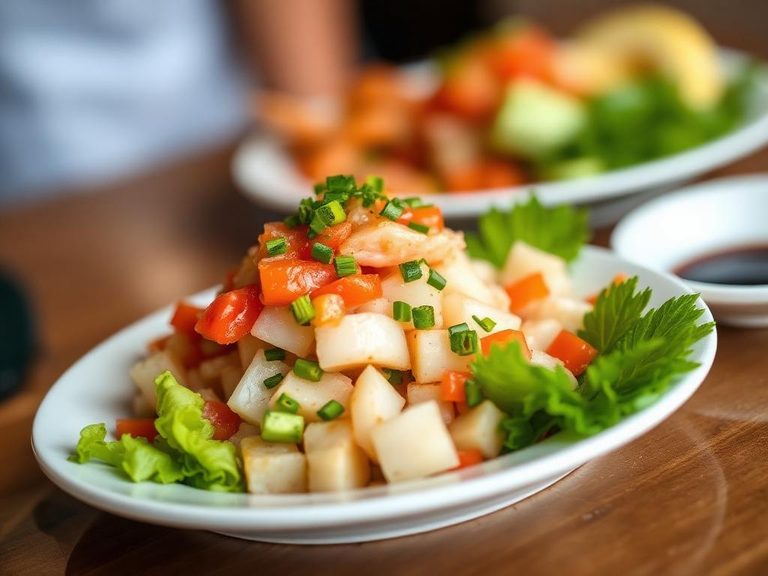
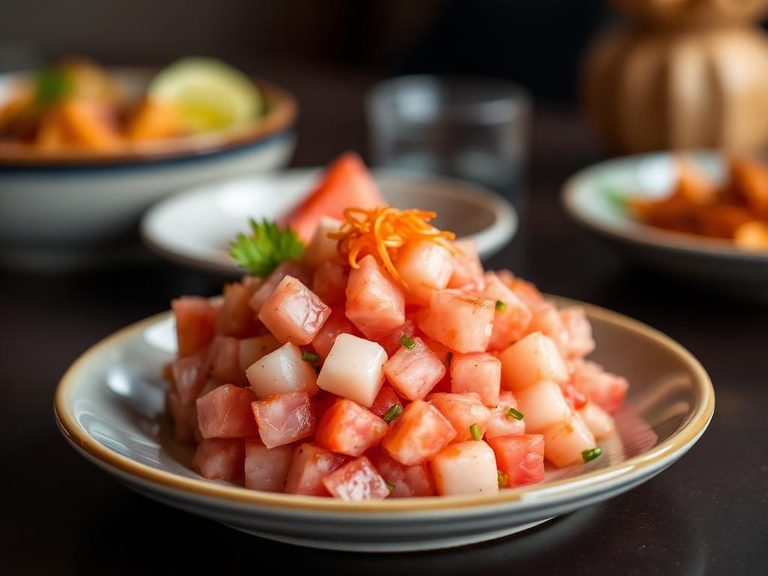
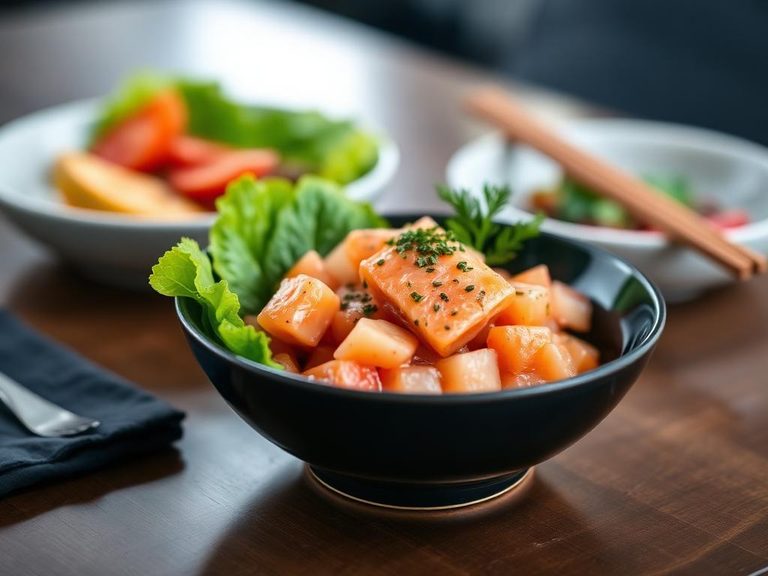
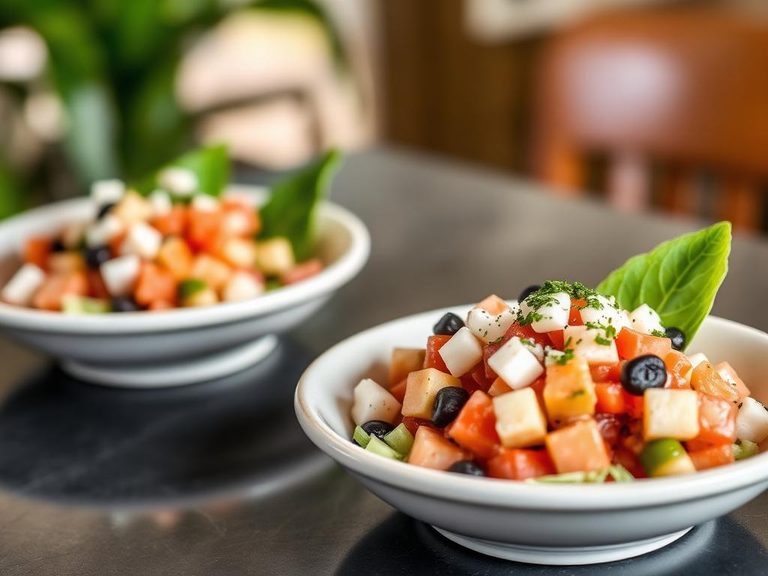
Poké is a traditional Hawaiian dish featuring diced raw fish, typically ahi tuna, marinated in soy sauce, sesame oil, and other seasonings. It's often served over rice and topped with ingredients like avocado, seaweed, and macadamia nuts, making it a vibrant and customizable meal. Originating from Hawaii, it reflects the islands' blend of Polynesian, Asian, and Western culinary influences.
🍽️ Nutrition at a glance
Poké is generally high in protein due to the raw fish, with a moderate amount of healthy fats from ingredients like avocado and sesame oil, and carbohydrates mainly from the rice base. A typical serving provides omega-3 fatty acids, vitamins, and minerals, with a calorie range of about 300-500 per bowl depending on portion sizes and additions.
Nutrition breakdown
| Calories | 500 kcal |
| Protein | 30 g |
| Carbs | 55 g |
| Fat | 18 g |
| Fiber | 4 g |
| Sugar | 10 g |
| Sodium | 800 mg |
| Potassium | 600 mg |
| Selenium | 40 mcg |
| Vitamin B12 | 2.5 mcg |
| Niacin (B3) | 10 mg |
| Phosphorus | 350 mg |
| Magnesium | 70 mg |
| Vitamin D | 1.5 mcg |
| Omega-3 (EPA+DHA) | 0.5 g |
Per 1 bowl (340 g) · estimated, varies by recipe
💡 What's interesting
Culturally, poké showcases Hawaii's multicultural heritage, evolving from simple fishermen's snacks to a global food trend. Nutritionally, it's unique for offering a fresh, minimally processed source of high-quality protein and heart-healthy fats, often enjoyed as a balanced and energizing meal.
🍽️ Related dishes
AI estimate may be inaccurate · Terms