

Fish, smelt, rainbow, cooked, dry heat
Whole food · Finfish and Shellfish Products

Photo: Wikipedia
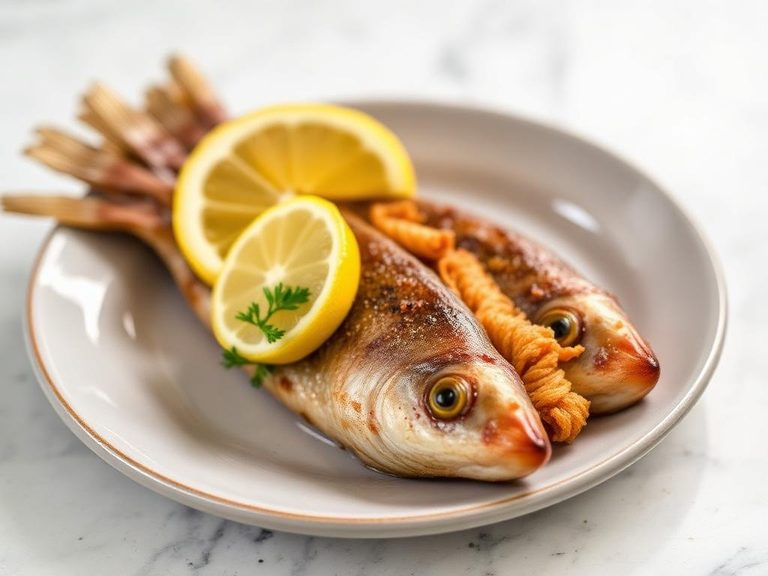
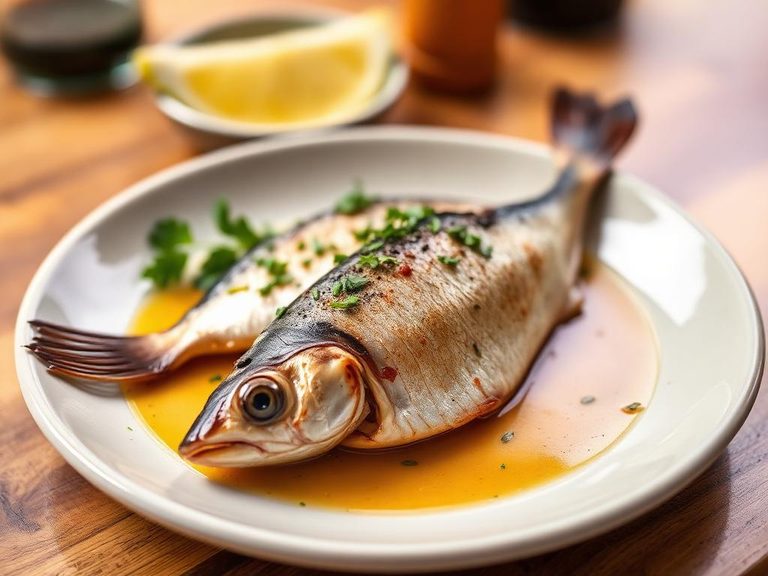
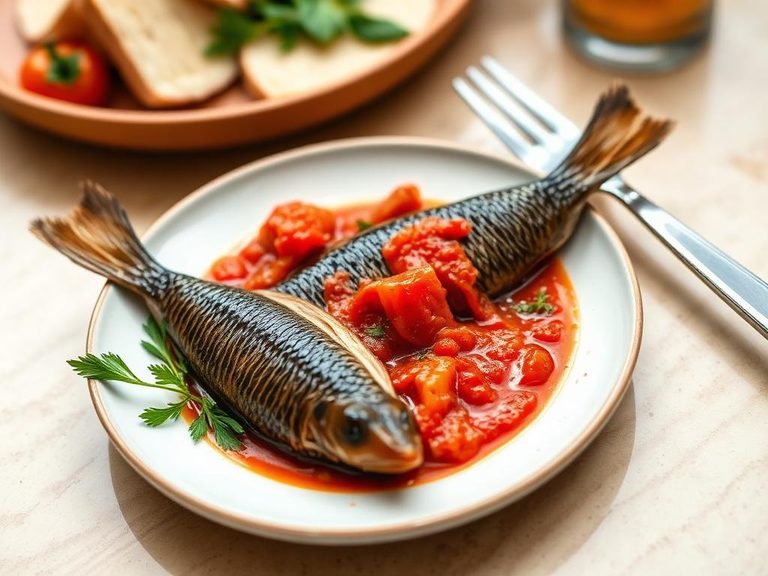
Rainbow smelt, a small, slender forage fish, is cooked via dry heat to achieve a delicate, crisp skin and a tender, flaky white flesh with a mild, sweet flavor. This lean protein powerhouse provides over 22 grams of protein per 100g with virtually no carbohydrates, making it an excellent choice for low-carb and high-protein diets.
Calorie split: 76% protein · 0% carbs · 24% fat
↓ Full nutrition💚 Why it's loved
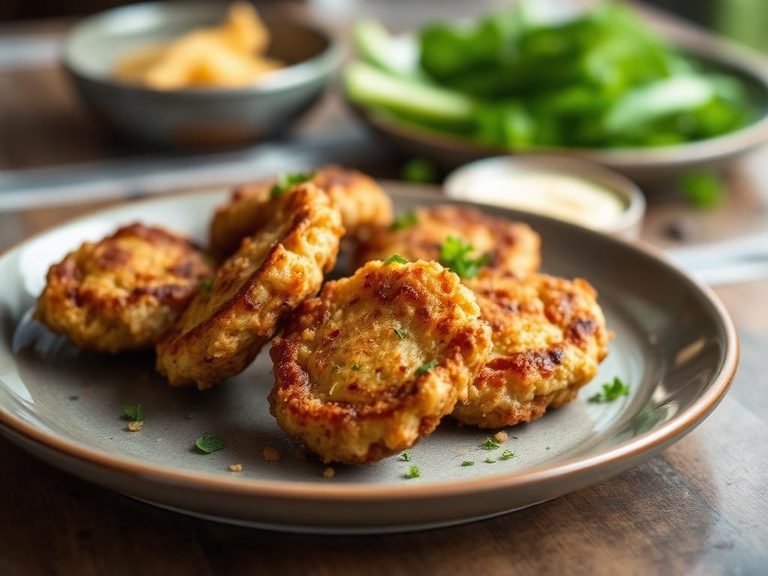
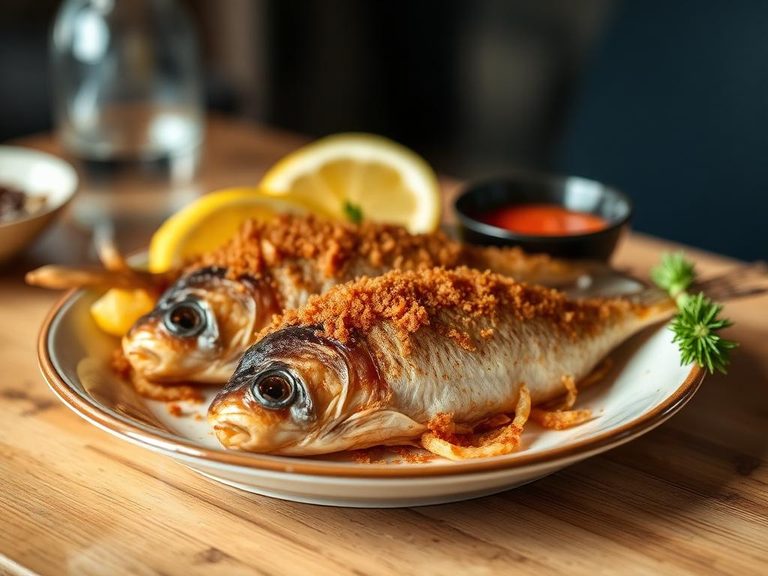
People love rainbow smelt for its clean, subtly sweet taste and satisfying texture, which pairs beautifully with a simple squeeze of lemon. Its small size makes it incredibly versatile, perfect for quick pan-frying, baking, or even eating whole as a crispy appetizer.
⚠️ Watch-outs & how to enjoy it better
As a common allergen, fish like smelt can cause reactions in sensitive individuals. Its mild flavor can be overpowered by strong seasonings, and overcooking can lead to a dry texture. To counteract dryness, cook quickly at high heat and serve immediately with a flavorful sauce or tartar sauce.
Key benefits
- Excellent source of high-quality, lean protein.
- Very low in calories and contains no carbohydrates or sugar.
- Naturally gluten-free and suitable for low-carb dietary patterns.
- Provides essential nutrients like selenium and B vitamins.
🍽️ Popular dishes
🌍 Where it's eaten
💡 Did you know?
Unlike many fish, rainbow smelt are anadromous, meaning they migrate from the sea into freshwater rivers and streams to spawn, a behavior more commonly associated with salmon.
Full nutrition (USDA data · scales with serving)
| Water | 72.8 g |
| Energy | 124 kcal |
| Energy | 519 kj |
| Protein | 22.6 g |
| Total lipid (fat) | 3.1 g |
| Ash | 1.8 g |
| Carbohydrate, by difference | 0.00 g |
| Fiber, total dietary | 0.00 g |
| Calcium, Ca | 77.0 mg |
| Iron, Fe | 1.1 mg |
| Magnesium, Mg | 38.0 mg |
| Phosphorus, P | 295 mg |
| Potassium, K | 372 mg |
| Sodium, Na | 77.0 mg |
| Zinc, Zn | 2.1 mg |
| Copper, Cu | 0.18 mg |
| Manganese, Mn | 0.90 mg |
| Selenium, Se | 46.8 ug |
| Vitamin C, total ascorbic acid | 0.00 mg |
| Thiamin | 0.01 mg |
| Riboflavin | 0.15 mg |
| Niacin | 1.8 mg |
| Pantothenic acid | 0.74 mg |
| Vitamin B-6 | 0.17 mg |
| Folate, total | 5.0 ug |
| Folic acid | 0.00 ug |
| Folate, food | 5.0 ug |
| Folate, DFE | 5.0 ug |
| Vitamin B-12 | 4.0 ug |
| Vitamin A, RAE | 17.0 ug |
| Retinol | 17.0 ug |
| Vitamin A, IU | 58.0 iu |
Fat & fatty acid profile (per 100g)
| Fatty acids, total saturated | 0.58 g |
| SFA 12:0 | 0.00 g |
| SFA 14:0 | 0.10 g |
| SFA 16:0 | 0.42 g |
| SFA 18:0 | 0.05 g |
| Fatty acids, total monounsaturated | 0.82 g |
| MUFA 16:1 | 0.26 g |
| MUFA 18:1 | 0.52 g |
| MUFA 20:1 | 0.04 g |
| MUFA 22:1 | 0.00 g |
| Fatty acids, total polyunsaturated | 1.1 g |
| PUFA 18:2 | 0.06 g |
| PUFA 18:3 | 0.06 g |
| PUFA 18:4 | 0.03 g |
| PUFA 20:4 | 0.07 g |
| PUFA 20:5 n-3 (EPA) | 0.35 g |
| PUFA 22:5 n-3 (DPA) | 0.02 g |
| PUFA 22:6 n-3 (DHA) | 0.54 g |
| Cholesterol | 90.0 mg |
Amino acid profile (per 100g)
| Tryptophan | 0.25 g |
| Threonine | 0.99 g |
| Isoleucine | 1.0 g |
| Leucine | 1.8 g |
| Lysine | 2.1 g |
| Methionine | 0.67 g |
| Cystine | 0.24 g |
| Phenylalanine | 0.88 g |
| Tyrosine | 0.76 g |
| Valine | 1.2 g |
| Arginine | 1.4 g |
| Histidine | 0.67 g |
| Alanine | 1.4 g |
| Aspartic acid | 2.3 g |
| Glutamic acid | 3.4 g |
| Glycine | 1.1 g |
| Proline | 0.80 g |
| Serine | 0.92 g |
FAQ
Do you eat the bones in rainbow smelt?
When cooked until crispy, the small, soft bones in smelt are often edible and a good source of calcium. However, many people prefer to debone them, especially larger specimens, before cooking.
How is the taste different from other small fish like sardines or anchovies?
Rainbow smelt has a much milder, sweeter, and less 'fishy' flavor compared to the stronger, oilier taste of sardines or the intensely salty, umami punch of cured anchovies.
What's the best way to store fresh smelt?
Store fresh smelt on a bed of ice in the coldest part of your refrigerator and use within 1-2 days. For longer storage, clean them, pat dry, and freeze in a single layer on a baking sheet before transferring to a freezer bag.
Nutrient density (calculated · NRF9.3)
Nutrient Rich Foods index: beneficial nutrients (protein, fiber, vitamins, minerals) minus saturated fat, added sugar & sodium, per 100 kcal.
NRF9.3 index — Fulgoni, Keast & Drewnowski, 2009. Computed from USDA nutrients.
Weight-loss friendliness (composite index)
Energy density 1.24 kcal/g · 73% calories from protein · 0.0 g fiber · 0.0 g sugar per 100 g.
Composite of energy density (Rolls et al., 1999), protein & fiber satiety, minus sugar. A calculated heuristic — ranks satiety-per-calorie, not a clinical measure.
Dietary load (calculated from USDA values)
Potential renal acid load. Positive = acid-forming, negative = alkaline-forming.
Sodium-to-potassium ratio: 0.21 (lower is better — aim for ≤ 1)
Sodium:potassium per WHO potassium guidance. Computed from USDA nutrients.