

Fish, salmon, coho, farmed, raw
Whole food · Finfish and Shellfish Products

Photo: Wikipedia
Coho salmon is a lean, wild-harvested (or farmed) Pacific salmon prized for its vibrant orange-red flesh and a delicate, clean flavor less intensely 'fishy' than its sockeye cousin. Its texture is fine-grained and tender, becoming moist and flaky when cooked. Nutritionally, it's a powerhouse of high-quality protein and heart-healthy omega-3 fats, with virtually no carbohydrates.
Calorie split: 55% protein · 0% carbs · 45% fat
↓ Full nutrition💚 Why it's loved
People love coho for its versatility and milder taste, which makes it a gateway fish for those wary of strong seafood flavors. It's celebrated in Pacific Northwest cuisine, often featured in everything from simple grilled fillets to elegant cedar-plank preparations.
⚠️ Watch-outs & how to enjoy it better
While nutritious, farmed coho can have a higher environmental impact and trace contaminants compared to wild-caught; look for reputable sources. As an oily fish, it's a common allergen. To mitigate this, ensure it's thoroughly cooked to reduce any risk and source from well-managed fisheries or farms to minimize contaminants.
Key benefits
- Excellent source of complete protein for muscle maintenance and repair.
- Rich in long-chain omega-3 fatty acids (EPA & DHA) for brain and heart health.
- Provides a good dose of B vitamins, especially B12 and niacin, for energy metabolism.
- Contains the antioxidant astaxanthin, which gives it its red color.
- Low in saturated fat and a source of selenium and potassium.
🍽️ Popular dishes
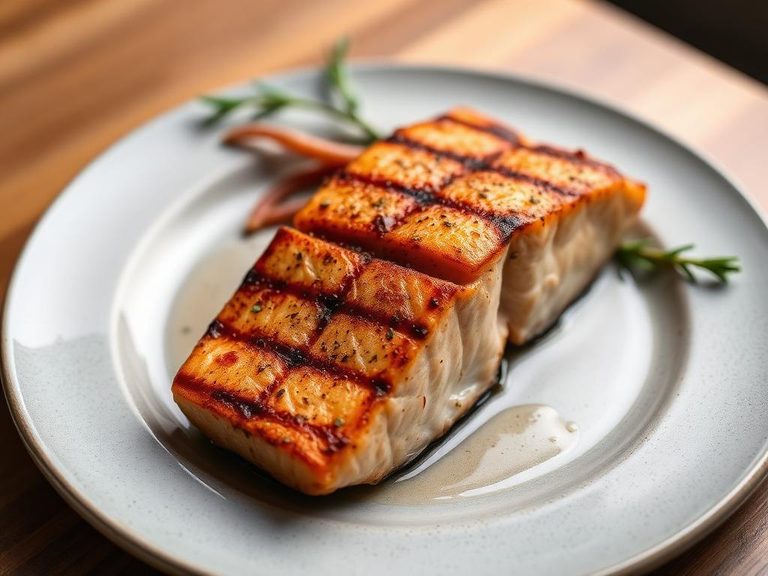
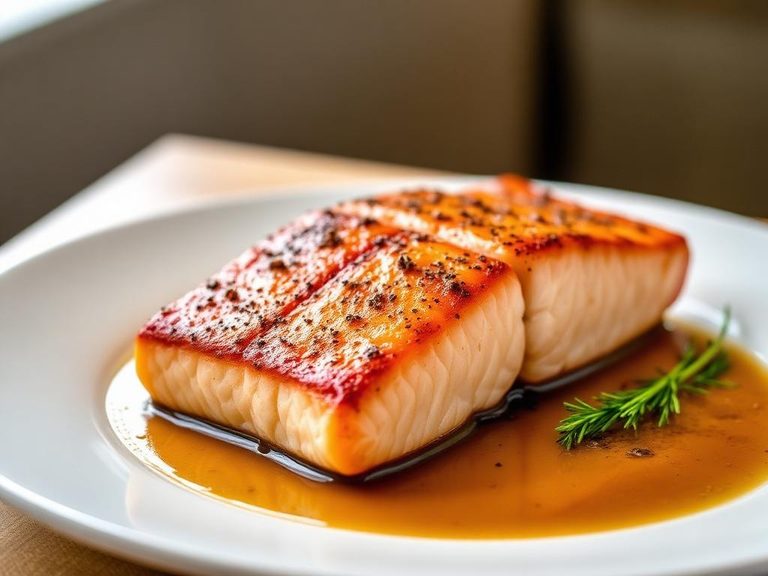
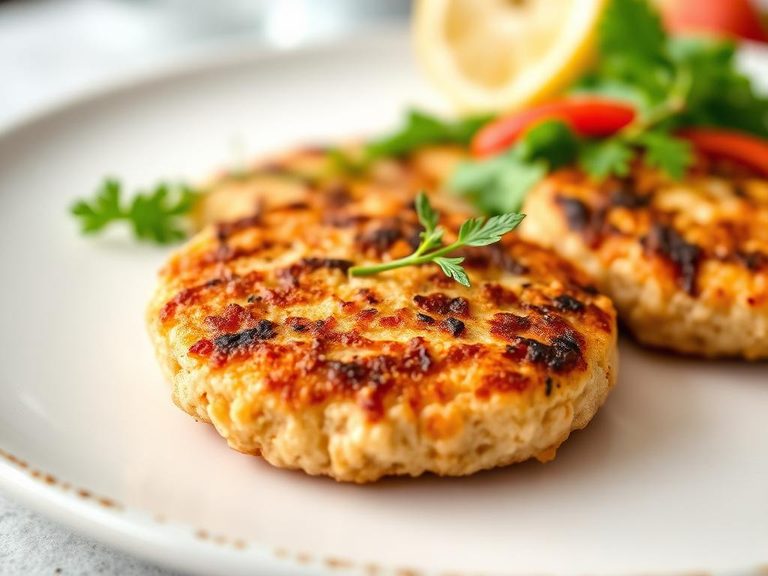
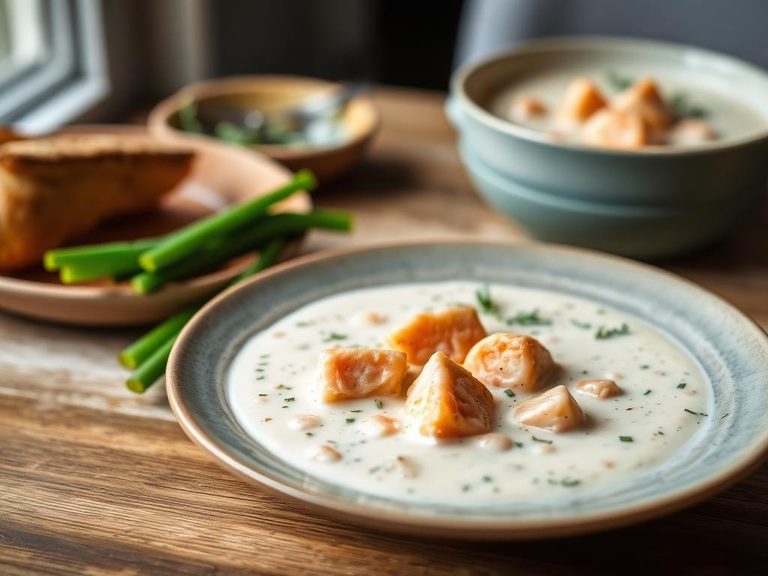
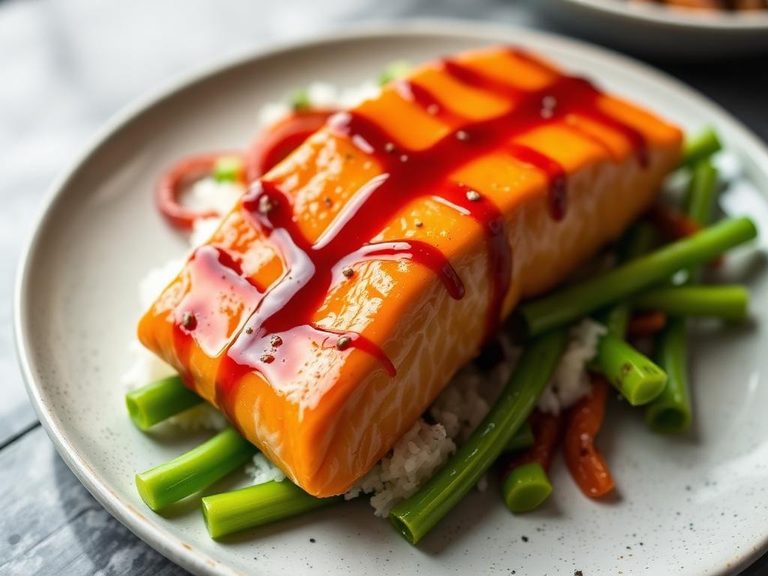
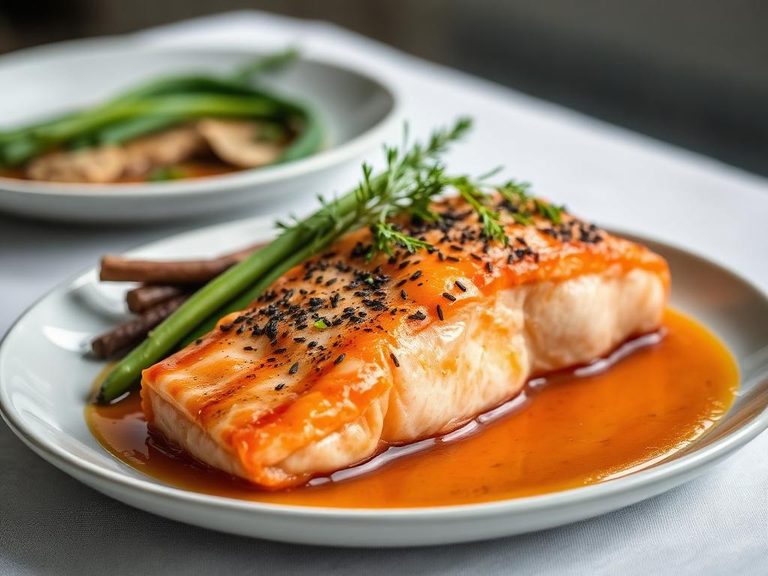
🌍 Where it's eaten
💡 Did you know?
Coho salmon are sometimes called 'silver salmon' for their bright, metallic sides, and they are famous for their acrobatic leaps when hooked by anglers.
Full nutrition (USDA data · scales with serving)
| Water | 70.5 g |
| Energy | 160 kcal |
| Energy | 669 kj |
| Protein | 21.3 g |
| Total lipid (fat) | 7.7 g |
| Ash | 1.3 g |
| Carbohydrate, by difference | 0.00 g |
| Fiber, total dietary | 0.00 g |
| Calcium, Ca | 12.0 mg |
| Iron, Fe | 0.34 mg |
| Magnesium, Mg | 31.0 mg |
| Phosphorus, P | 292 mg |
| Potassium, K | 450 mg |
| Sodium, Na | 47.0 mg |
| Zinc, Zn | 0.43 mg |
| Copper, Cu | 0.05 mg |
| Manganese, Mn | 0.01 mg |
| Selenium, Se | 12.6 ug |
| Vitamin C, total ascorbic acid | 1.1 mg |
| Thiamin | 0.09 mg |
| Riboflavin | 0.11 mg |
| Niacin | 6.8 mg |
| Pantothenic acid | 1.1 mg |
| Vitamin B-6 | 0.66 mg |
| Folate, total | 13.0 ug |
| Folic acid | 0.00 ug |
| Folate, food | 13.0 ug |
| Folate, DFE | 13.0 ug |
| Vitamin B-12 | 2.7 ug |
| Vitamin A, RAE | 56.0 ug |
| Retinol | 56.0 ug |
| Vitamin A, IU | 188 iu |
Fat & fatty acid profile (per 100g)
| Fatty acids, total saturated | 1.8 g |
| SFA 14:0 | 0.29 g |
| SFA 16:0 | 1.1 g |
| SFA 18:0 | 0.31 g |
| Fatty acids, total monounsaturated | 3.3 g |
| MUFA 16:1 | 0.45 g |
| MUFA 18:1 | 1.7 g |
| MUFA 20:1 | 0.51 g |
| MUFA 22:1 | 0.58 g |
| Fatty acids, total polyunsaturated | 1.9 g |
| PUFA 18:2 | 0.35 g |
| PUFA 18:3 | 0.07 g |
| PUFA 18:4 | 0.11 g |
| PUFA 20:4 | 0.10 g |
| PUFA 20:5 n-3 (EPA) | 0.39 g |
| PUFA 22:6 n-3 (DHA) | 0.82 g |
| Cholesterol | 51.0 mg |
Amino acid profile (per 100g)
| Tryptophan | 0.24 g |
| Threonine | 0.93 g |
| Isoleucine | 0.98 g |
| Leucine | 1.7 g |
| Lysine | 2.0 g |
| Methionine | 0.63 g |
| Cystine | 0.23 g |
| Phenylalanine | 0.83 g |
| Tyrosine | 0.72 g |
| Valine | 1.1 g |
| Arginine | 1.3 g |
| Histidine | 0.63 g |
| Alanine | 1.3 g |
| Aspartic acid | 2.2 g |
| Glutamic acid | 3.2 g |
| Glycine | 1.0 g |
| Proline | 0.75 g |
| Serine | 0.87 g |
FAQ
How is coho salmon different from sockeye or Atlantic salmon?
Coho has a milder flavor and firmer texture than the richer, more 'fishy' sockeye. It's generally leaner and less fatty than farmed Atlantic salmon, which has a very mild taste and softer texture.
What's the best way to cook coho salmon to keep it moist?
Due to its lower fat content, coho can dry out if overcooked. Methods like baking en papillote, poaching, or quick pan-searing are excellent. Aim for an internal temperature of 125°F (52°C) for medium-rare, where it will be moist and tender.
Is farmed coho a sustainable choice?
Sustainability varies greatly by farm. Look for certifications like the Aquaculture Stewardship Council (ASC) or Best Aquaculture Practices (BAP). Wild-caught Alaskan coho is generally considered a well-managed, sustainable choice.
Nutrient density (calculated · NRF9.3)
Nutrient Rich Foods index: beneficial nutrients (protein, fiber, vitamins, minerals) minus saturated fat, added sugar & sodium, per 100 kcal.
NRF9.3 index — Fulgoni, Keast & Drewnowski, 2009. Computed from USDA nutrients.
Weight-loss friendliness (composite index)
Energy density 1.60 kcal/g · 53% calories from protein · 0.0 g fiber · 0.0 g sugar per 100 g.
Composite of energy density (Rolls et al., 1999), protein & fiber satiety, minus sugar. A calculated heuristic — ranks satiety-per-calorie, not a clinical measure.
Dietary load (calculated from USDA values)
Potential renal acid load. Positive = acid-forming, negative = alkaline-forming.
Sodium-to-potassium ratio: 0.10 (lower is better — aim for ≤ 1)
Sodium:potassium per WHO potassium guidance. Computed from USDA nutrients.