

Fish, lingcod, meat, raw (Alaska Native)
Whole food · American Indian/Alaska Native Foods

Photo: Wikipedia
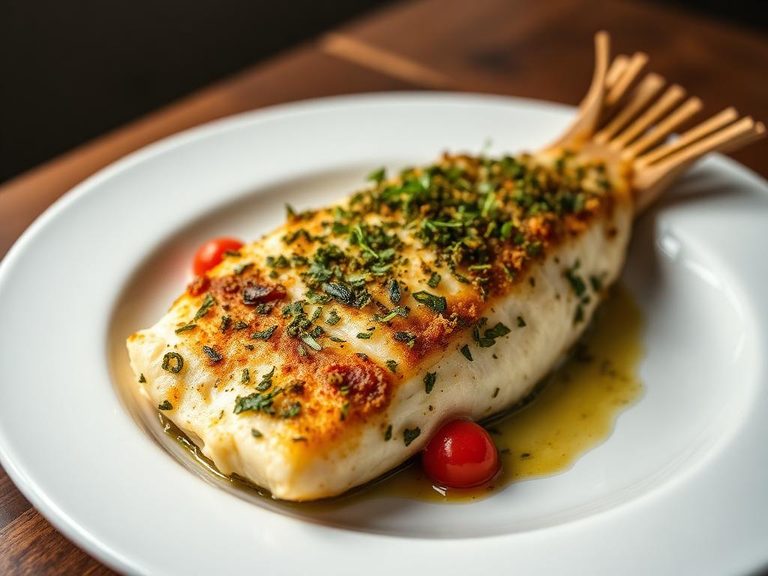
Lingcod is a lean, firm-fleshed Pacific fish prized by Alaska Natives for its mild, slightly sweet flavor and meaty texture that flakes into large, satisfying pieces. Its stark white, almost translucent raw flesh transforms into an opaque, snow-white delicacy when cooked. Nutritionally, it's a powerhouse of pure, high-quality protein with virtually no fat or carbohydrates.
Calorie split: 91% protein · 0% carbs · 9% fat
↓ Full nutrition💚 Why it's loved
People love lingcod for its clean, versatile flavor that absorbs seasonings beautifully and its firm texture that holds up perfectly to grilling, baking, or pan-searing. In Alaska Native cultures, it's a vital traditional food, valued for its reliability and nourishment.
⚠️ Watch-outs & how to enjoy it better
As a very lean fish, it can dry out if overcooked, so careful timing is key. Some may find its mildness less exciting than oilier fish. To counter dryness, cook it just until opaque and consider basting with a little oil or butter, or serve it with a flavorful sauce.
Key benefits
- Excellent source of complete protein (17.9g per 100g)
- Extremely low in fat and calories
- Naturally carb-free and sugar-free
- Rich in essential nutrients like selenium and phosphorus
- A sustainable choice from well-managed Alaskan fisheries
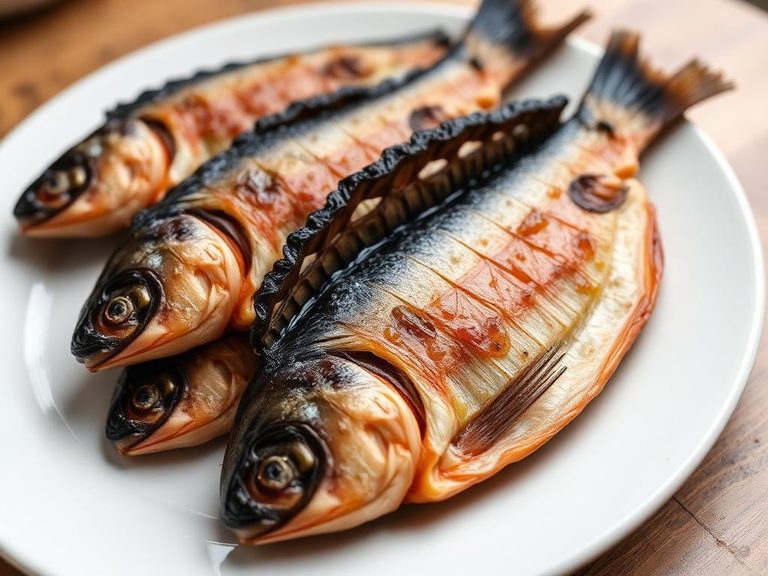
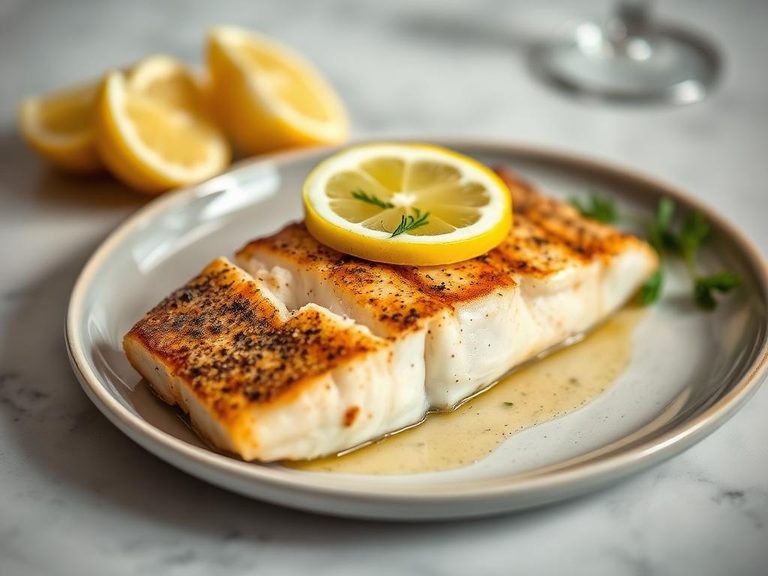
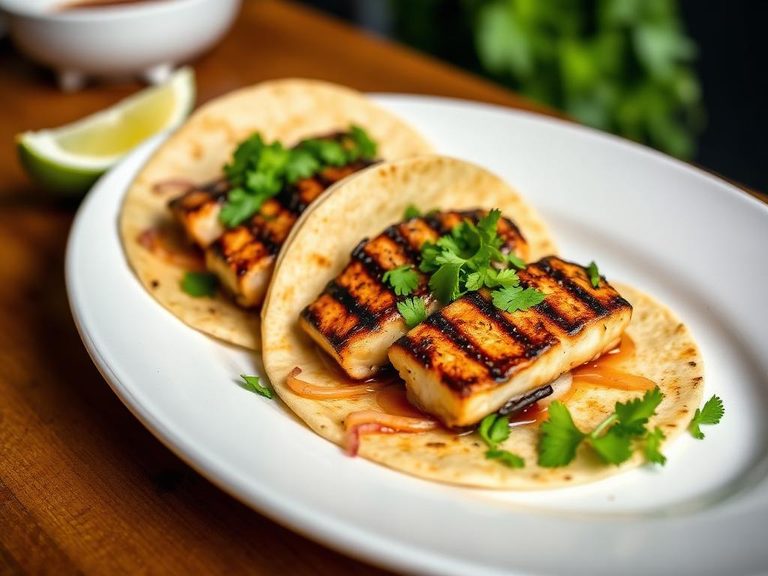
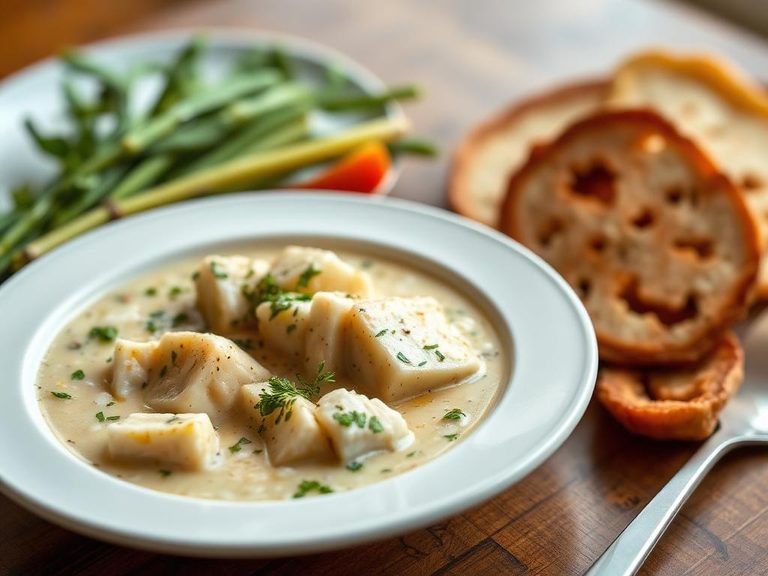
🍽️ Popular dishes
🌍 Where it's eaten
💡 Did you know?
Despite its name, lingcod is not a true cod but a member of the greenling family, and its raw flesh is famously a striking blue-green color due to a bile pigment called biliverdin, which disappears completely when cooked.
Full nutrition (USDA data · scales with serving)
| Water | 80.0 g |
| Energy | 79.0 kcal |
| Energy | 330 kj |
| Protein | 17.9 g |
| Total lipid (fat) | 0.80 g |
| Ash | 1.3 g |
| Carbohydrate, by difference | 0.00 g |
| Potassium, K | 433 mg |
| Sodium, Na | 59.0 mg |
| Thiamin | 0.11 mg |
| Riboflavin | 0.36 mg |
| Vitamin A, IU | 230 iu |
Fat & fatty acid profile (per 100g)
Estimated from Fish, halibut, raw, with skin (Alaska Native) — USDA does not publish this profile for Fish.
| Fatty acids, total saturated | 0.73 g |
| SFA 8:0 | 0.00 g |
| SFA 10:0 | 0.00 g |
| SFA 12:0 | 0.00 g |
| SFA 14:0 | 0.09 g |
| SFA 15:0 | 0.01 g |
| SFA 16:0 | 0.38 g |
| SFA 17:0 | 0.00 g |
| SFA 18:0 | 0.09 g |
| SFA 20:0 | 0.01 g |
| SFA 22:0 | 0.00 g |
| SFA 24:0 | 0.00 g |
| Fatty acids, total monounsaturated | 1.2 g |
| MUFA 14:1 | 0.00 g |
| MUFA 15:1 | 0.00 g |
| MUFA 16:1 | 0.23 g |
| MUFA 17:1 | 0.00 g |
| MUFA 18:1 | 0.59 g |
| MUFA 20:1 | 0.11 g |
| MUFA 22:1 | 0.00 g |
| MUFA 22:1 c | 0.00 g |
| MUFA 24:1 c | 0.01 g |
| Fatty acids, total polyunsaturated | 0.91 g |
| PUFA 18:2 | 0.02 g |
| PUFA 18:3 | 0.01 g |
| PUFA 18:3 n-3 c,c,c (ALA) | 0.01 g |
| PUFA 18:3 n-6 c,c,c | 0.00 g |
| PUFA 18:4 | 0.00 g |
| PUFA 20:2 n-6 c,c | 0.01 g |
| PUFA 20:3 | 0.00 g |
| PUFA 20:4 | 0.03 g |
| PUFA 20:5 n-3 (EPA) | 0.22 g |
| PUFA 21:5 | 0.00 g |
| PUFA 22:4 | 0.00 g |
| PUFA 22:5 n-3 (DPA) | 0.06 g |
| PUFA 22:6 n-3 (DHA) | 0.39 g |
| Cholesterol | 72.0 mg |
Amino acid profile (per 100g)
Estimated from Fish, halibut, raw, with skin (Alaska Native) — USDA does not publish this profile for Fish.
| Tryptophan | 0.31 g |
| Threonine | 0.95 g |
| Isoleucine | 0.94 g |
| Leucine | 1.6 g |
| Lysine | 1.8 g |
| Methionine | 0.80 g |
| Cystine | 0.35 g |
| Phenylalanine | 0.82 g |
| Tyrosine | 0.70 g |
| Valine | 1.0 g |
| Arginine | 1.2 g |
| Histidine | 0.50 g |
| Alanine | 1.2 g |
| Aspartic acid | 2.8 g |
| Glutamic acid | 3.2 g |
| Glycine | 0.93 g |
| Proline | 0.73 g |
| Serine | 0.91 g |
| Hydroxyproline | 0.18 g |
FAQ
Is lingcod the same as cod?
No, lingcod (Ophiodon elongatus) is a different species from the greenling family, while true cod (like Pacific or Atlantic cod) belong to the Gadidae family. They have different textures and flavors.
How do I know when lingcod is cooked?
It's done when the flesh turns from translucent to opaque white and flakes easily with a fork. The internal temperature should reach 145°F (63°C).
Can I eat lingcod raw?
While some preparations use very fresh, sashimi-grade fish, lingcod is typically cooked. Its lean, dense texture is best enjoyed cooked to avoid a potentially dry or chewy result.
Weight-loss friendliness (composite index)
Energy density 0.79 kcal/g · 91% calories from protein · 0.0 g fiber · 0.0 g sugar per 100 g.
Composite of energy density (Rolls et al., 1999), protein & fiber satiety, minus sugar. A calculated heuristic — ranks satiety-per-calorie, not a clinical measure.
Dietary load (calculated from USDA values)
Sodium-to-potassium ratio: 0.14 (lower is better — aim for ≤ 1)
Sodium:potassium per WHO potassium guidance. Computed from USDA nutrients.