

Fish, catfish, channel, cooked, breaded and fried
Whole food · Finfish and Shellfish Products

Photo: Wikipedia
Channel catfish, coated in a seasoned cornmeal or flour batter and deep-fried to a golden crunch, offers a satisfying contrast between its crispy exterior and moist, flaky white flesh. The cooking method adds a savory richness, while the fish itself provides a lean source of protein. Nutritionally, it's a solid protein source, though the frying process increases the fat content compared to other preparations.
Calorie split: 32% protein · 14% carbs · 53% fat
↓ Full nutrition💚 Why it's loved
People love it for the irresistible crunch of the golden coating giving way to tender, mild-flavored fish. It's a cornerstone of Southern U.S. comfort food, celebrated at fish fries and for its versatile, crowd-pleasing appeal.
⚠️ Watch-outs & how to enjoy it better
The deep-frying process significantly increases the calorie and fat content compared to baked or grilled fish. To counteract this, practice portion control, pair it with a large, vinegar-based coleslaw or a fresh green salad instead of fries, and blot excess oil with a paper towel after cooking. It's also a common allergen (fish), and the batter may contain gluten.
Key benefits
- High-quality protein source (18g per 100g)
- Contains essential nutrients like phosphorus and selenium
- Provides B vitamins, including B12 and niacin
- A familiar and accessible entry point for seafood consumption
🍽️ Popular dishes
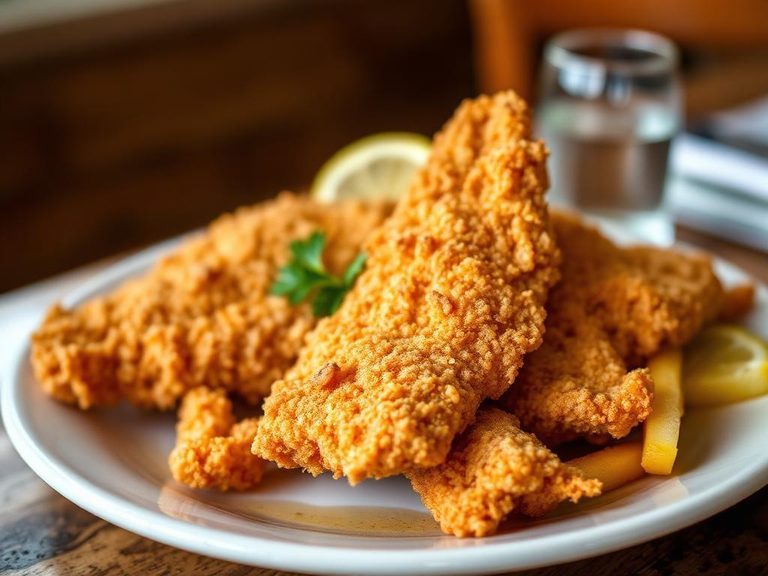

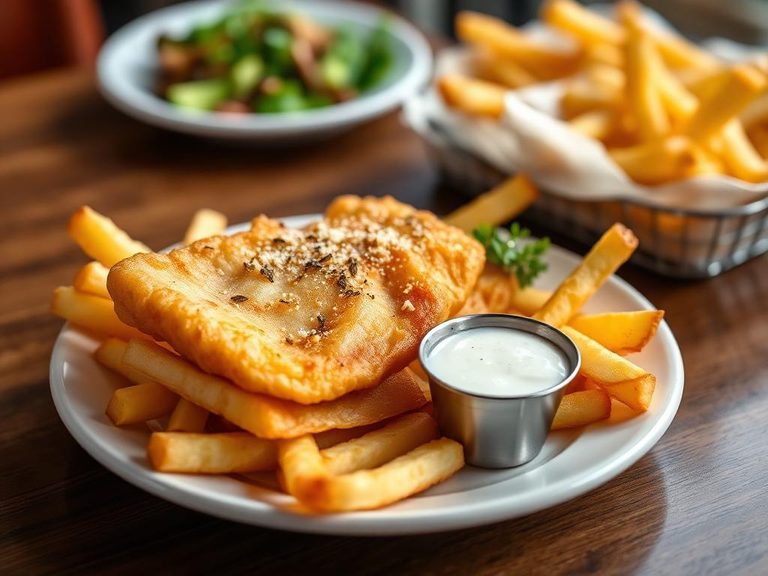

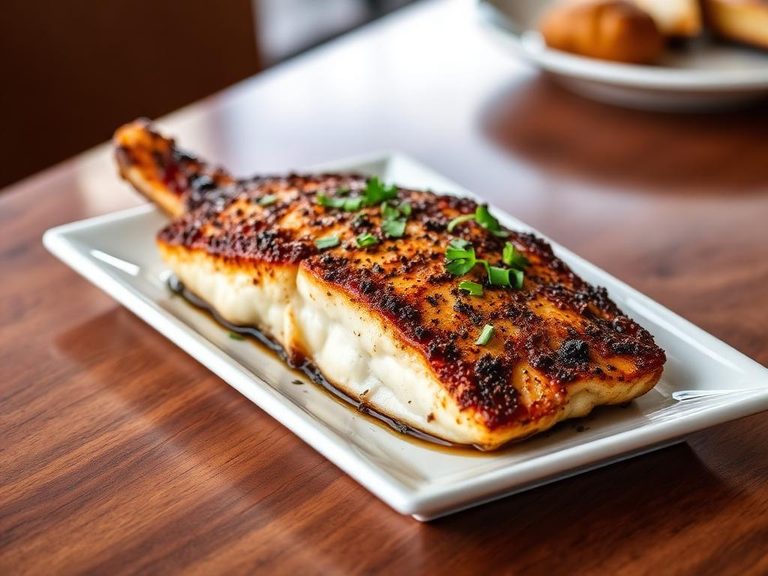
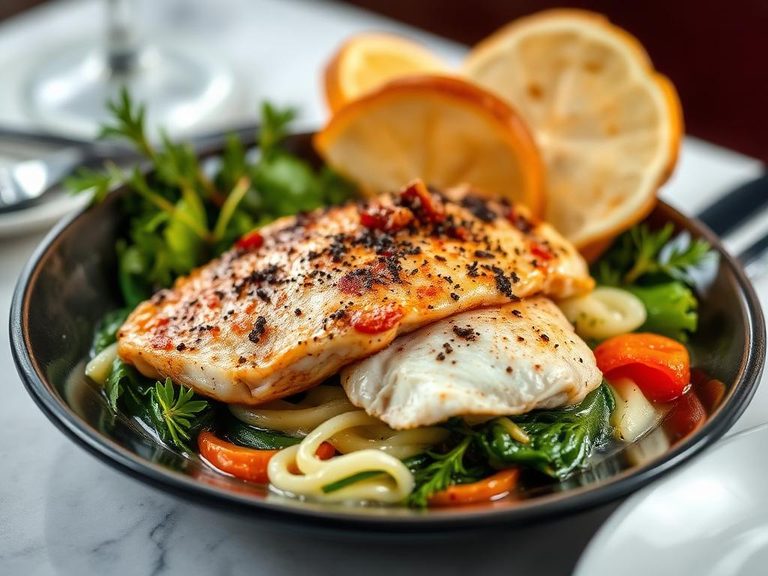
🌍 Where it's eaten
💡 Did you know?
Channel catfish are bottom-feeders with an exceptional sense of taste and smell, possessing taste receptors not just in their mouths but over their entire body, essentially 'tasting' the water as they swim.
Full nutrition (USDA data · scales with serving)
| Water | 58.8 g |
| Energy | 229 kcal |
| Energy | 956 kj |
| Protein | 18.1 g |
| Total lipid (fat) | 13.3 g |
| Ash | 1.3 g |
| Carbohydrate, by difference | 8.0 g |
| Fiber, total dietary | 0.70 g |
| Calcium, Ca | 44.0 mg |
| Iron, Fe | 1.4 mg |
| Magnesium, Mg | 27.0 mg |
| Phosphorus, P | 216 mg |
| Potassium, K | 340 mg |
| Sodium, Na | 280 mg |
| Zinc, Zn | 0.86 mg |
| Copper, Cu | 0.10 mg |
| Manganese, Mn | 0.04 mg |
| Selenium, Se | 13.9 ug |
| Vitamin C, total ascorbic acid | 0.00 mg |
| Thiamin | 0.07 mg |
| Riboflavin | 0.13 mg |
| Niacin | 2.3 mg |
| Pantothenic acid | 0.73 mg |
| Vitamin B-6 | 0.19 mg |
| Folate, total | 30.0 ug |
| Folic acid | 14.0 ug |
| Folate, food | 17.0 ug |
| Folate, DFE | 39.0 ug |
| Vitamin B-12 | 1.9 ug |
| Vitamin A, RAE | 8.0 ug |
| Vitamin A, IU | 28.0 iu |
Fat & fatty acid profile (per 100g)
| Fatty acids, total saturated | 3.3 g |
| SFA 14:0 | 0.09 g |
| SFA 16:0 | 2.0 g |
| SFA 18:0 | 1.2 g |
| Fatty acids, total monounsaturated | 5.6 g |
| MUFA 16:1 | 0.17 g |
| MUFA 18:1 | 5.3 g |
| MUFA 20:1 | 0.05 g |
| MUFA 22:1 | 0.00 g |
| Fatty acids, total polyunsaturated | 3.3 g |
| PUFA 18:2 | 2.6 g |
| PUFA 18:3 | 0.18 g |
| PUFA 18:4 | 0.03 g |
| PUFA 20:4 | 0.10 g |
| PUFA 20:5 n-3 (EPA) | 0.12 g |
| PUFA 22:5 n-3 (DPA) | 0.06 g |
| PUFA 22:6 n-3 (DHA) | 0.22 g |
| Cholesterol | 71.0 mg |
Amino acid profile (per 100g)
| Tryptophan | 0.20 g |
| Threonine | 0.79 g |
| Isoleucine | 0.84 g |
| Leucine | 1.5 g |
| Lysine | 1.6 g |
| Methionine | 0.53 g |
| Cystine | 0.20 g |
| Phenylalanine | 0.73 g |
| Tyrosine | 0.62 g |
| Valine | 0.94 g |
| Arginine | 1.1 g |
| Histidine | 0.53 g |
| Alanine | 1.1 g |
| Aspartic acid | 1.8 g |
| Glutamic acid | 2.7 g |
| Glycine | 0.85 g |
| Proline | 0.69 g |
| Serine | 0.76 g |
FAQ
Is fried catfish healthy?
It's a good source of protein and nutrients, but deep-frying adds significant fat and calories. Healthier alternatives include baking, grilling, or blackening the catfish.
What does fried catfish taste like?
The fish itself has a mild, slightly sweet flavor and a tender, flaky texture. The seasoned cornmeal or flour coating provides a savory, crunchy exterior.
How do I prevent fried catfish from being greasy?
Ensure your oil is at the correct temperature (around 350°F or 175°C) before adding the fish. Don't overcrowd the pan, and drain the cooked fish on a wire rack or paper towels.
Nutrient density (calculated · NRF9.3)
Nutrient Rich Foods index: beneficial nutrients (protein, fiber, vitamins, minerals) minus saturated fat, added sugar & sodium, per 100 kcal.
NRF9.3 index — Fulgoni, Keast & Drewnowski, 2009. Computed from USDA nutrients.
Weight-loss friendliness (composite index)
Energy density 2.29 kcal/g · 32% calories from protein · 0.7 g fiber · 0.0 g sugar per 100 g.
Composite of energy density (Rolls et al., 1999), protein & fiber satiety, minus sugar. A calculated heuristic — ranks satiety-per-calorie, not a clinical measure.
Dietary load (calculated from USDA values)
Potential renal acid load. Positive = acid-forming, negative = alkaline-forming.
Sodium-to-potassium ratio: 0.82 (lower is better — aim for ≤ 1)
Sodium:potassium per WHO potassium guidance. Computed from USDA nutrients.