

Crackers, matzo, whole-wheat
Whole food · Baked Products
Whole-wheat matzo is a crisp, unleavened flatbread with a rustic, nutty flavor and a satisfyingly sturdy crunch. Its dense, dry texture makes it a blank canvas for both savory and sweet toppings. Nutritionally, it's a powerhouse of complex carbohydrates and fiber, providing sustained energy without added sugars.
Calorie split: 14% protein · 83% carbs · 4% fat
↓ Full nutrition💚 Why it's loved
People love it for its simple, toasty wheat flavor and its incredible versatility—it can be a crunchy snack base, a soup thickener, or a ritual food. Its cultural significance during Passover gives it a deep emotional resonance for many.
⚠️ Watch-outs & how to enjoy it better
Its very low moisture and high fiber content can be a challenge for digestion, potentially causing bloating or discomfort if eaten quickly or in large amounts without enough water. To counteract this, eat it slowly, chew thoroughly, and pair it with hydrating foods like hummus, tzatziki, or a glass of water.
Key benefits
- Excellent source of dietary fiber (11.8g per 100g)
- High in plant-based protein (13.1g per 100g)
- Naturally low in fat (1.5g per 100g)
- Provides sustained energy from complex carbohydrates
- Unleavened, making it suitable for specific dietary observances
🍽️ Popular dishes
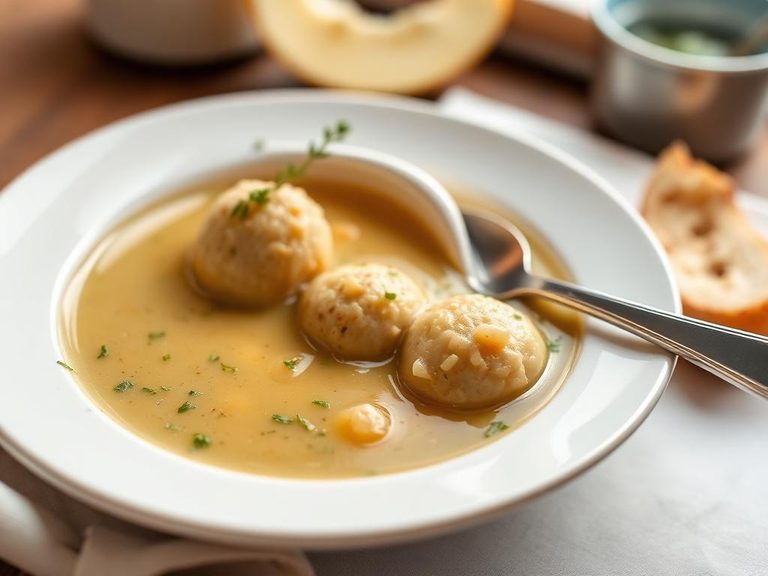
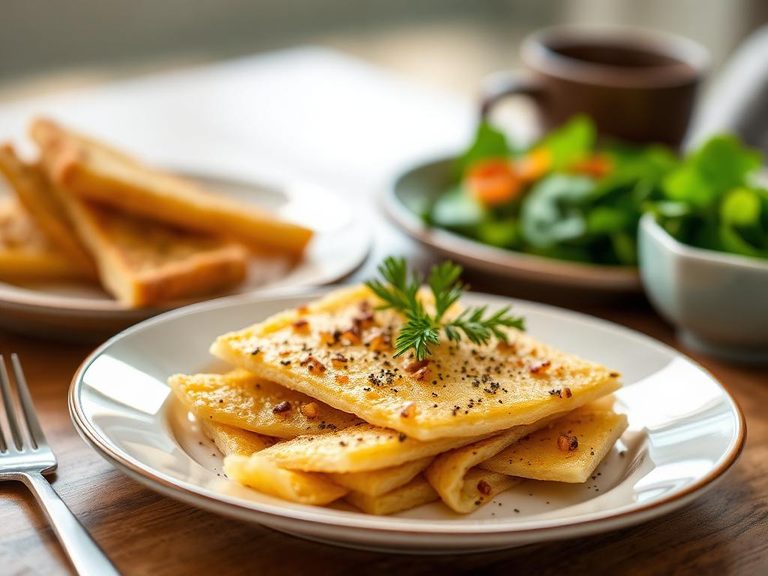

🌍 Where it's eaten
💡 Did you know?
During Passover, the entire production of matzo is traditionally rushed from mixing to baking in under 18 minutes to prevent any fermentation, a rule that gave rise to the iconic 'matzo factory' assembly line.
Full nutrition (USDA data · scales with serving)
| Water | 4.8 g |
| Energy | 351 kcal |
| Energy | 1469 kj |
| Protein | 13.1 g |
| Total lipid (fat) | 1.5 g |
| Ash | 1.6 g |
| Carbohydrate, by difference | 78.9 g |
| Fiber, total dietary | 11.8 g |
| Calcium, Ca | 23.0 mg |
| Iron, Fe | 4.7 mg |
| Magnesium, Mg | 134 mg |
| Phosphorus, P | 305 mg |
| Potassium, K | 316 mg |
| Sodium, Na | 2.0 mg |
| Zinc, Zn | 2.6 mg |
| Copper, Cu | 0.35 mg |
| Manganese, Mn | 3.5 mg |
| Selenium, Se | 75.1 ug |
| Vitamin C, total ascorbic acid | 0.00 mg |
| Thiamin | 0.36 mg |
| Riboflavin | 0.27 mg |
| Niacin | 5.4 mg |
| Pantothenic acid | 1.2 mg |
| Vitamin B-6 | 0.16 mg |
| Folate, total | 35.0 ug |
| Folic acid | 0.00 ug |
| Folate, food | 35.0 ug |
| Folate, DFE | 35.0 ug |
| Vitamin B-12 | 0.00 ug |
| Vitamin A, RAE | 0.00 ug |
| Retinol | 0.00 ug |
| Vitamin A, IU | 0.00 iu |
| Alcohol, ethyl | 0.00 g |
Fat & fatty acid profile (per 100g)
| Fatty acids, total saturated | 0.24 g |
| SFA 4:0 | 0.00 g |
| SFA 6:0 | 0.00 g |
| SFA 8:0 | 0.00 g |
| SFA 10:0 | 0.00 g |
| SFA 12:0 | 0.00 g |
| SFA 14:0 | 0.00 g |
| SFA 16:0 | 0.22 g |
| SFA 18:0 | 0.01 g |
| Fatty acids, total monounsaturated | 0.19 g |
| MUFA 16:1 | 0.01 g |
| MUFA 18:1 | 0.18 g |
| MUFA 20:1 | 0.00 g |
| MUFA 22:1 | 0.00 g |
| Fatty acids, total polyunsaturated | 0.65 g |
| PUFA 18:2 | 0.62 g |
| PUFA 18:3 | 0.03 g |
| PUFA 18:4 | 0.00 g |
| PUFA 20:4 | 0.00 g |
| PUFA 20:5 n-3 (EPA) | 0.00 g |
| PUFA 22:5 n-3 (DPA) | 0.00 g |
| PUFA 22:6 n-3 (DHA) | 0.00 g |
| Cholesterol | 0.00 mg |
Amino acid profile (per 100g)
| Tryptophan | 0.21 g |
| Threonine | 0.38 g |
| Isoleucine | 0.49 g |
| Leucine | 0.89 g |
| Lysine | 0.37 g |
| Methionine | 0.20 g |
| Cystine | 0.31 g |
| Phenylalanine | 0.62 g |
| Tyrosine | 0.39 g |
| Valine | 0.60 g |
| Arginine | 0.63 g |
| Histidine | 0.31 g |
| Alanine | 0.47 g |
| Aspartic acid | 0.69 g |
| Glutamic acid | 4.1 g |
| Glycine | 0.54 g |
| Proline | 1.4 g |
| Serine | 0.62 g |
FAQ
What's the difference between regular and whole-wheat matzo?
Whole-wheat matzo is made from 100% whole-wheat flour, giving it a darker color, nuttier flavor, and significantly more fiber and nutrients compared to regular (white) matzo, which is made from refined flour.
Can I use whole-wheat matzo for matzo ball soup?
Yes, you can use whole-wheat matzo meal to make the balls. They will be denser and have a heartier, more rustic flavor than those made with regular matzo meal.
Why is it so dry and brittle?
The extreme dryness is intentional. It's baked at high heat until all moisture is removed, which prevents leavening and gives matzo its long shelf life and characteristic crunch.
Nutrient density (calculated · NRF9.3)
Nutrient Rich Foods index: beneficial nutrients (protein, fiber, vitamins, minerals) minus saturated fat, added sugar & sodium, per 100 kcal.
NRF9.3 index — Fulgoni, Keast & Drewnowski, 2009. Computed from USDA nutrients.
Weight-loss friendliness (composite index)
Energy density 3.51 kcal/g · 15% calories from protein · 11.8 g fiber · 0.0 g sugar per 100 g.
Composite of energy density (Rolls et al., 1999), protein & fiber satiety, minus sugar. A calculated heuristic — ranks satiety-per-calorie, not a clinical measure.
Dietary load (calculated from USDA values)
Potential renal acid load. Positive = acid-forming, negative = alkaline-forming.
Sodium-to-potassium ratio: 0.01 (lower is better — aim for ≤ 1)
Sodium:potassium per WHO potassium guidance. Computed from USDA nutrients.