

Cookies, brownies, prepared from recipe
Whole food · Baked Products
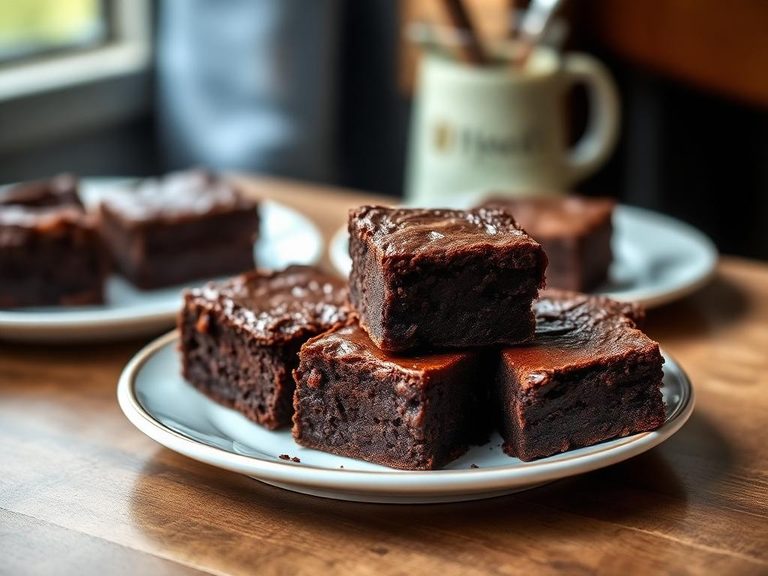
A rich, dense baked confection, these brownies offer a deeply chocolatey flavor with a fudgy or cakey texture, depending on the recipe. Nutritionally, they are a high-energy, high-fat treat, providing nearly 30 grams of fat per 100g serving.
Calorie split: 5% protein · 41% carbs · 54% fat
↓ Full nutrition💚 Why it's loved
People love brownies for their intense chocolate satisfaction and the comforting, indulgent experience they provide, often evoking nostalgia and home baking. They are a versatile dessert that can be dressed up with frosting or served plain.
⚠️ Watch-outs & how to enjoy it better
They are calorie-dense and high in fat and refined carbohydrates, which can contribute to blood sugar spikes and are not ideal for those monitoring caloric intake or managing diabetes. To enjoy mindfully, practice strict portion control and pair a small piece with a source of protein or fiber, like a handful of nuts or a side of Greek yogurt, to help slow sugar absorption.
Key benefits
- Provides quick energy from carbohydrates
- Can be a source of antioxidants from cocoa
- Often used as a celebratory or comfort food
- Highly customizable with mix-ins
🍽️ Popular dishes



🌍 Where it's eaten
💡 Did you know?
The first known printed recipe for 'brownies' appeared in the 1906 Boston Cooking-School Cook Book by Fannie Farmer, though it was a molasses-based recipe without chocolate.
Full nutrition (USDA data · scales with serving)
| Water | 12.6 g |
| Energy | 466 kcal |
| Energy | 1950 kj |
| Protein | 6.2 g |
| Total lipid (fat) | 29.1 g |
| Ash | 1.6 g |
| Carbohydrate, by difference | 50.2 g |
| Calcium, Ca | 57.0 mg |
| Iron, Fe | 1.8 mg |
| Magnesium, Mg | 53.0 mg |
| Phosphorus, P | 132 mg |
| Potassium, K | 176 mg |
| Sodium, Na | 343 mg |
| Zinc, Zn | 0.97 mg |
| Copper, Cu | 0.39 mg |
| Manganese, Mn | 0.59 mg |
| Selenium, Se | 11.5 ug |
| Vitamin C, total ascorbic acid | 0.30 mg |
| Thiamin | 0.14 mg |
| Riboflavin | 0.19 mg |
| Niacin | 0.98 mg |
| Pantothenic acid | 0.33 mg |
| Vitamin B-6 | 0.09 mg |
| Folate, total | 29.0 ug |
| Folic acid | 14.0 ug |
| Folate, food | 15.0 ug |
| Folate, DFE | 39.0 ug |
| Vitamin B-12 | 0.16 ug |
| Vitamin A, RAE | 176 ug |
| Retinol | 161 ug |
| Carotene, beta | 174 ug |
| Vitamin A, IU | 827 iu |
Fat & fatty acid profile (per 100g)
| Fatty acids, total saturated | 7.3 g |
| SFA 4:0 | 0.00 g |
| SFA 6:0 | 0.00 g |
| SFA 8:0 | 0.00 g |
| SFA 10:0 | 0.00 g |
| SFA 12:0 | 0.00 g |
| SFA 14:0 | 0.07 g |
| SFA 16:0 | 4.2 g |
| SFA 18:0 | 3.0 g |
| Fatty acids, total monounsaturated | 10.8 g |
| MUFA 16:1 | 0.07 g |
| MUFA 18:1 | 10.7 g |
| MUFA 20:1 | 0.06 g |
| MUFA 22:1 | 0.00 g |
| Fatty acids, total polyunsaturated | 9.4 g |
| PUFA 18:2 | 8.4 g |
| PUFA 18:3 | 0.93 g |
| PUFA 18:4 | 0.00 g |
| PUFA 20:4 | 0.03 g |
| PUFA 20:5 n-3 (EPA) | 0.00 g |
| PUFA 22:5 n-3 (DPA) | 0.00 g |
| PUFA 22:6 n-3 (DHA) | 0.01 g |
| Cholesterol | 73.0 mg |
Amino acid profile (per 100g)
| Tryptophan | 0.08 g |
| Threonine | 0.23 g |
| Isoleucine | 0.27 g |
| Leucine | 0.45 g |
| Lysine | 0.28 g |
| Methionine | 0.13 g |
| Cystine | 0.13 g |
| Phenylalanine | 0.30 g |
| Tyrosine | 0.21 g |
| Valine | 0.32 g |
| Arginine | 0.43 g |
| Histidine | 0.14 g |
| Alanine | 0.27 g |
| Aspartic acid | 0.52 g |
| Glutamic acid | 1.2 g |
| Glycine | 0.24 g |
| Proline | 0.36 g |
| Serine | 0.35 g |
FAQ
What's the difference between fudgy and cakey brownies?
Fudgy brownies have a higher fat-to-flour ratio and often use melted chocolate, resulting in a dense, moist texture. Cakey brownies use more flour and leavening agents like baking powder, creating a lighter, more open crumb similar to a cake.
Can brownies be made gluten-free?
Yes, many recipes use gluten-free flour blends (often based on rice, almond, or oat flour) or rely on the natural structure of eggs and chocolate to create a delicious gluten-free version.
Why do recipes say not to overmix the batter?
Overmixing develops the gluten in the flour, which can lead to tough, chewy brownies instead of the desired tender or fudgy texture. Mix just until the dry ingredients are incorporated.
Nutrient density (calculated · NRF9.3)
Nutrient Rich Foods index: beneficial nutrients (protein, fiber, vitamins, minerals) minus saturated fat, added sugar & sodium, per 100 kcal.
NRF9.3 index — Fulgoni, Keast & Drewnowski, 2009. Computed from USDA nutrients.
Weight-loss friendliness (composite index)
Energy density 4.66 kcal/g · 5% calories from protein · 0.0 g fiber · 0.0 g sugar per 100 g.
Composite of energy density (Rolls et al., 1999), protein & fiber satiety, minus sugar. A calculated heuristic — ranks satiety-per-calorie, not a clinical measure.
Dietary load (calculated from USDA values)
Potential renal acid load. Positive = acid-forming, negative = alkaline-forming.
Sodium-to-potassium ratio: 1.95 (lower is better — aim for ≤ 1)
Sodium:potassium per WHO potassium guidance. Computed from USDA nutrients.