

Chicken, stewing, meat and skin, cooked, stewed
Whole food · Poultry Products

Photo: Wikipedia
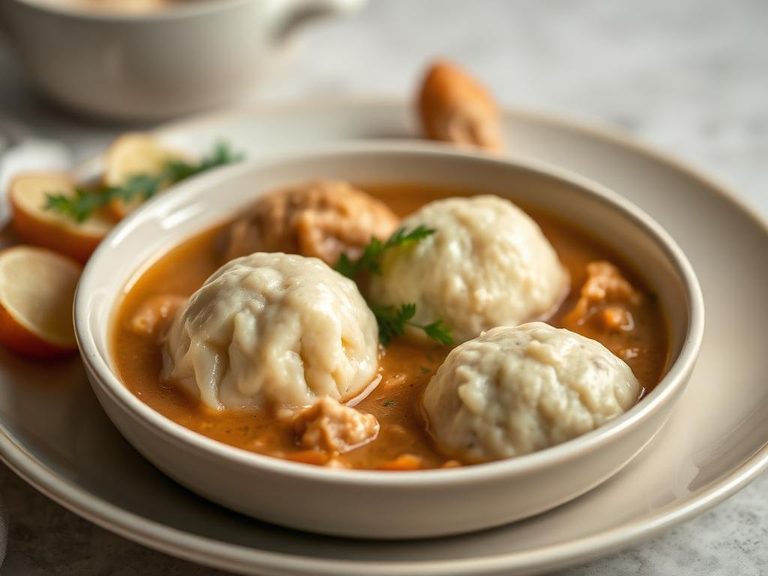
Stewing transforms chicken into a tender, fall-apart succulence, with the skin melting into a rich, savory sauce. This cooking method yields a deeply flavorful, high-protein, low-carb centerpiece where the meat's natural juices become the star. It's a comforting, rustic dish where the texture is soft and the taste is profoundly savory.
Calorie split: 39% protein · 0% carbs · 61% fat
↓ Full nutrition💚 Why it's loved
People adore stewed chicken for its comforting, melt-in-your-mouth texture and the way it absorbs the flavors of herbs, spices, and vegetables in the pot. It's a versatile, one-pot meal that feels like a hug, deeply rooted in home cooking traditions worldwide.
⚠️ Watch-outs & how to enjoy it better
The skin and cooking method can make this a higher-fat option (18.87g per 100g), which may be a consideration for those managing fat intake. To counteract, you can easily remove the skin before eating or skim excess fat from the cooking liquid. Stews can also be high in sodium depending on the recipe, so using low-sodium broth and seasoning with herbs, garlic, and citrus can help.
Key benefits
- Excellent source of complete protein (26.88g per 100g)
- Naturally very low in carbohydrates and sugars
- Provides essential B vitamins like niacin and B6
- Contains minerals such as selenium and phosphorus
- The stewing process helps retain moisture and flavor
🍽️ Popular dishes
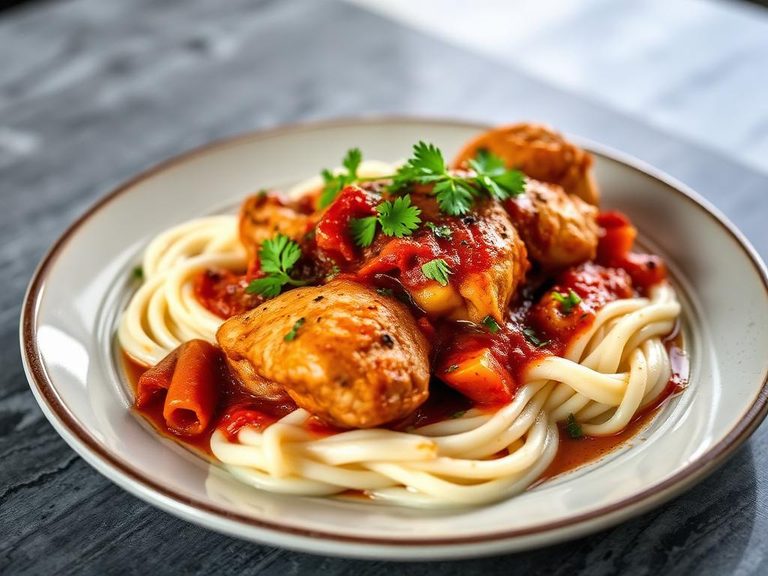
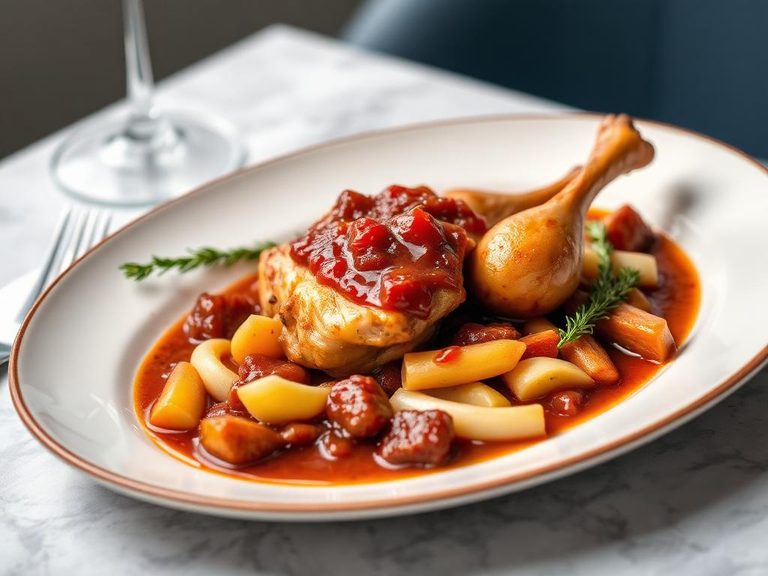
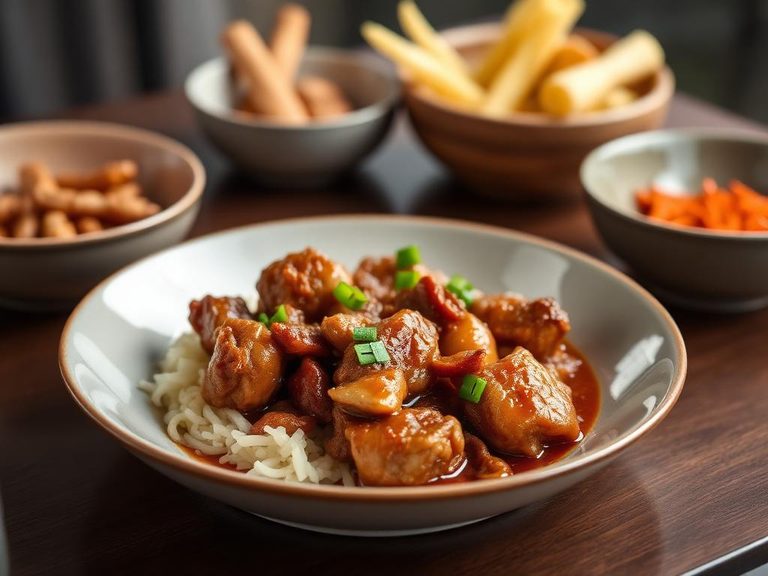
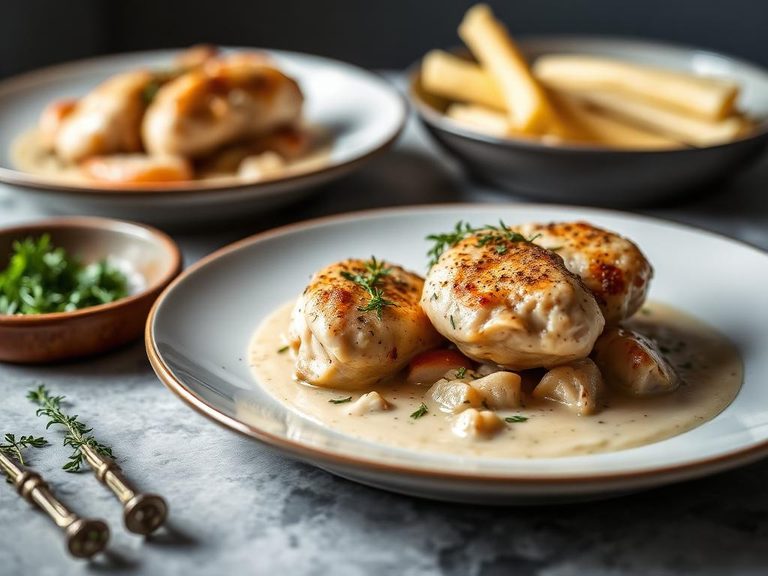
🌍 Where it's eaten
💡 Did you know?
The collagen in chicken skin and connective tissue breaks down into gelatin during the long, slow stew, which naturally thickens the sauce and gives it a silky, luxurious mouthfeel without needing flour or cream.
Full nutrition (USDA data · scales with serving)
| Water | 53.1 g |
| Energy | 285 kcal |
| Energy | 1192 kj |
| Protein | 26.9 g |
| Total lipid (fat) | 18.9 g |
| Ash | 1.2 g |
| Carbohydrate, by difference | 0.00 g |
| Fiber, total dietary | 0.00 g |
| Calcium, Ca | 13.0 mg |
| Iron, Fe | 1.4 mg |
| Magnesium, Mg | 20.0 mg |
| Phosphorus, P | 180 mg |
| Potassium, K | 182 mg |
| Sodium, Na | 73.0 mg |
| Zinc, Zn | 1.8 mg |
| Copper, Cu | 0.10 mg |
| Manganese, Mn | 0.02 mg |
| Selenium, Se | 19.7 ug |
| Vitamin C, total ascorbic acid | 0.00 mg |
| Thiamin | 0.09 mg |
| Riboflavin | 0.23 mg |
| Niacin | 5.8 mg |
| Pantothenic acid | 0.75 mg |
| Vitamin B-6 | 0.25 mg |
| Folate, total | 5.0 ug |
| Folic acid | 0.00 ug |
| Folate, food | 5.0 ug |
| Folate, DFE | 5.0 ug |
| Vitamin B-12 | 0.23 ug |
| Vitamin A, RAE | 39.0 ug |
| Retinol | 39.0 ug |
| Vitamin A, IU | 131 iu |
| Alcohol, ethyl | 0.00 g |
Fat & fatty acid profile (per 100g)
| Fatty acids, total saturated | 5.1 g |
| SFA 10:0 | 0.00 g |
| SFA 12:0 | 0.03 g |
| SFA 14:0 | 0.14 g |
| SFA 16:0 | 3.7 g |
| SFA 18:0 | 1.1 g |
| Fatty acids, total monounsaturated | 7.2 g |
| MUFA 16:1 | 1.0 g |
| MUFA 18:1 | 5.9 g |
| MUFA 20:1 | 0.17 g |
| MUFA 22:1 | 0.00 g |
| Fatty acids, total polyunsaturated | 4.2 g |
| PUFA 18:2 | 3.5 g |
| PUFA 18:3 | 0.16 g |
| PUFA 20:4 | 0.25 g |
| PUFA 20:5 n-3 (EPA) | 0.02 g |
| PUFA 22:5 n-3 (DPA) | 0.04 g |
| PUFA 22:6 n-3 (DHA) | 0.08 g |
| Cholesterol | 79.0 mg |
Amino acid profile (per 100g)
| Tryptophan | 0.30 g |
| Threonine | 1.1 g |
| Isoleucine | 1.3 g |
| Leucine | 2.0 g |
| Lysine | 2.2 g |
| Methionine | 0.72 g |
| Cystine | 0.36 g |
| Phenylalanine | 1.0 g |
| Tyrosine | 0.87 g |
| Valine | 1.3 g |
| Arginine | 1.7 g |
| Histidine | 0.79 g |
| Alanine | 1.6 g |
| Aspartic acid | 2.4 g |
| Glutamic acid | 3.9 g |
| Glycine | 1.7 g |
| Proline | 1.3 g |
| Serine | 0.95 g |
FAQ
What's the difference between stewing and braising chicken?
Stewing typically involves submerging smaller pieces of chicken in liquid and cooking them completely in the flavorful broth. Braising usually sears larger pieces (like whole legs) first, then finishes cooking them in a smaller amount of liquid, often with the meat only partially submerged.
How do I keep stewed chicken from getting tough?
The key is low and slow cooking. A gentle simmer, not a hard boil, allows the connective tissue to break down properly. Also, using bone-in, skin-on pieces like thighs or legs helps keep the meat moist and flavorful compared to lean breast meat.
Can I use chicken breast for stewing?
Yes, but with caution. Chicken breast is very lean and can dry out easily. If using breast, add it later in the cooking process or use a shorter stewing time. Thighs are generally more forgiving and flavorful for this method.
Nutrient density (calculated · NRF9.3)
Nutrient Rich Foods index: beneficial nutrients (protein, fiber, vitamins, minerals) minus saturated fat, added sugar & sodium, per 100 kcal.
NRF9.3 index — Fulgoni, Keast & Drewnowski, 2009. Computed from USDA nutrients.
Weight-loss friendliness (composite index)
Energy density 2.85 kcal/g · 38% calories from protein · 0.0 g fiber · 0.0 g sugar per 100 g.
Composite of energy density (Rolls et al., 1999), protein & fiber satiety, minus sugar. A calculated heuristic — ranks satiety-per-calorie, not a clinical measure.
Dietary load (calculated from USDA values)
Potential renal acid load. Positive = acid-forming, negative = alkaline-forming.
Sodium-to-potassium ratio: 0.40 (lower is better — aim for ≤ 1)
Sodium:potassium per WHO potassium guidance. Computed from USDA nutrients.