

Chicken, heart, all classes, cooked, simmered
Whole food · Poultry Products
Chicken hearts are small, dense, and surprisingly lean muscle organs with a rich, slightly gamey flavor and a satisfyingly firm, chewy texture. When simmered, they become tender while retaining a pleasant bite, offering a potent protein punch with minimal fat and virtually no carbohydrates. This makes them a standout choice for high-protein, low-carb diets.
Calorie split: 60% protein · 0% carbs · 40% fat
↓ Full nutrition💚 Why it's loved
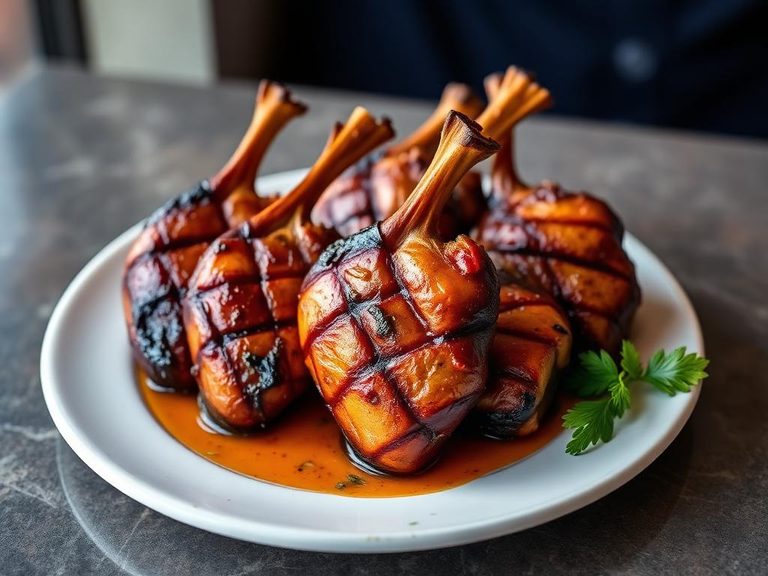
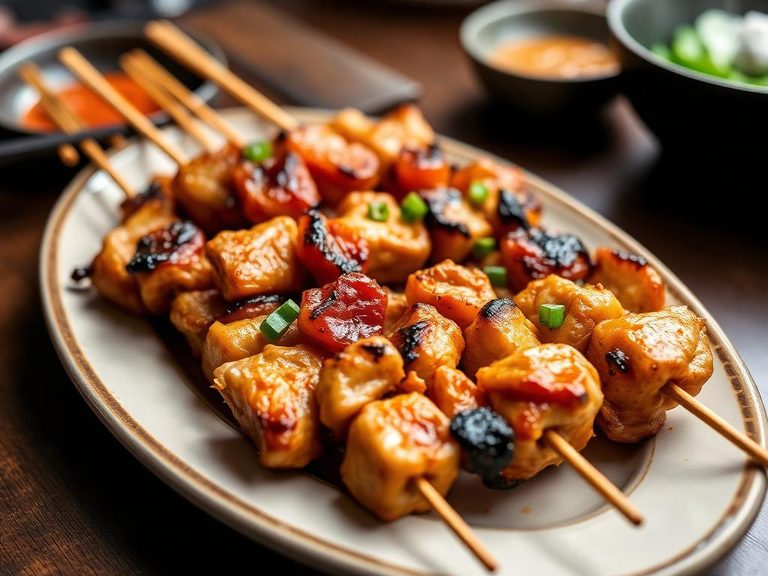
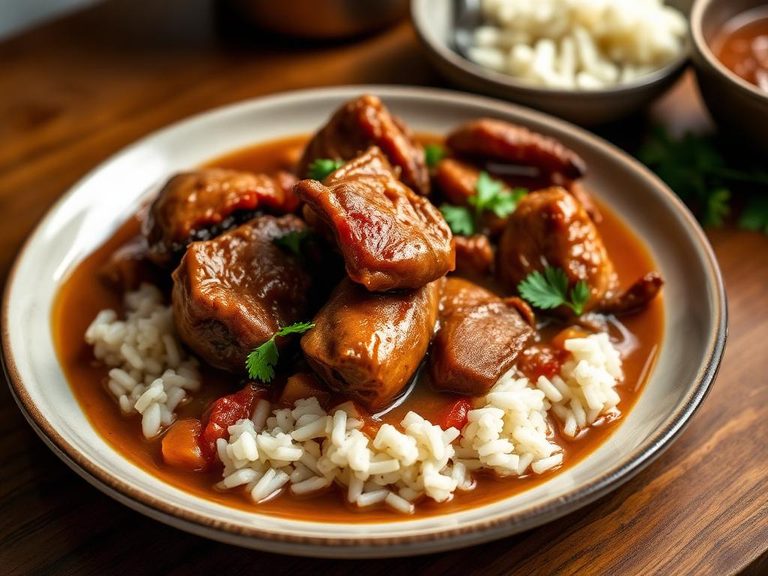
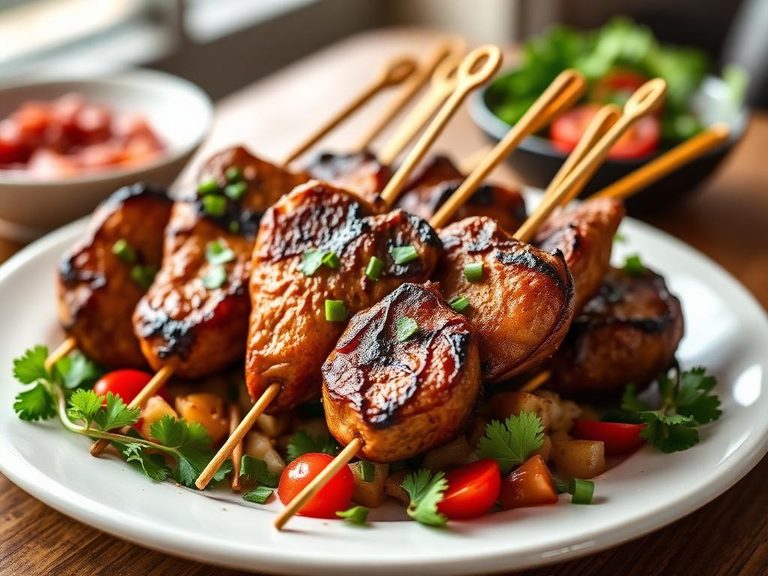
People love chicken hearts for their deep, savory umami flavor and uniquely satisfying texture that's more interesting than standard muscle meat. They are a versatile, budget-friendly protein that absorbs marinades beautifully and is central to many beloved street foods and comfort dishes worldwide.
⚠️ Watch-outs & how to enjoy it better
The primary caution is their high purine content, which can be problematic for individuals with gout or certain kidney conditions. The strong, mineral-like flavor can also be off-putting to some. To mitigate, those concerned should practice portion control and avoid pairing them with other high-purine foods like organ meats or certain seafood; simmering in broth or marinating in acidic ingredients like vinegar or citrus can also mellow the flavor.
Key benefits
- Excellent source of complete protein (26g per 100g)
- Very low in carbohydrates and sugar
- Rich in iron and B vitamins, especially B12
- Contains CoQ10, an antioxidant supporting cellular energy
- Provides zinc and selenium for immune function
🍽️ Popular dishes
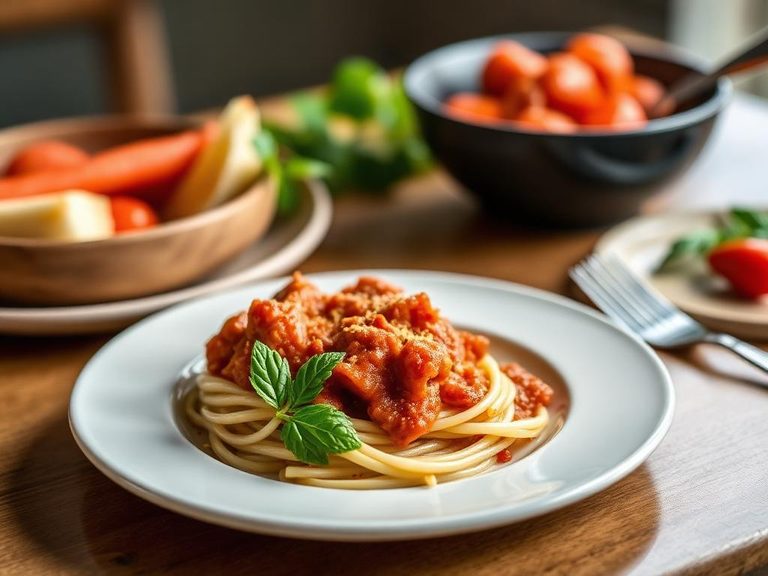
🌍 Where it's eaten
💡 Did you know?
Chicken hearts are one of the richest dietary sources of Coenzyme Q10 (CoQ10), a compound crucial for energy production in cells and often taken as a supplement for heart health.
Full nutrition (USDA data · scales with serving)
| Water | 64.8 g |
| Energy | 185 kcal |
| Energy | 774 kj |
| Protein | 26.4 g |
| Total lipid (fat) | 7.9 g |
| Ash | 0.72 g |
| Carbohydrate, by difference | 0.10 g |
| Fiber, total dietary | 0.00 g |
| Calcium, Ca | 19.0 mg |
| Iron, Fe | 9.0 mg |
| Magnesium, Mg | 20.0 mg |
| Phosphorus, P | 199 mg |
| Potassium, K | 132 mg |
| Sodium, Na | 48.0 mg |
| Zinc, Zn | 7.3 mg |
| Copper, Cu | 0.50 mg |
| Manganese, Mn | 0.11 mg |
| Selenium, Se | 8.0 ug |
| Vitamin C, total ascorbic acid | 1.8 mg |
| Thiamin | 0.07 mg |
| Riboflavin | 0.74 mg |
| Niacin | 2.8 mg |
| Pantothenic acid | 2.7 mg |
| Vitamin B-6 | 0.32 mg |
| Folate, total | 80.0 ug |
| Folic acid | 0.00 ug |
| Folate, food | 80.0 ug |
| Folate, DFE | 80.0 ug |
| Vitamin B-12 | 7.3 ug |
| Vitamin A, RAE | 8.0 ug |
| Retinol | 8.0 ug |
| Vitamin A, IU | 28.0 iu |
Fat & fatty acid profile (per 100g)
| Fatty acids, total saturated | 2.3 g |
| SFA 10:0 | 0.00 g |
| SFA 12:0 | 0.00 g |
| SFA 14:0 | 0.05 g |
| SFA 16:0 | 1.2 g |
| SFA 18:0 | 0.66 g |
| Fatty acids, total monounsaturated | 2.0 g |
| MUFA 16:1 | 0.33 g |
| MUFA 18:1 | 1.7 g |
| MUFA 20:1 | 0.00 g |
| MUFA 22:1 | 0.00 g |
| Fatty acids, total polyunsaturated | 2.3 g |
| PUFA 18:2 | 1.6 g |
| PUFA 18:3 | 0.06 g |
| PUFA 20:4 | 0.61 g |
| PUFA 20:5 n-3 (EPA) | 0.00 g |
| PUFA 22:5 n-3 (DPA) | 0.00 g |
| PUFA 22:6 n-3 (DHA) | 0.00 g |
| Cholesterol | 242 mg |
Amino acid profile (per 100g)
| Tryptophan | 0.34 g |
| Threonine | 1.2 g |
| Isoleucine | 1.4 g |
| Leucine | 2.3 g |
| Lysine | 2.2 g |
| Methionine | 0.64 g |
| Cystine | 0.36 g |
| Phenylalanine | 1.2 g |
| Tyrosine | 0.95 g |
| Valine | 1.5 g |
| Arginine | 1.7 g |
| Histidine | 0.69 g |
| Alanine | 1.7 g |
| Aspartic acid | 2.6 g |
| Glutamic acid | 3.9 g |
| Glycine | 1.5 g |
| Proline | 1.3 g |
| Serine | 1.1 g |
FAQ
How do I clean and prepare chicken hearts?
Rinse them under cold water. Trim any excess fat, gristle, or the top portion of the ventricles if desired. Some prefer to slice them in half lengthwise for faster, more even cooking and to remove any residual blood.
What's the best way to cook them so they're not tough?
The key is either quick, high-heat cooking (grilling, stir-frying) or long, slow simmering. Over medium heat, they become rubbery. For simmering, cook in a flavorful broth for at least 45-60 minutes until fork-tender.
Are chicken hearts a muscle meat or an organ meat?
They are considered organ meat (offal), specifically a muscular organ. Nutritionally, they share some characteristics with both muscle meats (high protein) and organ meats (rich in micronutrients like iron and B12).
Nutrient density (calculated · NRF9.3)
Nutrient Rich Foods index: beneficial nutrients (protein, fiber, vitamins, minerals) minus saturated fat, added sugar & sodium, per 100 kcal.
NRF9.3 index — Fulgoni, Keast & Drewnowski, 2009. Computed from USDA nutrients.
Weight-loss friendliness (composite index)
Energy density 1.85 kcal/g · 57% calories from protein · 0.0 g fiber · 0.0 g sugar per 100 g.
Composite of energy density (Rolls et al., 1999), protein & fiber satiety, minus sugar. A calculated heuristic — ranks satiety-per-calorie, not a clinical measure.
Dietary load (calculated from USDA values)
Potential renal acid load. Positive = acid-forming, negative = alkaline-forming.
Sodium-to-potassium ratio: 0.36 (lower is better — aim for ≤ 1)
Sodium:potassium per WHO potassium guidance. Computed from USDA nutrients.