

Chicken, broilers or fryers, leg, meat only, cooked, fried
Whole food · Poultry Products

Photo: Wikipedia
This is the dark meat of a chicken leg, cooked by frying until the exterior is golden and crisp while the interior remains juicy and flavorful. It is a protein powerhouse, delivering over 28 grams of protein per 100 grams with minimal carbohydrates. The frying process imparts a rich, savory taste and a satisfyingly tender texture that is distinct from leaner white meat.
Calorie split: 57% protein · 1% carbs · 42% fat
↓ Full nutrition💚 Why it's loved
People love it for its deep, savory flavor and succulent texture that holds up beautifully to frying, creating a crispy exterior and juicy interior. It is a globally beloved comfort food, celebrated for its versatility in everything from casual weeknight dinners to festive feasts.
⚠️ Watch-outs & how to enjoy it better
The frying process can significantly increase the calorie and fat content compared to other cooking methods, which may be a concern for those monitoring fat intake. It can also be high in sodium if seasoned heavily or prepared with salty sauces, and the skin (if included) is a source of saturated fat. To counteract this, opt for air-frying or pan-searing with minimal oil, use herbs and spices instead of salt for flavor, and remove the skin before eating to reduce fat. Pairing it with fiber-rich vegetables can help balance the meal.
Key benefits
- Excellent source of high-quality protein for muscle maintenance and satiety.
- Very low in carbohydrates, making it suitable for low-carb and ketogenic diets.
- Rich in essential minerals like iron and zinc from the dark meat.
- Provides a good source of B vitamins, particularly niacin and B6.
- Naturally gluten-free if prepared without breading or flour coatings.
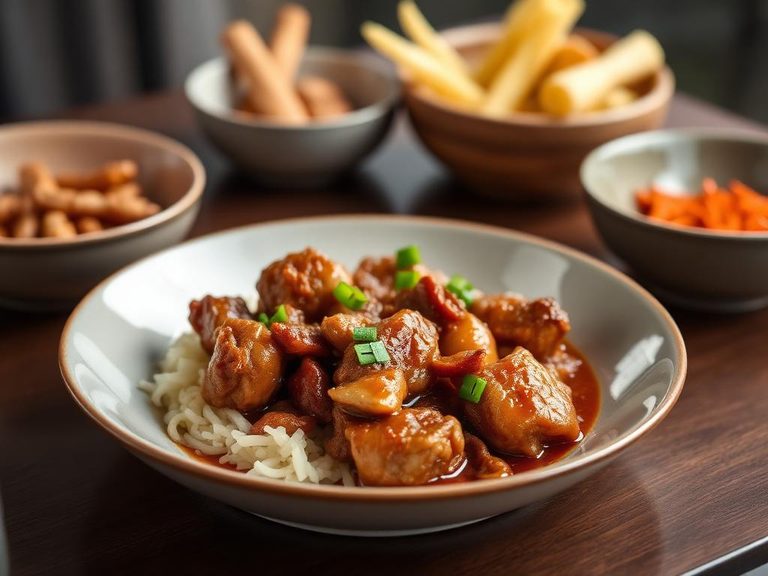
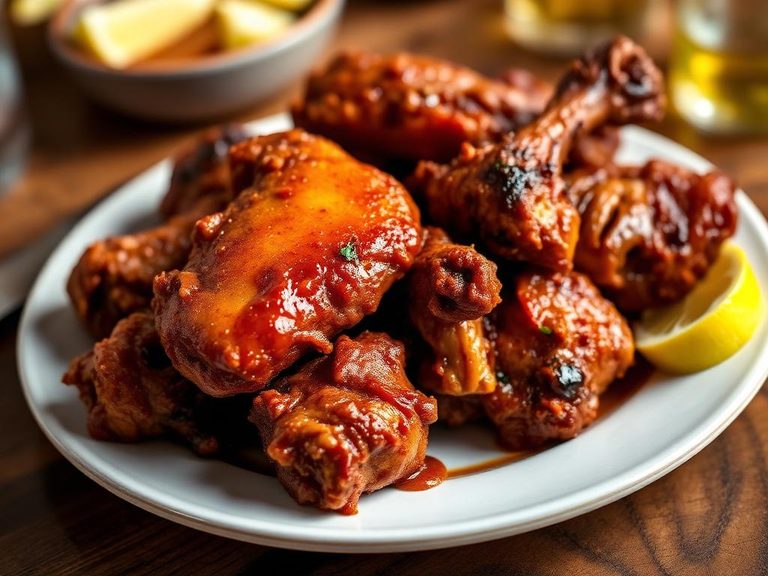
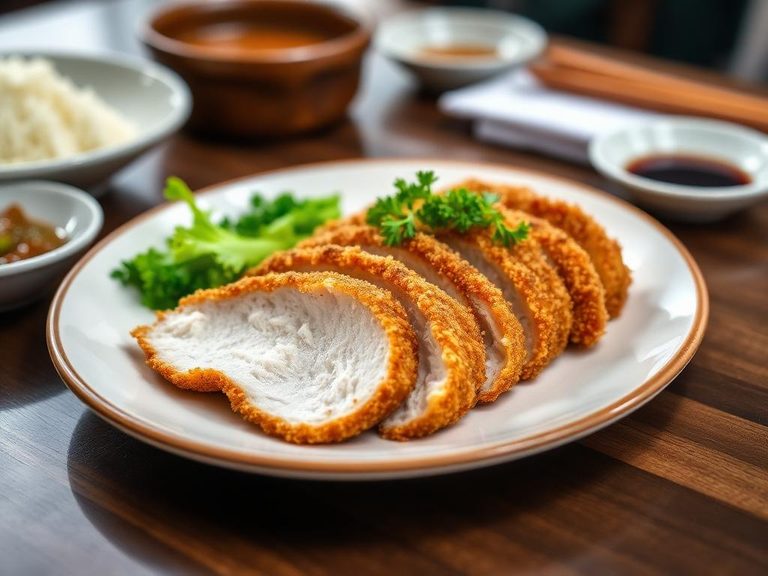
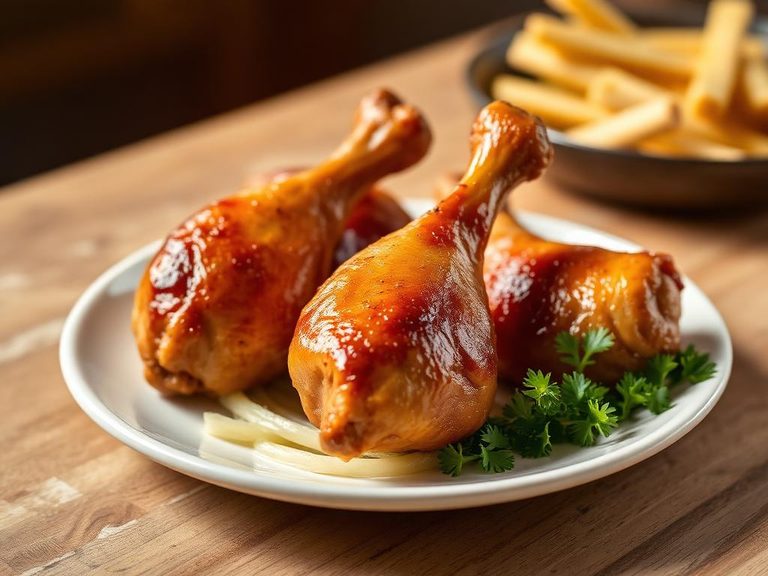
🍽️ Popular dishes


🌍 Where it's eaten
💡 Did you know?
Dark meat like chicken legs contains more myoglobin, a protein that stores oxygen in muscle cells, which is why it has a darker color and a richer, more robust flavor than white meat.
Full nutrition (USDA data · scales with serving)
| Water | 60.6 g |
| Energy | 208 kcal |
| Energy | 870 kj |
| Protein | 28.4 g |
| Total lipid (fat) | 9.3 g |
| Ash | 1.1 g |
| Carbohydrate, by difference | 0.65 g |
| Fiber, total dietary | 0.00 g |
| Calcium, Ca | 13.0 mg |
| Iron, Fe | 1.4 mg |
| Magnesium, Mg | 25.0 mg |
| Phosphorus, P | 193 mg |
| Potassium, K | 254 mg |
| Sodium, Na | 96.0 mg |
| Zinc, Zn | 3.0 mg |
| Copper, Cu | 0.09 mg |
| Manganese, Mn | 0.03 mg |
| Selenium, Se | 18.8 ug |
| Vitamin C, total ascorbic acid | 0.00 mg |
| Thiamin | 0.08 mg |
| Riboflavin | 0.25 mg |
| Niacin | 6.7 mg |
| Pantothenic acid | 1.3 mg |
| Vitamin B-6 | 0.39 mg |
| Folate, total | 9.0 ug |
| Folic acid | 0.00 ug |
| Folate, food | 9.0 ug |
| Folate, DFE | 9.0 ug |
| Vitamin B-12 | 0.34 ug |
| Vitamin A, RAE | 20.0 ug |
| Retinol | 20.0 ug |
| Vitamin A, IU | 66.0 iu |
Fat & fatty acid profile (per 100g)
| Fatty acids, total saturated | 2.5 g |
| SFA 10:0 | 0.00 g |
| SFA 12:0 | 0.03 g |
| SFA 14:0 | 0.06 g |
| SFA 16:0 | 1.7 g |
| SFA 18:0 | 0.65 g |
| Fatty acids, total monounsaturated | 3.4 g |
| MUFA 16:1 | 0.40 g |
| MUFA 18:1 | 3.0 g |
| MUFA 20:1 | 0.04 g |
| MUFA 22:1 | 0.00 g |
| Fatty acids, total polyunsaturated | 2.2 g |
| PUFA 18:2 | 1.9 g |
| PUFA 18:3 | 0.09 g |
| PUFA 20:4 | 0.13 g |
| PUFA 20:5 n-3 (EPA) | 0.01 g |
| PUFA 22:5 n-3 (DPA) | 0.03 g |
| PUFA 22:6 n-3 (DHA) | 0.05 g |
| Cholesterol | 99.0 mg |
Amino acid profile (per 100g)
| Tryptophan | 0.33 g |
| Threonine | 1.2 g |
| Isoleucine | 1.5 g |
| Leucine | 2.1 g |
| Lysine | 2.4 g |
| Methionine | 0.78 g |
| Cystine | 0.36 g |
| Phenylalanine | 1.1 g |
| Tyrosine | 0.96 g |
| Valine | 1.4 g |
| Arginine | 1.7 g |
| Histidine | 0.88 g |
| Alanine | 1.5 g |
| Aspartic acid | 2.5 g |
| Glutamic acid | 4.3 g |
| Glycine | 1.4 g |
| Proline | 1.2 g |
| Serine | 0.98 g |
FAQ
Is fried chicken leg meat healthy?
It can be part of a healthy diet in moderation. It is high in protein and nutrients but also in fat and calories due to frying. Choosing healthier cooking methods like baking or air-frying can reduce the fat content significantly.
How does frying affect the nutritional value?
Frying adds fat and calories, especially if the chicken is breaded or deep-fried. It can also reduce some heat-sensitive vitamins. However, it retains most of the protein, minerals, and B vitamins.
Can I eat this if I'm on a low-carb diet?
Yes, the meat itself is very low in carbs (0.65g per 100g). However, be cautious of breading or sugary sauces, which can add significant carbs. Opt for unbreaded, simply seasoned fried chicken.
Nutrient density (calculated · NRF9.3)
Nutrient Rich Foods index: beneficial nutrients (protein, fiber, vitamins, minerals) minus saturated fat, added sugar & sodium, per 100 kcal.
NRF9.3 index — Fulgoni, Keast & Drewnowski, 2009. Computed from USDA nutrients.
Weight-loss friendliness (composite index)
Energy density 2.08 kcal/g · 55% calories from protein · 0.0 g fiber · 0.0 g sugar per 100 g.
Composite of energy density (Rolls et al., 1999), protein & fiber satiety, minus sugar. A calculated heuristic — ranks satiety-per-calorie, not a clinical measure.
Dietary load (calculated from USDA values)
Potential renal acid load. Positive = acid-forming, negative = alkaline-forming.
Sodium-to-potassium ratio: 0.38 (lower is better — aim for ≤ 1)
Sodium:potassium per WHO potassium guidance. Computed from USDA nutrients.