

Cereals ready-to-eat, POST GREAT GRAINS Cranberry Almond Crunch
Whole food · Breakfast Cereals

Photo: Wikipedia
POST GREAT GRAINS Cranberry Almond Crunch is a crunchy, toasted whole-grain cereal featuring clusters of oats, wheat, and barley, studded with tart dried cranberries and sliced almonds. It delivers a satisfying mix of textures—chewy fruit, crisp nuts, and hearty grains—with a balanced sweet-tart flavor. Notably, it provides a substantial 11.1 grams of fiber per 100 grams, supporting digestive health.
Calorie split: 9% protein · 78% carbs · 13% fat
↓ Full nutrition💚 Why it's loved
People love it for the delightful textural contrast between the crunchy grain clusters, chewy cranberries, and sliced almonds, creating a satisfying eating experience. Its versatility makes it a staple for quick breakfasts, yogurt toppings, or a standalone snack.
⚠️ Watch-outs & how to enjoy it better
The 25.5g of sugar per 100g (from added sugars and cranberries) can cause blood-sugar spikes, making it less ideal for those managing diabetes. As a processed cereal, it may contain higher sodium levels. To counteract, pair it with a source of protein and fat (like Greek yogurt or milk) to slow sugar absorption, and practice portion control by measuring a single serving.
Key benefits
- High in dietary fiber (11.1g per 100g)
- Good source of plant-based protein (8.9g per 100g)
- Contains whole grains like oats, wheat, and barley
- Provides healthy fats from almonds
- Convenient, no-cook breakfast or snack option
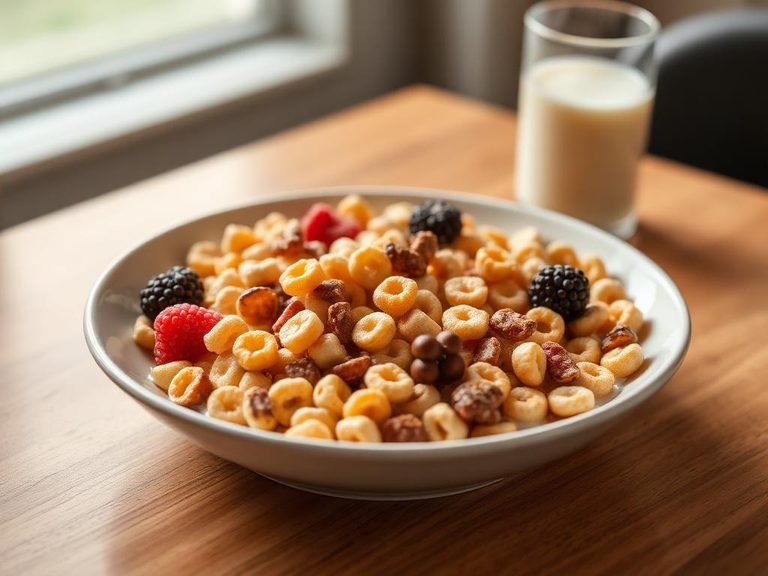
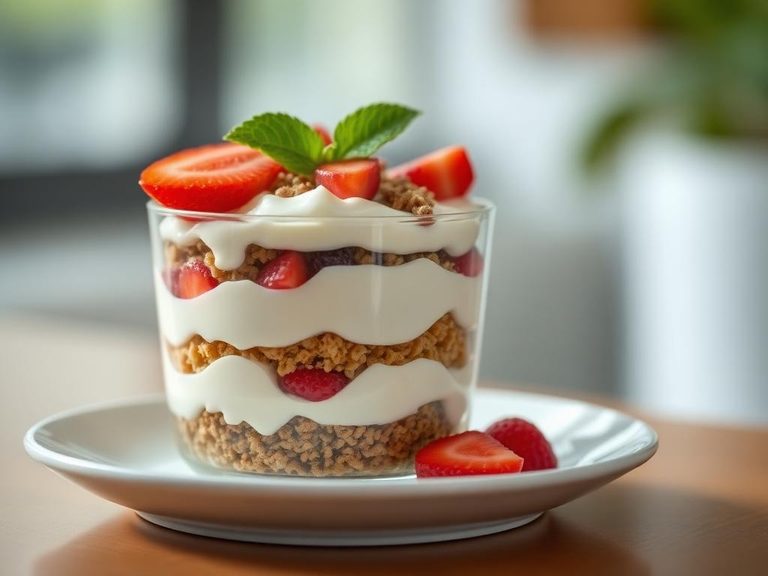
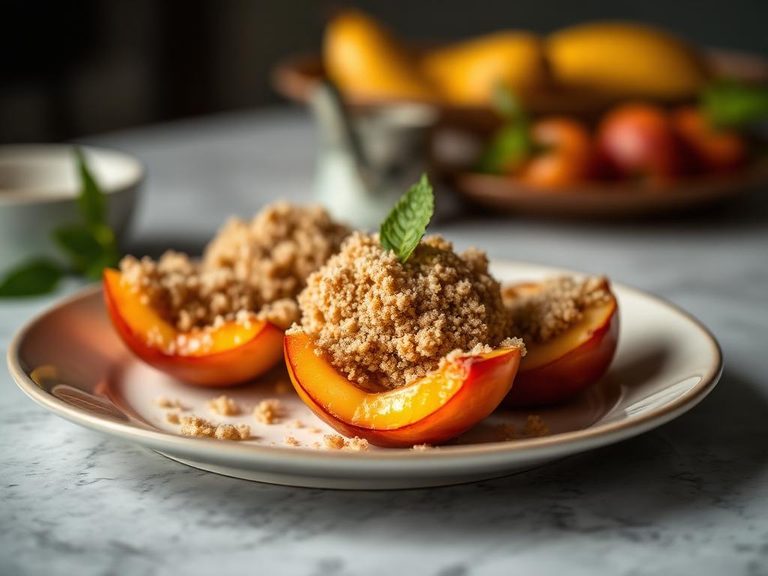
🍽️ Popular dishes
🌍 Where it's eaten
💡 Did you know?
The 'Great Grains' name is a direct nod to the inclusion of multiple whole grains in a single bowl, a marketing strategy popularized in the 1980s to highlight nutritional diversity.
Full nutrition (USDA data · scales with serving)
| Water | 6.2 g |
| Energy | 384 kcal |
| Energy | 1607 kj |
| Protein | 8.9 g |
| Total lipid (fat) | 5.9 g |
| Ash | 2.4 g |
| Carbohydrate, by difference | 76.6 g |
| Fiber, total dietary | 11.1 g |
| Total Sugars | 25.5 g |
| Calcium, Ca | 40.0 mg |
| Iron, Fe | 3.8 mg |
| Magnesium, Mg | 89.0 mg |
| Phosphorus, P | 255 mg |
| Potassium, K | 308 mg |
| Sodium, Na | 214 mg |
| Zinc, Zn | 3.1 mg |
| Copper, Cu | 0.30 mg |
| Selenium, Se | 37.0 ug |
| Vitamin C, total ascorbic acid | 25.0 mg |
| Thiamin | 0.80 mg |
| Riboflavin | 0.90 mg |
| Niacin | 10.4 mg |
| Vitamin B-6 | 1.0 mg |
| Folate, total | 208 ug |
| Folic acid | 189 ug |
| Folate, food | 19.0 ug |
| Folate, DFE | 341 ug |
| Choline, total | 26.9 mg |
| Vitamin B-12 | 3.1 ug |
| Vitamin B-12, added | 3.1 ug |
| Vitamin A, RAE | 467 ug |
| Retinol | 466 ug |
| Carotene, beta | 5.0 ug |
| Carotene, alpha | 0.00 ug |
| Cryptoxanthin, beta | 0.00 ug |
| Vitamin A, IU | 1563 iu |
| Lycopene | 0.00 ug |
| Lutein + zeaxanthin | 127 ug |
| Vitamin E (alpha-tocopherol) | 5.6 mg |
| Vitamin E, added | 3.0 mg |
| Vitamin D (D2 + D3), International Units | 83.0 iu |
| Vitamin D (D2 + D3) | 2.1 ug |
| Vitamin D3 (cholecalciferol) | 2.1 ug |
| Vitamin K (phylloquinone) | 2.0 ug |
| Alcohol, ethyl | 0.00 g |
| Caffeine | 0.00 mg |
| Theobromine | 0.00 mg |
Fat & fatty acid profile (per 100g)
| Fatty acids, total saturated | 0.80 g |
| SFA 4:0 | 0.00 g |
| SFA 6:0 | 0.00 g |
| SFA 8:0 | 0.01 g |
| SFA 10:0 | 0.01 g |
| SFA 12:0 | 0.07 g |
| SFA 13:0 | 0.00 g |
| SFA 14:0 | 0.03 g |
| SFA 15:0 | 0.00 g |
| SFA 16:0 | 0.57 g |
| SFA 17:0 | 0.00 g |
| SFA 18:0 | 0.10 g |
| Fatty acids, total monounsaturated | 3.0 g |
| MUFA 16:1 | 0.02 g |
| MUFA 18:1 | 3.0 g |
| MUFA 20:1 | 0.01 g |
| MUFA 22:1 | 0.00 g |
| Fatty acids, total polyunsaturated | 1.7 g |
| PUFA 18:2 | 1.6 g |
| PUFA 18:3 | 0.07 g |
| PUFA 18:4 | 0.00 g |
| PUFA 20:2 n-6 c,c | 0.00 g |
| PUFA 20:3 | 0.00 g |
| PUFA 20:4 | 0.00 g |
| PUFA 20:5 n-3 (EPA) | 0.00 g |
| PUFA 21:5 | 0.00 g |
| PUFA 22:4 | 0.00 g |
| PUFA 22:5 n-3 (DPA) | 0.00 g |
| PUFA 22:6 n-3 (DHA) | 0.00 g |
| Fatty acids, total trans | 0.00 g |
| Cholesterol | 0.00 mg |
FAQ
Is this cereal gluten-free?
No. It contains whole grains like wheat and barley, which are sources of gluten and are not suitable for individuals with celiac disease or gluten sensitivity.
How does the sugar content compare to other cereals?
At 25.5g per 100g, its sugar content is on the higher side, partly from the dried cranberries. It's important to check serving sizes, as a typical 30-40g serving would contain around 7.5-10g of sugar.
Can I eat this as a snack straight from the box?
Yes, its crunchy clusters make it a popular dry snack. However, be mindful of portion size to avoid overconsumption of calories and sugar.
Nutrient density (calculated · NRF9.3)
Nutrient Rich Foods index: beneficial nutrients (protein, fiber, vitamins, minerals) minus saturated fat, added sugar & sodium, per 100 kcal.
NRF9.3 index — Fulgoni, Keast & Drewnowski, 2009. Computed from USDA nutrients.
Weight-loss friendliness (composite index)
Energy density 3.84 kcal/g · 9% calories from protein · 11.1 g fiber · 25.5 g sugar per 100 g.
Composite of energy density (Rolls et al., 1999), protein & fiber satiety, minus sugar. A calculated heuristic — ranks satiety-per-calorie, not a clinical measure.
Dietary load (calculated from USDA values)
Potential renal acid load. Positive = acid-forming, negative = alkaline-forming.
Sodium-to-potassium ratio: 0.69 (lower is better — aim for ≤ 1)
Sodium:potassium per WHO potassium guidance. Computed from USDA nutrients.