

Cake, chocolate, prepared from recipe without frosting
Whole food · Baked Products

Photo: Wikipedia
This is a dense, unfrosted chocolate cake, baked from a classic recipe. It offers a deep, rich cocoa flavor with a moist, tender crumb, providing a satisfying chocolate experience without the extra sweetness of frosting. Nutritionally, it's a significant source of energy, primarily from carbohydrates and fats.
Calorie split: 6% protein · 58% carbs · 37% fat
↓ Full nutrition💚 Why it's loved
People love its pure, unadulterated chocolate flavor and comforting, familiar texture. It's a versatile canvas, perfect on its own or as a base for fruit, a dusting of powdered sugar, or a scoop of ice cream.
⚠️ Watch-outs & how to enjoy it better
Its high carbohydrate content can cause rapid blood-sugar spikes, making it challenging for diabetics or those managing insulin levels. To counteract this, pair a small slice with a source of protein (like Greek yogurt) or healthy fat (like nuts) to slow digestion. Be mindful of portion size, as it is calorie-dense.
Key benefits
- Provides quick energy from carbohydrates
- Contains cocoa, a source of flavonoid antioxidants
- Offers a small amount of plant-based protein
- Can be a base for healthier, homemade modifications
- Satisfies chocolate cravings in a portion-controlled way
🍽️ Popular dishes
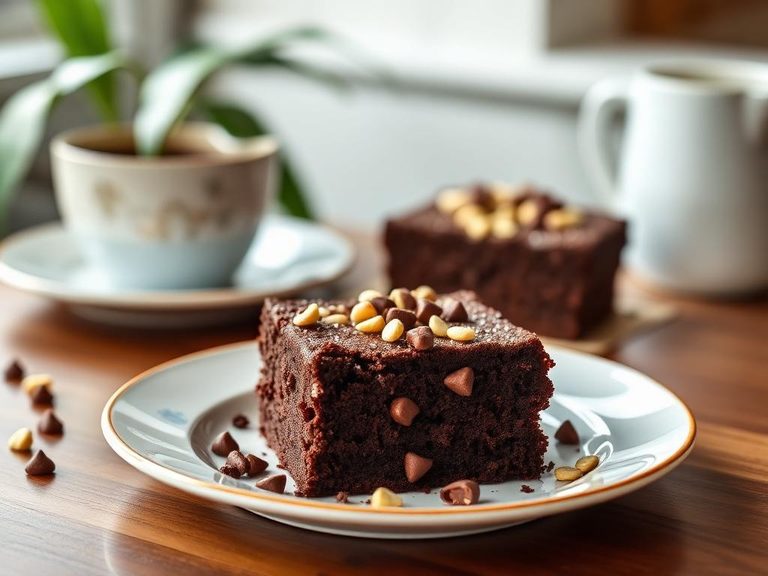

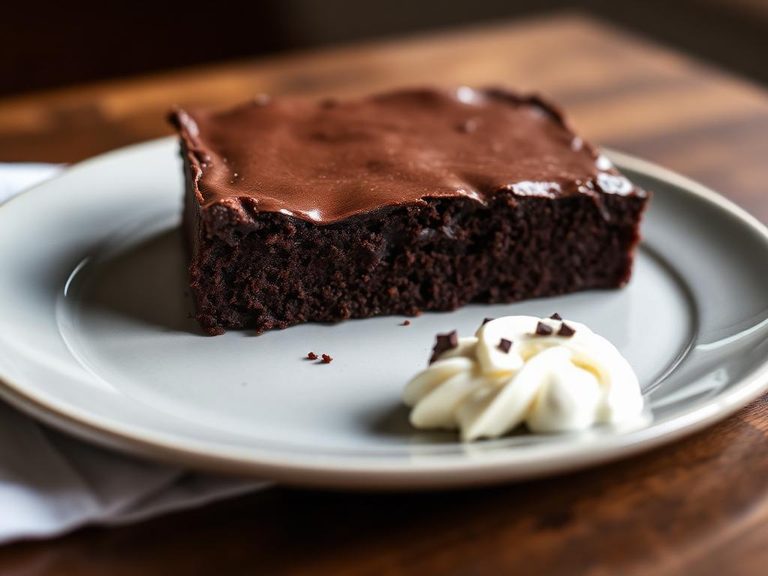
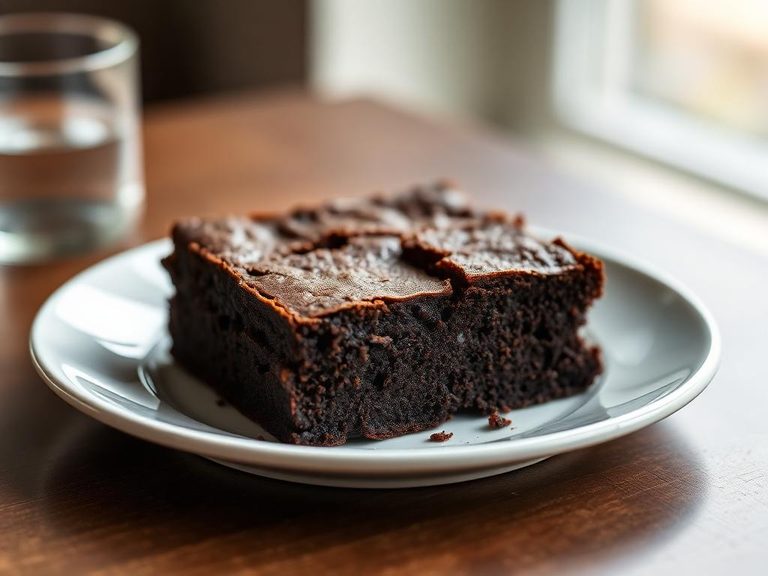
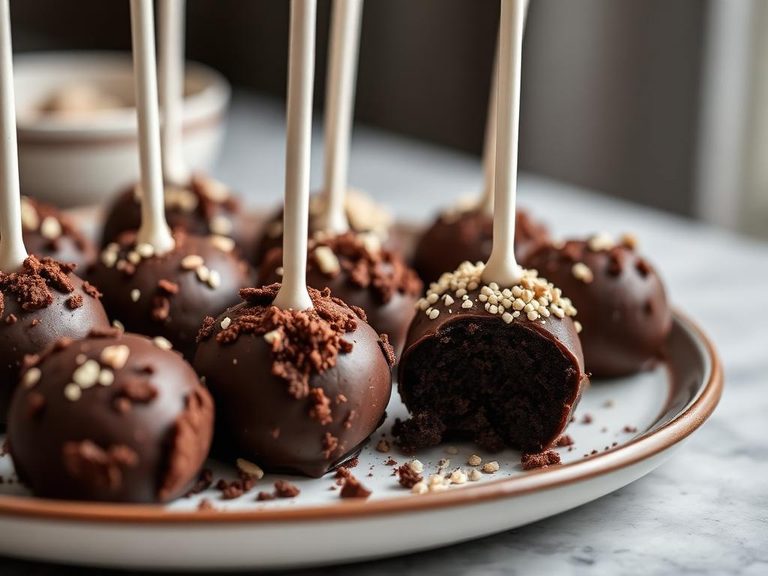
🌍 Where it's eaten
💡 Did you know?
The oldest known chocolate cake recipe, dating to 1879, was for a 'Devil's Food Cake' and used baking soda to create a darker, redder crumb, contrasting with the lighter 'White Cake.'
Full nutrition (USDA data · scales with serving)
| Water | 24.4 g |
| Energy | 371 kcal |
| Energy | 1551 kj |
| Protein | 5.3 g |
| Total lipid (fat) | 15.1 g |
| Ash | 1.3 g |
| Carbohydrate, by difference | 53.4 g |
| Fiber, total dietary | 1.6 g |
| Calcium, Ca | 60.0 mg |
| Iron, Fe | 1.6 mg |
| Magnesium, Mg | 32.0 mg |
| Phosphorus, P | 106 mg |
| Potassium, K | 140 mg |
| Sodium, Na | 315 mg |
| Zinc, Zn | 0.69 mg |
| Copper, Cu | 0.21 mg |
| Manganese, Mn | 0.28 mg |
| Selenium, Se | 11.9 ug |
| Vitamin C, total ascorbic acid | 0.20 mg |
| Thiamin | 0.14 mg |
| Riboflavin | 0.21 mg |
| Niacin | 1.1 mg |
| Pantothenic acid | 0.30 mg |
| Vitamin B-6 | 0.04 mg |
| Folate, total | 27.0 ug |
| Folic acid | 17.0 ug |
| Folate, food | 10.0 ug |
| Folate, DFE | 39.0 ug |
| Choline, total | 128 mg |
| Betaine | 47.7 mg |
| Vitamin B-12 | 0.16 ug |
| Vitamin A, IU | 140 iu |
| Alcohol, ethyl | 0.00 g |
Fat & fatty acid profile (per 100g)
| Fatty acids, total saturated | 5.4 g |
| SFA 4:0 | 0.02 g |
| SFA 6:0 | 0.01 g |
| SFA 8:0 | 0.01 g |
| SFA 10:0 | 0.01 g |
| SFA 12:0 | 0.01 g |
| SFA 14:0 | 0.10 g |
| SFA 16:0 | 2.8 g |
| SFA 18:0 | 2.4 g |
| Fatty acids, total monounsaturated | 6.0 g |
| MUFA 16:1 | 0.05 g |
| MUFA 18:1 | 6.0 g |
| MUFA 20:1 | 0.00 g |
| MUFA 22:1 | 0.00 g |
| Fatty acids, total polyunsaturated | 2.8 g |
| PUFA 18:2 | 2.6 g |
| PUFA 18:3 | 0.16 g |
| PUFA 18:4 | 0.00 g |
| PUFA 20:4 | 0.02 g |
| PUFA 20:5 n-3 (EPA) | 0.00 g |
| PUFA 22:5 n-3 (DPA) | 0.00 g |
| PUFA 22:6 n-3 (DHA) | 0.01 g |
| Cholesterol | 58.0 mg |
Amino acid profile (per 100g)
| Tryptophan | 0.07 g |
| Threonine | 0.20 g |
| Isoleucine | 0.24 g |
| Leucine | 0.41 g |
| Lysine | 0.27 g |
| Methionine | 0.12 g |
| Cystine | 0.10 g |
| Phenylalanine | 0.27 g |
| Tyrosine | 0.20 g |
| Valine | 0.28 g |
| Arginine | 0.25 g |
| Histidine | 0.12 g |
| Alanine | 0.22 g |
| Aspartic acid | 0.39 g |
| Glutamic acid | 1.2 g |
| Glycine | 0.18 g |
| Proline | 0.41 g |
| Serine | 0.30 g |
FAQ
How is this different from a brownie?
While similar in ingredients, a brownie is typically much denser, fudgier, and chewier, often with a crackly top. This cake is lighter, taller, and has a more traditional, tender cake crumb.
Can I freeze this cake?
Yes, unfrosted chocolate cake freezes exceptionally well. Wrap individual slices or the whole cake tightly in plastic wrap and foil, then freeze for up to 3 months. Thaw at room temperature.
Why is there 0g of sugar listed if it's a cake?
The nutrition data likely refers to *added* sugars. The carbohydrates come from the flour and any sweeteners used in the recipe (like granulated sugar), which are counted as total carbs, not separate 'sugars' in this specific labeling format.
Nutrient density (calculated · NRF9.3)
Nutrient Rich Foods index: beneficial nutrients (protein, fiber, vitamins, minerals) minus saturated fat, added sugar & sodium, per 100 kcal.
NRF9.3 index — Fulgoni, Keast & Drewnowski, 2009. Computed from USDA nutrients.
Weight-loss friendliness (composite index)
Energy density 3.71 kcal/g · 6% calories from protein · 1.6 g fiber · 0.0 g sugar per 100 g.
Composite of energy density (Rolls et al., 1999), protein & fiber satiety, minus sugar. A calculated heuristic — ranks satiety-per-calorie, not a clinical measure.
Dietary load (calculated from USDA values)
Potential renal acid load. Positive = acid-forming, negative = alkaline-forming.
Sodium-to-potassium ratio: 2.25 (lower is better — aim for ≤ 1)
Sodium:potassium per WHO potassium guidance. Computed from USDA nutrients.