

Sweet potato, canned, mashed
Whole food · Vegetables and Vegetable Products

Photo: Wikipedia
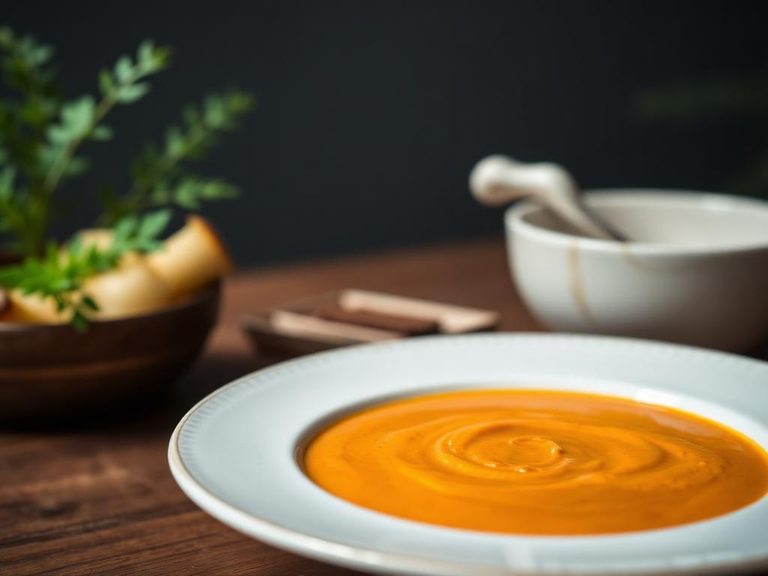
Canned mashed sweet potato is a velvety, ready-to-use purée with a deep, caramel-like sweetness and a smooth, dense texture. It offers a quick, nutrient-dense option, providing a good source of fiber and vitamin A (as beta-carotene) with minimal fat.
Calorie split: 8% protein · 91% carbs · 2% fat
↓ Full nutrition💚 Why it's loved
People love it for its comforting, sweet flavor and incredibly smooth texture, which makes it a versatile base for both savory and sweet dishes. It's a staple in many cultures, often associated with home cooking and holiday traditions like Thanksgiving.
⚠️ Watch-outs & how to enjoy it better
The high natural sugar content (5.45g per 100g) can cause blood-sugar spikes, especially for those managing diabetes. To counteract this, pair it with protein (like nuts or beans) and healthy fats (like olive oil or avocado) to slow digestion, and practice portion control.
Key benefits
- Rich in beta-carotene, a precursor to vitamin A
- Good source of dietary fiber
- Low in fat and cholesterol
- Convenient, shelf-stable, and ready to eat
- Contains natural sugars and complex carbohydrates
🍽️ Popular dishes
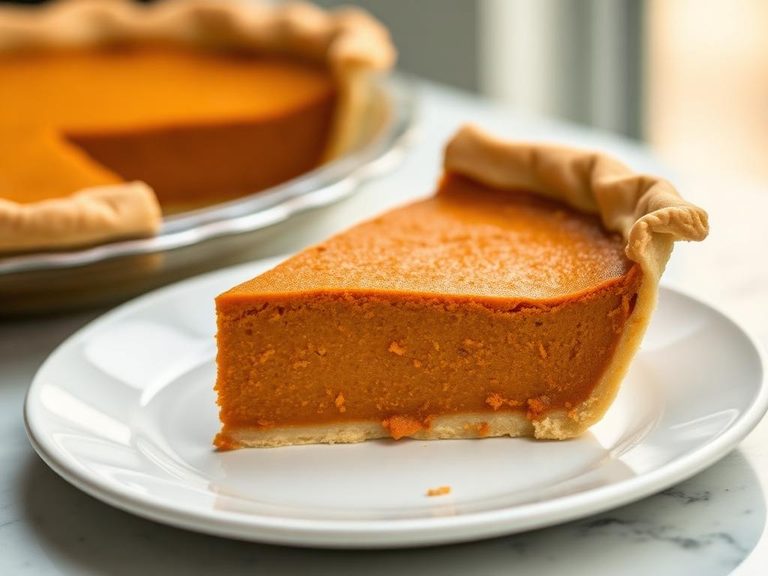
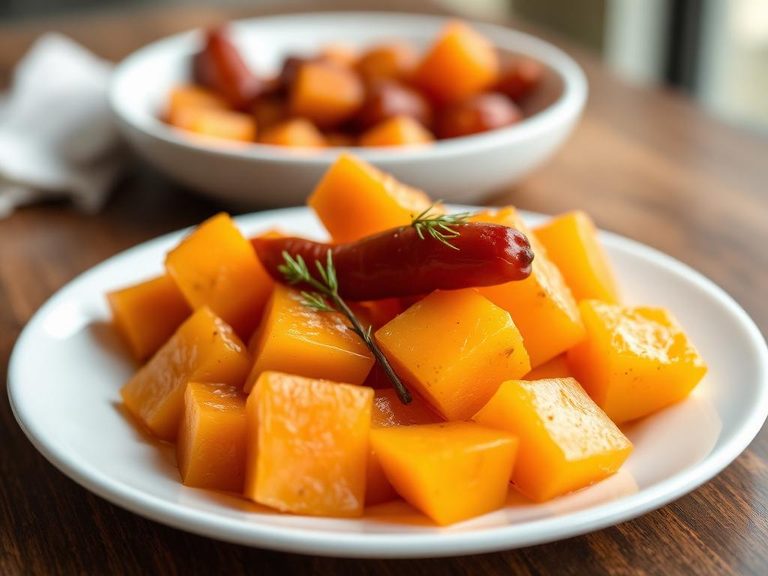
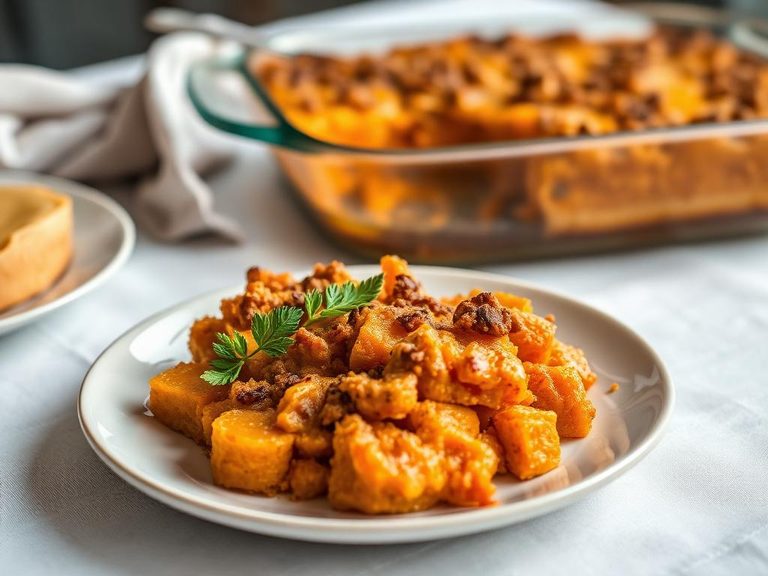
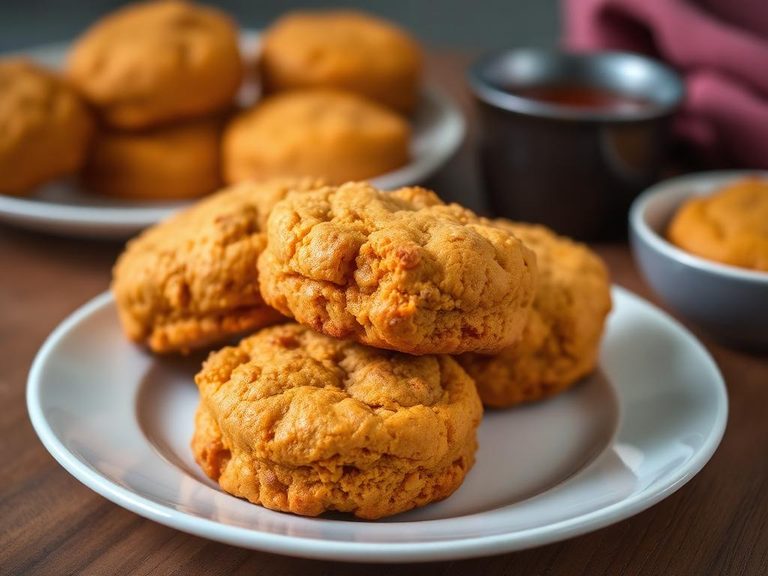
🌍 Where it's eaten
💡 Did you know?
The vibrant orange color of canned mashed sweet potato comes from beta-carotene, which your body converts to vitamin A; a single 100g serving can provide over 200% of your daily recommended intake.
Full nutrition (USDA data · scales with serving)
| Water | 73.9 g |
| Energy | 101 kcal |
| Energy | 421 kj |
| Protein | 2.0 g |
| Total lipid (fat) | 0.20 g |
| Ash | 0.75 g |
| Carbohydrate, by difference | 23.2 g |
| Fiber, total dietary | 1.7 g |
| Total Sugars | 5.5 g |
| Calcium, Ca | 30.0 mg |
| Iron, Fe | 1.3 mg |
| Magnesium, Mg | 24.0 mg |
| Phosphorus, P | 52.0 mg |
| Potassium, K | 210 mg |
| Sodium, Na | 75.0 mg |
| Zinc, Zn | 0.21 mg |
| Copper, Cu | 0.28 mg |
| Manganese, Mn | 0.99 mg |
| Selenium, Se | 0.80 ug |
| Vitamin C, total ascorbic acid | 5.2 mg |
| Thiamin | 0.03 mg |
| Riboflavin | 0.09 mg |
| Niacin | 0.95 mg |
| Pantothenic acid | 0.51 mg |
| Vitamin B-6 | 0.23 mg |
| Folate, total | 11.0 ug |
| Folic acid | 0.00 ug |
| Folate, food | 11.0 ug |
| Folate, DFE | 11.0 ug |
| Vitamin B-12 | 0.00 ug |
| Vitamin A, RAE | 435 ug |
| Retinol | 0.00 ug |
| Carotene, beta | 5219 ug |
| Carotene, alpha | 0.00 ug |
| Cryptoxanthin, beta | 0.00 ug |
| Vitamin A, IU | 8699 iu |
| Lycopene | 0.00 ug |
| Lutein + zeaxanthin | 0.00 ug |
| Vitamin E (alpha-tocopherol) | 1.1 mg |
| Vitamin D (D2 + D3), International Units | 0.00 iu |
| Vitamin D (D2 + D3) | 0.00 ug |
| Vitamin K (phylloquinone) | 2.4 ug |
| Alcohol, ethyl | 0.00 g |
| Caffeine | 0.00 mg |
| Theobromine | 0.00 mg |
Fat & fatty acid profile (per 100g)
| Fatty acids, total saturated | 0.04 g |
| SFA 16:0 | 0.04 g |
| SFA 18:0 | 0.00 g |
| Fatty acids, total monounsaturated | 0.01 g |
| MUFA 18:1 | 0.01 g |
| Fatty acids, total polyunsaturated | 0.08 g |
| PUFA 18:2 | 0.07 g |
| PUFA 18:3 | 0.01 g |
| Fatty acids, total trans | 0.00 g |
| Cholesterol | 0.00 mg |
Amino acid profile (per 100g)
| Tryptophan | 0.02 g |
| Threonine | 0.10 g |
| Isoleucine | 0.10 g |
| Leucine | 0.14 g |
| Lysine | 0.10 g |
| Methionine | 0.05 g |
| Cystine | 0.02 g |
| Phenylalanine | 0.12 g |
| Tyrosine | 0.08 g |
| Valine | 0.13 g |
| Arginine | 0.09 g |
| Histidine | 0.04 g |
| Alanine | 0.11 g |
| Aspartic acid | 0.34 g |
| Glutamic acid | 0.19 g |
| Glycine | 0.09 g |
| Proline | 0.09 g |
| Serine | 0.10 g |
FAQ
Is canned mashed sweet potato healthy?
Yes, it's a nutritious source of fiber, vitamin A, and complex carbohydrates. However, check labels for added sugars or sodium, and be mindful of its natural sugar content if you're monitoring blood sugar.
How does it differ from fresh mashed sweet potato?
Canned mashed sweet potato is pre-cooked and often smoother, with a more concentrated sweetness. Fresh mashed may have a slightly different texture and flavor, and you can control additives like salt or sugar.
Can I use it in savory dishes?
Absolutely. Its natural sweetness pairs well with savory ingredients like spices (cumin, paprika), herbs (rosemary, thyme), and proteins (chicken, beans). It's great in soups, stews, or as a base for savory pancakes.
Nutrient density (calculated · NRF9.3)
Nutrient Rich Foods index: beneficial nutrients (protein, fiber, vitamins, minerals) minus saturated fat, added sugar & sodium, per 100 kcal.
NRF9.3 index — Fulgoni, Keast & Drewnowski, 2009. Computed from USDA nutrients.
Weight-loss friendliness (composite index)
Energy density 1.01 kcal/g · 8% calories from protein · 1.7 g fiber · 5.5 g sugar per 100 g.
Composite of energy density (Rolls et al., 1999), protein & fiber satiety, minus sugar. A calculated heuristic — ranks satiety-per-calorie, not a clinical measure.
Dietary load (calculated from USDA values)
Potential renal acid load. Positive = acid-forming, negative = alkaline-forming.
Sodium-to-potassium ratio: 0.36 (lower is better — aim for ≤ 1)
Sodium:potassium per WHO potassium guidance. Computed from USDA nutrients.