

Soup, minestrone, canned, prepared with equal volume water
Whole food · Soups, Sauces, and Gravies

Photo: Wikipedia
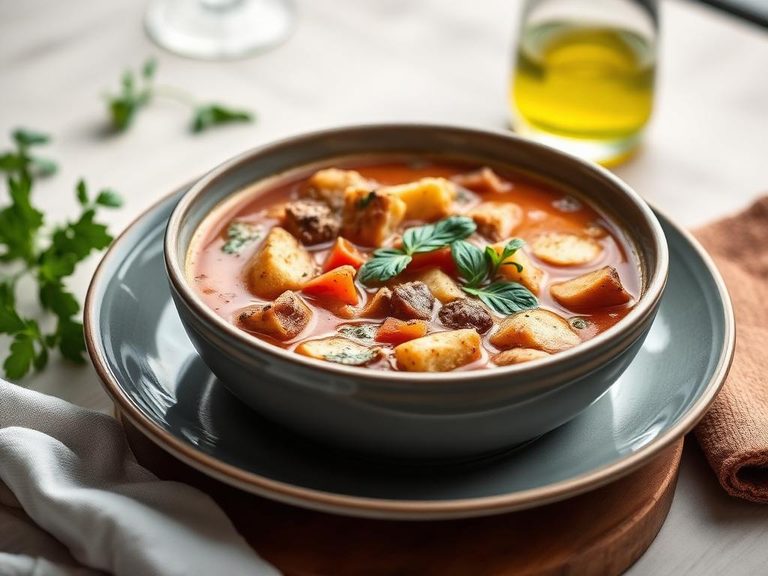
This is a light, broth-based Italian vegetable soup, typically featuring a medley of beans, carrots, celery, and tomatoes in a savory tomato-infused broth. Its texture is a comforting mix of soft vegetables and tender beans, with a taste that's savory, subtly sweet from the tomatoes, and herbaceous. Nutritionally, it's a low-calorie, high-fiber option that provides plant-based protein from its beans.
Calorie split: 20% protein · 53% carbs · 27% fat
↓ Full nutrition💚 Why it's loved
People love minestrone for its hearty, comforting flavor that feels both nourishing and satisfying, often evoking a sense of home and tradition. It's also celebrated for its incredible versatility, as it's a perfect 'clean-out-the-fridge' soup that can adapt to seasonal vegetables and personal taste.
⚠️ Watch-outs & how to enjoy it better
The primary downside is its often high sodium content from the canned broth and added salt, which can be a concern for those monitoring blood pressure. Additionally, the starchy beans and pasta can cause a moderate blood-sugar rise. To counteract this, look for low-sodium versions or dilute with water, and pair it with a source of protein or healthy fat (like a sprinkle of Parmesan or a side of whole-grain bread) to slow digestion.
Key benefits
- Low-calorie density aids in weight management
- Good source of plant-based protein from beans
- Contains dietary fiber for digestive health
- Provides a variety of vitamins and minerals from vegetables
- Hydrating due to its high water content
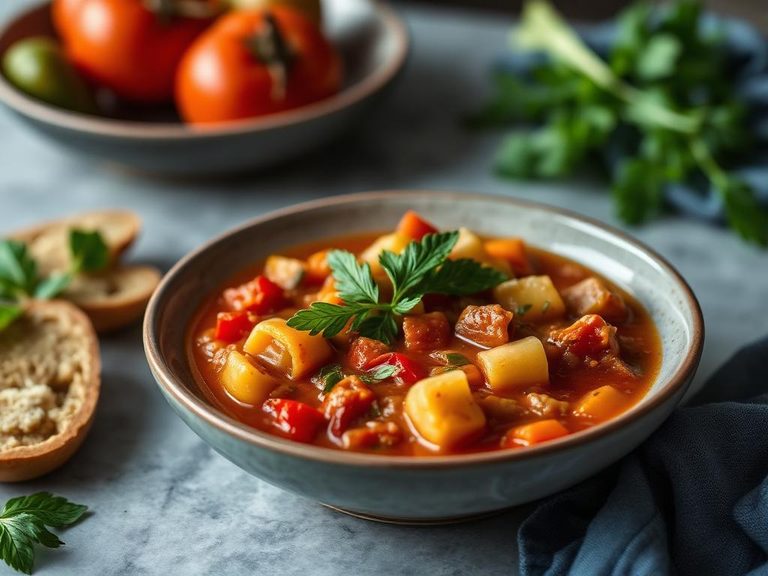
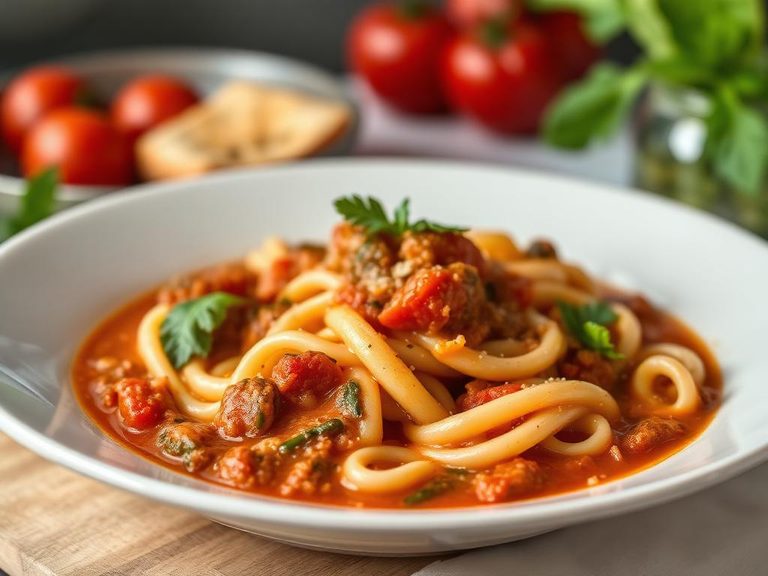
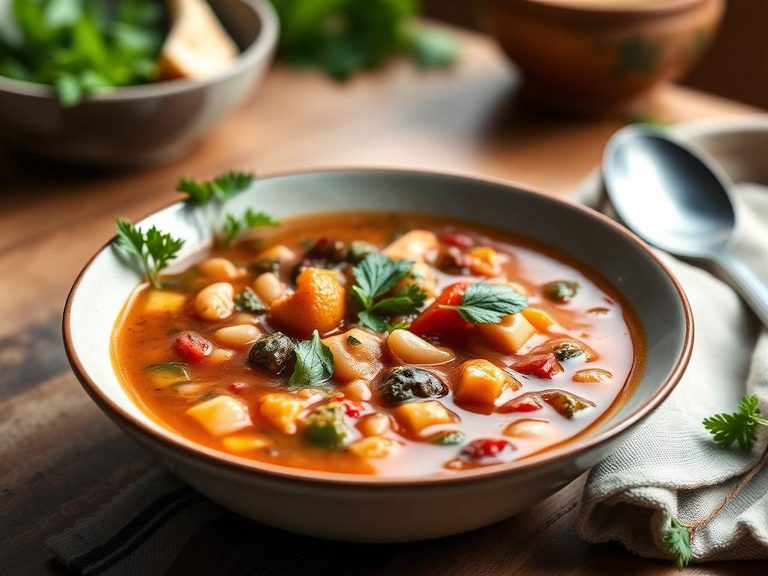
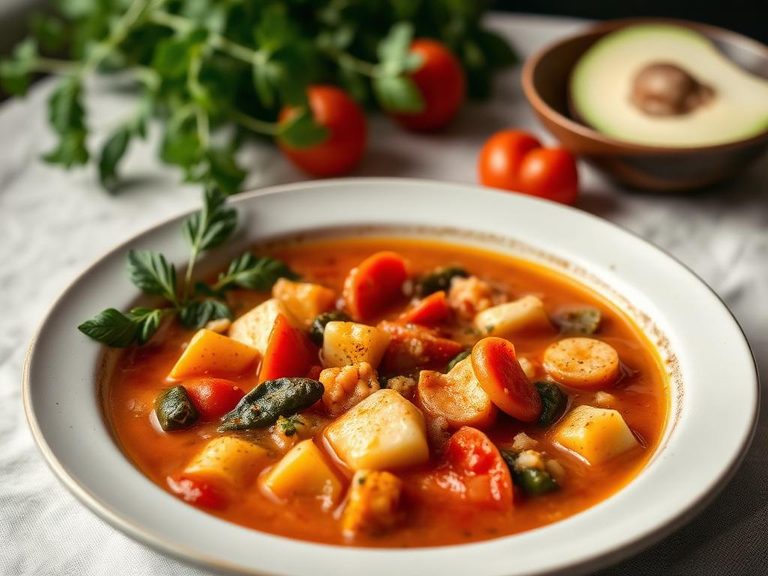
🍽️ Popular dishes
🌍 Where it's eaten
💡 Did you know?
The name 'minestrone' comes from the Latin 'minestrare,' meaning 'to serve,' and historically, it was a 'everything but the kitchen sink' soup used to use up leftovers, making it one of the original 'zero-waste' dishes.
Full nutrition (USDA data · scales with serving)
| Water | 91.3 g |
| Energy | 34.0 kcal |
| Energy | 142 kj |
| Protein | 1.8 g |
| Total lipid (fat) | 1.0 g |
| Ash | 1.2 g |
| Carbohydrate, by difference | 4.7 g |
| Fiber, total dietary | 0.40 g |
| Calcium, Ca | 14.0 mg |
| Iron, Fe | 0.38 mg |
| Magnesium, Mg | 3.0 mg |
| Phosphorus, P | 23.0 mg |
| Potassium, K | 130 mg |
| Sodium, Na | 254 mg |
| Zinc, Zn | 0.31 mg |
| Copper, Cu | 0.05 mg |
| Manganese, Mn | 0.15 mg |
| Vitamin C, total ascorbic acid | 0.50 mg |
| Thiamin | 0.02 mg |
| Riboflavin | 0.02 mg |
| Niacin | 0.39 mg |
| Pantothenic acid | 0.14 mg |
| Vitamin B-6 | 0.04 mg |
| Folate, total | 15.0 ug |
| Folic acid | 8.0 ug |
| Folate, food | 7.0 ug |
| Folate, DFE | 21.0 ug |
| Vitamin B-12 | 0.00 ug |
| Vitamin A, RAE | 49.0 ug |
| Retinol | 0.00 ug |
| Vitamin A, IU | 970 iu |
| Alcohol, ethyl | 0.00 g |
Fat & fatty acid profile (per 100g)
| Fatty acids, total saturated | 0.23 g |
| SFA 4:0 | 0.00 g |
| SFA 6:0 | 0.00 g |
| SFA 8:0 | 0.00 g |
| SFA 10:0 | 0.00 g |
| SFA 12:0 | 0.00 g |
| SFA 14:0 | 0.01 g |
| SFA 16:0 | 0.13 g |
| SFA 18:0 | 0.05 g |
| Fatty acids, total monounsaturated | 0.29 g |
| MUFA 16:1 | 0.01 g |
| MUFA 18:1 | 0.27 g |
| MUFA 20:1 | 0.00 g |
| MUFA 22:1 | 0.00 g |
| Fatty acids, total polyunsaturated | 0.46 g |
| PUFA 18:2 | 0.40 g |
| PUFA 18:3 | 0.06 g |
| PUFA 18:4 | 0.00 g |
| PUFA 20:4 | 0.00 g |
| PUFA 20:5 n-3 (EPA) | 0.00 g |
| PUFA 22:5 n-3 (DPA) | 0.00 g |
| PUFA 22:6 n-3 (DHA) | 0.00 g |
| Cholesterol | 1.0 mg |
Amino acid profile (per 100g)
| Tryptophan | 0.01 g |
| Threonine | 0.04 g |
| Isoleucine | 0.05 g |
| Leucine | 0.10 g |
| Lysine | 0.08 g |
| Methionine | 0.02 g |
| Cystine | 0.01 g |
| Phenylalanine | 0.06 g |
| Tyrosine | 0.04 g |
| Valine | 0.07 g |
| Arginine | 0.08 g |
| Histidine | 0.03 g |
| Alanine | 0.10 g |
| Aspartic acid | 0.15 g |
| Glutamic acid | 0.51 g |
| Glycine | 0.16 g |
| Proline | 0.14 g |
| Serine | 0.06 g |
FAQ
Is canned minestrone soup healthy?
It can be a healthy choice as it's low in calories and fat while providing fiber and protein. However, the main nutritional drawback is often high sodium. Opting for low-sodium versions and adding fresh vegetables or herbs can significantly improve its health profile.
How can I make canned minestrone taste better?
Enhance it by sautéing fresh garlic and onion before adding the soup, stirring in a handful of fresh spinach or kale, and finishing with a drizzle of high-quality olive oil, fresh basil, or a sprinkle of grated Parmesan cheese.
What is the difference between minestrone and vegetable soup?
While both are vegetable-based, minestrone is specifically an Italian-style soup that almost always includes beans (like cannellini) and often small pasta or rice, in a tomato-based broth. Generic vegetable soup may have a wider variety of bases and doesn't require beans or pasta.
Nutrient density (calculated · NRF9.3)
Nutrient Rich Foods index: beneficial nutrients (protein, fiber, vitamins, minerals) minus saturated fat, added sugar & sodium, per 100 kcal.
NRF9.3 index — Fulgoni, Keast & Drewnowski, 2009. Computed from USDA nutrients.
Weight-loss friendliness (composite index)
Energy density 0.34 kcal/g · 21% calories from protein · 0.4 g fiber · 0.0 g sugar per 100 g.
Composite of energy density (Rolls et al., 1999), protein & fiber satiety, minus sugar. A calculated heuristic — ranks satiety-per-calorie, not a clinical measure.
Dietary load (calculated from USDA values)
Potential renal acid load. Positive = acid-forming, negative = alkaline-forming.
Sodium-to-potassium ratio: 1.95 (lower is better — aim for ≤ 1)
Sodium:potassium per WHO potassium guidance. Computed from USDA nutrients.