

Soup, cream of chicken, canned, prepared with equal volume water
Whole food · Soups, Sauces, and Gravies
This is the classic, shelf-stable comfort food: a smooth, savory, off-white liquid with a velvety, slightly thin texture when reconstituted. Its flavor is a mild, salty chicken broth base with a subtle dairy richness. Nutritionally, it's a light, low-calorie option that provides a small protein boost and is often a source of added sodium.
Calorie split: 12% protein · 32% carbs · 57% fat
↓ Full nutrition💚 Why it's loved
People love it for its nostalgic, warming simplicity and its role as a pantry staple that can be ready in minutes. Its mild flavor makes it a gentle, comforting choice for sick days or a quick, light meal.
⚠️ Watch-outs & how to enjoy it better
It is often high in sodium, which can be a concern for those monitoring blood pressure. To counteract this, look for 'low-sodium' versions or dilute it further with water or unsalted broth. The canning process can also give it a slightly metallic aftertaste for some; transferring it to a pot and heating gently can help mellow this. As a processed food, it may contain additives like MSG or modified food starch; checking ingredient labels allows for informed choices.
Key benefits
- Excellent source of quick, low-calorie hydration.
- Provides a small, easily digestible protein boost.
- Offers a comforting, familiar flavor for meal prep or recovery.
- Shelf-stable and requires minimal cooking time.
- Can serve as a versatile base for other dishes.
🍽️ Popular dishes
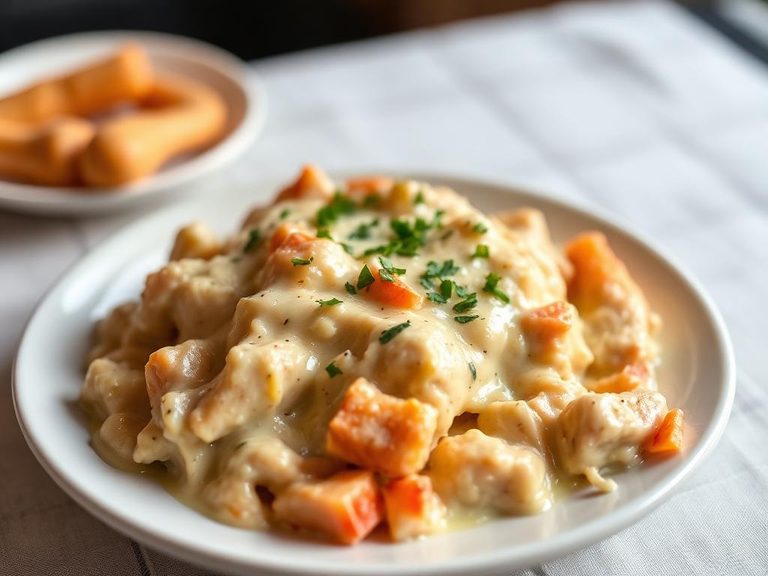
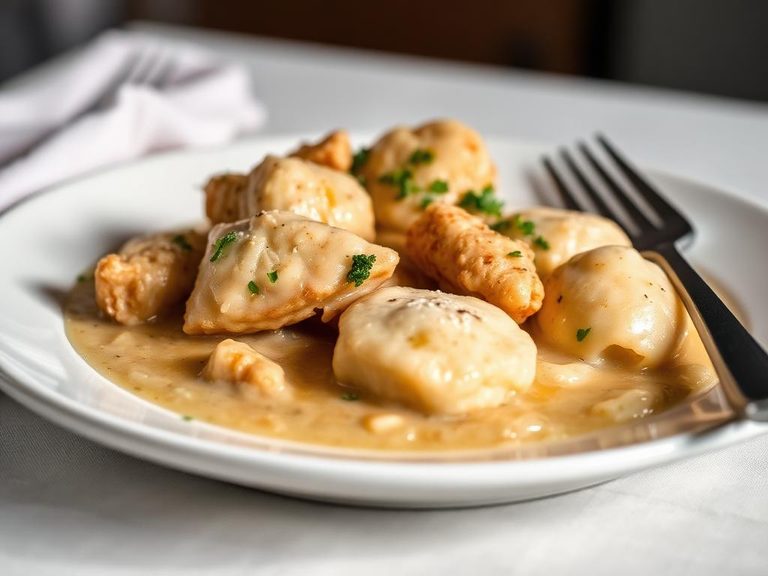
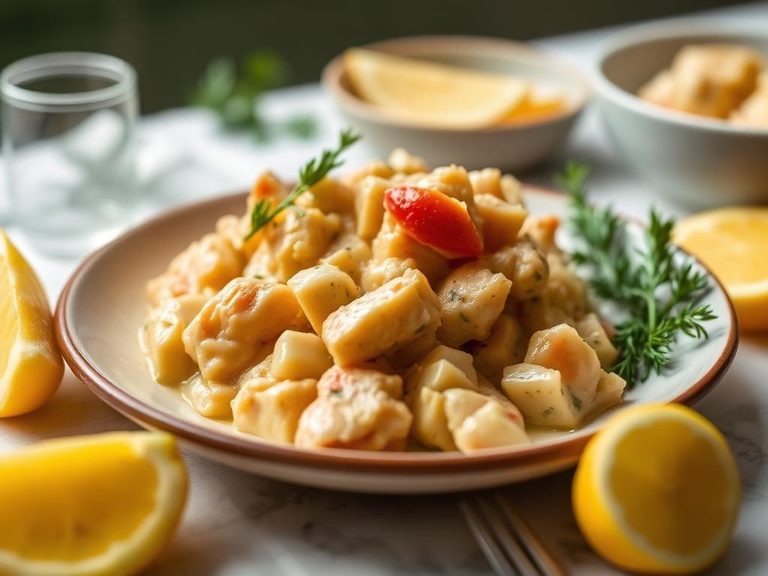
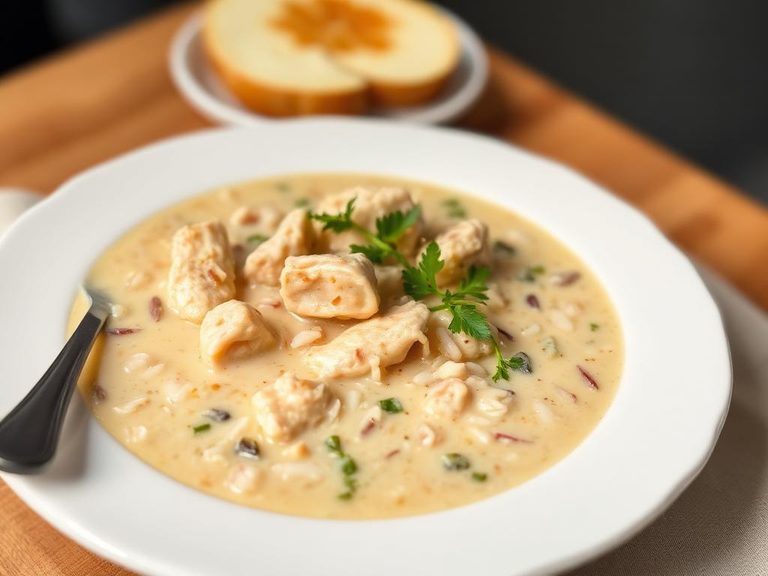
🌍 Where it's eaten
💡 Did you know?
The condensed cream soup can was a revolutionary 20th-century convenience food, with Campbell's introducing its first condensed soup in 1897, fundamentally changing home cooking by providing a ready-made sauce base.
Full nutrition (USDA data · scales with serving)
| Water | 90.6 g |
| Energy | 48.0 kcal |
| Energy | 201 kj |
| Protein | 1.4 g |
| Total lipid (fat) | 3.0 g |
| Ash | 1.2 g |
| Carbohydrate, by difference | 3.8 g |
| Fiber, total dietary | 0.10 g |
| Calcium, Ca | 14.0 mg |
| Iron, Fe | 0.25 mg |
| Magnesium, Mg | 1.0 mg |
| Phosphorus, P | 15.0 mg |
| Potassium, K | 36.0 mg |
| Sodium, Na | 347 mg |
| Zinc, Zn | 0.26 mg |
| Copper, Cu | 0.05 mg |
| Manganese, Mn | 0.15 mg |
| Vitamin C, total ascorbic acid | 0.10 mg |
| Thiamin | 0.01 mg |
| Riboflavin | 0.03 mg |
| Niacin | 0.34 mg |
| Pantothenic acid | 0.08 mg |
| Vitamin B-6 | 0.01 mg |
| Folate, total | 1.0 ug |
| Folic acid | 0.00 ug |
| Folate, food | 1.0 ug |
| Folate, DFE | 1.0 ug |
| Vitamin B-12 | 0.04 ug |
| Vitamin A, RAE | 67.0 ug |
| Retinol | 66.0 ug |
| Vitamin A, IU | 230 iu |
| Alcohol, ethyl | 0.00 g |
Fat & fatty acid profile (per 100g)
| Fatty acids, total saturated | 0.85 g |
| SFA 4:0 | 0.02 g |
| SFA 6:0 | 0.02 g |
| SFA 8:0 | 0.01 g |
| SFA 10:0 | 0.01 g |
| SFA 12:0 | 0.01 g |
| SFA 14:0 | 0.06 g |
| SFA 16:0 | 0.54 g |
| SFA 18:0 | 0.17 g |
| Fatty acids, total monounsaturated | 1.3 g |
| MUFA 16:1 | 0.12 g |
| MUFA 18:1 | 1.2 g |
| MUFA 20:1 | 0.00 g |
| MUFA 22:1 | 0.00 g |
| Fatty acids, total polyunsaturated | 0.61 g |
| PUFA 18:2 | 0.58 g |
| PUFA 18:3 | 0.03 g |
| PUFA 18:4 | 0.00 g |
| PUFA 20:4 | 0.00 g |
| PUFA 20:5 n-3 (EPA) | 0.00 g |
| PUFA 22:5 n-3 (DPA) | 0.00 g |
| PUFA 22:6 n-3 (DHA) | 0.00 g |
| Cholesterol | 4.0 mg |
Amino acid profile (per 100g)
| Tryptophan | 0.02 g |
| Threonine | 0.05 g |
| Isoleucine | 0.07 g |
| Leucine | 0.11 g |
| Lysine | 0.09 g |
| Methionine | 0.03 g |
| Cystine | 0.02 g |
| Phenylalanine | 0.06 g |
| Tyrosine | 0.05 g |
| Valine | 0.07 g |
| Arginine | 0.07 g |
| Histidine | 0.04 g |
| Alanine | 0.06 g |
| Aspartic acid | 0.10 g |
| Glutamic acid | 0.32 g |
| Glycine | 0.06 g |
| Proline | 0.10 g |
| Serine | 0.06 g |
FAQ
How is 'prepared with equal volume water' different from the condensed version?
The canned product is a thick concentrate. The nutrition data is for the final, ready-to-eat soup after you've mixed one part concentrate with one part water (or milk for extra richness), which is the standard serving method.
Can I use this in recipes that call for homemade cream of chicken soup?
Yes, it's a common substitute. However, homemade versions are typically richer and less salty. You may need to adjust seasoning and consider adding a touch of cream or cornstarch to match the desired consistency and flavor depth.
Is the fat in this soup from real cream?
Not typically. The fat content in canned cream of chicken soup usually comes from a combination of vegetable oil, modified food starch, and sometimes small amounts of chicken fat or dairy ingredients like whey. Check the ingredient list for specifics.
Nutrient density (calculated · NRF9.3)
Nutrient Rich Foods index: beneficial nutrients (protein, fiber, vitamins, minerals) minus saturated fat, added sugar & sodium, per 100 kcal.
NRF9.3 index — Fulgoni, Keast & Drewnowski, 2009. Computed from USDA nutrients.
Weight-loss friendliness (composite index)
Energy density 0.48 kcal/g · 12% calories from protein · 0.1 g fiber · 0.0 g sugar per 100 g.
Composite of energy density (Rolls et al., 1999), protein & fiber satiety, minus sugar. A calculated heuristic — ranks satiety-per-calorie, not a clinical measure.
Dietary load (calculated from USDA values)
Potential renal acid load. Positive = acid-forming, negative = alkaline-forming.
Sodium-to-potassium ratio: 9.64 (lower is better — aim for ≤ 1)
Sodium:potassium per WHO potassium guidance. Computed from USDA nutrients.