

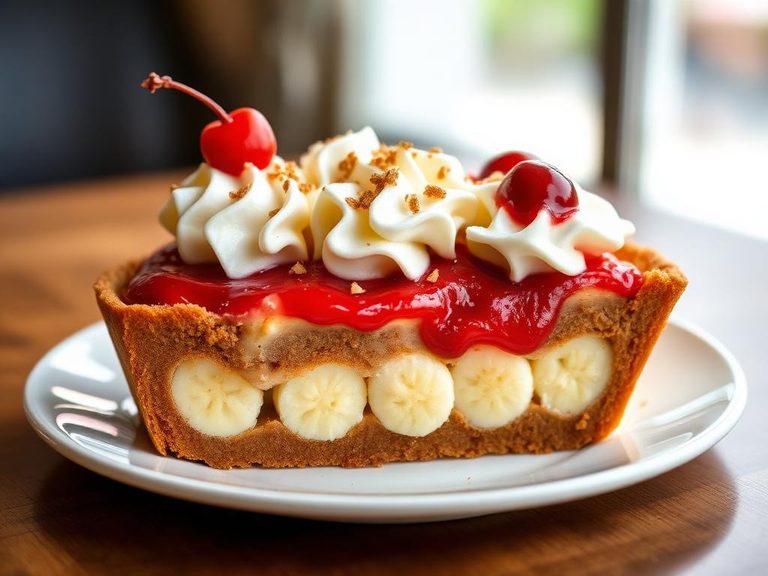
Pie, banana cream, prepared from mix, no-bake type
Whole food · Baked Products

Photo: Wikipedia
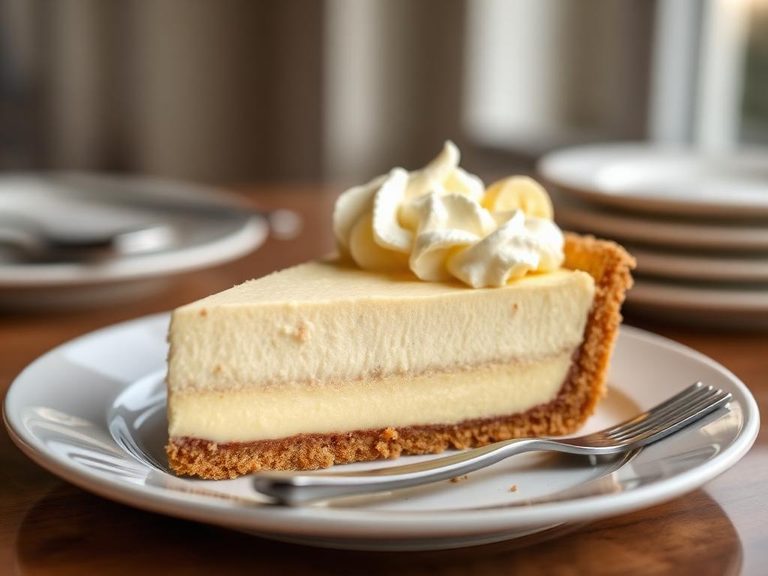
A no-bake banana cream pie features a smooth, sweet custard made from a mix, layered with sliced bananas in a pre-made graham cracker or cookie crust. Its texture is a delightful contrast between the soft, creamy filling and the slightly crumbly base. Nutritionally, it's a high-energy dessert, with most of its calories coming from carbohydrates and fats.
Calorie split: 5% protein · 49% carbs · 45% fat
↓ Full nutrition💚 Why it's loved
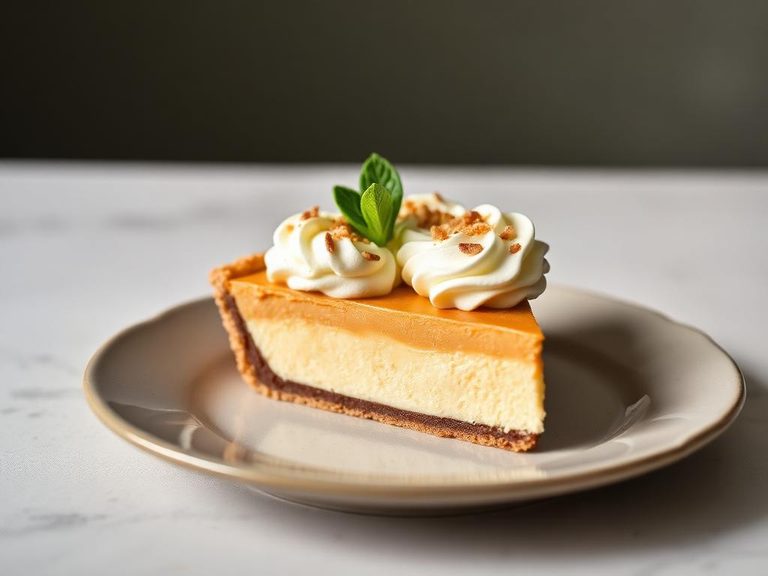
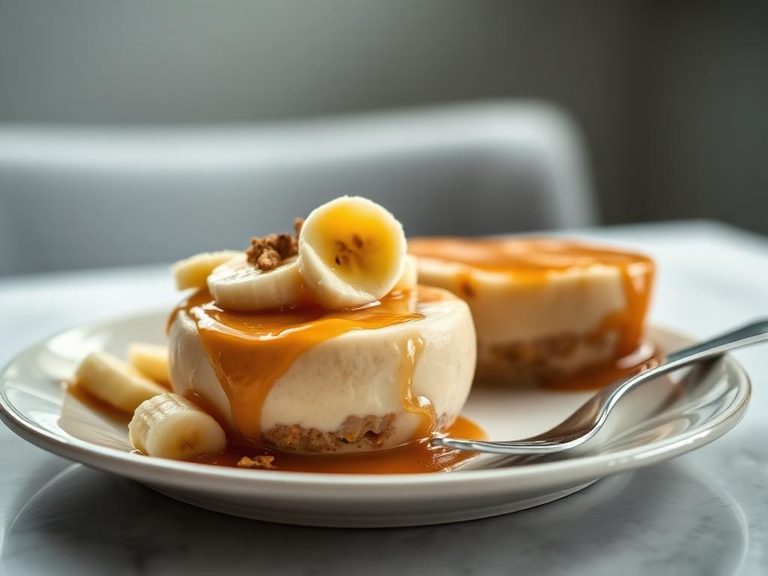
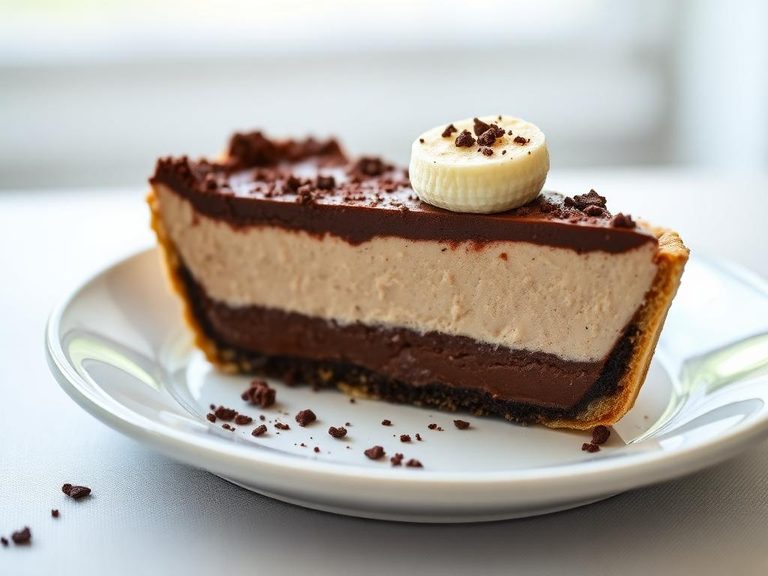
People adore it for its nostalgic, sweet, and creamy banana flavor that feels like a comforting treat. It's a versatile dessert that can be dressed up with whipped cream or a caramel drizzle for any occasion.
⚠️ Watch-outs & how to enjoy it better
The high carbohydrate and fat content can lead to blood sugar spikes, and the mix may contain sodium or common allergens like wheat and dairy. To counteract this, enjoy a modest slice alongside a source of protein or fiber, like a handful of nuts, to help slow sugar absorption.
Key benefits
- Provides quick energy from carbohydrates
- Contains some dietary fat for satiety
- Offers a small amount of protein
- No baking required, making it easy to prepare
- A classic, comforting dessert for gatherings
🍽️ Popular dishes
🌍 Where it's eaten
💡 Did you know?
The 'no-bake' style became particularly popular in the mid-20th century with the rise of convenience foods and pre-made pie crusts, emphasizing ease and speed over traditional baking methods.
Full nutrition (USDA data · scales with serving)
| Water | 50.9 g |
| Energy | 251 kcal |
| Energy | 1050 kj |
| Protein | 3.4 g |
| Total lipid (fat) | 12.9 g |
| Ash | 1.1 g |
| Carbohydrate, by difference | 31.6 g |
| Fiber, total dietary | 0.60 g |
| Calcium, Ca | 73.0 mg |
| Iron, Fe | 0.46 mg |
| Magnesium, Mg | 12.0 mg |
| Phosphorus, P | 167 mg |
| Potassium, K | 113 mg |
| Sodium, Na | 290 mg |
| Zinc, Zn | 0.33 mg |
| Copper, Cu | 0.04 mg |
| Manganese, Mn | 0.11 mg |
| Selenium, Se | 4.9 ug |
| Vitamin C, total ascorbic acid | 0.50 mg |
| Thiamin | 0.10 mg |
| Riboflavin | 0.15 mg |
| Niacin | 0.71 mg |
| Pantothenic acid | 0.26 mg |
| Vitamin B-6 | 0.04 mg |
| Folate, total | 21.0 ug |
| Folic acid | 14.0 ug |
| Folate, food | 7.0 ug |
| Folate, DFE | 31.0 ug |
| Vitamin B-12 | 0.21 ug |
| Vitamin A, RAE | 95.0 ug |
| Retinol | 90.0 ug |
| Vitamin A, IU | 408 iu |
Fat & fatty acid profile (per 100g)
| Fatty acids, total saturated | 6.9 g |
| SFA 4:0 | 0.32 g |
| SFA 6:0 | 0.19 g |
| SFA 8:0 | 0.11 g |
| SFA 10:0 | 0.25 g |
| SFA 12:0 | 0.28 g |
| SFA 14:0 | 1.0 g |
| SFA 16:0 | 3.0 g |
| SFA 18:0 | 1.6 g |
| Fatty acids, total monounsaturated | 4.6 g |
| MUFA 16:1 | 0.22 g |
| MUFA 18:1 | 4.2 g |
| MUFA 20:1 | 0.00 g |
| MUFA 22:1 | 0.00 g |
| Fatty acids, total polyunsaturated | 0.76 g |
| PUFA 18:2 | 0.60 g |
| PUFA 18:3 | 0.16 g |
| PUFA 18:4 | 0.00 g |
| PUFA 20:4 | 0.00 g |
| PUFA 20:5 n-3 (EPA) | 0.00 g |
| PUFA 22:5 n-3 (DPA) | 0.00 g |
| PUFA 22:6 n-3 (DHA) | 0.00 g |
| Cholesterol | 29.0 mg |
Amino acid profile (per 100g)
| Tryptophan | 0.05 g |
| Threonine | 0.14 g |
| Isoleucine | 0.17 g |
| Leucine | 0.28 g |
| Lysine | 0.20 g |
| Methionine | 0.07 g |
| Cystine | 0.05 g |
| Phenylalanine | 0.16 g |
| Tyrosine | 0.13 g |
| Valine | 0.18 g |
| Arginine | 0.16 g |
| Histidine | 0.08 g |
| Alanine | 0.13 g |
| Aspartic acid | 0.27 g |
| Glutamic acid | 0.79 g |
| Glycine | 0.10 g |
| Proline | 0.30 g |
| Serine | 0.18 g |
FAQ
Is this pie gluten-free?
Typically no. The crust is usually made from graham crackers or cookies containing wheat flour, and the filling mix may also contain wheat-based thickeners. Always check the specific product labels.
Can I use fresh bananas instead of the mix?
Yes, many homemade recipes use a cooked custard base with fresh bananas. This allows you to control the sugar content and avoid additives found in some commercial mixes.
How should I store leftover pie?
Due to the dairy-based filling, it must be refrigerated. Cover it tightly and consume within 2-3 days for best quality and food safety.
Nutrient density (calculated · NRF9.3)
Nutrient Rich Foods index: beneficial nutrients (protein, fiber, vitamins, minerals) minus saturated fat, added sugar & sodium, per 100 kcal.
NRF9.3 index — Fulgoni, Keast & Drewnowski, 2009. Computed from USDA nutrients.
Weight-loss friendliness (composite index)
Energy density 2.51 kcal/g · 5% calories from protein · 0.6 g fiber · 0.0 g sugar per 100 g.
Composite of energy density (Rolls et al., 1999), protein & fiber satiety, minus sugar. A calculated heuristic — ranks satiety-per-calorie, not a clinical measure.
Dietary load (calculated from USDA values)
Potential renal acid load. Positive = acid-forming, negative = alkaline-forming.
Sodium-to-potassium ratio: 2.57 (lower is better — aim for ≤ 1)
Sodium:potassium per WHO potassium guidance. Computed from USDA nutrients.