

Mustard greens, frozen, unprepared
Whole food · Vegetables and Vegetable Products

Photo: Wikipedia
Frozen mustard greens are a convenient, year-round pantry staple that delivers the vegetable's signature peppery, slightly bitter bite and tender-crisp texture when cooked. They are exceptionally nutrient-dense, offering a powerhouse of vitamins and fiber for a mere 20 calories per 100g. This makes them an efficient way to add depth and nutrition to soups, stews, and sautés.
Calorie split: 38% protein · 52% carbs · 9% fat
↓ Full nutrition💚 Why it's loved
People love mustard greens for their bold, peppery flavor that cuts through rich, savory dishes and adds a vibrant green color. Their versatility allows them to be braised, stir-fried, or blended into soups, making them a beloved ingredient in many global cuisines.
⚠️ Watch-outs & how to enjoy it better
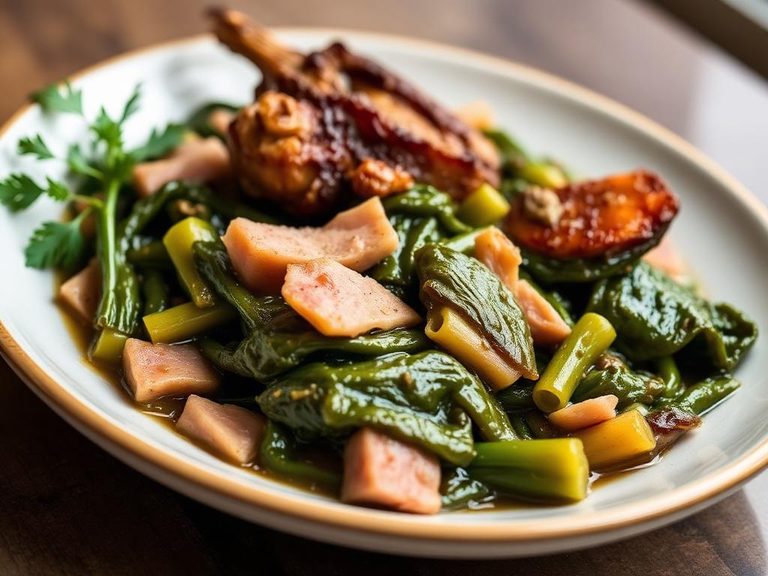
The strong, bitter taste can be off-putting to some, and the high vitamin K content requires caution for individuals on blood-thinning medications. To counteract bitterness, cook them with a splash of acid like vinegar or lemon, or pair them with a fatty protein like smoked turkey or bacon to balance the flavor and aid nutrient absorption.
Key benefits
- Rich in vitamins A, C, and K for immune and bone health
- High in dietary fiber (3.3g per 100g) to support digestion
- Very low in calories (20 kcal) and fat (0.27g)
- Contains glucosinolates, compounds studied for their antioxidant properties
- Provides a good source of calcium and iron
🍽️ Popular dishes
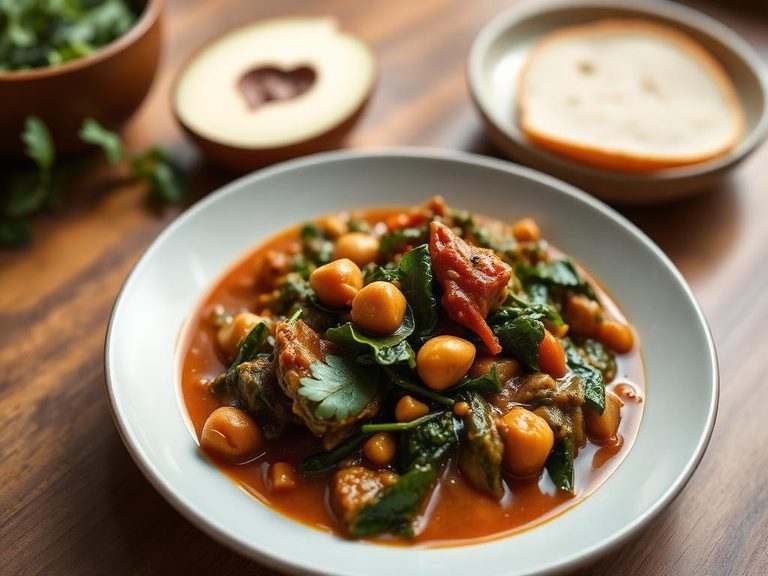
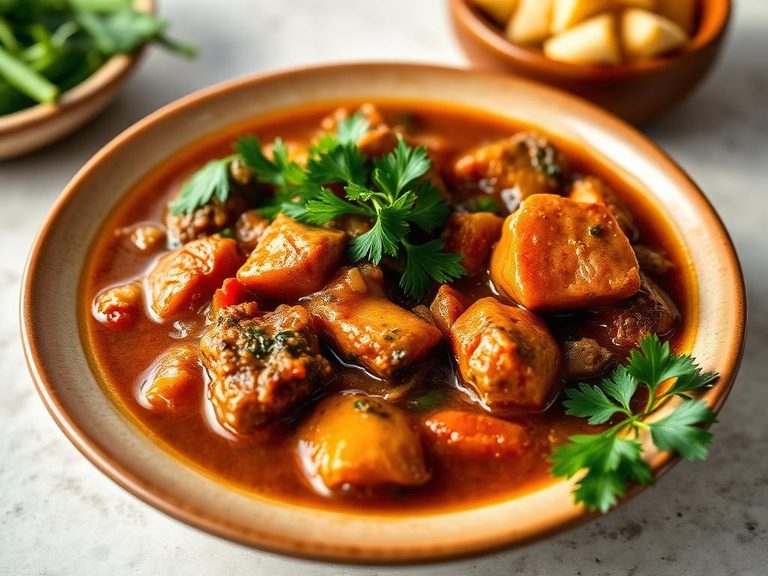
🌍 Where it's eaten
💡 Did you know?
The peppery kick of mustard greens comes from the same compound, allyl isothiocyanate, that gives wasabi and horseradish their heat.
Full nutrition (USDA data · scales with serving)
| Water | 93.2 g |
| Energy | 20.0 kcal |
| Energy | 84.0 kj |
| Protein | 2.5 g |
| Total lipid (fat) | 0.27 g |
| Ash | 0.63 g |
| Carbohydrate, by difference | 3.4 g |
| Fiber, total dietary | 3.3 g |
| Calcium, Ca | 116 mg |
| Iron, Fe | 1.3 mg |
| Magnesium, Mg | 15.0 mg |
| Phosphorus, P | 30.0 mg |
| Potassium, K | 170 mg |
| Sodium, Na | 29.0 mg |
| Zinc, Zn | 0.23 mg |
| Copper, Cu | 0.07 mg |
| Manganese, Mn | 0.34 mg |
| Selenium, Se | 0.70 ug |
| Vitamin C, total ascorbic acid | 25.3 mg |
| Thiamin | 0.05 mg |
| Riboflavin | 0.06 mg |
| Niacin | 0.31 mg |
| Pantothenic acid | 0.02 mg |
| Vitamin B-6 | 0.13 mg |
| Folate, total | 138 ug |
| Folic acid | 0.00 ug |
| Folate, food | 138 ug |
| Folate, DFE | 138 ug |
| Vitamin B-12 | 0.00 ug |
| Vitamin A, RAE | 258 ug |
| Retinol | 0.00 ug |
| Vitamin A, IU | 5155 iu |
| Vitamin D (D2 + D3), International Units | 0.00 iu |
| Vitamin D (D2 + D3) | 0.00 ug |
| Alcohol, ethyl | 0.00 g |
Fat & fatty acid profile (per 100g)
| Fatty acids, total saturated | 0.01 g |
| SFA 4:0 | 0.00 g |
| SFA 6:0 | 0.00 g |
| SFA 8:0 | 0.00 g |
| SFA 10:0 | 0.00 g |
| SFA 12:0 | 0.00 g |
| SFA 14:0 | 0.00 g |
| SFA 16:0 | 0.01 g |
| SFA 18:0 | 0.00 g |
| Fatty acids, total monounsaturated | 0.12 g |
| MUFA 16:1 | 0.00 g |
| MUFA 18:1 | 0.02 g |
| MUFA 20:1 | 0.03 g |
| MUFA 22:1 | 0.08 g |
| Fatty acids, total polyunsaturated | 0.05 g |
| PUFA 18:2 | 0.03 g |
| PUFA 18:3 | 0.02 g |
| PUFA 18:4 | 0.00 g |
| PUFA 20:4 | 0.00 g |
| PUFA 20:5 n-3 (EPA) | 0.00 g |
| PUFA 22:5 n-3 (DPA) | 0.00 g |
| PUFA 22:6 n-3 (DHA) | 0.00 g |
| Fatty acids, total trans | 0.00 g |
| Cholesterol | 0.00 mg |
Amino acid profile (per 100g)
| Tryptophan | 0.03 g |
| Threonine | 0.07 g |
| Isoleucine | 0.09 g |
| Leucine | 0.08 g |
| Lysine | 0.11 g |
| Methionine | 0.02 g |
| Cystine | 0.04 g |
| Phenylalanine | 0.07 g |
| Tyrosine | 0.13 g |
| Valine | 0.10 g |
| Arginine | 0.18 g |
| Histidine | 0.04 g |
FAQ
How do I prepare frozen mustard greens?
No thawing is needed. Simply add the frozen greens directly to soups, stews, or a hot pan with a little oil. Cook until tender, usually 5-10 minutes, and season to taste.
Are mustard greens the same as kale or collard greens?
No, they are different vegetables in the Brassica family. Mustard greens have a sharper, more peppery flavor than collards or kale, which are milder and earthier.
Can I eat mustard greens raw?
Yes, young, tender leaves can be used in salads for a spicy kick. However, mature leaves are better cooked to soften their texture and mellow the bitterness.
How do I reduce the bitterness of mustard greens?
Cooking them with a bit of fat (like bacon grease or oil), a splash of vinegar, or a pinch of sugar can help balance their natural bitterness.
Nutrient density (calculated · NRF9.3)
Nutrient Rich Foods index: beneficial nutrients (protein, fiber, vitamins, minerals) minus saturated fat, added sugar & sodium, per 100 kcal.
NRF9.3 index — Fulgoni, Keast & Drewnowski, 2009. Computed from USDA nutrients.
Weight-loss friendliness (composite index)
Energy density 0.20 kcal/g · 50% calories from protein · 3.3 g fiber · 0.0 g sugar per 100 g.
Composite of energy density (Rolls et al., 1999), protein & fiber satiety, minus sugar. A calculated heuristic — ranks satiety-per-calorie, not a clinical measure.
Dietary load (calculated from USDA values)
Potential renal acid load. Positive = acid-forming, negative = alkaline-forming.
Sodium-to-potassium ratio: 0.17 (lower is better — aim for ≤ 1)
Sodium:potassium per WHO potassium guidance. Computed from USDA nutrients.