Korean Geotjeori
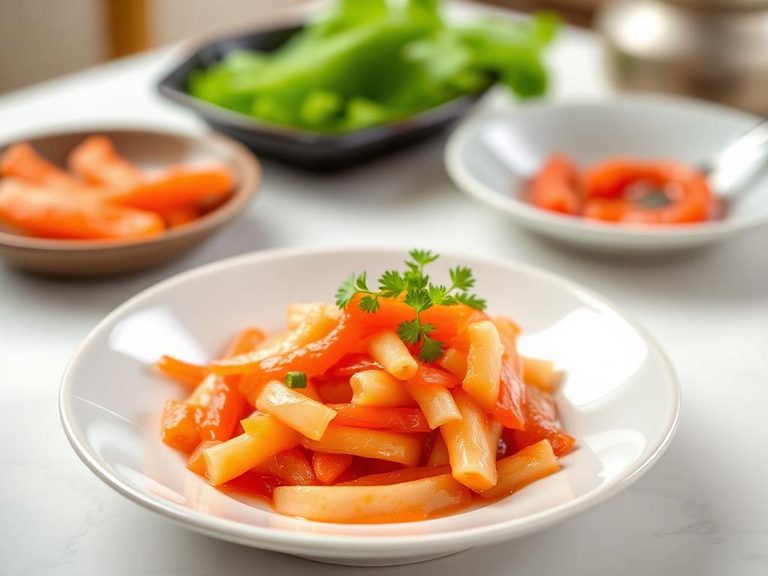
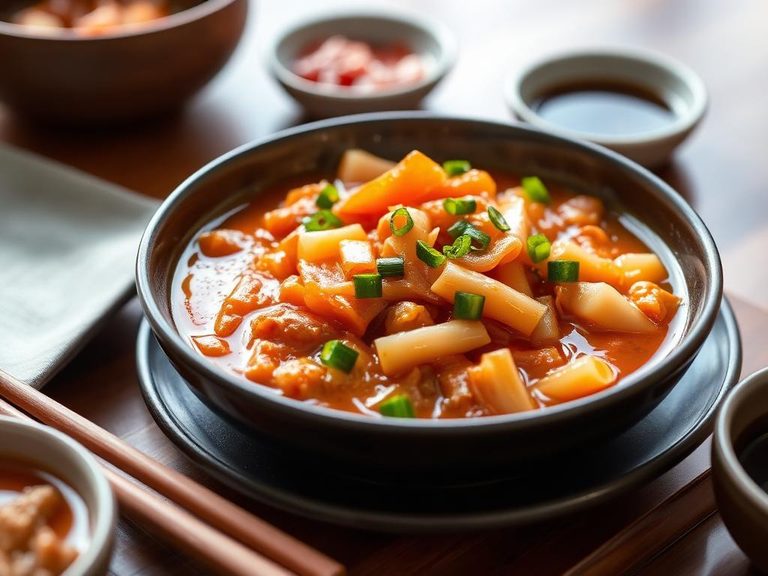
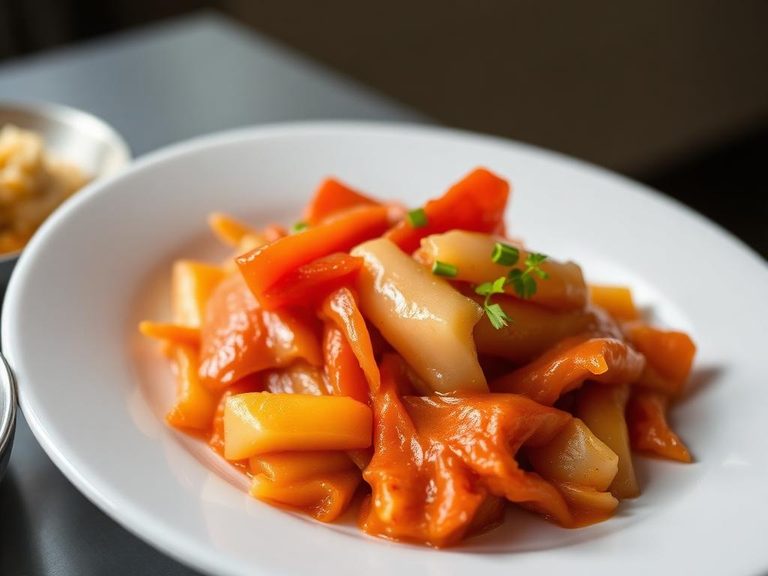
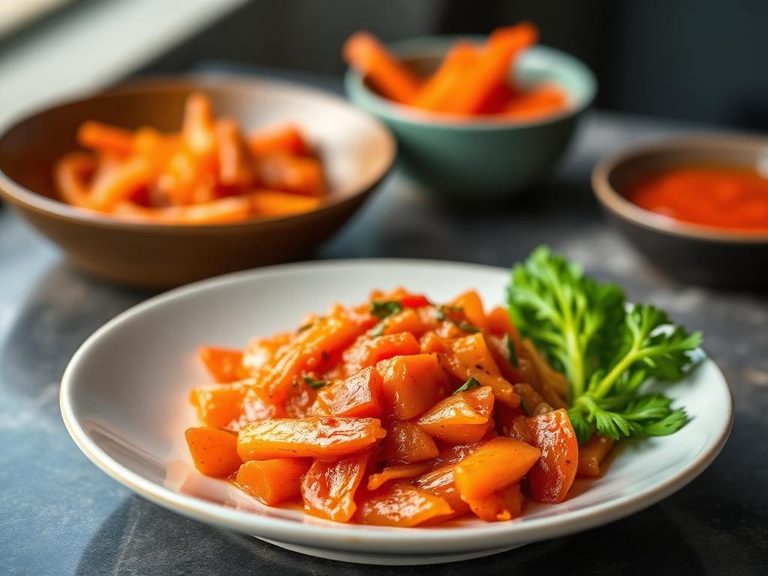
Geotjeori is a fresh, unfermented Korean kimchi, often made with crisp napa cabbage, Korean radish, and a vibrant paste of gochugaru (Korean chili flakes), garlic, ginger, and fish sauce or salted shrimp. Unlike traditional kimchi, it's meant to be eaten immediately, offering a bright, crunchy, and spicy flavor profile. It's a popular side dish (banchan) and a refreshing accompaniment to meals, especially during warmer months.
🍽️ Nutrition at a glance
Geotjeori is generally low in calories, with a typical serving (about 100g) containing roughly 20-30 calories. It is primarily a source of dietary fiber and vitamins A, C, and K from the fresh vegetables, with minimal fat and protein, and its sodium content can vary based on the seasoning.
Nutrition breakdown
| Calories | 25 kcal |
| Protein | 1.5 g |
| Carbs | 4.5 g |
| Fat | 0.5 g |
| Fiber | 2 g |
| Sugar | 2 g |
| Sodium | 650 mg |
| Vitamin C | 20 mg |
| Vitamin K | 40 mcg |
| Vitamin A | 150 mcg |
| Folate | 30 mcg |
| Potassium | 200 mg |
| Calcium | 30 mg |
| Iron | 0.8 mg |
| Manganese | 0.2 mg |
Per 1 cup (150 g) · estimated, varies by recipe
💡 What's interesting
Culturally, geotjeori represents the 'fresh' side of kimchi-making, often prepared for immediate consumption during seasonal vegetable harvests or as a quick, homemade banchan. Nutritionally, its unfermented state preserves more of the raw vegetables' heat-sensitive vitamins compared to fermented kimchi, though it lacks the probiotic benefits developed during fermentation.