

Mustard greens, frozen, cooked, boiled, drained, with salt
Whole food · Vegetables and Vegetable Products

Photo: Wikipedia
Frozen mustard greens, once boiled and drained, transform into a tender, vibrant green with a distinct peppery bite and a satisfyingly soft, almost silky texture. They are a nutritional powerhouse, offering a remarkable 2.8 grams of dietary fiber per 100 grams for just 19 calories, making them an excellent choice for adding volume and nutrients to a meal.
Calorie split: 38% protein · 52% carbs · 9% fat
↓ Full nutrition💚 Why it's loved
People love these greens for their robust, peppery flavor that adds a bold, savory depth to soups, stews, and stir-fries without overwhelming other ingredients. They are a beloved staple in many cuisines for their ability to absorb surrounding flavors while contributing a unique, nutritious backbone.
⚠️ Watch-outs & how to enjoy it better
The high oxalate content in mustard greens can be a concern for individuals prone to certain types of kidney stones. To mitigate this, always boil and drain them as instructed, which significantly reduces oxalate levels, and consider pairing them with calcium-rich foods like cheese or tofu to further bind oxalates. Their natural bitterness may also be off-putting to some, which can be balanced with a splash of vinegar or a savory sauce.
Key benefits
- Excellent source of dietary fiber for digestive health.
- Very low in calories and fat, aiding weight management.
- Provides a good amount of plant-based protein.
- Rich in vitamins K and A, which support bone and immune health.
- Contains glucosinolates, compounds studied for their health benefits.
🍽️ Popular dishes
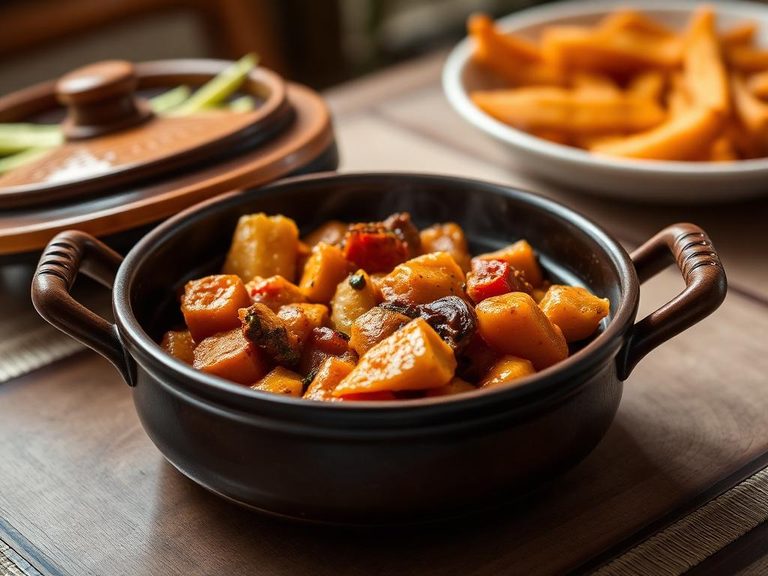
🌍 Where it's eaten
💡 Did you know?
Mustard greens are a member of the Brassica family, making them a close relative of broccoli, kale, and cabbage, and their seeds are the source of common table mustard.
Full nutrition (USDA data · scales with serving)
| Water | 93.8 g |
| Energy | 19.0 kcal |
| Energy | 78.0 kj |
| Protein | 2.3 g |
| Total lipid (fat) | 0.25 g |
| Ash | 0.57 g |
| Carbohydrate, by difference | 3.1 g |
| Fiber, total dietary | 2.8 g |
| Total Sugars | 0.32 g |
| Calcium, Ca | 101 mg |
| Iron, Fe | 1.1 mg |
| Magnesium, Mg | 13.0 mg |
| Phosphorus, P | 24.0 mg |
| Potassium, K | 139 mg |
| Sodium, Na | 261 mg |
| Zinc, Zn | 0.20 mg |
| Copper, Cu | 0.06 mg |
| Manganese, Mn | 0.29 mg |
| Selenium, Se | 0.60 ug |
| Vitamin C, total ascorbic acid | 13.8 mg |
| Thiamin | 0.04 mg |
| Riboflavin | 0.05 mg |
| Niacin | 0.26 mg |
| Pantothenic acid | 0.02 mg |
| Vitamin B-6 | 0.11 mg |
| Folate, total | 70.0 ug |
| Folic acid | 0.00 ug |
| Folate, food | 70.0 ug |
| Folate, DFE | 70.0 ug |
| Choline, total | 0.30 mg |
| Betaine | 0.20 mg |
| Vitamin B-12 | 0.00 ug |
| Vitamin B-12, added | 0.00 ug |
| Vitamin A, RAE | 354 ug |
| Retinol | 0.00 ug |
| Carotene, beta | 4246 ug |
| Carotene, alpha | 0.00 ug |
| Cryptoxanthin, beta | 0.00 ug |
| Vitamin A, IU | 7076 iu |
| Lycopene | 0.00 ug |
| Lutein + zeaxanthin | 6672 ug |
| Vitamin E (alpha-tocopherol) | 1.4 mg |
| Vitamin E, added | 0.00 mg |
| Vitamin D (D2 + D3), International Units | 0.00 iu |
| Vitamin D (D2 + D3) | 0.00 ug |
| Vitamin K (phylloquinone) | 335 ug |
Fat & fatty acid profile (per 100g)
| Fatty acids, total saturated | 0.01 g |
| SFA 14:0 | 0.00 g |
| SFA 16:0 | 0.01 g |
| SFA 18:0 | 0.00 g |
| Fatty acids, total monounsaturated | 0.11 g |
| MUFA 16:1 | 0.00 g |
| MUFA 18:1 | 0.02 g |
| MUFA 20:1 | 0.02 g |
| MUFA 22:1 | 0.07 g |
| Fatty acids, total polyunsaturated | 0.05 g |
| PUFA 18:2 | 0.02 g |
| PUFA 18:3 | 0.02 g |
| Fatty acids, total trans | 0.00 g |
| Cholesterol | 0.00 mg |
Amino acid profile (per 100g)
| Tryptophan | 0.03 g |
| Threonine | 0.06 g |
| Isoleucine | 0.08 g |
| Leucine | 0.07 g |
| Lysine | 0.10 g |
| Methionine | 0.02 g |
| Cystine | 0.03 g |
| Phenylalanine | 0.06 g |
| Tyrosine | 0.12 g |
| Valine | 0.09 g |
| Arginine | 0.17 g |
| Histidine | 0.04 g |
FAQ
Why should I boil and drain frozen mustard greens even if the package says 'pre-cooked'?
Boiling and draining is crucial for reducing the naturally occurring oxalic acid, which can interfere with mineral absorption and contribute to kidney stones. This step also mellows any overly bitter notes, resulting in a better flavor and texture.
How do I keep mustard greens from tasting too bitter?
A quick boil in salted water followed by an ice bath can help tame bitterness. Alternatively, cooking them with a sweet ingredient like onions or carrots, or finishing the dish with a splash of acid like lemon juice or vinegar, can beautifully balance the peppery bite.
Are mustard greens high in sodium because they are sold frozen with salt?
The 'with salt' in the description indicates salt was added during processing. The boiling and draining step helps remove some of this added sodium. For precise control, you can rinse the drained greens under cool water before using them in your recipe.
Nutrient density (calculated · NRF9.3)
Nutrient Rich Foods index: beneficial nutrients (protein, fiber, vitamins, minerals) minus saturated fat, added sugar & sodium, per 100 kcal.
NRF9.3 index — Fulgoni, Keast & Drewnowski, 2009. Computed from USDA nutrients.
Weight-loss friendliness (composite index)
Energy density 0.19 kcal/g · 48% calories from protein · 2.8 g fiber · 0.3 g sugar per 100 g.
Composite of energy density (Rolls et al., 1999), protein & fiber satiety, minus sugar. A calculated heuristic — ranks satiety-per-calorie, not a clinical measure.
Dietary load (calculated from USDA values)
Potential renal acid load. Positive = acid-forming, negative = alkaline-forming.
Sodium-to-potassium ratio: 1.88 (lower is better — aim for ≤ 1)
Sodium:potassium per WHO potassium guidance. Computed from USDA nutrients.