

Lemon peel, raw
Whole food · Fruits and Fruit Juices

Photo: Wikipedia
Raw lemon peel is the vibrant, aromatic outer zest of the lemon fruit, prized for its intense citrus flavor and slightly bitter, zesty kick. Its texture is firm yet pliable, with a glossy, oil-rich surface that releases a powerful fragrance when grated or sliced. Nutritionally, it is a fiber powerhouse, offering over 10 grams of fiber per 100 grams, along with a notable amount of vitamin C and antioxidants.
Calorie split: 8% protein · 88% carbs · 4% fat
↓ Full nutrition💚 Why it's loved
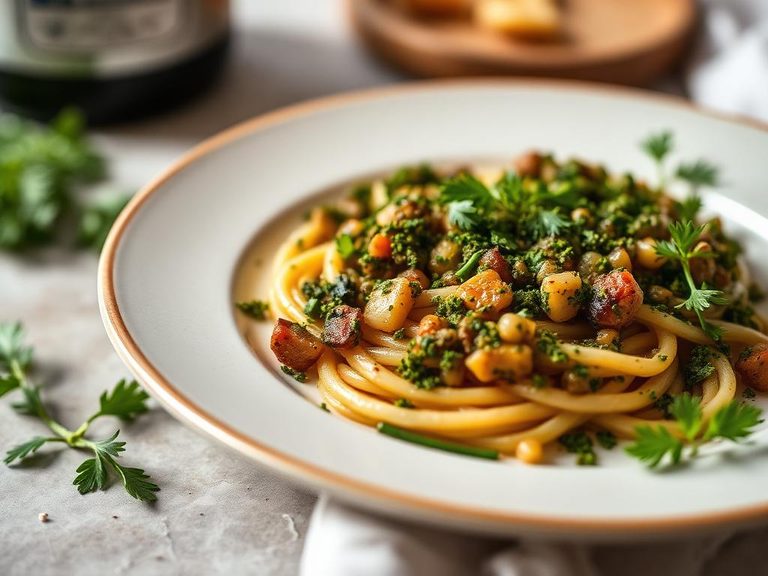
People love lemon peel for its intensely bright, aromatic flavor that can transform both sweet and savory dishes with just a small amount. It is a staple in global cuisines, from Italian gremolata to Moroccan tagines, valued for adding depth and complexity.
⚠️ Watch-outs & how to enjoy it better
The peel's strong bitterness can be overpowering for some palates, and its high fiber content may cause digestive discomfort if consumed in large quantities. To mitigate this, use it sparingly, pair it with fat or protein (like olive oil or nuts) to balance the flavor, and consider blanching or cooking it to mellow the bitterness.
Key benefits
- Rich in dietary fiber, supporting digestive health
- High in vitamin C, an essential antioxidant
- Contains flavonoids like limonene, linked to anti-inflammatory properties
- Low in calories and fat, making it a nutrient-dense flavor enhancer
- Provides a natural source of pectin, a soluble fiber
🍽️ Popular dishes

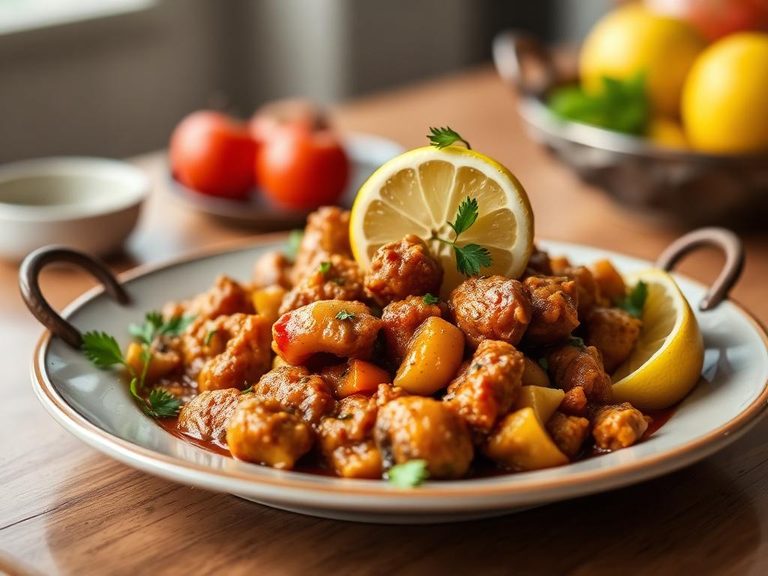
🌍 Where it's eaten
💡 Did you know?
Lemon peel contains more fiber than the flesh of the fruit and is a significant source of the compound d-limonene, which is also used in industrial cleaning products and has been studied for its potential anti-cancer properties.
Full nutrition (USDA data · scales with serving)
| Water | 81.6 g |
| Energy | 47.0 kcal |
| Energy | 197 kj |
| Protein | 1.5 g |
| Total lipid (fat) | 0.30 g |
| Ash | 0.60 g |
| Carbohydrate, by difference | 16.0 g |
| Fiber, total dietary | 10.6 g |
| Total Sugars | 4.2 g |
| Calcium, Ca | 134 mg |
| Iron, Fe | 0.80 mg |
| Magnesium, Mg | 15.0 mg |
| Phosphorus, P | 12.0 mg |
| Potassium, K | 160 mg |
| Sodium, Na | 6.0 mg |
| Zinc, Zn | 0.25 mg |
| Copper, Cu | 0.09 mg |
| Selenium, Se | 0.70 ug |
| Vitamin C, total ascorbic acid | 129 mg |
| Thiamin | 0.06 mg |
| Riboflavin | 0.08 mg |
| Niacin | 0.40 mg |
| Pantothenic acid | 0.32 mg |
| Vitamin B-6 | 0.17 mg |
| Folate, total | 13.0 ug |
| Folic acid | 0.00 ug |
| Folate, food | 13.0 ug |
| Folate, DFE | 13.0 ug |
| Choline, total | 8.5 mg |
| Vitamin B-12 | 0.00 ug |
| Vitamin B-12, added | 0.00 ug |
| Vitamin A, RAE | 3.0 ug |
| Retinol | 0.00 ug |
| Carotene, beta | 7.0 ug |
| Carotene, alpha | 1.0 ug |
| Cryptoxanthin, beta | 45.0 ug |
| Vitamin A, IU | 50.0 iu |
| Lycopene | 0.00 ug |
| Lutein + zeaxanthin | 18.0 ug |
| Vitamin E (alpha-tocopherol) | 0.25 mg |
| Vitamin E, added | 0.00 mg |
| Vitamin D (D2 + D3), International Units | 0.00 iu |
| Vitamin D (D2 + D3) | 0.00 ug |
| Vitamin K (phylloquinone) | 0.00 ug |
| Alcohol, ethyl | 0.00 g |
| Caffeine | 0.00 mg |
| Theobromine | 0.00 mg |
Fat & fatty acid profile (per 100g)
| Fatty acids, total saturated | 0.04 g |
| SFA 4:0 | 0.00 g |
| SFA 6:0 | 0.00 g |
| SFA 8:0 | 0.00 g |
| SFA 10:0 | 0.00 g |
| SFA 12:0 | 0.00 g |
| SFA 14:0 | 0.00 g |
| SFA 16:0 | 0.04 g |
| SFA 18:0 | 0.00 g |
| Fatty acids, total monounsaturated | 0.01 g |
| MUFA 16:1 | 0.00 g |
| MUFA 18:1 | 0.01 g |
| MUFA 20:1 | 0.00 g |
| MUFA 22:1 | 0.00 g |
| Fatty acids, total polyunsaturated | 0.09 g |
| PUFA 18:2 | 0.06 g |
| PUFA 18:3 | 0.03 g |
| PUFA 18:4 | 0.00 g |
| PUFA 20:4 | 0.00 g |
| PUFA 20:5 n-3 (EPA) | 0.00 g |
| PUFA 22:5 n-3 (DPA) | 0.00 g |
| PUFA 22:6 n-3 (DHA) | 0.00 g |
| Fatty acids, total trans | 0.00 g |
| Cholesterol | 0.00 mg |
| Phytosterols | 35.0 mg |
FAQ
Can I eat lemon peel raw?
Yes, but it is best used in small amounts due to its strong bitterness. Grate it as zest for flavor, or finely chop it for salads and garnishes.
How do I remove the bitterness from lemon peel?
Blanch the peel in boiling water for 1-2 minutes, then soak it in cold water or a sugar syrup to reduce bitterness before using in recipes.
Is lemon peel high in sugar?
No, it contains about 4 grams of sugar per 100 grams, which is relatively low, but its high fiber content helps moderate blood sugar response.
What are the best ways to use lemon peel?
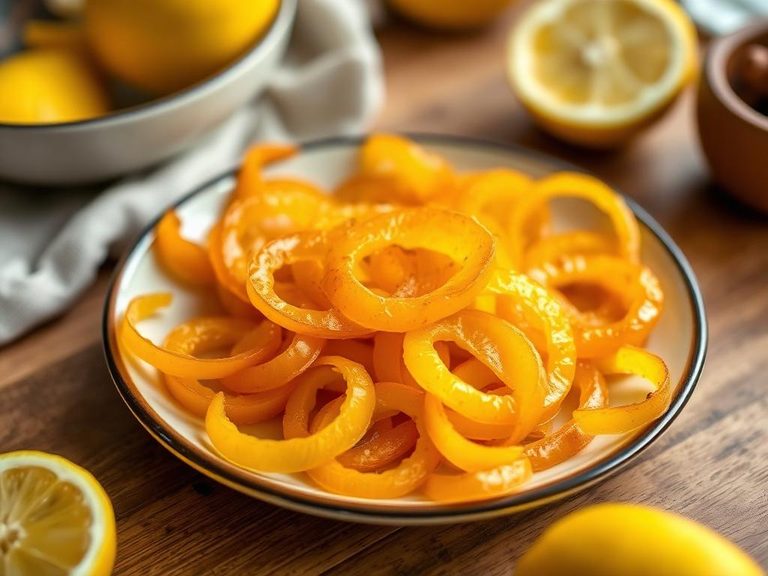
Use it as zest in baking, infuse it in oils or syrups, add it to marinades, or make candied peel for a sweet treat.
Nutrient density (calculated · NRF9.3)
Nutrient Rich Foods index: beneficial nutrients (protein, fiber, vitamins, minerals) minus saturated fat, added sugar & sodium, per 100 kcal.
NRF9.3 index — Fulgoni, Keast & Drewnowski, 2009. Computed from USDA nutrients.
Weight-loss friendliness (composite index)
Energy density 0.47 kcal/g · 13% calories from protein · 10.6 g fiber · 4.2 g sugar per 100 g.
Composite of energy density (Rolls et al., 1999), protein & fiber satiety, minus sugar. A calculated heuristic — ranks satiety-per-calorie, not a clinical measure.
Dietary load (calculated from USDA values)
Potential renal acid load. Positive = acid-forming, negative = alkaline-forming.
Sodium-to-potassium ratio: 0.04 (lower is better — aim for ≤ 1)
Sodium:potassium per WHO potassium guidance. Computed from USDA nutrients.