

Lamb, variety meats and by-products, brain, cooked, pan-fried
Whole food · Lamb, Veal, and Game Products

Photo: Wikipedia
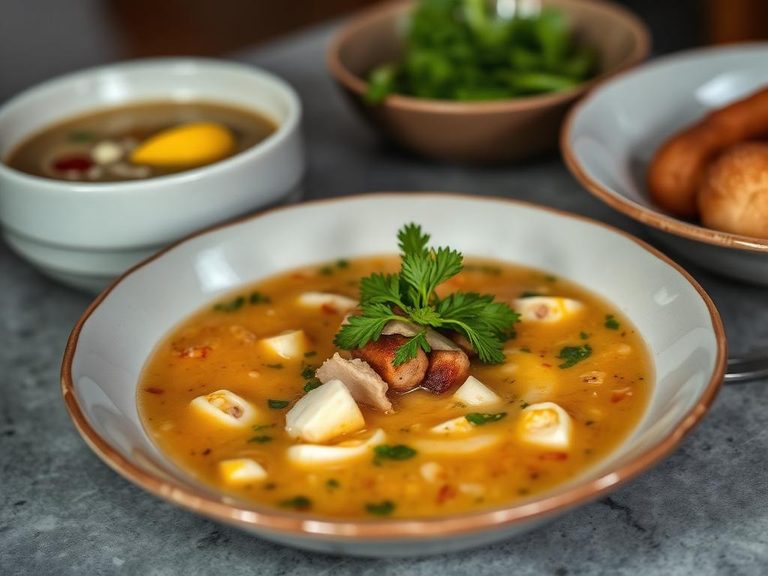
Pan-fried lamb brain is a delicate, creamy delicacy with a texture often compared to a rich, velvety custard or soft tofu. Its flavor is mild, subtly mineral, and absorbs seasonings beautifully, while the high-fat content creates a luxurious mouthfeel. Nutritionally, it's a powerhouse of protein and fat, providing significant energy and essential fatty acids with virtually no carbohydrates.
Calorie split: 25% protein · 0% carbs · 75% fat
↓ Full nutrition💚 Why it's loved
People cherish it for its unique, luxurious texture and its ability to act as a blank canvas for bold spices and sauces. It's a prized ingredient in many culinary traditions, representing nose-to-tail eating and often featured in festive or traditional dishes.
⚠️ Watch-outs & how to enjoy it better
The primary concern is its high cholesterol content, which may require moderation for individuals managing specific health conditions. To counteract this, practice strict portion control and balance the meal with fiber-rich vegetables like steamed broccoli or a fresh salad. Always source from reputable suppliers to ensure quality and safety.
Key benefits
- Excellent source of high-quality protein for muscle maintenance.
- Rich in essential fatty acids, including omega-3 DHA.
- Provides key nutrients like vitamin B12, iron, and phosphorus.
- Zero carbohydrates, making it suitable for ketogenic diets.
🍽️ Popular dishes
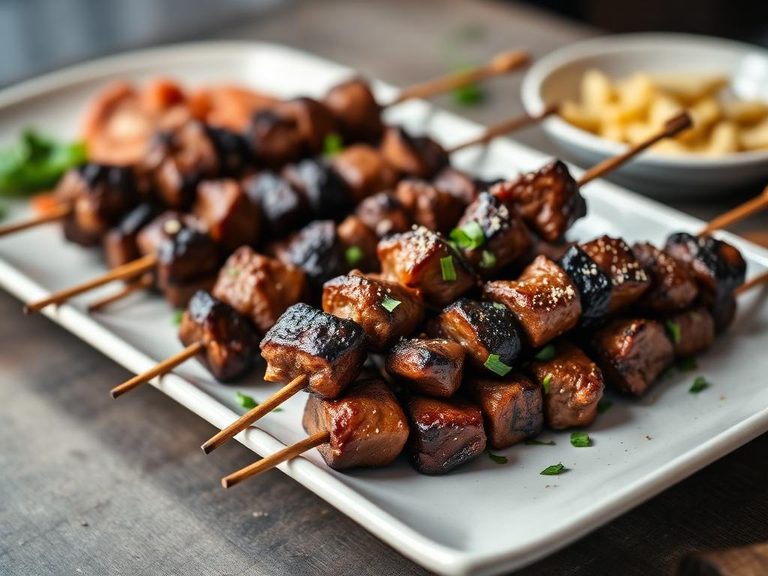
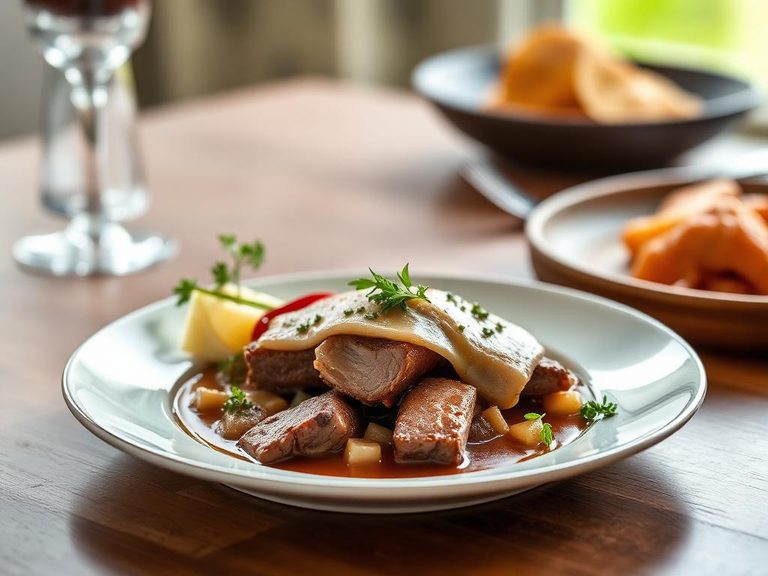
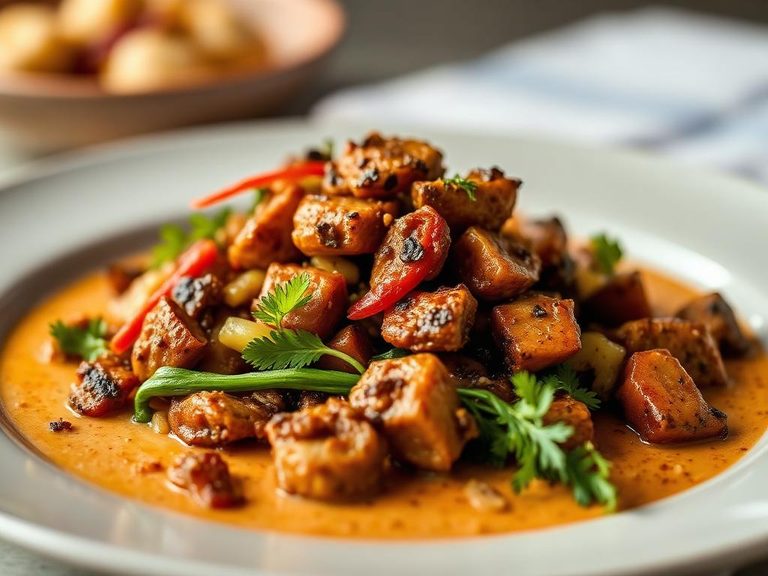
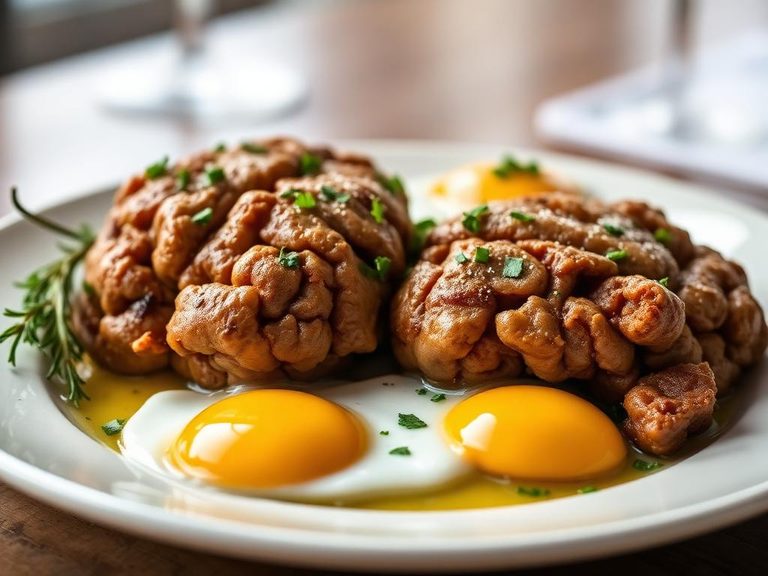
🌍 Where it's eaten
💡 Did you know?
In some traditional cuisines, lamb brain was historically believed to confer intelligence or mental fortitude to the eater, a classic example of 'like cures like' in food symbolism.
Full nutrition (USDA data · scales with serving)
| Water | 60.7 g |
| Energy | 273 kcal |
| Energy | 1142 kj |
| Protein | 17.0 g |
| Total lipid (fat) | 22.2 g |
| Ash | 1.8 g |
| Carbohydrate, by difference | 0.00 g |
| Fiber, total dietary | 0.00 g |
| Calcium, Ca | 21.0 mg |
| Iron, Fe | 2.0 mg |
| Magnesium, Mg | 22.0 mg |
| Phosphorus, P | 495 mg |
| Potassium, K | 358 mg |
| Sodium, Na | 157 mg |
| Zinc, Zn | 2.0 mg |
| Copper, Cu | 0.48 mg |
| Manganese, Mn | 0.07 mg |
| Selenium, Se | 12.0 ug |
| Vitamin C, total ascorbic acid | 23.0 mg |
| Thiamin | 0.17 mg |
| Riboflavin | 0.37 mg |
| Niacin | 4.5 mg |
| Pantothenic acid | 1.6 mg |
| Vitamin B-6 | 0.23 mg |
| Folate, total | 7.0 ug |
| Folic acid | 0.00 ug |
| Folate, food | 7.0 ug |
| Folate, DFE | 7.0 ug |
| Vitamin B-12 | 24.1 ug |
| Vitamin A, RAE | 0.00 ug |
| Retinol | 0.00 ug |
| Vitamin A, IU | 0.00 iu |
Fat & fatty acid profile (per 100g)
| Fatty acids, total saturated | 5.7 g |
| SFA 12:0 | 0.00 g |
| SFA 14:0 | 0.09 g |
| SFA 16:0 | 2.7 g |
| SFA 18:0 | 2.8 g |
| Fatty acids, total monounsaturated | 4.0 g |
| MUFA 16:1 | 0.13 g |
| MUFA 18:1 | 3.3 g |
| MUFA 20:1 | 0.32 g |
| MUFA 22:1 | 0.00 g |
| Fatty acids, total polyunsaturated | 2.3 g |
| PUFA 18:2 | 0.07 g |
| PUFA 18:3 | 0.00 g |
| PUFA 20:4 | 0.60 g |
| PUFA 20:5 n-3 (EPA) | 0.00 g |
| PUFA 22:5 n-3 (DPA) | 0.33 g |
| PUFA 22:6 n-3 (DHA) | 1.3 g |
| Cholesterol | 2504 mg |
Amino acid profile (per 100g)
| Tryptophan | 0.17 g |
| Threonine | 0.76 g |
| Isoleucine | 0.68 g |
| Leucine | 1.3 g |
| Lysine | 1.1 g |
| Methionine | 0.34 g |
| Cystine | 0.18 g |
| Phenylalanine | 0.82 g |
| Tyrosine | 0.62 g |
| Valine | 0.81 g |
| Arginine | 1.1 g |
| Histidine | 0.45 g |
| Alanine | 0.96 g |
| Aspartic acid | 1.4 g |
| Glutamic acid | 2.0 g |
| Glycine | 0.80 g |
| Proline | 0.73 g |
| Serine | 0.88 g |
FAQ
How is the texture different from other organ meats?
Unlike the dense chew of liver or heart, lamb brain has a uniquely soft, creamy, and almost custard-like texture that is very delicate and can become crumbly if overcooked.
Is it safe to eat?
When sourced from healthy, young animals and cooked thoroughly to an internal temperature of 160°F (71°C), it is safe. Proper handling and cooking are essential to eliminate any potential pathogens.
What does it taste like?
It has a very mild, slightly sweet and mineral flavor, often described as less 'gamey' than liver. Its mildness makes it excellent for absorbing the flavors of garlic, herbs, and sauces.
Nutrient density (calculated · NRF9.3)
Nutrient Rich Foods index: beneficial nutrients (protein, fiber, vitamins, minerals) minus saturated fat, added sugar & sodium, per 100 kcal.
NRF9.3 index — Fulgoni, Keast & Drewnowski, 2009. Computed from USDA nutrients.
Weight-loss friendliness (composite index)
Energy density 2.73 kcal/g · 25% calories from protein · 0.0 g fiber · 0.0 g sugar per 100 g.
Composite of energy density (Rolls et al., 1999), protein & fiber satiety, minus sugar. A calculated heuristic — ranks satiety-per-calorie, not a clinical measure.
Dietary load (calculated from USDA values)
Potential renal acid load. Positive = acid-forming, negative = alkaline-forming.
Sodium-to-potassium ratio: 0.44 (lower is better — aim for ≤ 1)
Sodium:potassium per WHO potassium guidance. Computed from USDA nutrients.