

Lamb, leg, sirloin half, separable lean and fat, trimmed to 1/4" fat, choice, raw
Whole food · Lamb, Veal, and Game Products

Photo: Wikipedia
This is a premium cut from the upper rear leg of lamb, prized for its robust, meaty flavor and a satisfying texture that balances lean tenderness with a marbling of fat. Nutritionally, it's a powerhouse of high-quality protein and essential fats, delivering a substantial 272 calories and over 16 grams of protein per 100 grams. The rich, deep taste is a hallmark of well-raised lamb, making it a centerpiece for special meals.
Calorie split: 25% protein · 0% carbs · 75% fat
↓ Full nutrition💚 Why it's loved
People cherish this cut for its deep, distinctive lamb flavor that is rich but not gamey when cooked properly. Its versatility allows it to shine in everything from slow-roasted holiday feasts to quick-seared steaks, making it a beloved choice for celebratory and comforting meals.
⚠️ Watch-outs & how to enjoy it better
The high fat content (over 22g per 100g) makes it a calorie-dense choice, which may not suit strict low-fat diets. The strong flavor can be off-putting to those new to lamb. To counteract, trim visible fat before cooking and pair with acidic or herbaceous sides like a mint sauce, lemony salad, or roasted vegetables to cut through the richness.
Key benefits
- Excellent source of complete, high-quality protein for muscle maintenance.
- Rich in iron, zinc, and B vitamins, especially B12 for energy metabolism.
- Provides conjugated linoleic acid (CLA), a type of beneficial fatty acid.
- The fat content aids in the absorption of fat-soluble vitamins (A, D, E, K).
- A nutrient-dense choice for those following low-carb or ketogenic diets.
🍽️ Popular dishes
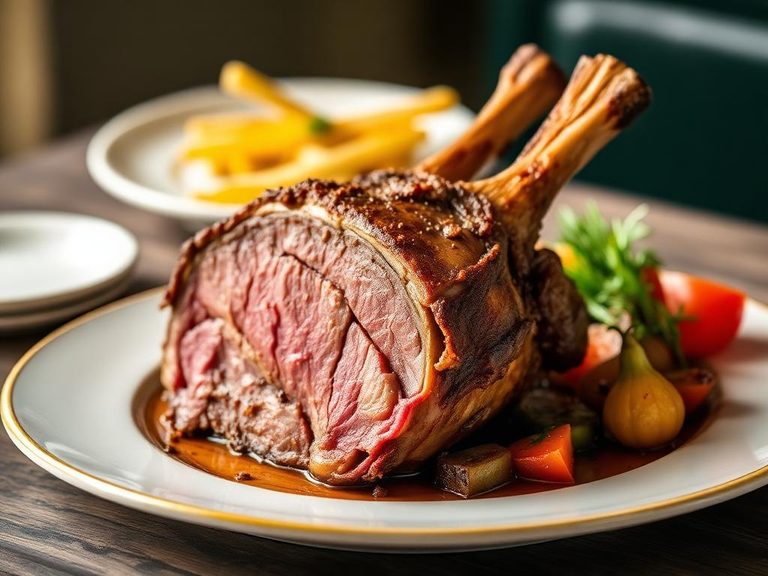
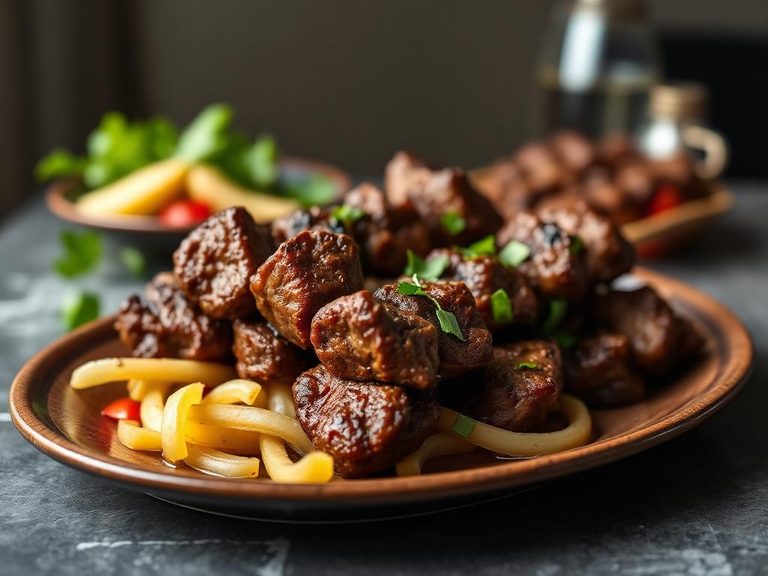
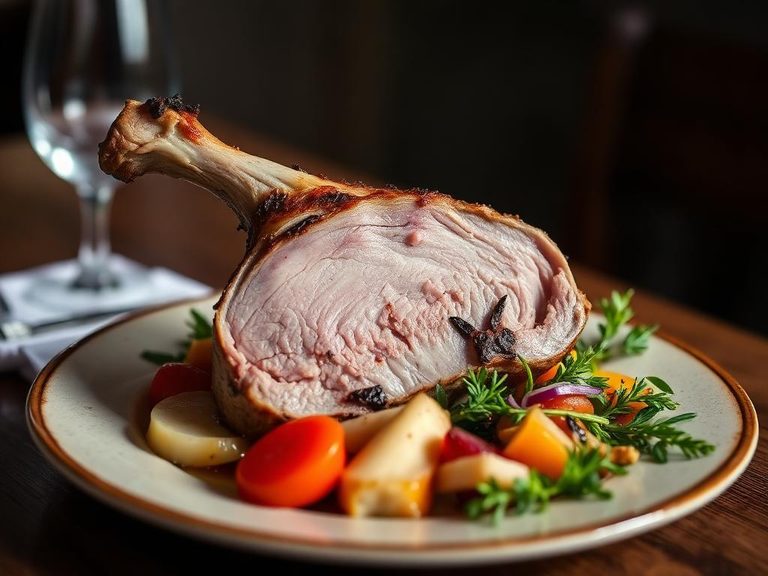
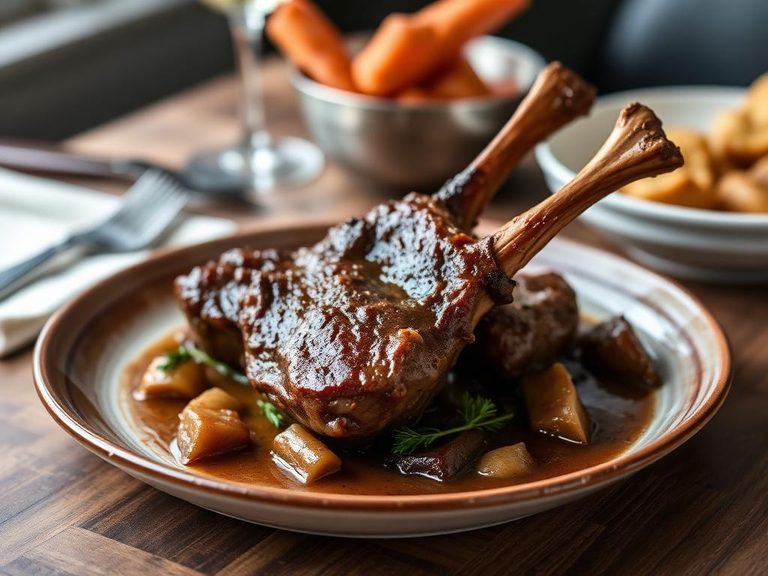
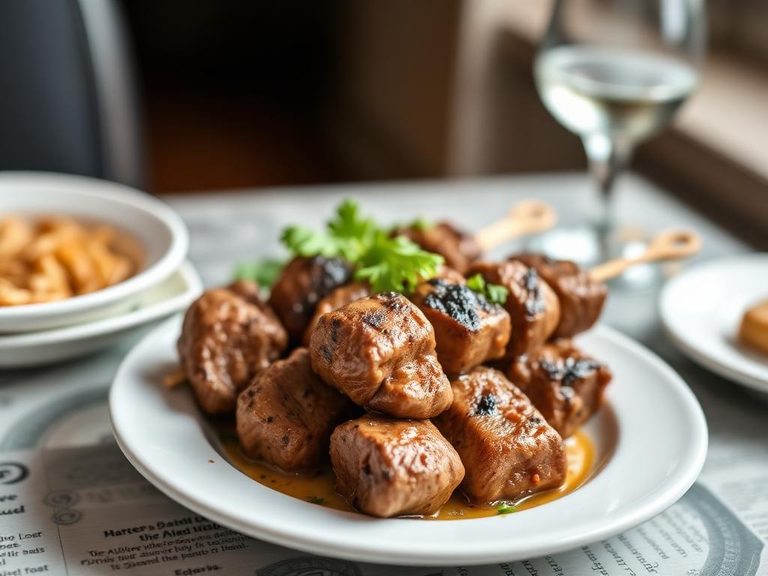
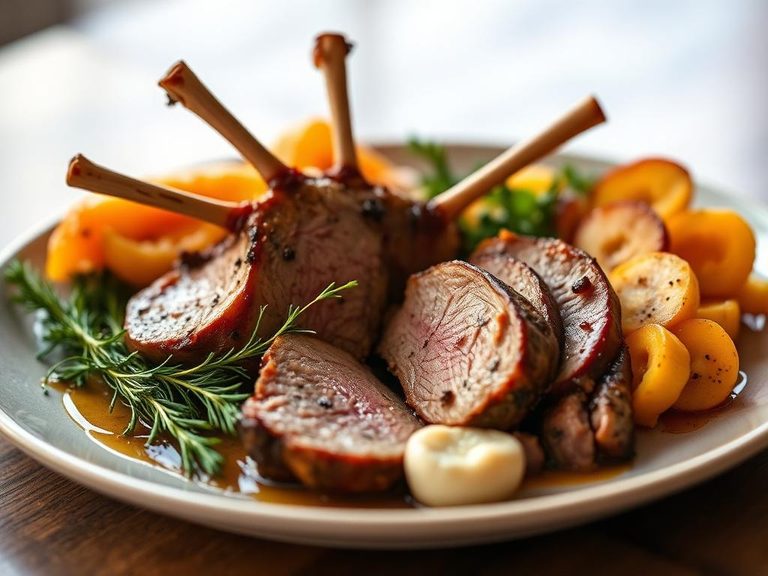
🌍 Where it's eaten
💡 Did you know?
The specific term 'sirloin half' refers to the upper portion of the leg, which contains the sirloin tip muscle, making it slightly more tender and prized for roasting than the lower 'shank half'.
Full nutrition (USDA data · scales with serving)
| Water | 60.3 g |
| Energy | 272 kcal |
| Energy | 1138 kj |
| Protein | 16.9 g |
| Total lipid (fat) | 22.1 g |
| Ash | 0.89 g |
| Carbohydrate, by difference | 0.00 g |
| Fiber, total dietary | 0.00 g |
| Calcium, Ca | 10.0 mg |
| Iron, Fe | 1.6 mg |
| Magnesium, Mg | 22.0 mg |
| Phosphorus, P | 159 mg |
| Potassium, K | 231 mg |
| Sodium, Na | 56.0 mg |
| Zinc, Zn | 3.1 mg |
| Copper, Cu | 0.11 mg |
| Manganese, Mn | 0.02 mg |
| Selenium, Se | 19.6 ug |
| Vitamin C, total ascorbic acid | 0.00 mg |
| Thiamin | 0.12 mg |
| Riboflavin | 0.23 mg |
| Niacin | 6.3 mg |
| Pantothenic acid | 0.70 mg |
| Vitamin B-6 | 0.14 mg |
| Folate, total | 18.0 ug |
| Folic acid | 0.00 ug |
| Folate, food | 18.0 ug |
| Folate, DFE | 18.0 ug |
| Vitamin B-12 | 2.5 ug |
| Vitamin A, RAE | 0.00 ug |
| Retinol | 0.00 ug |
| Vitamin A, IU | 0.00 iu |
| Vitamin E (alpha-tocopherol) | 0.22 mg |
Fat & fatty acid profile (per 100g)
| Fatty acids, total saturated | 9.7 g |
| SFA 10:0 | 0.06 g |
| SFA 12:0 | 0.10 g |
| SFA 14:0 | 0.90 g |
| SFA 16:0 | 4.9 g |
| SFA 18:0 | 3.1 g |
| Fatty acids, total monounsaturated | 9.1 g |
| MUFA 16:1 | 0.64 g |
| MUFA 18:1 | 8.2 g |
| Fatty acids, total polyunsaturated | 1.7 g |
| PUFA 18:2 | 1.3 g |
| PUFA 18:3 | 0.40 g |
| PUFA 20:4 | 0.07 g |
| Cholesterol | 72.0 mg |
Amino acid profile (per 100g)
| Tryptophan | 0.20 g |
| Threonine | 0.72 g |
| Isoleucine | 0.82 g |
| Leucine | 1.3 g |
| Lysine | 1.5 g |
| Methionine | 0.43 g |
| Cystine | 0.20 g |
| Phenylalanine | 0.69 g |
| Tyrosine | 0.57 g |
| Valine | 0.91 g |
| Arginine | 1.0 g |
| Histidine | 0.54 g |
| Alanine | 1.0 g |
| Aspartic acid | 1.5 g |
| Glutamic acid | 2.5 g |
| Glycine | 0.83 g |
| Proline | 0.71 g |
| Serine | 0.63 g |
FAQ
What is the best way to cook this cut to keep it tender?
For maximum tenderness, use dry-heat methods like roasting, grilling, or broiling to medium-rare or medium doneness. For tougher pieces, slow-braising or stewing breaks down connective tissue beautifully.
How can I reduce the strong 'lamb' taste?
Marinating the meat for several hours in acidic ingredients like yogurt, lemon juice, or vinegar, combined with garlic and herbs like rosemary, can mellow the flavor. Trimming excess fat before cooking also helps.
Is this cut suitable for grilling?
Yes, it's excellent for grilling. Cut into thick steaks or kebabs, marinate well, and cook over medium-high heat. Be careful not to overcook, as lean lamb can dry out quickly.
Nutrient density (calculated · NRF9.3)
Nutrient Rich Foods index: beneficial nutrients (protein, fiber, vitamins, minerals) minus saturated fat, added sugar & sodium, per 100 kcal.
NRF9.3 index — Fulgoni, Keast & Drewnowski, 2009. Computed from USDA nutrients.
Weight-loss friendliness (composite index)
Energy density 2.72 kcal/g · 25% calories from protein · 0.0 g fiber · 0.0 g sugar per 100 g.
Composite of energy density (Rolls et al., 1999), protein & fiber satiety, minus sugar. A calculated heuristic — ranks satiety-per-calorie, not a clinical measure.
Dietary load (calculated from USDA values)
Potential renal acid load. Positive = acid-forming, negative = alkaline-forming.
Sodium-to-potassium ratio: 0.24 (lower is better — aim for ≤ 1)
Sodium:potassium per WHO potassium guidance. Computed from USDA nutrients.