

Easter Lamb
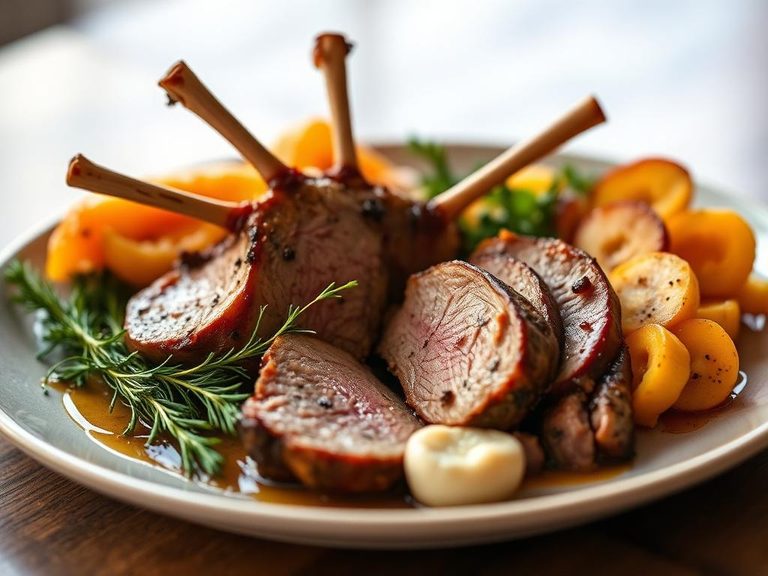
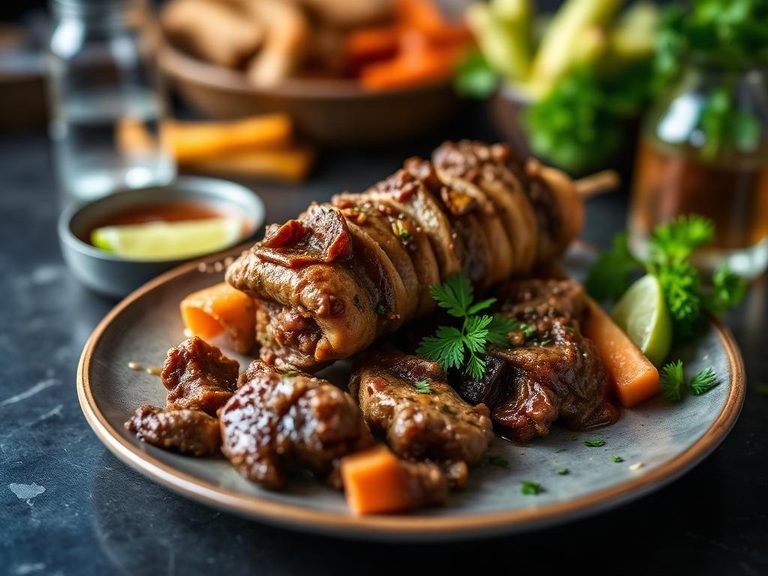
Easter Lamb is a traditional centerpiece dish, often a roasted leg or rack of lamb, symbolizing spring and renewal. It is typically prepared with herbs like rosemary and garlic, and is a staple in Mediterranean, Middle Eastern, and European cuisines for Easter celebrations.
🍽️ Nutrition at a glance
This dish is high in protein and healthy fats, providing key nutrients like iron, zinc, and B vitamins. A typical serving of roasted lamb can range from 300 to 500 calories, depending on the cut and preparation.
Nutrition breakdown
| Calories | 1200 kcal |
| Protein | 120 g |
| Carbs | 0 g |
| Fat | 80 g |
| Fiber | 0 g |
| Sugar | 0 g |
| Sodium | 350 mg |
| Iron | 8 mg |
| Zinc | 15 mg |
| Vitamin B12 | 12 µg |
| Niacin (B3) | 30 mg |
| Phosphorus | 800 mg |
| Selenium | 120 µg |
| Potassium | 900 mg |
| Vitamin B6 | 1.2 mg |
Per 1 leg (approx. 500 g cooked meat) · estimated, varies by recipe
💡 What's interesting
The lamb symbolizes innocence and sacrifice in many Christian traditions, making it a meaningful Easter dish. Nutritionally, lamb is one of the richest sources of conjugated linoleic acid (CLA), a fatty acid studied for its potential health benefits.
🍽️ Related dishes

AI estimate may be inaccurate · Terms