

Fish oil, cod liver
Whole food · Fats and Oils

Photo: Wikipedia
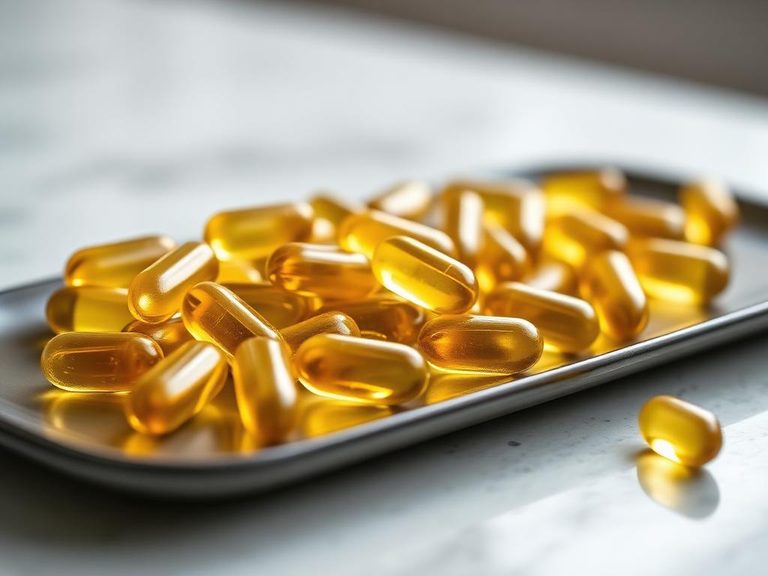
Cod liver oil is a thick, golden-yellow oil extracted from the liver of Atlantic cod, known for its distinct, potent fishy aroma and smooth, oily texture. It is a concentrated source of fat-soluble vitamins A and D, as well as omega-3 fatty acids, making it a traditional nutritional supplement rather than a culinary cooking oil.
Calorie split: 0% protein · 0% carbs · 100% fat
↓ Full nutrition💚 Why it's loved
People value it as a traditional, potent nutritional supplement, especially in Northern European cultures where sunlight is scarce in winter, and for its historical role in supporting public health.
⚠️ Watch-outs & how to enjoy it better
Its strong, fishy taste and smell are off-putting to many, and it can cause fishy burps or digestive upset. Those on blood thinners (due to vitamin K content) or with fish allergies should be cautious; taking it with a meal can reduce aftertaste.
Key benefits
- Rich source of vitamin D for bone health
- Provides vitamin A for vision and immune function
- Contains omega-3 fatty acids (EPA & DHA)
- Historically used to prevent rickets
- Concentrated source of fat-soluble nutrients
🍽️ Popular dishes
🌍 Where it's eaten
💡 Did you know?
During World War II, the British government mandated the daily distribution of cod liver oil to children and pregnant women to prevent malnutrition-related diseases.
Full nutrition (USDA data · scales with serving)
| Water | 0.00 g |
| Energy | 902 kcal |
| Energy | 3774 kj |
| Protein | 0.00 g |
| Total lipid (fat) | 100 g |
| Ash | 0.00 g |
| Carbohydrate, by difference | 0.00 g |
| Fiber, total dietary | 0.00 g |
| Calcium, Ca | 0.00 mg |
| Iron, Fe | 0.00 mg |
| Magnesium, Mg | 0.00 mg |
| Phosphorus, P | 0.00 mg |
| Potassium, K | 0.00 mg |
| Sodium, Na | 0.00 mg |
| Zinc, Zn | 0.00 mg |
| Copper, Cu | 0.00 mg |
| Manganese, Mn | 0.00 mg |
| Selenium, Se | 0.00 ug |
| Vitamin C, total ascorbic acid | 0.00 mg |
| Riboflavin | 0.00 mg |
| Niacin | 0.00 mg |
| Pantothenic acid | 0.00 mg |
| Vitamin B-6 | 0.00 mg |
| Folate, total | 0.00 ug |
| Folic acid | 0.00 ug |
| Folate, food | 0.00 ug |
| Folate, DFE | 0.00 ug |
| Vitamin B-12 | 0.00 ug |
| Vitamin A, RAE | 30000 ug |
| Retinol | 30000 ug |
| Vitamin A, IU | 100000 iu |
| Vitamin D (D2 + D3), International Units | 10000 iu |
| Vitamin D (D2 + D3) | 250 ug |
Fat & fatty acid profile (per 100g)
| Fatty acids, total saturated | 22.6 g |
| SFA 14:0 | 3.6 g |
| SFA 16:0 | 10.6 g |
| SFA 18:0 | 2.8 g |
| Fatty acids, total monounsaturated | 46.7 g |
| MUFA 16:1 | 8.3 g |
| MUFA 18:1 | 20.7 g |
| MUFA 20:1 | 10.4 g |
| MUFA 22:1 | 7.3 g |
| Fatty acids, total polyunsaturated | 22.5 g |
| PUFA 18:2 | 0.94 g |
| PUFA 18:3 | 0.94 g |
| PUFA 18:4 | 0.94 g |
| PUFA 20:4 | 0.94 g |
| PUFA 20:5 n-3 (EPA) | 6.9 g |
| PUFA 22:5 n-3 (DPA) | 0.94 g |
| PUFA 22:6 n-3 (DHA) | 11.0 g |
| Cholesterol | 570 mg |
Amino acid profile (per 100g)
Estimated from Fish, tuna, white, canned in oil, without salt, drained solids — USDA does not publish this profile for Fish oil.
| Tryptophan | 0.30 g |
| Threonine | 1.2 g |
| Isoleucine | 1.2 g |
| Leucine | 2.2 g |
| Lysine | 2.4 g |
| Methionine | 0.79 g |
| Cystine | 0.28 g |
| Phenylalanine | 1.0 g |
| Tyrosine | 0.90 g |
| Valine | 1.4 g |
| Arginine | 1.6 g |
| Histidine | 0.78 g |
| Alanine | 1.6 g |
| Aspartic acid | 2.7 g |
| Glutamic acid | 4.0 g |
| Glycine | 1.3 g |
| Proline | 0.94 g |
| Serine | 1.1 g |
FAQ
Is cod liver oil the same as regular fish oil?
No. Cod liver oil is extracted specifically from the liver and is high in vitamins A and D. Regular fish oil (from flesh) is primarily a source of omega-3s without the high vitamin content.
Can I cook with cod liver oil?
It is not recommended for cooking or frying. Its high vitamin content can degrade with heat, and its strong flavor would overpower most dishes. It's best taken as a supplement or added to cold foods.
Why does it sometimes cause fishy burps?
The oil can reflux from the stomach. Taking it with a meal, freezing the capsules before ingestion, or choosing an enteric-coated version can minimize this effect.
Nutrient density (calculated · NRF9.3)
Nutrient Rich Foods index: beneficial nutrients (protein, fiber, vitamins, minerals) minus saturated fat, added sugar & sodium, per 100 kcal.
NRF9.3 index — Fulgoni, Keast & Drewnowski, 2009. Computed from USDA nutrients.
Weight-loss friendliness (composite index)
Energy density 9.02 kcal/g · 0% calories from protein · 0.0 g fiber · 0.0 g sugar per 100 g.
Composite of energy density (Rolls et al., 1999), protein & fiber satiety, minus sugar. A calculated heuristic — ranks satiety-per-calorie, not a clinical measure.
Dietary load (calculated from USDA values)
Potential renal acid load. Positive = acid-forming, negative = alkaline-forming.
Sodium:potassium per WHO potassium guidance. Computed from USDA nutrients.