

Fish, lingcod, liver (Alaska Native)
Whole food · American Indian/Alaska Native Foods

Photo: Wikipedia
Lingcod liver is a rich, oily delicacy from the cold waters of the North Pacific, prized for its smooth, buttery texture and deep, savory flavor. It is exceptionally high in fat and calories, making it a dense source of energy and nutrients. Often compared to cod liver oil in its nutritional profile, it offers a concentrated dose of healthy fats and vitamins.
Calorie split: 5% protein · 6% carbs · 89% fat
↓ Full nutrition💚 Why it's loved
People love it for its luxurious, melt-in-the-mouth richness and deep, umami flavor that is more intense than typical fish. It is a cherished traditional food in Alaskan Native cultures, often enjoyed for its nutritional density and connection to the sea.
⚠️ Watch-outs & how to enjoy it better
Its extremely high fat and calorie content can be a concern for those managing weight or fat intake. The strong, oily flavor and texture may be off-putting to those not accustomed to organ meats or fish livers. To counteract, pair it with acidic or crisp sides like pickled vegetables or a simple salad to cut through the richness, and practice portion control.
Key benefits
- Extremely high in omega-3 fatty acids
- Rich in vitamin A and vitamin D
- Provides a dense source of calories for energy
- Contains essential fatty acids for heart and brain health
- A traditional food source for coastal communities
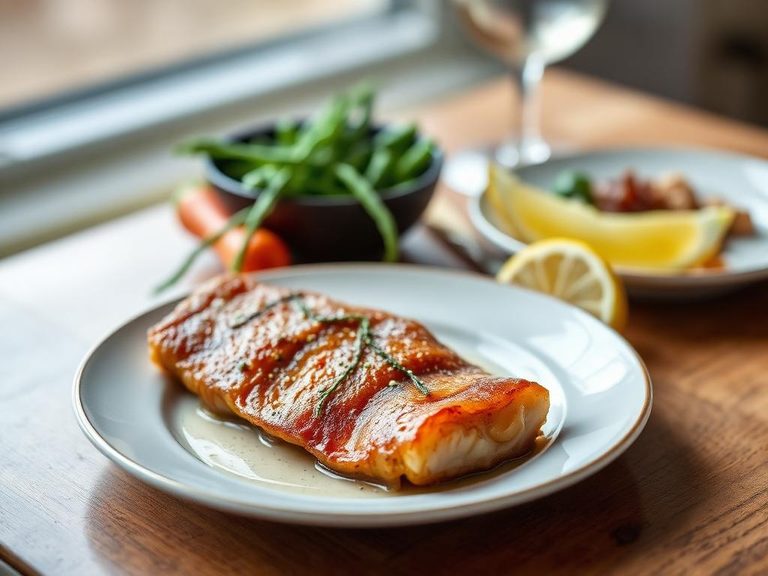
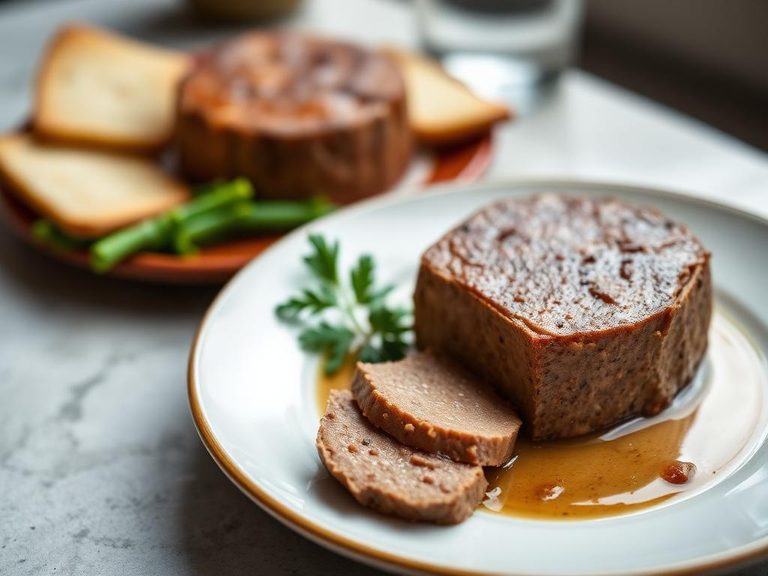
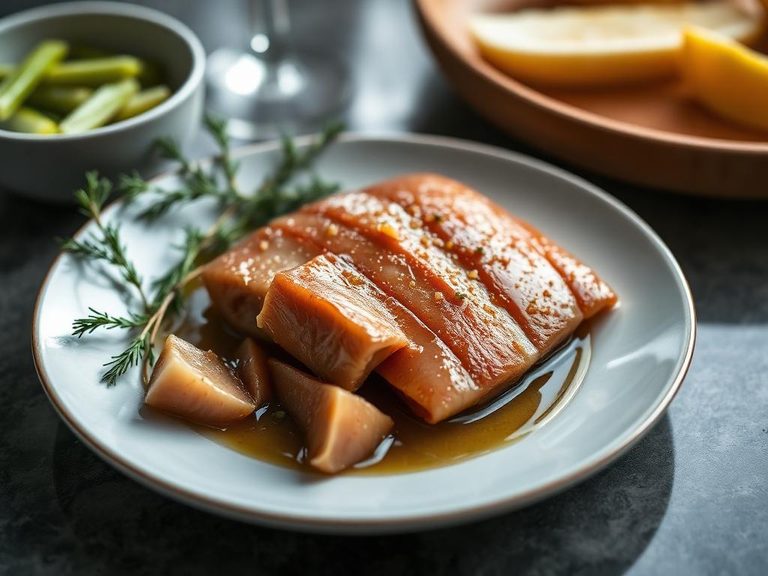
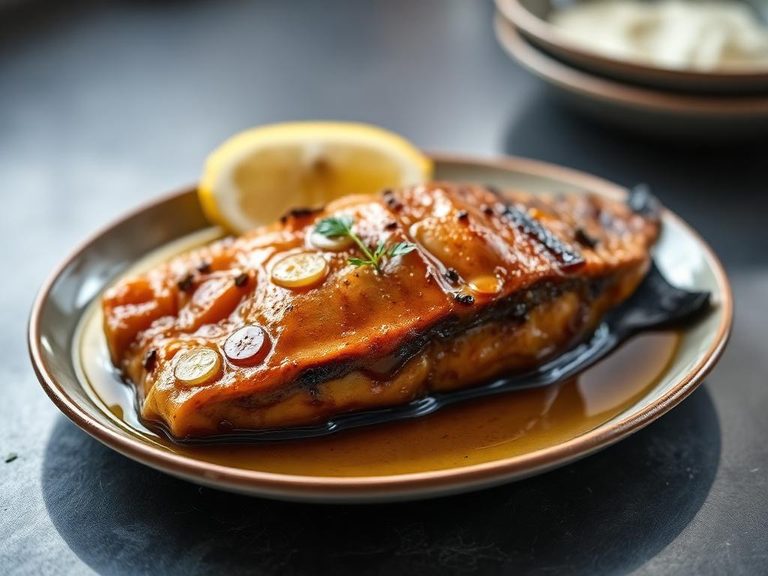
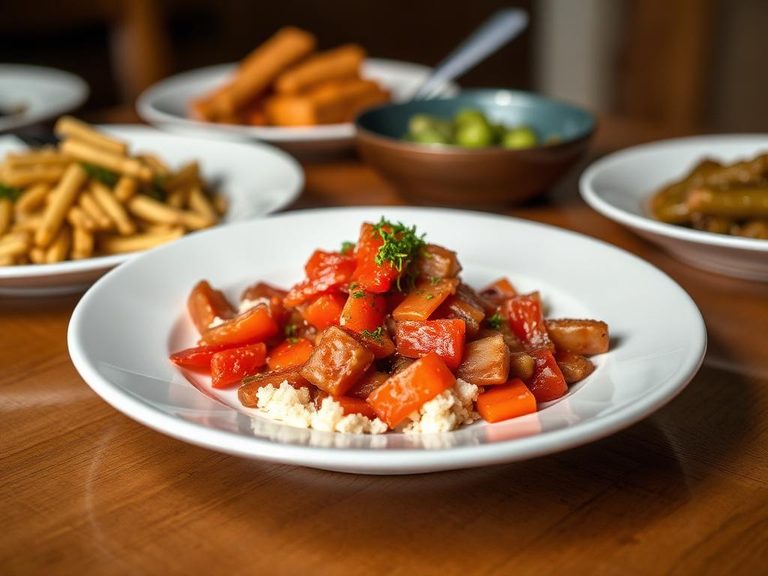
🍽️ Popular dishes
🌍 Where it's eaten
💡 Did you know?
Lingcod is not a true cod but a member of the greenling family, and its liver is so rich in oil that it was historically rendered into a lamp fuel by coastal communities.
Full nutrition (USDA data · scales with serving)
| Water | 45.9 g |
| Energy | 424 kcal |
| Energy | 1776 kj |
| Protein | 5.6 g |
| Total lipid (fat) | 42.0 g |
| Ash | 0.50 g |
| Carbohydrate, by difference | 6.0 g |
| Calcium, Ca | 5.0 mg |
| Iron, Fe | 1.0 mg |
| Phosphorus, P | 123 mg |
| Vitamin C, total ascorbic acid | 0.00 mg |
| Thiamin | 0.22 mg |
| Niacin | 4.2 mg |
| Vitamin A, IU | 9100 iu |
Fat & fatty acid profile (per 100g)
Estimated from Fish, halibut, raw, with skin (Alaska Native) — USDA does not publish this profile for Fish.
| Fatty acids, total saturated | 0.73 g |
| SFA 8:0 | 0.00 g |
| SFA 10:0 | 0.00 g |
| SFA 12:0 | 0.00 g |
| SFA 14:0 | 0.09 g |
| SFA 15:0 | 0.01 g |
| SFA 16:0 | 0.38 g |
| SFA 17:0 | 0.00 g |
| SFA 18:0 | 0.09 g |
| SFA 20:0 | 0.01 g |
| SFA 22:0 | 0.00 g |
| SFA 24:0 | 0.00 g |
| Fatty acids, total monounsaturated | 1.2 g |
| MUFA 14:1 | 0.00 g |
| MUFA 15:1 | 0.00 g |
| MUFA 16:1 | 0.23 g |
| MUFA 17:1 | 0.00 g |
| MUFA 18:1 | 0.59 g |
| MUFA 20:1 | 0.11 g |
| MUFA 22:1 | 0.00 g |
| MUFA 22:1 c | 0.00 g |
| MUFA 24:1 c | 0.01 g |
| Fatty acids, total polyunsaturated | 0.91 g |
| PUFA 18:2 | 0.02 g |
| PUFA 18:3 | 0.01 g |
| PUFA 18:3 n-3 c,c,c (ALA) | 0.01 g |
| PUFA 18:3 n-6 c,c,c | 0.00 g |
| PUFA 18:4 | 0.00 g |
| PUFA 20:2 n-6 c,c | 0.01 g |
| PUFA 20:3 | 0.00 g |
| PUFA 20:4 | 0.03 g |
| PUFA 20:5 n-3 (EPA) | 0.22 g |
| PUFA 21:5 | 0.00 g |
| PUFA 22:4 | 0.00 g |
| PUFA 22:5 n-3 (DPA) | 0.06 g |
| PUFA 22:6 n-3 (DHA) | 0.39 g |
| Cholesterol | 72.0 mg |
Amino acid profile (per 100g)
Estimated from Fish, halibut, raw, with skin (Alaska Native) — USDA does not publish this profile for Fish.
| Tryptophan | 0.31 g |
| Threonine | 0.95 g |
| Isoleucine | 0.94 g |
| Leucine | 1.6 g |
| Lysine | 1.8 g |
| Methionine | 0.80 g |
| Cystine | 0.35 g |
| Phenylalanine | 0.82 g |
| Tyrosine | 0.70 g |
| Valine | 1.0 g |
| Arginine | 1.2 g |
| Histidine | 0.50 g |
| Alanine | 1.2 g |
| Aspartic acid | 2.8 g |
| Glutamic acid | 3.2 g |
| Glycine | 0.93 g |
| Proline | 0.73 g |
| Serine | 0.91 g |
| Hydroxyproline | 0.18 g |
FAQ
Is lingcod liver safe to eat raw?
While some traditional preparations involve raw consumption, it is generally recommended to cook lingcod liver thoroughly to reduce the risk of foodborne illness, especially if it is not sourced from a trusted, fresh catch.
How does lingcod liver compare to cod liver oil?
Lingcod liver is a whole food that provides the same omega-3s, vitamin A, and vitamin D as cod liver oil, but in a solid, edible form with additional protein and texture.
Can lingcod liver be stored for long periods?
It is best consumed fresh or within a few days if refrigerated. For longer storage, it can be frozen or preserved by pickling or rendering into oil, which was a traditional method.
Weight-loss friendliness (composite index)
Energy density 4.24 kcal/g · 5% calories from protein · 0.0 g fiber · 0.0 g sugar per 100 g.
Composite of energy density (Rolls et al., 1999), protein & fiber satiety, minus sugar. A calculated heuristic — ranks satiety-per-calorie, not a clinical measure.