

Crustaceans, crayfish, mixed species, farmed, cooked, moist heat
Whole food · Finfish and Shellfish Products

Photo: Wikipedia
Crayfish, or crawfish, are small freshwater crustaceans that turn a vibrant red when cooked. Their meat is tender, sweet, and slightly briny, with a texture often compared to a cross between shrimp and lobster. Nutritionally, they are a powerhouse of lean protein with virtually no fat or carbohydrates.
Calorie split: 86% protein · 0% carbs · 14% fat
↓ Full nutrition💚 Why it's loved
People adore crayfish for their uniquely sweet, delicate flavor that carries the essence of its cooking broth, making them a social and flavorful centerpiece for communal feasts.
⚠️ Watch-outs & how to enjoy it better
Crayfish are a common shellfish allergen and can be high in sodium depending on the cooking method. To manage sodium, opt for boiling in unsalted water or using low-sodium seasonings, and always check for allergies before serving.
Key benefits
- Excellent source of high-quality, complete protein
- Very low in fat and calories
- Naturally carbohydrate-free
- Rich in selenium and vitamin B12
🍽️ Popular dishes
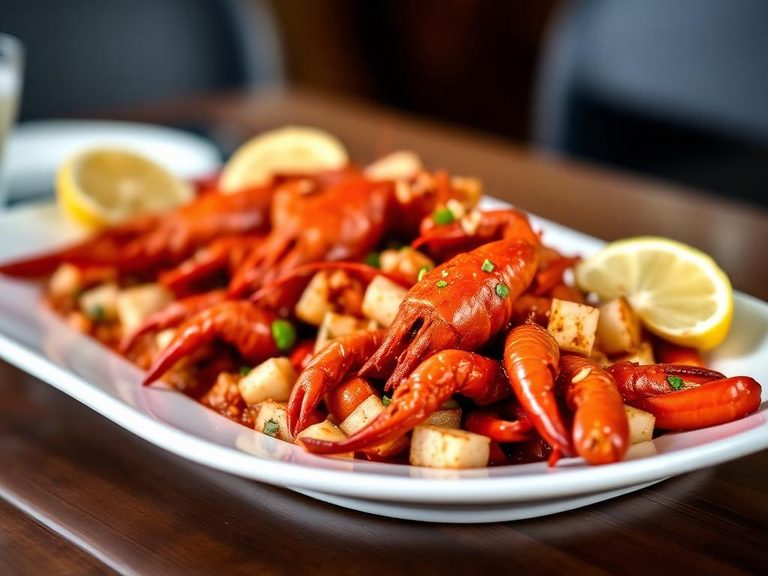
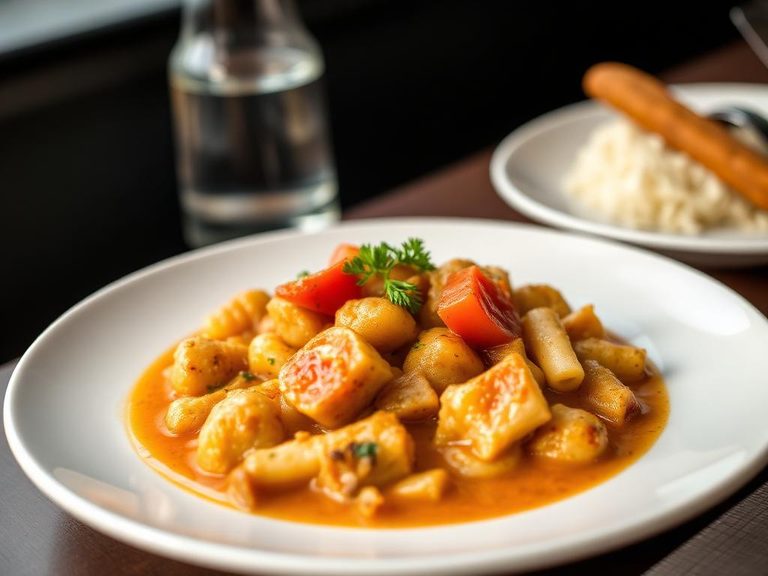
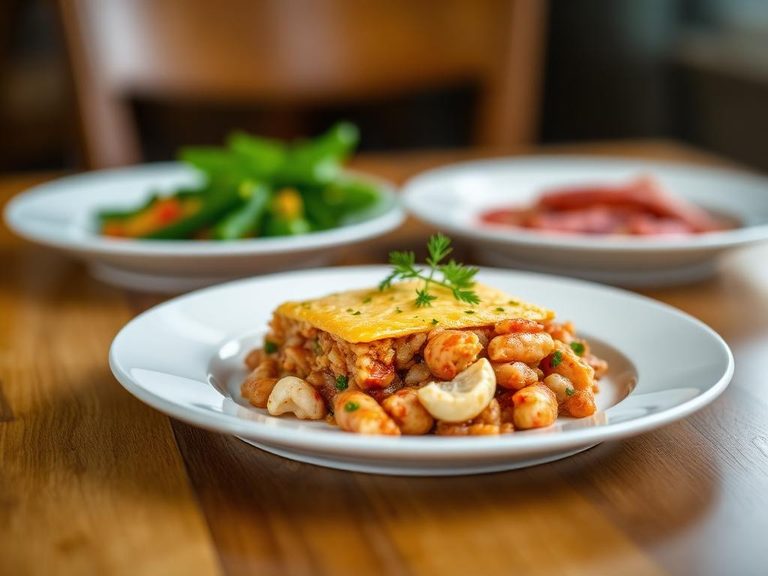
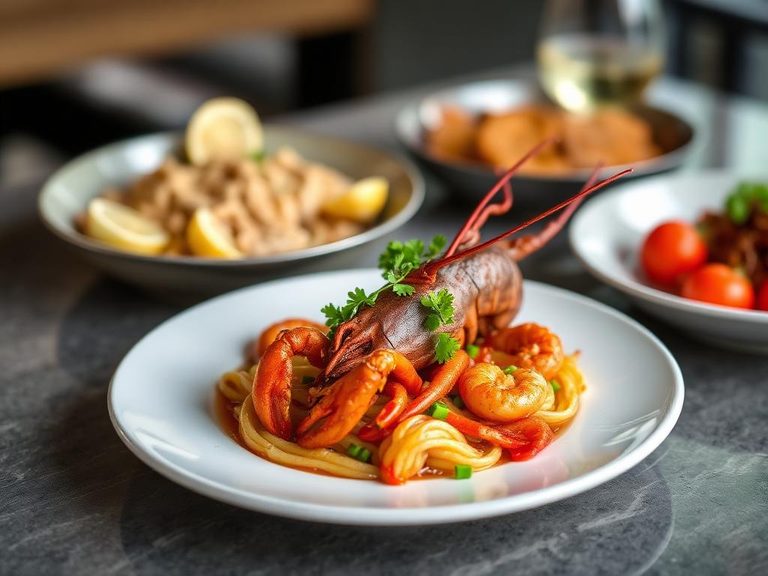

🌍 Where it's eaten
💡 Did you know?
A single female crayfish can carry 200 to 2,000 eggs under her tail, which she guards fiercely until they hatch.
Full nutrition (USDA data · scales with serving)
| Water | 80.8 g |
| Energy | 87.0 kcal |
| Energy | 364 kj |
| Protein | 17.5 g |
| Total lipid (fat) | 1.3 g |
| Ash | 1.1 g |
| Carbohydrate, by difference | 0.00 g |
| Fiber, total dietary | 0.00 g |
| Calcium, Ca | 51.0 mg |
| Iron, Fe | 1.1 mg |
| Magnesium, Mg | 33.0 mg |
| Phosphorus, P | 241 mg |
| Potassium, K | 238 mg |
| Sodium, Na | 97.0 mg |
| Zinc, Zn | 1.5 mg |
| Copper, Cu | 0.58 mg |
| Manganese, Mn | 0.22 mg |
| Selenium, Se | 34.2 ug |
| Vitamin C, total ascorbic acid | 0.50 mg |
| Thiamin | 0.05 mg |
| Riboflavin | 0.08 mg |
| Niacin | 1.7 mg |
| Pantothenic acid | 0.51 mg |
| Vitamin B-6 | 0.13 mg |
| Folate, total | 11.0 ug |
| Folic acid | 0.00 ug |
| Folate, food | 11.0 ug |
| Folate, DFE | 11.0 ug |
| Vitamin B-12 | 3.1 ug |
| Vitamin A, RAE | 15.0 ug |
| Retinol | 15.0 ug |
| Vitamin A, IU | 50.0 iu |
Fat & fatty acid profile (per 100g)
| Fatty acids, total saturated | 0.22 g |
| SFA 14:0 | 0.01 g |
| SFA 16:0 | 0.14 g |
| SFA 18:0 | 0.05 g |
| Fatty acids, total monounsaturated | 0.25 g |
| MUFA 16:1 | 0.04 g |
| MUFA 18:1 | 0.19 g |
| MUFA 20:1 | 0.01 g |
| Fatty acids, total polyunsaturated | 0.41 g |
| PUFA 18:2 | 0.16 g |
| PUFA 18:3 | 0.02 g |
| PUFA 18:4 | 0.00 g |
| PUFA 20:4 | 0.06 g |
| PUFA 20:5 n-3 (EPA) | 0.12 g |
| PUFA 22:6 n-3 (DHA) | 0.04 g |
| Cholesterol | 137 mg |
Amino acid profile (per 100g)
| Tryptophan | 0.24 g |
| Threonine | 0.71 g |
| Isoleucine | 0.85 g |
| Leucine | 1.4 g |
| Lysine | 1.5 g |
| Methionine | 0.49 g |
| Cystine | 0.20 g |
| Phenylalanine | 0.74 g |
| Tyrosine | 0.58 g |
| Valine | 0.82 g |
| Arginine | 1.5 g |
| Histidine | 0.36 g |
| Alanine | 0.99 g |
| Aspartic acid | 1.8 g |
| Glutamic acid | 3.0 g |
| Glycine | 1.1 g |
| Proline | 0.58 g |
| Serine | 0.69 g |
FAQ
What's the difference between crayfish and crawfish?
They are the same animal. 'Crawfish' is the common term in the American South, while 'crayfish' is used elsewhere. 'Crawdad' is another informal name.
How do you eat a whole cooked crayfish?
Twist the head from the tail, suck the flavorful juices from the head (optional), then peel the shell from the tail to access the meat. The large claws also contain a small amount of meat.
Are crayfish the same as lobsters?
No, they are different species. Crayfish are freshwater crustaceans, while lobsters are marine. They are related but distinct, with crayfish being much smaller.
Nutrient density (calculated · NRF9.3)
Nutrient Rich Foods index: beneficial nutrients (protein, fiber, vitamins, minerals) minus saturated fat, added sugar & sodium, per 100 kcal.
NRF9.3 index — Fulgoni, Keast & Drewnowski, 2009. Computed from USDA nutrients.
Weight-loss friendliness (composite index)
Energy density 0.87 kcal/g · 81% calories from protein · 0.0 g fiber · 0.0 g sugar per 100 g.
Composite of energy density (Rolls et al., 1999), protein & fiber satiety, minus sugar. A calculated heuristic — ranks satiety-per-calorie, not a clinical measure.
Dietary load (calculated from USDA values)
Potential renal acid load. Positive = acid-forming, negative = alkaline-forming.
Sodium-to-potassium ratio: 0.41 (lower is better — aim for ≤ 1)
Sodium:potassium per WHO potassium guidance. Computed from USDA nutrients.