

Chicken, capons, meat and skin, cooked, roasted
Whole food · Poultry Products

Photo: Wikipedia
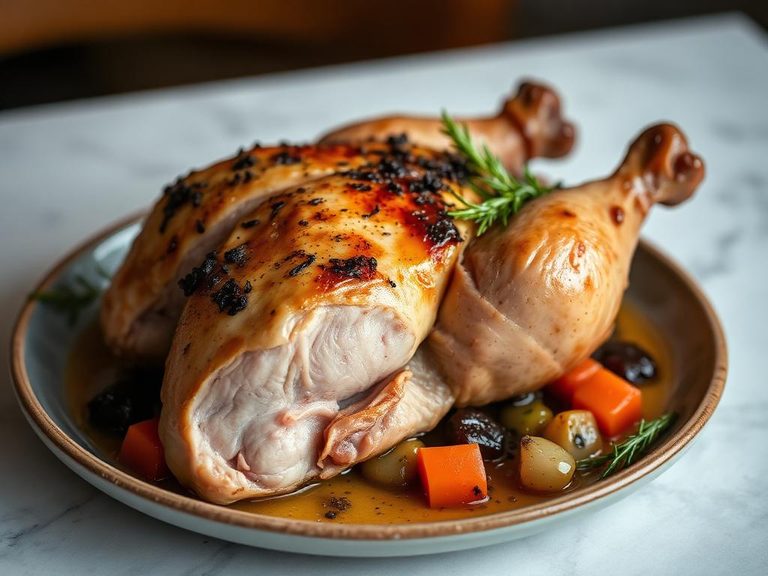
Roasted capon is the succulent, premium meat of a young, castrated rooster, prized for its exceptionally tender, juicy flesh and rich, delicate flavor. Its golden-brown skin crisps beautifully, while the meat itself remains moist and mild, offering a luxurious eating experience. With nearly 29g of high-quality protein per 100g and zero carbohydrates, it's a powerhouse of lean nutrition.
Calorie split: 52% protein · 0% carbs · 48% fat
↓ Full nutrition💚 Why it's loved
People adore capon for its uniquely tender and flavorful meat, which is considered a step above standard chicken in richness and succulence. Its versatility allows it to be the centerpiece of both rustic family roasts and elegant holiday feasts, symbolizing celebration in many cultures.
⚠️ Watch-outs & how to enjoy it better
The primary downside is its higher fat and calorie content compared to leaner poultry cuts, particularly with the skin on. Those monitoring saturated fat intake should consume it in moderation. To counteract this, you can remove the skin before eating or pair it with large portions of non-starchy vegetables and acidic salads to balance the meal and enhance satiety.
Key benefits
- Excellent source of complete, high-quality protein for muscle maintenance.
- Naturally carbohydrate-free, suitable for low-carb and ketogenic diets.
- Rich in essential B vitamins like niacin and B6 for energy metabolism.
- Contains minerals such as selenium and phosphorus for immune and bone health.
- Provides a good source of healthy fats, especially when skin is consumed.
🍽️ Popular dishes
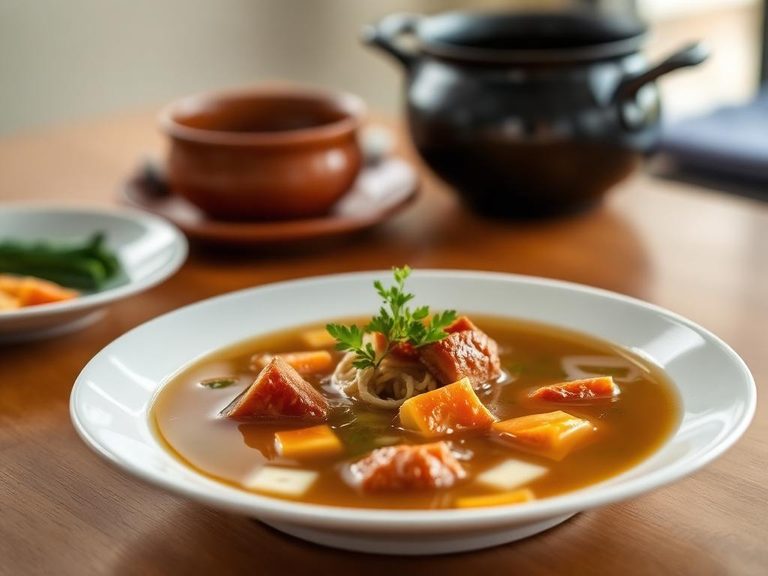
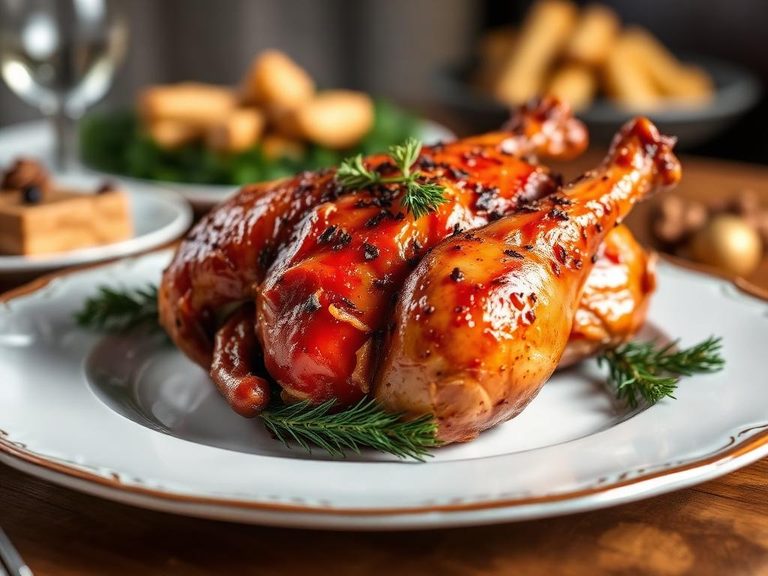
🌍 Where it's eaten
💡 Did you know?
Caponization, the ancient practice of castrating a young rooster, was once so valued that Roman gourmands like Apicius wrote specific recipes for capon, and the birds were sometimes fattened on a diet of bread soaked in milk.
Full nutrition (USDA data · scales with serving)
| Water | 58.7 g |
| Energy | 229 kcal |
| Energy | 958 kj |
| Protein | 29.0 g |
| Total lipid (fat) | 11.7 g |
| Ash | 1.0 g |
| Carbohydrate, by difference | 0.00 g |
| Fiber, total dietary | 0.00 g |
| Calcium, Ca | 14.0 mg |
| Iron, Fe | 1.5 mg |
| Magnesium, Mg | 24.0 mg |
| Phosphorus, P | 246 mg |
| Potassium, K | 255 mg |
| Sodium, Na | 49.0 mg |
| Zinc, Zn | 1.7 mg |
| Copper, Cu | 0.07 mg |
| Manganese, Mn | 0.02 mg |
| Selenium, Se | 21.6 ug |
| Fluoride, F | 14.7 ug |
| Vitamin C, total ascorbic acid | 0.00 mg |
| Thiamin | 0.07 mg |
| Riboflavin | 0.17 mg |
| Niacin | 8.9 mg |
| Pantothenic acid | 1.1 mg |
| Vitamin B-6 | 0.43 mg |
| Folate, total | 6.0 ug |
| Folic acid | 0.00 ug |
| Folate, food | 6.0 ug |
| Folate, DFE | 6.0 ug |
| Vitamin B-12 | 0.33 ug |
| Vitamin A, IU | 68.0 iu |
Fat & fatty acid profile (per 100g)
| Fatty acids, total saturated | 3.3 g |
| SFA 10:0 | 0.00 g |
| SFA 12:0 | 0.01 g |
| SFA 14:0 | 0.09 g |
| SFA 16:0 | 2.4 g |
| SFA 18:0 | 0.64 g |
| Fatty acids, total monounsaturated | 4.8 g |
| MUFA 16:1 | 0.66 g |
| MUFA 18:1 | 3.9 g |
| MUFA 20:1 | 0.13 g |
| MUFA 22:1 | 0.00 g |
| Fatty acids, total polyunsaturated | 2.5 g |
| PUFA 18:2 | 2.2 g |
| PUFA 18:3 | 0.10 g |
| PUFA 20:4 | 0.08 g |
| PUFA 20:5 n-3 (EPA) | 0.01 g |
| PUFA 22:5 n-3 (DPA) | 0.01 g |
| PUFA 22:6 n-3 (DHA) | 0.03 g |
| Cholesterol | 86.0 mg |
Amino acid profile (per 100g)
| Tryptophan | 0.33 g |
| Threonine | 1.2 g |
| Isoleucine | 1.5 g |
| Leucine | 2.1 g |
| Lysine | 2.4 g |
| Methionine | 0.77 g |
| Cystine | 0.38 g |
| Phenylalanine | 1.1 g |
| Tyrosine | 0.94 g |
| Valine | 1.4 g |
| Arginine | 1.8 g |
| Histidine | 0.86 g |
| Alanine | 1.7 g |
| Aspartic acid | 2.6 g |
| Glutamic acid | 4.2 g |
| Glycine | 1.8 g |
| Proline | 1.4 g |
| Serine | 1.0 g |
FAQ
How is capon different from regular chicken?
Capon is a castrated male chicken, which results in meat that is significantly more tender, juicy, and flavorful with a higher fat content than standard rooster or hen meat.
Is roasted capon with skin healthy?
It is a nutritious source of protein and vitamins, but the skin adds considerable fat and calories. Enjoying it in moderation or removing the skin makes it a leaner protein option.
What's the best way to cook capon to keep it moist?
Roasting at a moderate temperature (around 325-350°F / 160-175°C) and using a meat thermometer to avoid overcooking is key. Basting with its own juices or a bit of broth also helps retain moisture.
Nutrient density (calculated · NRF9.3)
Nutrient Rich Foods index: beneficial nutrients (protein, fiber, vitamins, minerals) minus saturated fat, added sugar & sodium, per 100 kcal.
NRF9.3 index — Fulgoni, Keast & Drewnowski, 2009. Computed from USDA nutrients.
Weight-loss friendliness (composite index)
Energy density 2.29 kcal/g · 51% calories from protein · 0.0 g fiber · 0.0 g sugar per 100 g.
Composite of energy density (Rolls et al., 1999), protein & fiber satiety, minus sugar. A calculated heuristic — ranks satiety-per-calorie, not a clinical measure.
Dietary load (calculated from USDA values)
Potential renal acid load. Positive = acid-forming, negative = alkaline-forming.
Sodium-to-potassium ratio: 0.19 (lower is better — aim for ≤ 1)
Sodium:potassium per WHO potassium guidance. Computed from USDA nutrients.