

Chicken, broilers or fryers, meat and skin and giblets and neck, cooked, fried, flour
Whole food · Poultry Products
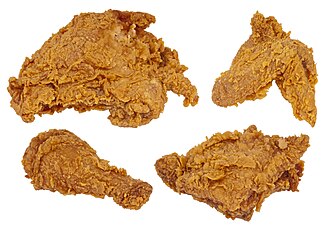
Photo: Wikipedia
This is a hearty, rustic preparation of broiler chicken, where the meat, skin, giblets, and neck are all dredged in seasoned flour and deep-fried to a golden, shattering crisp. The result is a complex textural experience: the skin becomes a crunchy shell, the meat stays juicy, and the giblets offer a richer, more mineral flavor. It's a calorie-dense, high-protein meal that provides significant amounts of B vitamins, iron, and zinc from the inclusion of organ meats.
Calorie split: 43% protein · 5% carbs · 52% fat
↓ Full nutrition💚 Why it's loved
People love it for the ultimate comfort-food crunch and the deep, savory flavor that comes from frying the skin and bony parts like the neck, which release collagen and flavor into the meat. It's a versatile centerpiece that can be seasoned with endless spice blends, from Southern American to West African, making it a cultural staple in many cuisines.
⚠️ Watch-outs & how to enjoy it better
The high fat content from frying and the skin can make it a heavy meal, and the method can be messy for home cooks. The giblets, especially the liver, are high in cholesterol and purines, so individuals with gout or specific dietary restrictions should consume them in moderation. To counteract the richness, serve it with a sharp, vinegar-based slaw or a fresh salad to cut the fat, and practice portion control by focusing on the meatier pieces rather than the neck and skin.
Key benefits
- Excellent source of complete protein for muscle maintenance.
- Rich in heme iron from giblets, which is highly absorbable.
- Provides zinc and B vitamins like B12 and niacin.
- The skin and frying fat offer a satisfying source of energy.
- A traditional way to utilize the whole bird, minimizing waste.
🍽️ Popular dishes
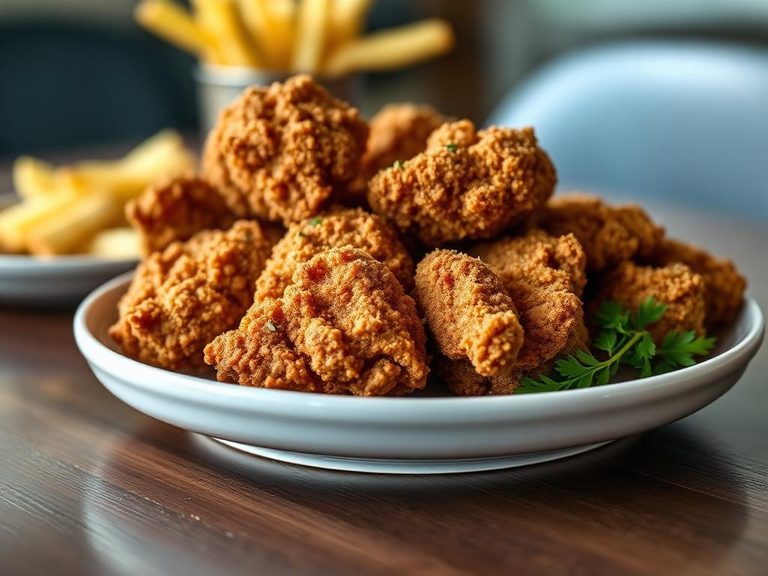
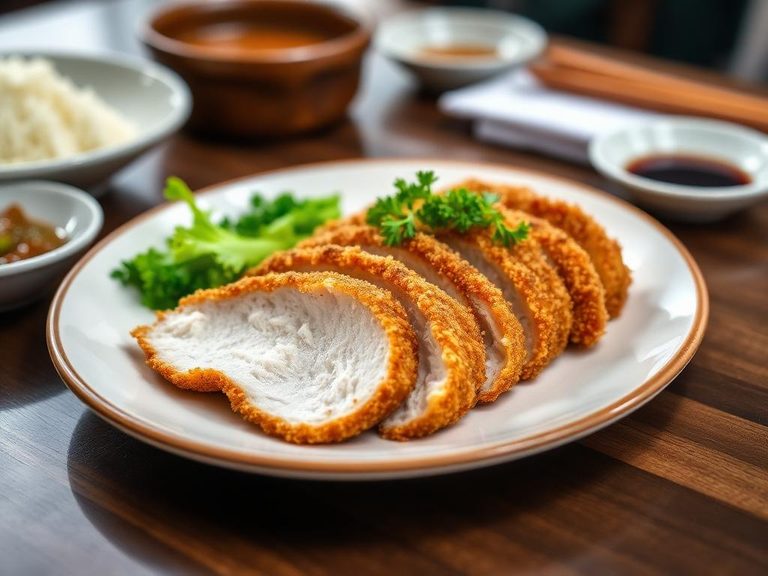


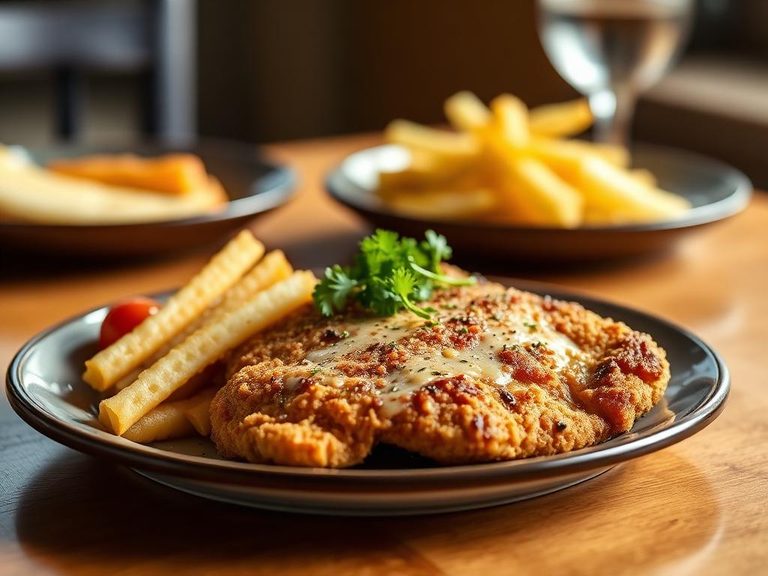

🌍 Where it's eaten
💡 Did you know?
The practice of dredging in flour before frying isn't just for crunch; it creates a dry surface that helps the Maillard reaction (browning) happen more evenly, developing hundreds of new flavor compounds.
Full nutrition (USDA data · scales with serving)
| Water | 51.9 g |
| Energy | 272 kcal |
| Energy | 1138 kj |
| Protein | 28.6 g |
| Total lipid (fat) | 15.3 g |
| Ash | 1.0 g |
| Carbohydrate, by difference | 3.3 g |
| Calcium, Ca | 17.0 mg |
| Iron, Fe | 2.0 mg |
| Magnesium, Mg | 25.0 mg |
| Phosphorus, P | 194 mg |
| Potassium, K | 237 mg |
| Sodium, Na | 86.0 mg |
| Zinc, Zn | 2.4 mg |
| Copper, Cu | 0.10 mg |
| Manganese, Mn | 0.05 mg |
| Selenium, Se | 16.6 ug |
| Vitamin C, total ascorbic acid | 0.50 mg |
| Thiamin | 0.09 mg |
| Riboflavin | 0.28 mg |
| Niacin | 8.9 mg |
| Pantothenic acid | 1.3 mg |
| Vitamin B-6 | 0.42 mg |
| Folate, total | 31.0 ug |
| Folic acid | 2.0 ug |
| Folate, food | 29.0 ug |
| Folate, DFE | 32.0 ug |
| Vitamin B-12 | 1.1 ug |
| Vitamin A, RAE | 248 ug |
| Retinol | 248 ug |
| Vitamin A, IU | 826 iu |
Fat & fatty acid profile (per 100g)
| Fatty acids, total saturated | 4.2 g |
| SFA 10:0 | 0.00 g |
| SFA 12:0 | 0.02 g |
| SFA 14:0 | 0.10 g |
| SFA 16:0 | 2.9 g |
| SFA 18:0 | 1.1 g |
| Fatty acids, total monounsaturated | 6.0 g |
| MUFA 16:1 | 0.64 g |
| MUFA 18:1 | 5.2 g |
| MUFA 20:1 | 0.11 g |
| MUFA 22:1 | 0.00 g |
| Fatty acids, total polyunsaturated | 3.5 g |
| PUFA 18:2 | 3.0 g |
| PUFA 18:3 | 0.15 g |
| PUFA 20:4 | 0.14 g |
| PUFA 20:5 n-3 (EPA) | 0.01 g |
| PUFA 22:5 n-3 (DPA) | 0.02 g |
| PUFA 22:6 n-3 (DHA) | 0.04 g |
| Cholesterol | 112 mg |
Amino acid profile (per 100g)
| Tryptophan | 0.32 g |
| Threonine | 1.2 g |
| Isoleucine | 1.4 g |
| Leucine | 2.1 g |
| Lysine | 2.3 g |
| Methionine | 0.76 g |
| Cystine | 0.38 g |
| Phenylalanine | 1.1 g |
| Tyrosine | 0.93 g |
| Valine | 1.4 g |
| Arginine | 1.8 g |
| Histidine | 0.83 g |
| Alanine | 1.6 g |
| Aspartic acid | 2.5 g |
| Glutamic acid | 4.3 g |
| Glycine | 1.8 g |
| Proline | 1.4 g |
| Serine | 1.0 g |
FAQ
What's the difference between this and regular fried chicken?
This preparation specifically includes the giblets (heart, gizzard, liver) and neck along with the standard meat and skin, offering a more varied texture and a deeper, more mineral-rich flavor profile.
Are the giblets safe to eat when fried?
Yes, when cooked thoroughly. The gizzard is tough and benefits from longer cooking, while the liver cooks quickly and can become dry. Frying at the right temperature ensures they are cooked through safely.
How do I prevent the coating from falling off?
Ensure the chicken pieces are patted very dry before dredging. A standard three-step process—flour, then beaten egg or buttermilk, then seasoned flour again—creates a better bond for the crust.
Nutrient density (calculated · NRF9.3)
Nutrient Rich Foods index: beneficial nutrients (protein, fiber, vitamins, minerals) minus saturated fat, added sugar & sodium, per 100 kcal.
NRF9.3 index — Fulgoni, Keast & Drewnowski, 2009. Computed from USDA nutrients.
Weight-loss friendliness (composite index)
Energy density 2.72 kcal/g · 42% calories from protein · 0.0 g fiber · 0.0 g sugar per 100 g.
Composite of energy density (Rolls et al., 1999), protein & fiber satiety, minus sugar. A calculated heuristic — ranks satiety-per-calorie, not a clinical measure.
Dietary load (calculated from USDA values)
Potential renal acid load. Positive = acid-forming, negative = alkaline-forming.
Sodium-to-potassium ratio: 0.36 (lower is better — aim for ≤ 1)
Sodium:potassium per WHO potassium guidance. Computed from USDA nutrients.