

Cheese, roquefort
Whole food · Dairy and Egg Products

Photo: Wikipedia
Roquefort is a pungent, crumbly blue cheese made from raw sheep's milk, veined with the distinctive blue-green mold Penicillium roqueforti. Its texture is creamy yet firm, delivering an intensely tangy, salty, and slightly metallic flavor with a rich, lingering finish. Nutritionally, it's a powerhouse of protein and fat, with virtually no carbohydrates.
Calorie split: 23% protein · 2% carbs · 75% fat
↓ Full nutrition💚 Why it's loved
People love Roquefort for its bold, complex flavor that transforms simple dishes, from salads to steaks. It holds a protected designation of origin (AOP) and is celebrated as the 'King of Cheeses' in French culinary tradition.
⚠️ Watch-outs & how to enjoy it better
Its very high sodium and saturated fat content can be a concern for those monitoring blood pressure or heart health. Those with a sheep's milk allergy or lactose intolerance should avoid it. To enjoy it mindfully, use it as a potent flavor accent rather than a main component, and pair it with fiber-rich foods like fresh pears or walnuts to balance the meal.
Key benefits
- Excellent source of high-quality protein from sheep's milk.
- Rich in calcium for bone health.
- Contains beneficial probiotics from raw milk and mold cultures.
- Provides conjugated linoleic acid (CLA), a type of healthy fat.
- Naturally low in lactose due to the cheesemaking process.
🍽️ Popular dishes
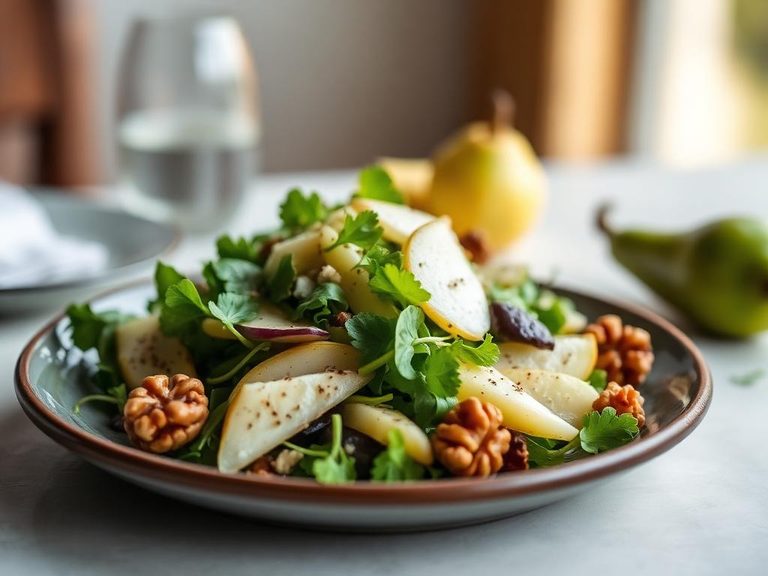
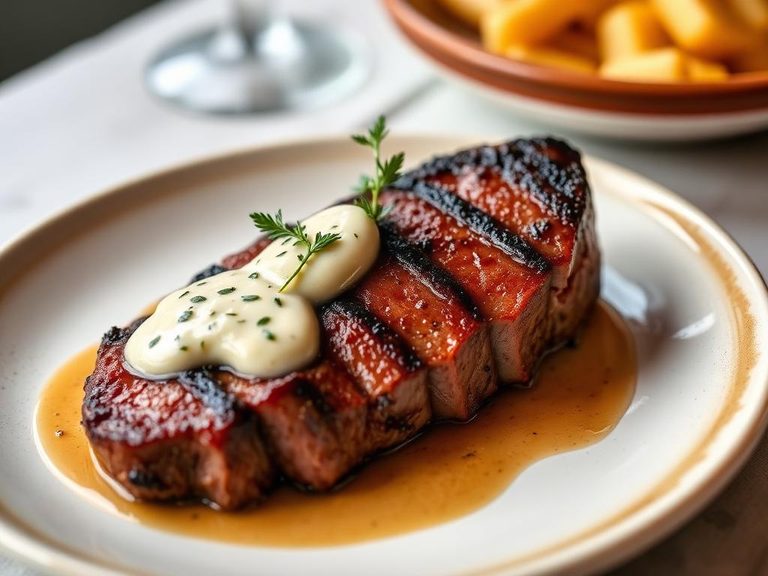
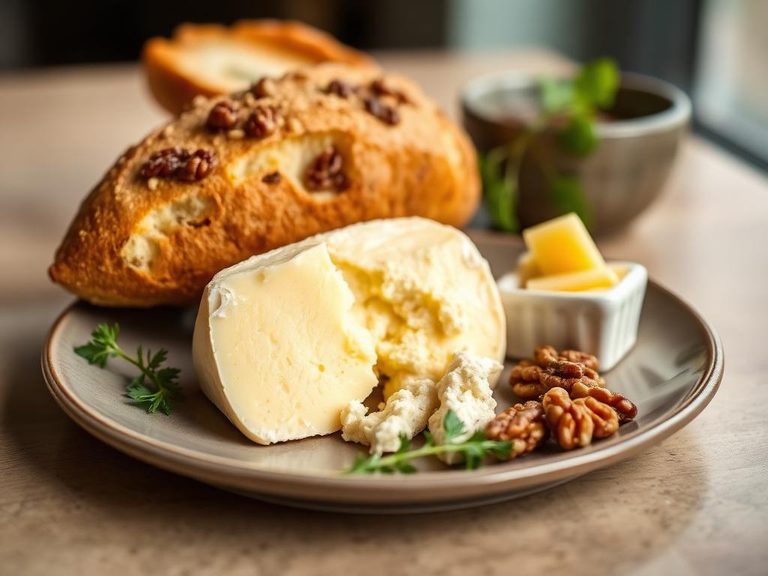


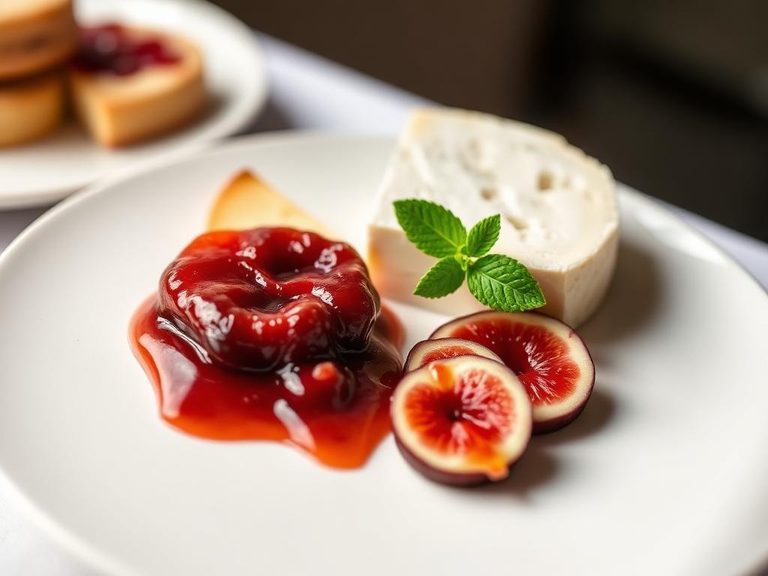
🌍 Where it's eaten
💡 Did you know?
True Roquefort must be aged in the natural limestone caves of Roquefort-sur-Soulzon, where the unique temperature and humidity are essential for developing its signature mold and flavor.
Full nutrition (USDA data · scales with serving)
| Water | 39.4 g |
| Energy | 369 kcal |
| Energy | 1544 kj |
| Protein | 21.5 g |
| Total lipid (fat) | 30.6 g |
| Ash | 6.4 g |
| Carbohydrate, by difference | 2.0 g |
| Fiber, total dietary | 0.00 g |
| Calcium, Ca | 662 mg |
| Iron, Fe | 0.56 mg |
| Magnesium, Mg | 30.0 mg |
| Phosphorus, P | 392 mg |
| Potassium, K | 91.0 mg |
| Sodium, Na | 1809 mg |
| Zinc, Zn | 2.1 mg |
| Copper, Cu | 0.03 mg |
| Manganese, Mn | 0.03 mg |
| Selenium, Se | 14.5 ug |
| Vitamin C, total ascorbic acid | 0.00 mg |
| Thiamin | 0.04 mg |
| Riboflavin | 0.59 mg |
| Niacin | 0.73 mg |
| Pantothenic acid | 1.7 mg |
| Vitamin B-6 | 0.12 mg |
| Folate, total | 49.0 ug |
| Folic acid | 0.00 ug |
| Folate, food | 49.0 ug |
| Folate, DFE | 49.0 ug |
| Vitamin B-12 | 0.64 ug |
| Vitamin A, RAE | 294 ug |
| Retinol | 290 ug |
| Vitamin A, IU | 1047 iu |
Fat & fatty acid profile (per 100g)
| Fatty acids, total saturated | 19.3 g |
| SFA 4:0 | 0.88 g |
| SFA 6:0 | 0.66 g |
| SFA 8:0 | 0.67 g |
| SFA 10:0 | 2.2 g |
| SFA 12:0 | 1.3 g |
| SFA 14:0 | 3.3 g |
| SFA 16:0 | 6.6 g |
| SFA 18:0 | 3.1 g |
| Fatty acids, total monounsaturated | 8.5 g |
| MUFA 16:1 | 0.73 g |
| MUFA 18:1 | 7.5 g |
| Fatty acids, total polyunsaturated | 1.3 g |
| PUFA 18:2 | 0.62 g |
| PUFA 18:3 | 0.70 g |
| PUFA 20:4 | 0.00 g |
| Cholesterol | 90.0 mg |
Amino acid profile (per 100g)
| Tryptophan | 0.30 g |
| Threonine | 0.96 g |
| Isoleucine | 1.2 g |
| Leucine | 2.1 g |
| Lysine | 1.8 g |
| Methionine | 0.56 g |
| Cystine | 0.13 g |
| Phenylalanine | 1.0 g |
| Tyrosine | 1.0 g |
| Valine | 1.6 g |
| Arginine | 0.71 g |
| Histidine | 0.60 g |
| Alanine | 0.97 g |
| Aspartic acid | 1.2 g |
| Glutamic acid | 3.7 g |
| Glycine | 0.15 g |
| Proline | 2.1 g |
| Serine | 1.8 g |
FAQ
What makes Roquefort different from other blue cheeses?
Roquefort is made exclusively from raw sheep's milk and must be aged in specific caves in France. Its flavor is generally sharper, saltier, and more complex than cow's milk blues like Gorgonzola or Stilton.
Can I substitute another blue cheese for Roquefort?
While you can use other blues like Gorgonzola Dolce or Stilton for a milder taste, they won't replicate Roquefort's unique tang from sheep's milk. For authentic recipes, the substitution will noticeably change the dish's character.
How should I store leftover Roquefort?
Wrap it tightly in cheese paper or wax paper, then place it in a sealed container in the refrigerator. This allows it to breathe while preventing it from drying out or absorbing other odors. It will keep for 1-2 weeks.
Nutrient density (calculated · NRF9.3)
Nutrient Rich Foods index: beneficial nutrients (protein, fiber, vitamins, minerals) minus saturated fat, added sugar & sodium, per 100 kcal.
NRF9.3 index — Fulgoni, Keast & Drewnowski, 2009. Computed from USDA nutrients.
Weight-loss friendliness (composite index)
Energy density 3.69 kcal/g · 23% calories from protein · 0.0 g fiber · 0.0 g sugar per 100 g.
Composite of energy density (Rolls et al., 1999), protein & fiber satiety, minus sugar. A calculated heuristic — ranks satiety-per-calorie, not a clinical measure.
Dietary load (calculated from USDA values)
Potential renal acid load. Positive = acid-forming, negative = alkaline-forming.
Sodium-to-potassium ratio: 19.88 (lower is better — aim for ≤ 1)
Sodium:potassium per WHO potassium guidance. Computed from USDA nutrients.