

Cereals, WHEATENA, cooked with water
Whole food · Breakfast Cereals

Photo: Wikipedia
Wheatena is a classic, whole-grain wheat hot cereal that cooks into a thick, nutty, and slightly earthy porridge. Its texture is heartier and more substantial than cream of wheat, with a satisfying, slightly chewy bite. Nutritionally, it's a standout for its high fiber content, which provides lasting energy and digestive support.
Calorie split: 13% protein · 79% carbs · 8% fat
↓ Full nutrition💚 Why it's loved
People love Wheatena for its comforting, toasty flavor that feels like a warm hug in a bowl, especially on cold mornings. Its versatility allows it to be a blank canvas for both sweet and savory toppings, from brown sugar and butter to a savory broth.
⚠️ Watch-outs & how to enjoy it better
As a wheat product, it contains gluten and is not suitable for those with celiac disease or gluten sensitivity. Its high carbohydrate content can cause blood sugar spikes if eaten alone. To counteract this, always pair it with a source of protein (like nuts, seeds, or a dollop of yogurt) and healthy fat (like nut butter or a sprinkle of chia seeds) to slow digestion and stabilize blood sugar.
Key benefits
- Excellent source of dietary fiber (2.7g per 100g cooked)
- Provides sustained energy from complex carbohydrates
- Low in fat and contains no added sugar
- Good plant-based source of protein
- Whole-grain food linked to heart health
🍽️ Popular dishes
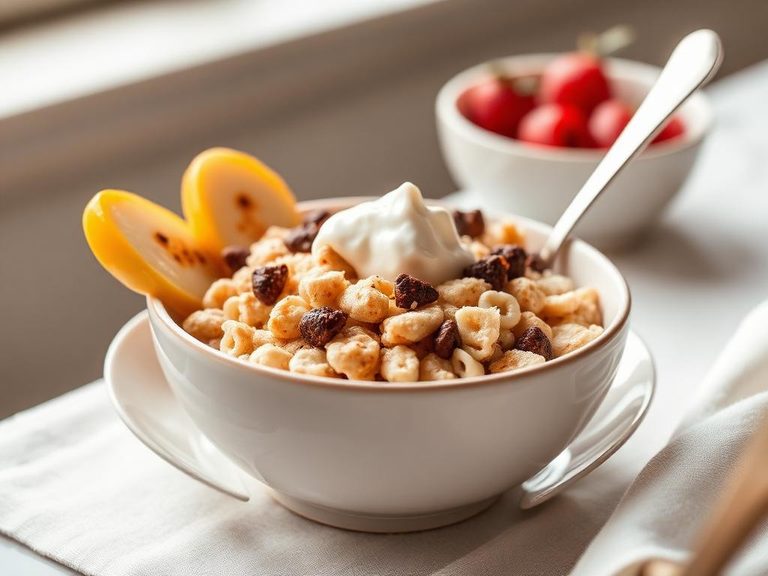
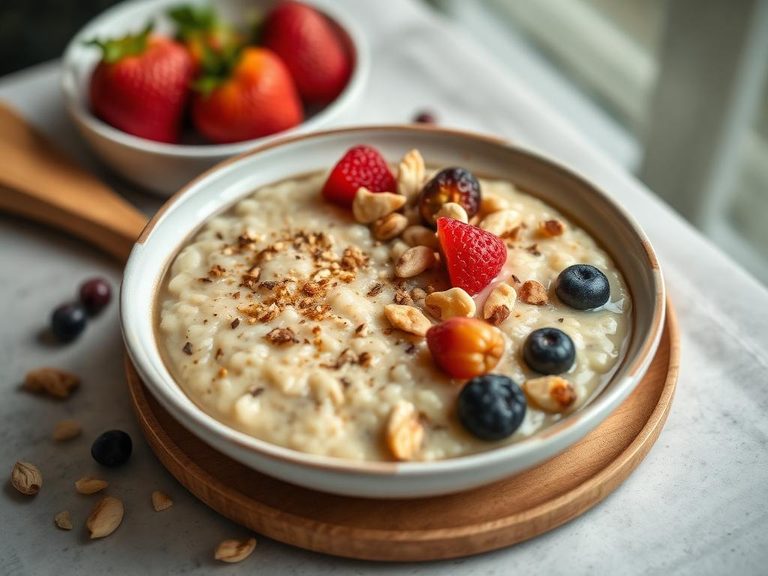

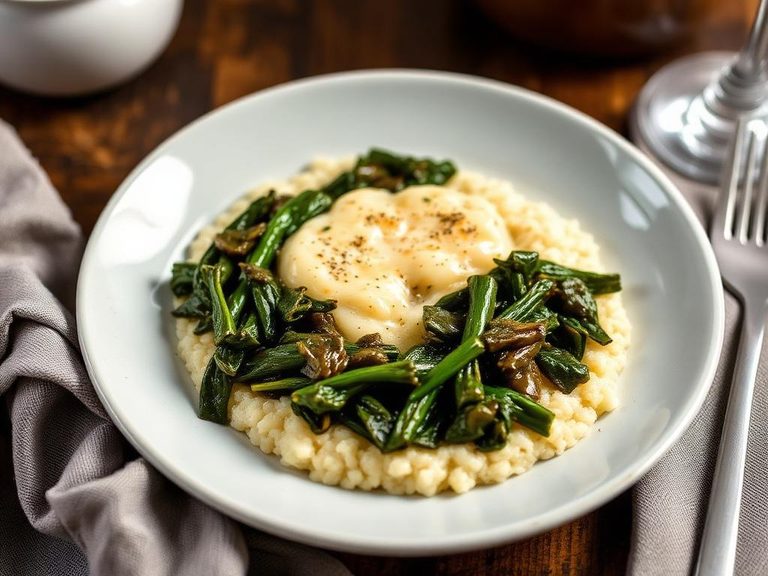
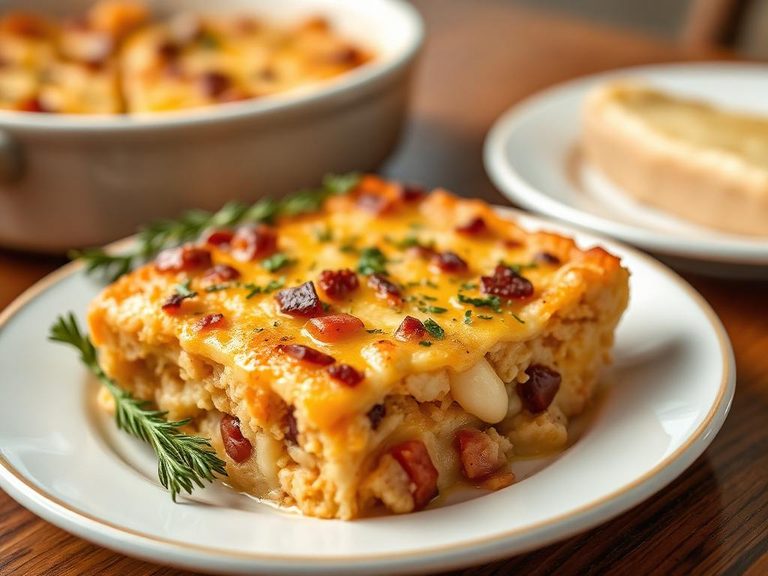
🌍 Where it's eaten
💡 Did you know?
Wheatena was famously created in the early 1900s by a Greek immigrant, George Homenides, who roasted wheat to create a nutritious, affordable cereal for New York's immigrant communities.
Full nutrition (USDA data · scales with serving)
| Water | 85.4 g |
| Energy | 56.0 kcal |
| Energy | 234 kj |
| Protein | 2.0 g |
| Total lipid (fat) | 0.50 g |
| Ash | 0.30 g |
| Carbohydrate, by difference | 11.8 g |
| Fiber, total dietary | 2.7 g |
| Calcium, Ca | 80.0 mg |
| Iron, Fe | 0.56 mg |
| Magnesium, Mg | 20.0 mg |
| Phosphorus, P | 60.0 mg |
| Potassium, K | 77.0 mg |
| Sodium, Na | 2.0 mg |
| Zinc, Zn | 0.69 mg |
| Copper, Cu | 0.05 mg |
| Manganese, Mn | 0.82 mg |
| Vitamin C, total ascorbic acid | 0.00 mg |
| Thiamin | 0.01 mg |
| Riboflavin | 0.02 mg |
| Niacin | 0.55 mg |
| Pantothenic acid | 0.04 mg |
| Vitamin B-6 | 0.02 mg |
| Folate, total | 7.0 ug |
| Folic acid | 0.00 ug |
| Folate, food | 7.0 ug |
| Folate, DFE | 7.0 ug |
| Vitamin B-12 | 0.00 ug |
| Retinol | 0.00 ug |
| Vitamin A, IU | 0.00 iu |
| Alcohol, ethyl | 0.00 g |
Fat & fatty acid profile (per 100g)
| Fatty acids, total saturated | 0.07 g |
| SFA 4:0 | 0.00 g |
| SFA 6:0 | 0.00 g |
| SFA 8:0 | 0.00 g |
| SFA 10:0 | 0.00 g |
| SFA 12:0 | 0.00 g |
| SFA 14:0 | 0.00 g |
| SFA 16:0 | 0.07 g |
| SFA 18:0 | 0.00 g |
| Fatty acids, total monounsaturated | 0.07 g |
| MUFA 16:1 | 0.00 g |
| MUFA 18:1 | 0.07 g |
| MUFA 20:1 | 0.00 g |
| MUFA 22:1 | 0.00 g |
| Fatty acids, total polyunsaturated | 0.25 g |
| PUFA 18:2 | 0.23 g |
| PUFA 18:3 | 0.02 g |
| PUFA 18:4 | 0.00 g |
| PUFA 20:4 | 0.00 g |
| PUFA 20:5 n-3 (EPA) | 0.00 g |
| PUFA 22:5 n-3 (DPA) | 0.00 g |
| PUFA 22:6 n-3 (DHA) | 0.00 g |
| Cholesterol | 0.00 mg |
Amino acid profile (per 100g)
Estimated from Cereals ready-to-eat, POST, HONEY BUNCHES OF OATS, honey roasted — USDA does not publish this profile for Cereals.
| Tryptophan | 0.09 g |
| Threonine | 0.24 g |
| Isoleucine | 0.26 g |
| Leucine | 0.80 g |
| Lysine | 0.12 g |
| Methionine | 0.10 g |
| Cystine | 0.11 g |
| Phenylalanine | 0.39 g |
| Tyrosine | 0.21 g |
| Valine | 0.34 g |
| Arginine | 0.24 g |
| Histidine | 0.18 g |
| Alanine | 0.46 g |
| Aspartic acid | 0.48 g |
| Glutamic acid | 1.9 g |
| Glycine | 0.27 g |
| Proline | 0.49 g |
| Serine | 0.38 g |
FAQ
How is Wheatena different from cream of wheat?
Wheatena is made from whole wheat groats that are toasted, giving it a nuttier flavor and more fiber. Cream of wheat is made from refined wheat farina, which is smoother, milder, and lower in fiber.
Is Wheatena gluten-free?
No, Wheatena is made from wheat and contains gluten. It is not safe for individuals with celiac disease or non-celiac gluten sensitivity.
Can I use Wheatena in baking?
Yes, it can be used to add texture and nutrition to muffins, breads, or as a binder in meatloaf, similar to how you might use oatmeal or bran.
Nutrient density (calculated · NRF9.3)
Nutrient Rich Foods index: beneficial nutrients (protein, fiber, vitamins, minerals) minus saturated fat, added sugar & sodium, per 100 kcal.
NRF9.3 index — Fulgoni, Keast & Drewnowski, 2009. Computed from USDA nutrients.
Weight-loss friendliness (composite index)
Energy density 0.56 kcal/g · 14% calories from protein · 2.7 g fiber · 0.0 g sugar per 100 g.
Composite of energy density (Rolls et al., 1999), protein & fiber satiety, minus sugar. A calculated heuristic — ranks satiety-per-calorie, not a clinical measure.
Dietary load (calculated from USDA values)
Potential renal acid load. Positive = acid-forming, negative = alkaline-forming.
Sodium-to-potassium ratio: 0.03 (lower is better — aim for ≤ 1)
Sodium:potassium per WHO potassium guidance. Computed from USDA nutrients.