

Cereals ready-to-eat, QUAKER, QUAKER 100% Natural Granola with Oats, Wheat, Honey, and Raisins
Whole food · Breakfast Cereals

Photo: Wikipedia
This is a classic, hearty ready-to-eat granola made from rolled oats, whole wheat, honey, and plump raisins, baked to a satisfyingly crunchy and chewy texture. The honey provides a warm, floral sweetness that complements the earthy grains and bursts of fruity raisin flavor. With nearly 10g of fiber per 100g, it's a notably high-fiber breakfast or snack option.
Calorie split: 9% protein · 69% carbs · 22% fat
↓ Full nutrition💚 Why it's loved
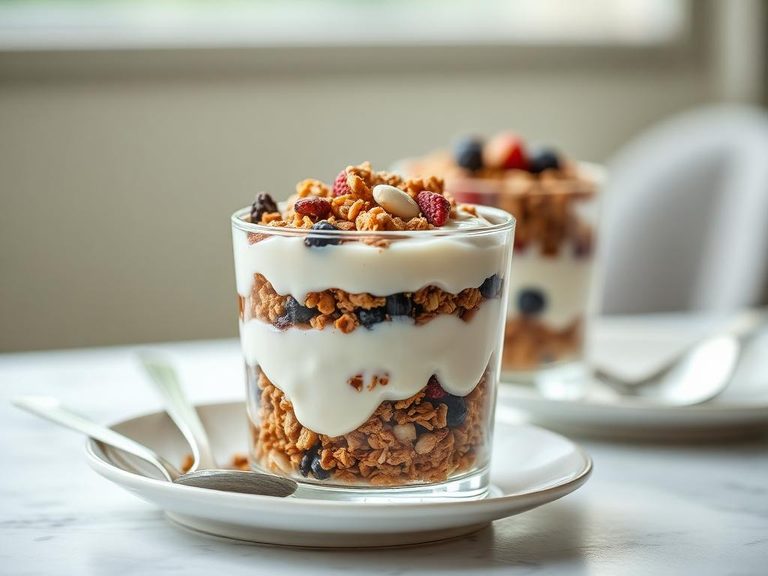
People love it for its comforting, nostalgic taste and the perfect balance of crunchy clusters and chewy raisins. It's incredibly versatile, enjoyed with milk, yogurt, or as a topping for smoothie bowls and fruit.
⚠️ Watch-outs & how to enjoy it better
The high sugar content (24.63g per 100g) can lead to a rapid blood-sugar spike, especially when eaten alone. To counteract this, pair it with a protein and fat source like Greek yogurt or a handful of nuts, and practice portion control by sticking to a measured serving. Those with gluten sensitivities should note it contains wheat.
Key benefits
- Excellent source of dietary fiber (9.4g per 100g)
- Provides plant-based protein from oats and wheat (9.66g per 100g)
- Contains whole grains as primary ingredients
- Convenient, no-cook breakfast or snack
- Natural sweetness from honey and raisins
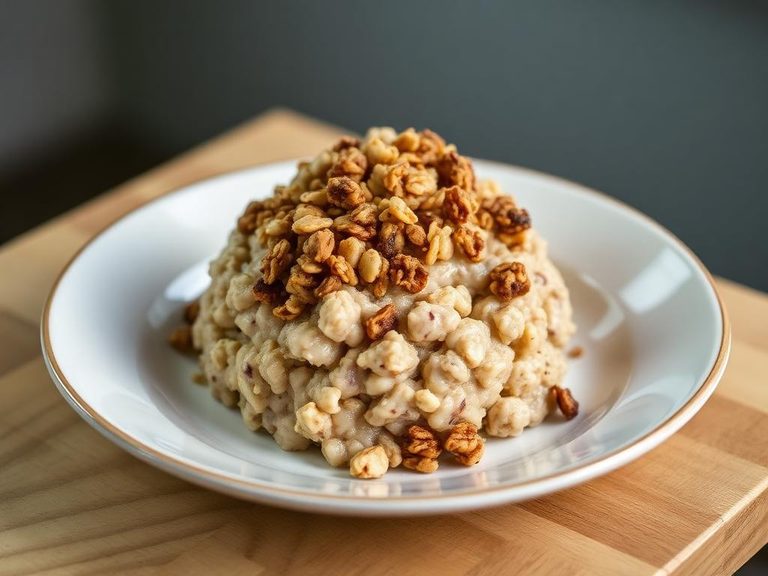
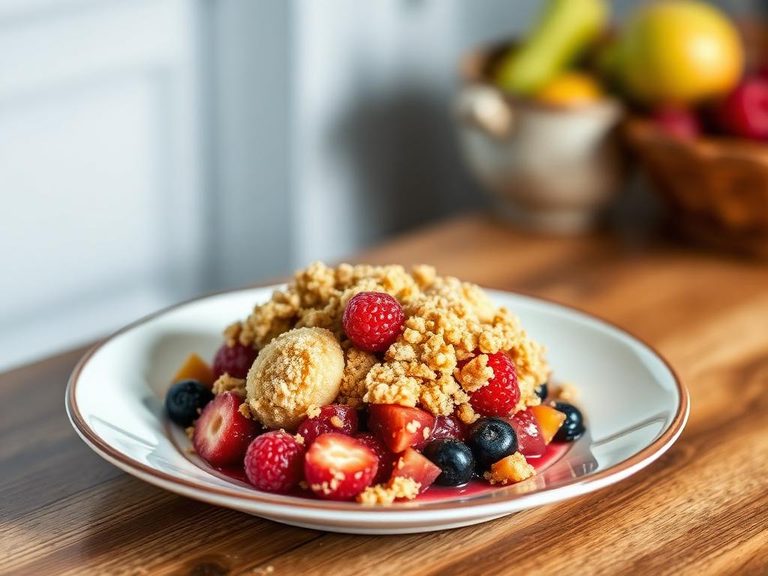
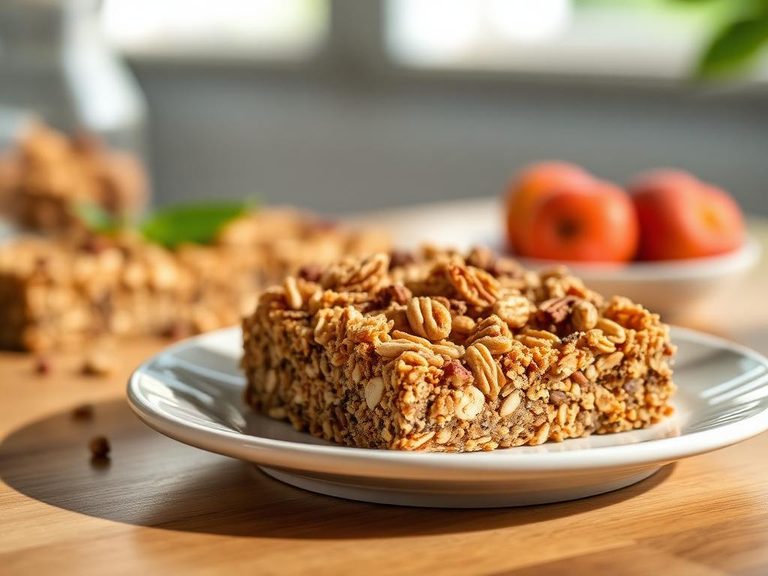
🍽️ Popular dishes
🌍 Where it's eaten
💡 Did you know?
The term 'granola' was trademarked in 1886 by Dr. James Caleb Jackson for a baked whole-grain cereal, and the modern concept was later popularized by John Harvey Kellogg.
Full nutrition (USDA data · scales with serving)
| Water | 3.4 g |
| Energy | 412 kcal |
| Energy | 1724 kj |
| Protein | 9.7 g |
| Total lipid (fat) | 10.4 g |
| Ash | 1.9 g |
| Carbohydrate, by difference | 74.7 g |
| Fiber, total dietary | 9.4 g |
| Total Sugars | 24.6 g |
| Calcium, Ca | 101 mg |
| Iron, Fe | 2.7 mg |
| Magnesium, Mg | 110 mg |
| Phosphorus, P | 357 mg |
| Potassium, K | 501 mg |
| Sodium, Na | 54.0 mg |
| Zinc, Zn | 2.6 mg |
| Copper, Cu | 0.32 mg |
| Manganese, Mn | 2.5 mg |
| Selenium, Se | 13.8 ug |
| Vitamin C, total ascorbic acid | 0.50 mg |
| Thiamin | 0.38 mg |
| Riboflavin | 0.26 mg |
| Niacin | 2.1 mg |
| Pantothenic acid | 0.82 mg |
| Vitamin B-6 | 0.23 mg |
| Folate, total | 33.0 ug |
| Folic acid | 0.00 ug |
| Folate, food | 33.0 ug |
| Folate, DFE | 33.0 ug |
| Choline, total | 31.8 mg |
| Betaine | 135 mg |
| Vitamin B-12 | 0.15 ug |
| Vitamin B-12, added | 0.00 ug |
| Vitamin A, RAE | 0.00 ug |
| Retinol | 0.00 ug |
| Carotene, beta | 5.0 ug |
| Carotene, alpha | 0.00 ug |
| Cryptoxanthin, beta | 0.00 ug |
| Vitamin A, IU | 8.0 iu |
| Lycopene | 0.00 ug |
| Lutein + zeaxanthin | 114 ug |
| Vitamin E (alpha-tocopherol) | 1.1 mg |
| Vitamin E, added | 0.00 mg |
| Vitamin D (D2 + D3), International Units | 0.00 iu |
| Vitamin D (D2 + D3) | 0.00 ug |
| Vitamin K (phylloquinone) | 6.5 ug |
| Alcohol, ethyl | 0.00 g |
| Caffeine | 0.00 mg |
| Theobromine | 0.00 mg |
Fat & fatty acid profile (per 100g)
| Fatty acids, total saturated | 1.1 g |
| SFA 4:0 | 0.00 g |
| SFA 6:0 | 0.00 g |
| SFA 8:0 | 0.00 g |
| SFA 10:0 | 0.00 g |
| SFA 12:0 | 0.01 g |
| SFA 14:0 | 0.01 g |
| SFA 16:0 | 0.83 g |
| SFA 18:0 | 0.20 g |
| SFA 20:0 | 0.05 g |
| SFA 22:0 | 0.03 g |
| SFA 24:0 | 0.00 g |
| Fatty acids, total monounsaturated | 5.9 g |
| MUFA 16:1 | 0.03 g |
| MUFA 18:1 | 5.7 g |
| MUFA 20:1 | 0.10 g |
| MUFA 22:1 | 0.00 g |
| Fatty acids, total polyunsaturated | 2.4 g |
| PUFA 18:2 | 1.9 g |
| PUFA 18:3 | 0.51 g |
| PUFA 18:4 | 0.00 g |
| PUFA 20:2 n-6 c,c | 0.00 g |
| PUFA 20:3 | 0.00 g |
| PUFA 20:4 | 0.00 g |
| PUFA 20:5 n-3 (EPA) | 0.00 g |
| PUFA 22:5 n-3 (DPA) | 0.00 g |
| PUFA 22:6 n-3 (DHA) | 0.00 g |
| Fatty acids, total trans | 0.00 g |
| Cholesterol | 2.0 mg |
FAQ
Is this granola considered a healthy breakfast?
It's a good source of fiber and whole grains, but it's also calorie-dense and high in sugar. It can be part of a healthy diet when portion-controlled (about ½ cup) and paired with protein-rich foods like milk or yogurt to balance the meal.
Can I eat this if I'm trying to reduce sugar intake?
This specific product has a significant amount of added sugar from honey and raisins. You might consider it an occasional treat or look for 'no added sugar' granola varieties, which are less common.
How does the texture hold up in milk?
The clusters are baked to be crunchy and will soften gradually in milk, but the oats and wheat maintain some chewiness. It's designed to retain some texture longer than flaked cereals.
Nutrient density (calculated · NRF9.3)
Nutrient Rich Foods index: beneficial nutrients (protein, fiber, vitamins, minerals) minus saturated fat, added sugar & sodium, per 100 kcal.
NRF9.3 index — Fulgoni, Keast & Drewnowski, 2009. Computed from USDA nutrients.
Weight-loss friendliness (composite index)
Energy density 4.12 kcal/g · 9% calories from protein · 9.4 g fiber · 24.6 g sugar per 100 g.
Composite of energy density (Rolls et al., 1999), protein & fiber satiety, minus sugar. A calculated heuristic — ranks satiety-per-calorie, not a clinical measure.
Dietary load (calculated from USDA values)
Potential renal acid load. Positive = acid-forming, negative = alkaline-forming.
Sodium-to-potassium ratio: 0.11 (lower is better — aim for ≤ 1)
Sodium:potassium per WHO potassium guidance. Computed from USDA nutrients.