

Cereals ready-to-eat, QUAKER, 100% Natural Granola, Oats, Wheat and Honey
Whole food · Breakfast Cereals

Photo: Wikipedia
Quaker's 100% Natural Granola is a hearty, clustered blend of toasted oats, whole wheat, and a touch of honey, delivering a satisfying crunch with a balanced, nutty sweetness. Each 100g serving packs a substantial 421 kcal, fueled by a robust 10.55g of protein and a notable 10.2g of fiber, making it a genuinely filling start to the day.
Calorie split: 10% protein · 67% carbs · 24% fat
↓ Full nutrition💚 Why it's loved
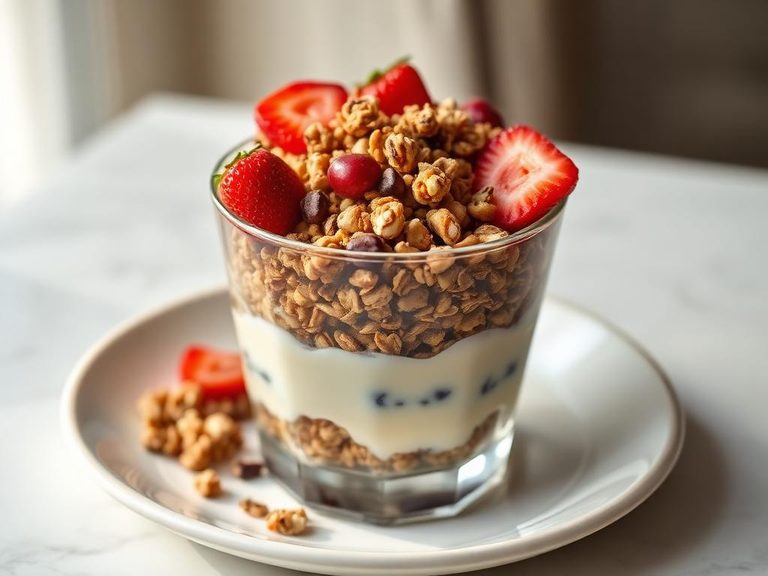
People love it for its perfect balance of wholesome, toasty oat flavor and just enough honey sweetness, creating a versatile base that's equally good with cold milk, sprinkled on yogurt, or eaten by the handful.
⚠️ Watch-outs & how to enjoy it better
With 20.34g of sugar per 100g, it can cause a blood-sugar spike if eaten alone, and its calorie density requires portion awareness. To counteract this, always pair it with a protein or fat source like Greek yogurt or nuts, and measure a standard serving instead of eating from the bag.
Key benefits
- Provides sustained energy from complex carbohydrates and fiber
- Good source of plant-based protein for muscle maintenance
- High in dietary fiber to support digestive health
- Contains whole grains like oats and wheat
- Offers a convenient, no-prep breakfast or snack option
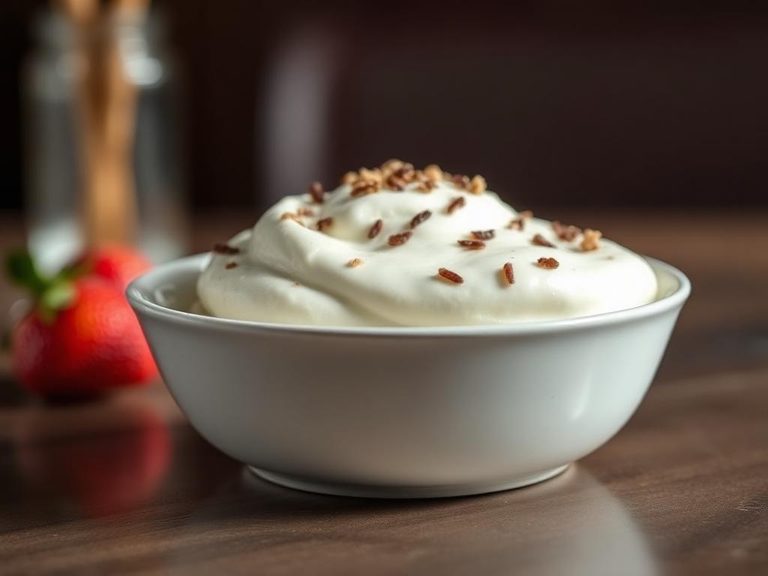
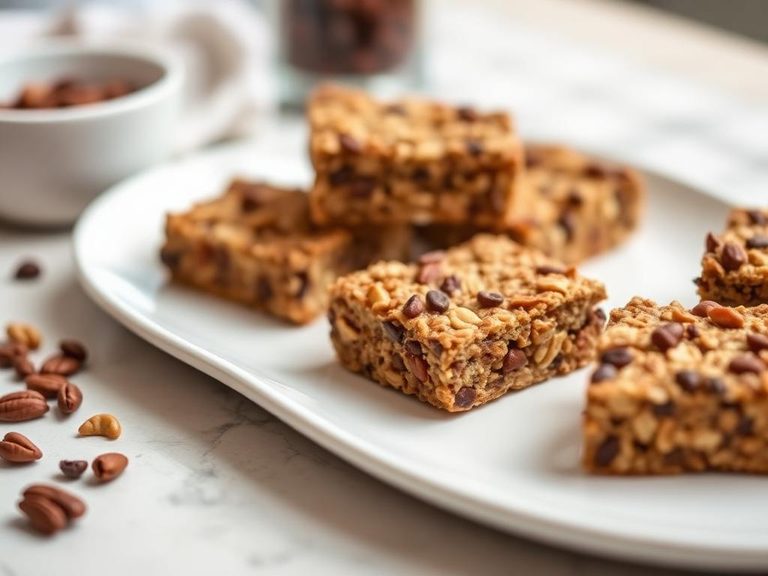
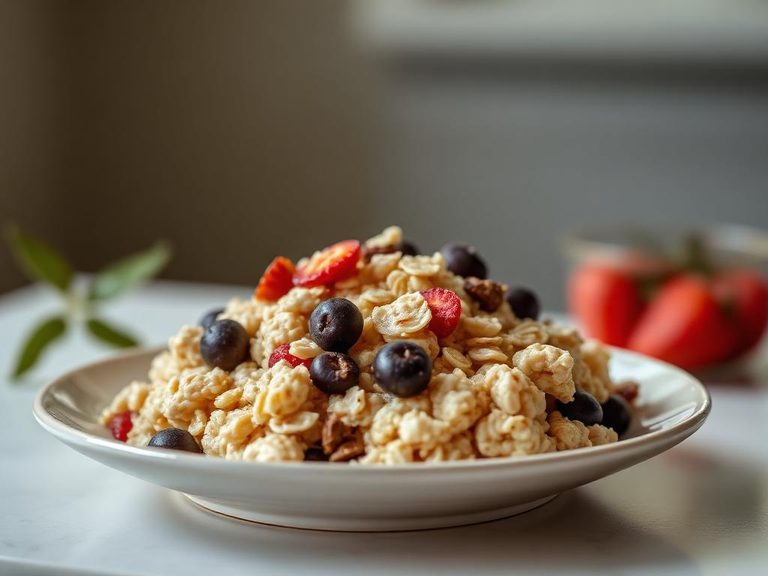
🍽️ Popular dishes
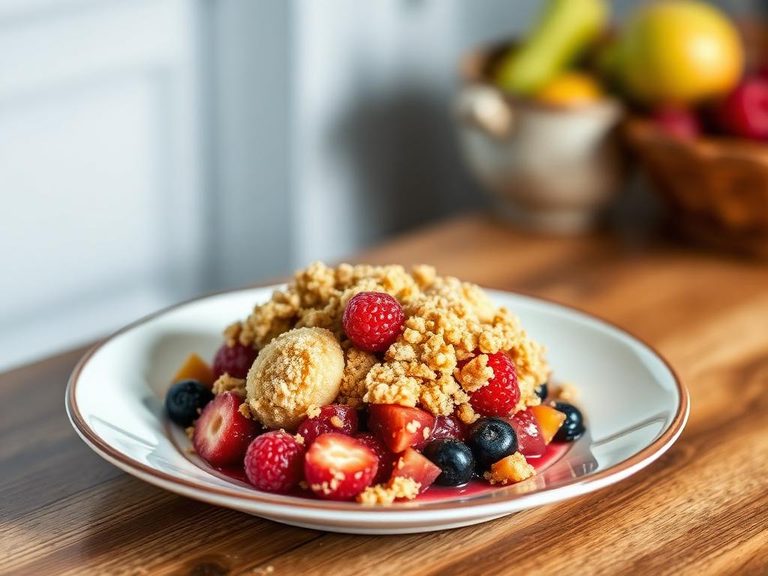
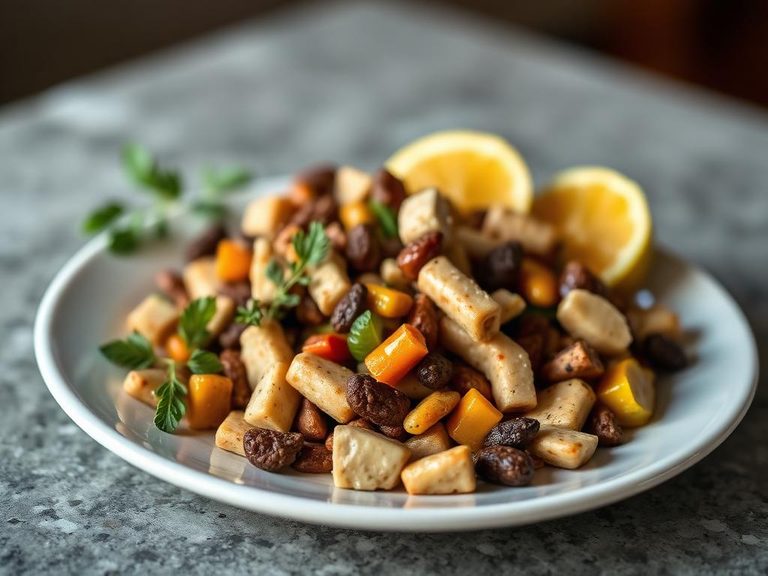
🌍 Where it's eaten
💡 Did you know?
The word 'granola' was trademarked in the 1880s by Dr. John Harvey Kellogg for his toasted corn and oat meal, predating the modern granola bar craze by nearly a century.
Full nutrition (USDA data · scales with serving)
| Water | 2.2 g |
| Energy | 421 kcal |
| Energy | 1761 kj |
| Protein | 10.6 g |
| Total lipid (fat) | 11.6 g |
| Ash | 2.0 g |
| Carbohydrate, by difference | 73.7 g |
| Fiber, total dietary | 10.2 g |
| Total Sugars | 20.3 g |
| Calcium, Ca | 109 mg |
| Iron, Fe | 2.8 mg |
| Magnesium, Mg | 121 mg |
| Phosphorus, P | 392 mg |
| Potassium, K | 483 mg |
| Sodium, Na | 50.0 mg |
| Zinc, Zn | 3.0 mg |
| Copper, Cu | 0.31 mg |
| Selenium, Se | 17.3 ug |
| Vitamin C, total ascorbic acid | 0.20 mg |
| Thiamin | 0.41 mg |
| Riboflavin | 0.29 mg |
| Niacin | 2.3 mg |
| Vitamin B-6 | 0.23 mg |
| Folate, total | 37.0 ug |
| Folic acid | 0.00 ug |
| Folate, food | 37.0 ug |
| Folate, DFE | 37.0 ug |
| Choline, total | 35.0 mg |
| Vitamin B-12 | 0.17 ug |
| Vitamin B-12, added | 0.00 ug |
| Vitamin A, RAE | 2.0 ug |
| Retinol | 2.0 ug |
| Carotene, beta | 1.0 ug |
| Carotene, alpha | 0.00 ug |
| Cryptoxanthin, beta | 0.00 ug |
| Vitamin A, IU | 8.0 iu |
| Lycopene | 0.00 ug |
| Lutein + zeaxanthin | 130 ug |
| Vitamin E (alpha-tocopherol) | 1.3 mg |
| Vitamin E, added | 0.00 mg |
| Vitamin D (D2 + D3), International Units | 0.00 iu |
| Vitamin D (D2 + D3) | 0.00 ug |
| Vitamin K (phylloquinone) | 7.0 ug |
| Alcohol, ethyl | 0.00 g |
| Caffeine | 0.00 mg |
| Theobromine | 0.00 mg |
Fat & fatty acid profile (per 100g)
| Fatty acids, total saturated | 1.2 g |
| SFA 4:0 | 0.00 g |
| SFA 6:0 | 0.00 g |
| SFA 8:0 | 0.00 g |
| SFA 10:0 | 0.00 g |
| SFA 12:0 | 0.01 g |
| SFA 14:0 | 0.01 g |
| SFA 16:0 | 0.89 g |
| SFA 18:0 | 0.22 g |
| SFA 20:0 | 0.05 g |
| SFA 22:0 | 0.03 g |
| Fatty acids, total monounsaturated | 6.6 g |
| MUFA 14:1 | 0.00 g |
| MUFA 16:1 | 0.03 g |
| MUFA 18:1 | 6.5 g |
| MUFA 20:1 | 0.12 g |
| MUFA 22:1 | 0.00 g |
| Fatty acids, total polyunsaturated | 2.7 g |
| PUFA 18:2 | 2.1 g |
| PUFA 18:3 | 0.54 g |
| PUFA 18:4 | 0.00 g |
| PUFA 20:2 n-6 c,c | 0.00 g |
| PUFA 20:3 | 0.00 g |
| PUFA 20:4 | 0.00 g |
| PUFA 20:5 n-3 (EPA) | 0.00 g |
| PUFA 22:5 n-3 (DPA) | 0.00 g |
| PUFA 22:6 n-3 (DHA) | 0.00 g |
| Fatty acids, total trans | 0.13 g |
| Cholesterol | 2.0 mg |
FAQ
Is this granola gluten-free?
No. It contains whole wheat and is processed in a facility that likely handles other gluten-containing grains, so it is not suitable for a gluten-free diet.
How does it differ from muesli?
Granola is baked with sweeteners and oils, creating clusters and a crunchy texture. Muesli is typically a raw, unbaked mix of oats, nuts, and dried fruit, resulting in a softer, chewier texture.
Can I eat this on a weight management plan?
Yes, but portion control is key. A standard 55g serving provides about 230 kcal. Measure your portion and combine it with low-sugar, high-protein foods like plain yogurt to increase satiety.
Nutrient density (calculated · NRF9.3)
Nutrient Rich Foods index: beneficial nutrients (protein, fiber, vitamins, minerals) minus saturated fat, added sugar & sodium, per 100 kcal.
NRF9.3 index — Fulgoni, Keast & Drewnowski, 2009. Computed from USDA nutrients.
Weight-loss friendliness (composite index)
Energy density 4.21 kcal/g · 10% calories from protein · 10.2 g fiber · 20.3 g sugar per 100 g.
Composite of energy density (Rolls et al., 1999), protein & fiber satiety, minus sugar. A calculated heuristic — ranks satiety-per-calorie, not a clinical measure.
Dietary load (calculated from USDA values)
Potential renal acid load. Positive = acid-forming, negative = alkaline-forming.
Sodium-to-potassium ratio: 0.10 (lower is better — aim for ≤ 1)
Sodium:potassium per WHO potassium guidance. Computed from USDA nutrients.