

Blackberries, frozen, unsweetened
Whole food · Fruits and Fruit Juices

Photo: Wikipedia
Frozen unsweetened blackberries are flash-frozen berries that lock in a deep, jammy sweetness with a pleasant tartness and a texture that softens beautifully as it thaws. They are a low-calorie, high-fiber fruit, with 5 grams of fiber per 100g helping to slow the release of their 10.67g of natural sugars.
Calorie split: 7% protein · 88% carbs · 5% fat
↓ Full nutrition💚 Why it's loved
People love them for their intense, concentrated berry flavor that's perfect for sauces, smoothies, and baking, and for the convenience of having peak-season fruit available anytime. They are a staple in desserts like cobblers and pies, and a quick way to add nutrition to breakfasts.
⚠️ Watch-outs & how to enjoy it better
The natural sugars can cause a blood-spike if eaten in large quantities alone, especially for those monitoring glucose levels. To counteract this, pair them with a source of protein or healthy fat, like Greek yogurt or nuts, to slow sugar absorption. Their tiny seeds can also be an irritant for those with diverticulitis or sensitive digestive tracts.
Key benefits
- Excellent source of dietary fiber (5g per 100g)
- Very low in fat (0.43g per 100g)
- Provides natural sugars for energy without added sweeteners
- Rich in antioxidants like anthocyanins
- Convenient year-round source of fresh-tasting fruit
🍽️ Popular dishes
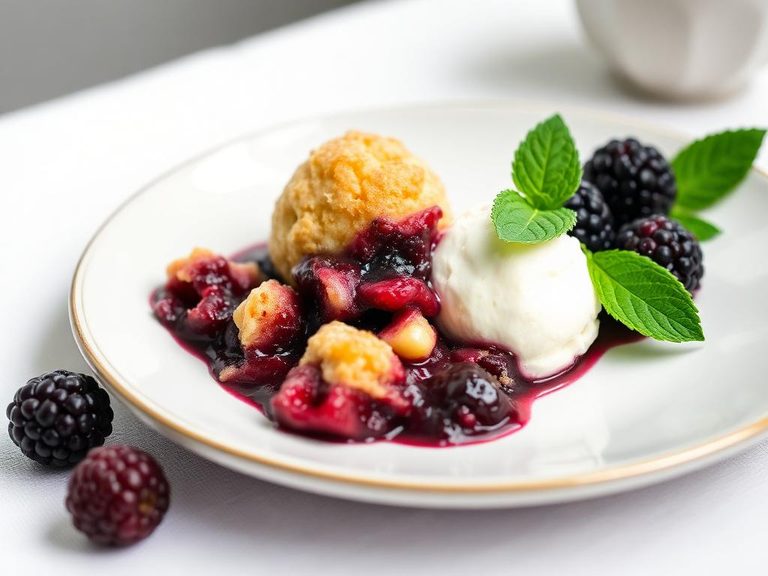
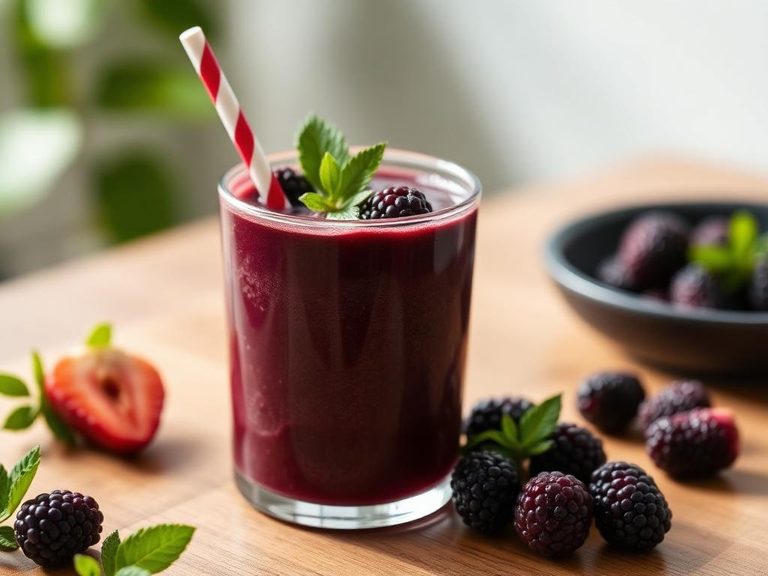
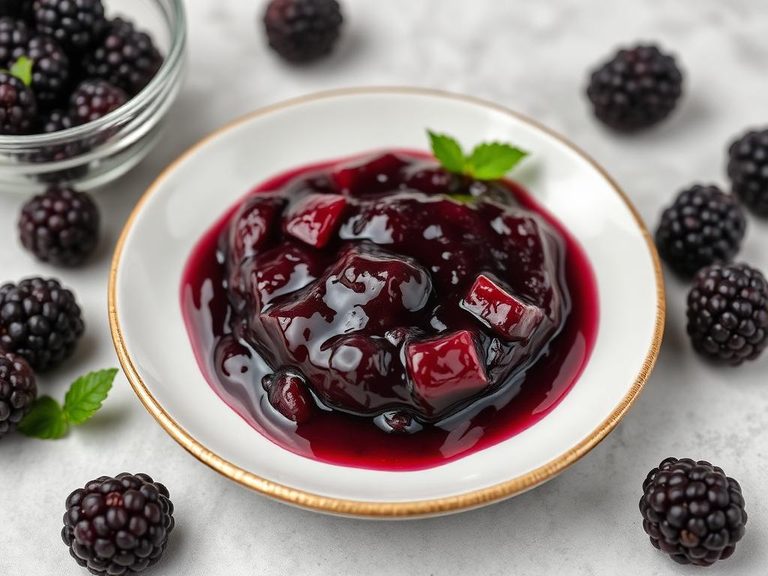
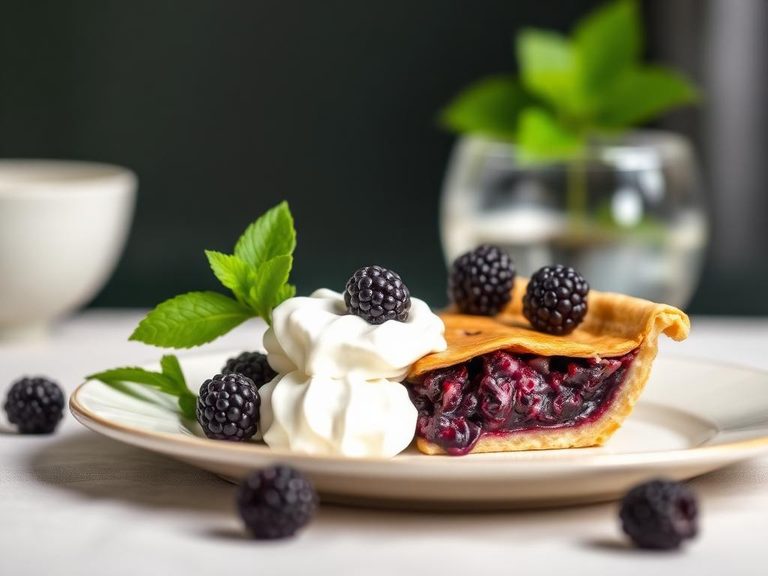
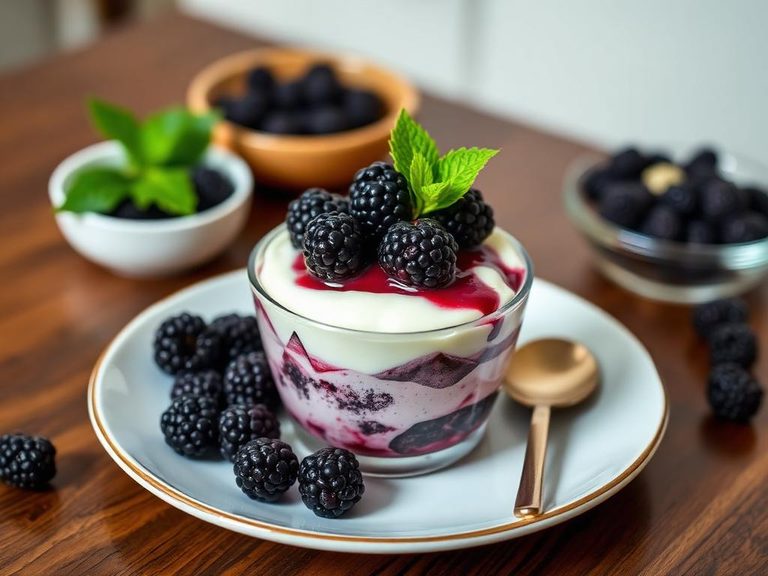
🌍 Where it's eaten
💡 Did you know?
The blackberry is not a true berry botanically; it's an aggregate fruit, with each tiny 'drupelet' containing its own seed.
Full nutrition (USDA data · scales with serving)
| Water | 82.2 g |
| Energy | 64.0 kcal |
| Energy | 268 kj |
| Protein | 1.2 g |
| Total lipid (fat) | 0.43 g |
| Ash | 0.51 g |
| Carbohydrate, by difference | 15.7 g |
| Fiber, total dietary | 5.0 g |
| Total Sugars | 10.7 g |
| Calcium, Ca | 29.0 mg |
| Iron, Fe | 0.80 mg |
| Magnesium, Mg | 22.0 mg |
| Phosphorus, P | 30.0 mg |
| Potassium, K | 140 mg |
| Sodium, Na | 1.0 mg |
| Zinc, Zn | 0.25 mg |
| Copper, Cu | 0.12 mg |
| Manganese, Mn | 1.2 mg |
| Selenium, Se | 0.40 ug |
| Vitamin C, total ascorbic acid | 3.1 mg |
| Thiamin | 0.03 mg |
| Riboflavin | 0.05 mg |
| Niacin | 1.2 mg |
| Pantothenic acid | 0.15 mg |
| Vitamin B-6 | 0.06 mg |
| Folate, total | 34.0 ug |
| Folic acid | 0.00 ug |
| Folate, food | 34.0 ug |
| Folate, DFE | 34.0 ug |
| Choline, total | 8.5 mg |
| Vitamin B-12 | 0.00 ug |
| Vitamin B-12, added | 0.00 ug |
| Vitamin A, RAE | 6.0 ug |
| Retinol | 0.00 ug |
| Carotene, beta | 68.0 ug |
| Carotene, alpha | 0.00 ug |
| Cryptoxanthin, beta | 0.00 ug |
| Vitamin A, IU | 114 iu |
| Lycopene | 0.00 ug |
| Lutein + zeaxanthin | 118 ug |
| Vitamin E (alpha-tocopherol) | 1.2 mg |
| Vitamin E, added | 0.00 mg |
| Vitamin D (D2 + D3), International Units | 0.00 iu |
| Vitamin D (D2 + D3) | 0.00 ug |
| Vitamin K (phylloquinone) | 19.8 ug |
| Alcohol, ethyl | 0.00 g |
| Caffeine | 0.00 mg |
| Theobromine | 0.00 mg |
Fat & fatty acid profile (per 100g)
| Fatty acids, total saturated | 0.01 g |
| SFA 4:0 | 0.00 g |
| SFA 6:0 | 0.00 g |
| SFA 8:0 | 0.00 g |
| SFA 10:0 | 0.00 g |
| SFA 12:0 | 0.00 g |
| SFA 14:0 | 0.00 g |
| SFA 16:0 | 0.01 g |
| SFA 18:0 | 0.00 g |
| Fatty acids, total monounsaturated | 0.04 g |
| MUFA 16:1 | 0.00 g |
| MUFA 18:1 | 0.04 g |
| MUFA 20:1 | 0.00 g |
| MUFA 22:1 | 0.00 g |
| Fatty acids, total polyunsaturated | 0.24 g |
| PUFA 18:2 | 0.16 g |
| PUFA 18:3 | 0.08 g |
| PUFA 18:4 | 0.00 g |
| PUFA 20:4 | 0.00 g |
| PUFA 20:5 n-3 (EPA) | 0.00 g |
| PUFA 22:5 n-3 (DPA) | 0.00 g |
| PUFA 22:6 n-3 (DHA) | 0.00 g |
| Fatty acids, total trans | 0.00 g |
| Cholesterol | 0.00 mg |
FAQ
Do I need to thaw frozen blackberries before using them?
It depends on the use. For smoothies or baking into pies, you can often use them frozen. For eating fresh or in salads, thaw them in the refrigerator or at room temperature for best texture.
How do I prevent my baked goods from turning purple when using blackberries?
Toss the berries lightly in a small amount of flour or cornstarch before folding them into batter. This helps absorb some juice and reduces color bleeding.
Are the nutrients in frozen blackberries as good as fresh?
Yes, often better. Flash-freezing shortly after harvest preserves nutrients at their peak, whereas fresh berries can lose nutrients during transport and storage.
Nutrient density (calculated · NRF9.3)
Nutrient Rich Foods index: beneficial nutrients (protein, fiber, vitamins, minerals) minus saturated fat, added sugar & sodium, per 100 kcal.
NRF9.3 index — Fulgoni, Keast & Drewnowski, 2009. Computed from USDA nutrients.
Weight-loss friendliness (composite index)
Energy density 0.64 kcal/g · 7% calories from protein · 5.0 g fiber · 10.7 g sugar per 100 g.
Composite of energy density (Rolls et al., 1999), protein & fiber satiety, minus sugar. A calculated heuristic — ranks satiety-per-calorie, not a clinical measure.
Dietary load (calculated from USDA values)
Potential renal acid load. Positive = acid-forming, negative = alkaline-forming.
Sodium-to-potassium ratio: 0.01 (lower is better — aim for ≤ 1)
Sodium:potassium per WHO potassium guidance. Computed from USDA nutrients.