Milk, lowfat, fluid, 1% milkfat, with added nonfat milk solids, vitamin A and vitamin D
Whole food · Dairy and Egg Products

Photo: Wikipedia
This is a nutritionally fortified, low-fat cow's milk, engineered to have a creamier mouthfeel than its fat content suggests. It pours smoothly and has a clean, mild dairy flavor, boosted by added vitamins A and D. It's a lean protein powerhouse, delivering nearly 3.5 grams of protein for just 43 calories.
💚 Why it's loved
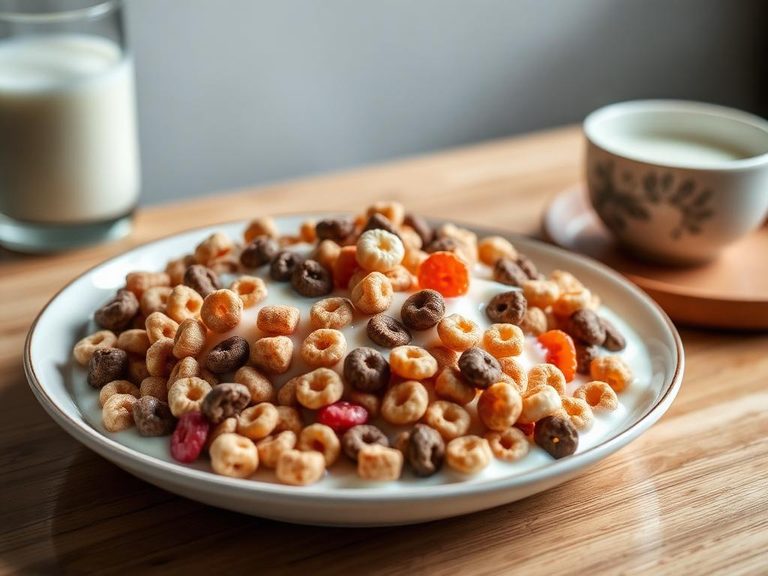
It's the go-to for a protein-packed, low-calorie beverage that doesn't sacrifice a familiar, comforting milk taste. Its versatility makes it perfect for everything from cereal and coffee to smoothies and baking.
⚠️ Watch-outs & how to enjoy it better
The added nonfat milk solids can give a slightly chalky or powdery aftertaste to some palates. For those with lactose intolerance, it can cause digestive discomfort; consider pairing it with a high-fiber food like oats or choosing a lactose-free version.
Key benefits
- Excellent source of high-quality, complete protein for muscle maintenance.
- Fortified with Vitamin D to support bone health and immune function.
- Provides calcium and phosphorus for strong teeth and bones.
- Low in saturated fat and calories compared to whole milk.
- Lactose content can offer a quick source of energy.
🍽️ Popular dishes


🌍 Where it's eaten
💡 Did you know?
The 'added nonfat milk solids' are often a byproduct of butter and cream production, making this milk a prime example of efficient dairy processing.
Full nutrition (scales with serving)
| Water | 89.8 g |
| Energy | 43.0 kcal |
| Energy | 178 kj |
| Protein | 3.5 g |
| Total lipid (fat) | 0.97 g |
| Ash | 0.77 g |
| Carbohydrate, by difference | 5.0 g |
| Fiber, total dietary | 0.00 g |
| Calcium, Ca | 128 mg |
| Iron, Fe | 0.05 mg |
| Magnesium, Mg | 14.0 mg |
| Phosphorus, P | 100 mg |
| Potassium, K | 162 mg |
| Sodium, Na | 52.0 mg |
| Zinc, Zn | 0.40 mg |
| Copper, Cu | 0.01 mg |
| Manganese, Mn | 0.00 mg |
| Selenium, Se | 2.3 ug |
| Vitamin C, total ascorbic acid | 1.0 mg |
| Thiamin | 0.04 mg |
| Riboflavin | 0.17 mg |
| Niacin | 0.09 mg |
| Pantothenic acid | 0.34 mg |
| Vitamin B-6 | 0.04 mg |
| Folate, total | 5.0 ug |
| Folic acid | 0.00 ug |
| Folate, food | 5.0 ug |
| Folate, DFE | 5.0 ug |
| Vitamin B-12 | 0.38 ug |
| Vitamin A, RAE | 59.0 ug |
| Retinol | 58.0 ug |
| Vitamin A, IU | 204 iu |
| Vitamin D (D2 + D3), International Units | 40.0 iu |
| Vitamin D (D2 + D3) | 1.0 ug |
| Alcohol, ethyl | 0.00 g |
Fat & fatty acid profile (per 100g)
| Fatty acids, total saturated | 0.60 g |
| SFA 4:0 | 0.03 g |
| SFA 6:0 | 0.02 g |
| SFA 8:0 | 0.01 g |
| SFA 10:0 | 0.02 g |
| SFA 12:0 | 0.03 g |
| SFA 14:0 | 0.10 g |
| SFA 16:0 | 0.26 g |
| SFA 18:0 | 0.12 g |
| Fatty acids, total monounsaturated | 0.28 g |
| MUFA 16:1 | 0.02 g |
| MUFA 18:1 | 0.24 g |
| MUFA 20:1 | 0.00 g |
| MUFA 22:1 | 0.00 g |
| Fatty acids, total polyunsaturated | 0.04 g |
| PUFA 18:2 | 0.02 g |
| PUFA 18:3 | 0.01 g |
| PUFA 18:4 | 0.00 g |
| PUFA 20:4 | 0.00 g |
| PUFA 20:5 n-3 (EPA) | 0.00 g |
| PUFA 22:5 n-3 (DPA) | 0.00 g |
| PUFA 22:6 n-3 (DHA) | 0.00 g |
| Cholesterol | 4.0 mg |
Amino acid profile (per 100g)
| Tryptophan | 0.05 g |
| Threonine | 0.16 g |
| Isoleucine | 0.21 g |
| Leucine | 0.34 g |
| Lysine | 0.28 g |
| Methionine | 0.09 g |
| Cystine | 0.03 g |
| Phenylalanine | 0.17 g |
| Tyrosine | 0.17 g |
| Valine | 0.23 g |
| Arginine | 0.13 g |
| Histidine | 0.09 g |
| Alanine | 0.12 g |
| Aspartic acid | 0.26 g |
| Glutamic acid | 0.73 g |
| Glycine | 0.07 g |
| Proline | 0.34 g |
| Serine | 0.19 g |
FAQ
Why are vitamins A and D added?
When milk fat is removed to make low-fat or skim milk, the naturally fat-soluble vitamins A and D are also reduced. Fortification restores these essential nutrients, which are crucial for vision, immune health, and bone strength.
How does it differ from regular low-fat milk?
The key difference is the 'added nonfat milk solids.' This increases the protein and mineral content slightly and, more importantly, improves the texture and body of the milk, making it feel less watery than standard 1% milk.
Is the sugar listed naturally occurring?
Yes. The 4.97g of carbohydrates per 100g is almost entirely lactose, the natural sugar found in milk. There are no added sugars in this product.