

Cowpeas (blackeyes), immature seeds, frozen, unprepared
Whole food · Vegetables and Vegetable Products

Photo: Wikipedia
These are the young, tender seeds of the black-eyed pea plant, harvested before maturity and flash-frozen to preserve their signature creamy texture and earthy, slightly nutty flavor. Nutritionally, they are a standout for being a high-protein, high-fiber, and very low-fat legume, making them a powerhouse for plant-based meals.
Calorie split: 25% protein · 70% carbs · 4% fat
↓ Full nutrition💚 Why it's loved
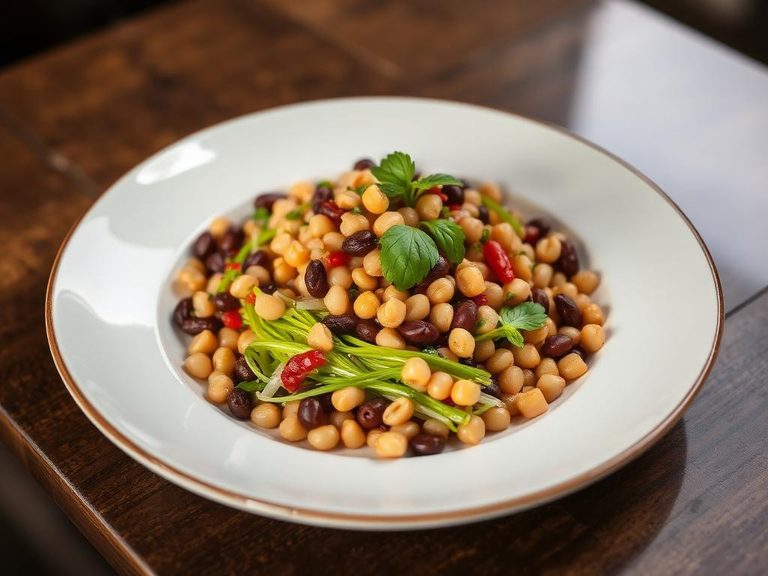
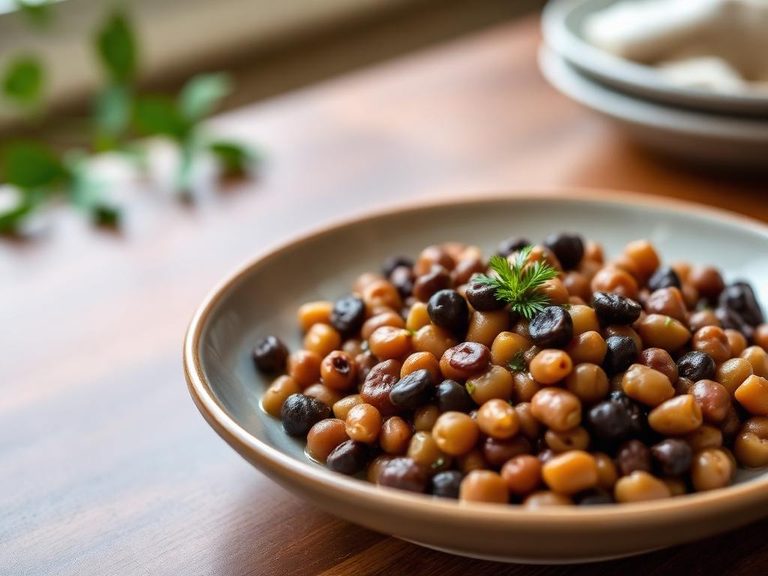
People love them for their distinctive, comforting flavor that forms the soul of dishes like Hoppin' John. Their versatility allows them to be mashed, stewed, or tossed into salads, absorbing seasonings beautifully while maintaining a pleasant, firm bite.
⚠️ Watch-outs & how to enjoy it better
As a legume, they can cause digestive gas or bloating in some individuals. They also contain moderate levels of lectins and phytic acid, which can interfere with mineral absorption. To counteract this, always cook them thoroughly (boiling for at least 10 minutes) and consider soaking dried versions overnight. Pairing with a source of vitamin C (like tomatoes or lemon juice) can enhance iron absorption.
Key benefits
- Excellent source of plant-based protein (9g per 100g).
- High in dietary fiber (5g per 100g) for digestive health.
- Very low in fat (0.7g per 100g).
- Rich in folate, manganese, and other essential minerals.
- Provides complex carbohydrates for sustained energy.
🍽️ Popular dishes




🌍 Where it's eaten
💡 Did you know?
In the Southern United States, eating black-eyed peas on New Year's Day is a longstanding tradition believed to bring good luck and prosperity for the coming year.
Full nutrition (USDA data · scales with serving)
| Water | 64.2 g |
| Energy | 139 kcal |
| Energy | 582 kj |
| Protein | 9.0 g |
| Total lipid (fat) | 0.70 g |
| Ash | 1.1 g |
| Carbohydrate, by difference | 25.1 g |
| Fiber, total dietary | 5.0 g |
| Calcium, Ca | 26.0 mg |
| Iron, Fe | 2.4 mg |
| Magnesium, Mg | 55.0 mg |
| Phosphorus, P | 122 mg |
| Potassium, K | 441 mg |
| Sodium, Na | 6.0 mg |
| Zinc, Zn | 1.6 mg |
| Copper, Cu | 0.20 mg |
| Manganese, Mn | 0.88 mg |
| Selenium, Se | 3.6 ug |
| Vitamin C, total ascorbic acid | 4.0 mg |
| Thiamin | 0.24 mg |
| Riboflavin | 0.07 mg |
| Niacin | 0.81 mg |
| Pantothenic acid | 0.24 mg |
| Vitamin B-6 | 0.11 mg |
| Folate, total | 187 ug |
| Folic acid | 0.00 ug |
| Folate, food | 187 ug |
| Folate, DFE | 187 ug |
| Vitamin B-12 | 0.00 ug |
| Vitamin A, RAE | 4.0 ug |
| Retinol | 0.00 ug |
| Vitamin A, IU | 84.0 iu |
| Vitamin D (D2 + D3), International Units | 0.00 iu |
| Vitamin D (D2 + D3) | 0.00 ug |
| Alcohol, ethyl | 0.00 g |
Fat & fatty acid profile (per 100g)
| Fatty acids, total saturated | 0.18 g |
| SFA 4:0 | 0.00 g |
| SFA 6:0 | 0.00 g |
| SFA 8:0 | 0.00 g |
| SFA 10:0 | 0.00 g |
| SFA 12:0 | 0.00 g |
| SFA 14:0 | 0.00 g |
| SFA 16:0 | 0.15 g |
| SFA 18:0 | 0.02 g |
| Fatty acids, total monounsaturated | 0.06 g |
| MUFA 16:1 | 0.00 g |
| MUFA 18:1 | 0.04 g |
| MUFA 20:1 | 0.00 g |
| MUFA 22:1 | 0.02 g |
| Fatty acids, total polyunsaturated | 0.30 g |
| PUFA 18:2 | 0.17 g |
| PUFA 18:3 | 0.12 g |
| PUFA 18:4 | 0.00 g |
| PUFA 20:4 | 0.00 g |
| PUFA 20:5 n-3 (EPA) | 0.00 g |
| PUFA 22:5 n-3 (DPA) | 0.00 g |
| PUFA 22:6 n-3 (DHA) | 0.00 g |
| Fatty acids, total trans | 0.00 g |
| Cholesterol | 0.00 mg |
Amino acid profile (per 100g)
| Tryptophan | 0.10 g |
| Threonine | 0.34 g |
| Isoleucine | 0.48 g |
| Leucine | 0.64 g |
| Lysine | 0.59 g |
| Methionine | 0.13 g |
| Cystine | 0.13 g |
| Phenylalanine | 0.49 g |
| Tyrosine | 0.37 g |
| Valine | 0.52 g |
| Arginine | 0.63 g |
| Histidine | 0.29 g |
FAQ
Are frozen black-eyed peas as nutritious as fresh?
Yes, frozen black-eyed peas are typically flash-frozen shortly after harvest, which locks in nutrients very effectively. They are nutritionally comparable to, and sometimes more consistent than, fresh peas that may have been stored for days.
Do I need to thaw frozen black-eyed peas before cooking?
No, you can cook them directly from frozen. Adding them straight to soups, stews, or boiling water is standard practice and saves time.
What's the difference between black-eyed peas and regular peas?
They are not true peas (which come from the Pisum sativum plant). Black-eyed peas are a type of cowpea (Vigna unguiculata), a legume with a distinct bean-like flavor and texture, unlike the sweet, starchy flavor of garden peas.
Nutrient density (calculated · NRF9.3)
Nutrient Rich Foods index: beneficial nutrients (protein, fiber, vitamins, minerals) minus saturated fat, added sugar & sodium, per 100 kcal.
NRF9.3 index — Fulgoni, Keast & Drewnowski, 2009. Computed from USDA nutrients.
Weight-loss friendliness (composite index)
Energy density 1.39 kcal/g · 26% calories from protein · 5.0 g fiber · 0.0 g sugar per 100 g.
Composite of energy density (Rolls et al., 1999), protein & fiber satiety, minus sugar. A calculated heuristic — ranks satiety-per-calorie, not a clinical measure.
Dietary load (calculated from USDA values)
Potential renal acid load. Positive = acid-forming, negative = alkaline-forming.
Sodium-to-potassium ratio: 0.01 (lower is better — aim for ≤ 1)
Sodium:potassium per WHO potassium guidance. Computed from USDA nutrients.