

Veal, shoulder, arm, separable lean only, cooked, braised
Whole food · Lamb, Veal, and Game Products

Photo: Wikipedia
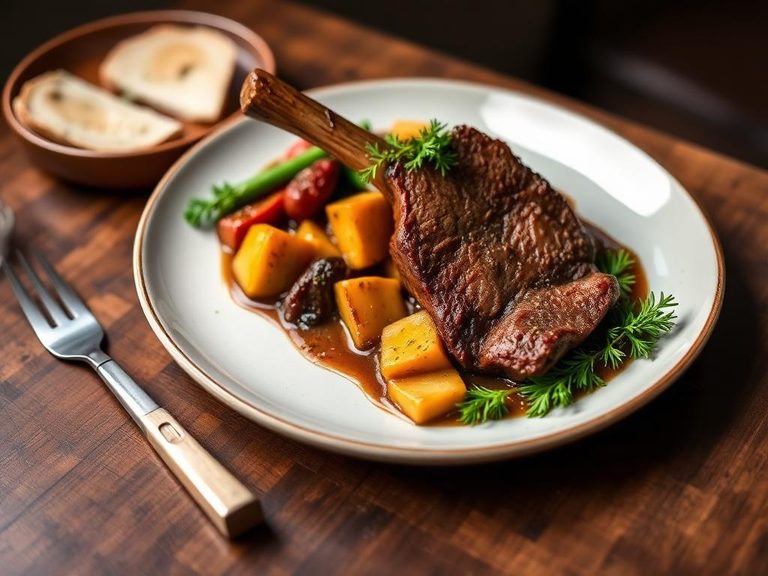
This cut is the lean, boneless portion from the shoulder (arm) of a young cow, slow-braised until fork-tender. It has a delicate, mild flavor and a fine-grained, succulent texture that easily absorbs cooking liquids. Nutritionally, it's a powerhouse of high-quality protein with minimal fat and zero carbohydrates.
Calorie split: 75% protein · 0% carbs · 25% fat
↓ Full nutrition💚 Why it's loved
People love it for its buttery tenderness and subtle, clean beef flavor that serves as a perfect canvas for herbs, wine, and aromatics. It's a classic comfort food, central to hearty European stews and Sunday roasts, evoking a sense of tradition and home cooking.
⚠️ Watch-outs & how to enjoy it better
As a very lean cut, it can become dry and tough if overcooked or prepared with high-heat methods like grilling. To counteract this, always use moist-heat cooking (braising, stewing) and ensure adequate liquid and cooking time to break down connective tissue. Those monitoring iron intake should note it's a source of heme iron.
Key benefits
- Excellent source of complete protein for muscle maintenance
- Very low in fat, especially saturated fat compared to other cuts
- Provides essential minerals like zinc and B vitamins
- Carbohydrate-free, suitable for low-carb and ketogenic diets
- Highly digestible when properly braised
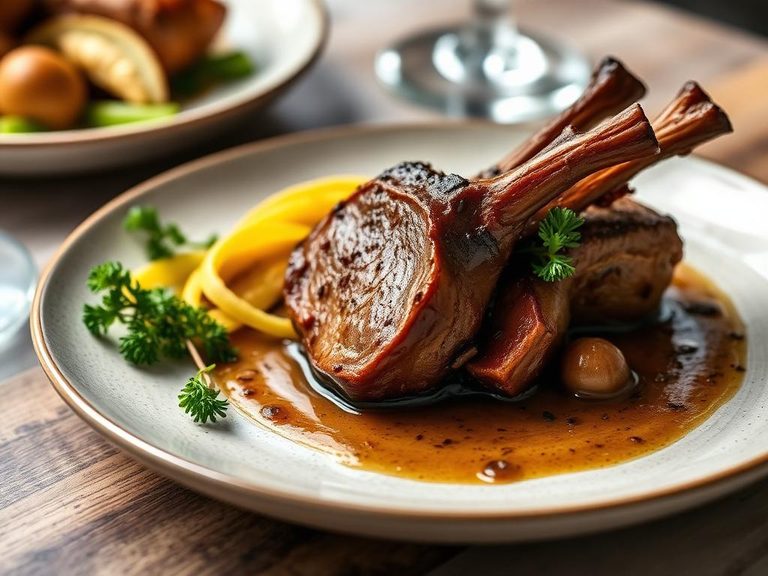
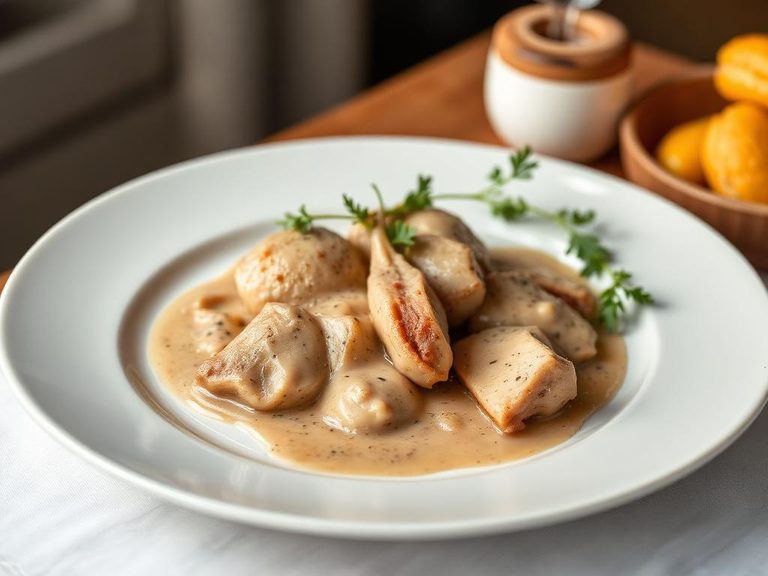
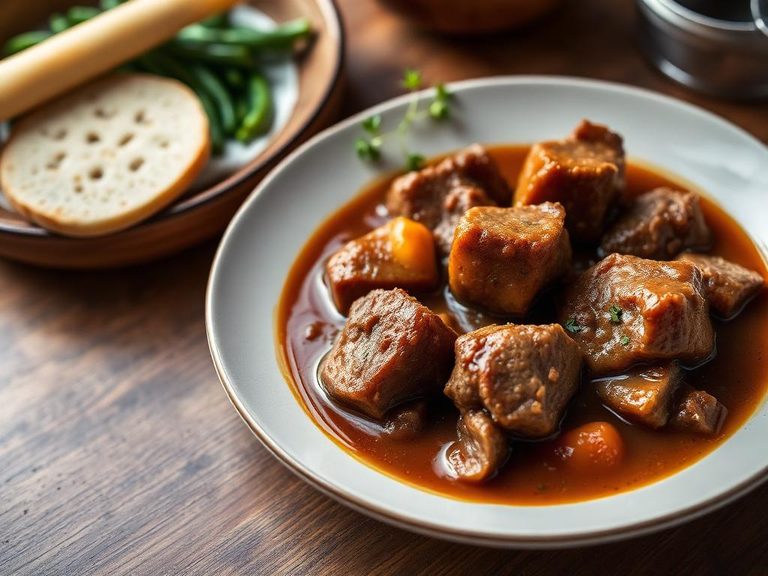
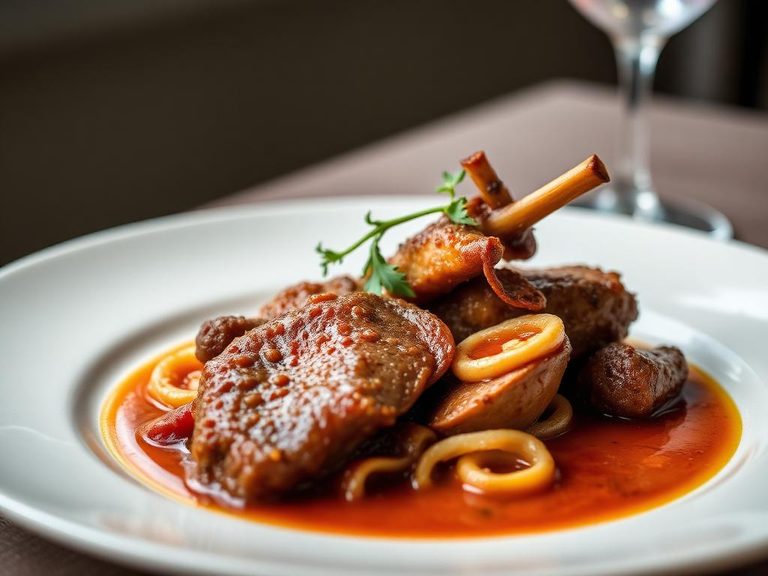
🍽️ Popular dishes

🌍 Where it's eaten
💡 Did you know?
The term 'arm' in this cut refers to the shoulder blade (scapula) bone that runs through it, not the actual leg of the animal.
Full nutrition (USDA data · scales with serving)
| Water | 58.2 g |
| Energy | 201 kcal |
| Energy | 841 kj |
| Protein | 35.7 g |
| Total lipid (fat) | 5.3 g |
| Ash | 1.3 g |
| Carbohydrate, by difference | 0.00 g |
| Fiber, total dietary | 0.00 g |
| Calcium, Ca | 30.0 mg |
| Iron, Fe | 1.4 mg |
| Magnesium, Mg | 30.0 mg |
| Phosphorus, P | 276 mg |
| Potassium, K | 347 mg |
| Sodium, Na | 90.0 mg |
| Zinc, Zn | 6.2 mg |
| Copper, Cu | 0.14 mg |
| Manganese, Mn | 0.04 mg |
| Selenium, Se | 15.3 ug |
| Vitamin C, total ascorbic acid | 0.00 mg |
| Thiamin | 0.06 mg |
| Riboflavin | 0.33 mg |
| Niacin | 10.7 mg |
| Pantothenic acid | 1.4 mg |
| Vitamin B-6 | 0.30 mg |
| Folate, total | 19.0 ug |
| Folic acid | 0.00 ug |
| Folate, food | 19.0 ug |
| Folate, DFE | 19.0 ug |
| Vitamin B-12 | 1.8 ug |
| Vitamin A, RAE | 0.00 ug |
| Retinol | 0.00 ug |
| Vitamin A, IU | 0.00 iu |
| Vitamin E (alpha-tocopherol) | 0.47 mg |
Fat & fatty acid profile (per 100g)
| Fatty acids, total saturated | 1.5 g |
| SFA 10:0 | 0.00 g |
| SFA 12:0 | 0.01 g |
| SFA 14:0 | 0.10 g |
| SFA 16:0 | 0.87 g |
| SFA 18:0 | 0.51 g |
| Fatty acids, total monounsaturated | 1.9 g |
| MUFA 16:1 | 0.17 g |
| MUFA 18:1 | 1.7 g |
| Fatty acids, total polyunsaturated | 0.48 g |
| PUFA 18:2 | 0.37 g |
| PUFA 18:3 | 0.02 g |
| PUFA 20:4 | 0.09 g |
| Cholesterol | 155 mg |
Amino acid profile (per 100g)
| Tryptophan | 0.36 g |
| Threonine | 1.6 g |
| Isoleucine | 1.8 g |
| Leucine | 2.8 g |
| Lysine | 2.9 g |
| Methionine | 0.83 g |
| Cystine | 0.40 g |
| Phenylalanine | 1.4 g |
| Tyrosine | 1.1 g |
| Valine | 2.0 g |
| Arginine | 2.1 g |
| Histidine | 1.3 g |
| Alanine | 2.1 g |
| Aspartic acid | 3.1 g |
| Glutamic acid | 5.7 g |
| Glycine | 1.8 g |
| Proline | 1.5 g |
| Serine | 1.3 g |
FAQ
What's the best way to cook this lean cut to prevent it from drying out?
Low-and-slow moist-heat methods are key. Braise it in liquid (like stock, wine, or tomatoes) at a low temperature (around 325°F/160°C) for 2-3 hours, or until it's easily pierced with a fork. This gently breaks down the connective tissue, resulting in tender, juicy meat.
How does veal shoulder compare to beef chuck?
Veal shoulder is significantly leaner, milder in flavor, and more tender than beef chuck. Beef chuck has more intramuscular fat and collagen, making it ideal for very long, slow cooking, while veal shoulder cooks somewhat faster and has a more delicate profile.
Is this a good cut for making broth or stock?
Yes, it's an excellent choice. The lean meat adds a clean, rich flavor to the broth without excessive grease. The bones and connective tissue (if included) will release collagen, giving the stock a wonderful body and mouthfeel.
Nutrient density (calculated · NRF9.3)
Nutrient Rich Foods index: beneficial nutrients (protein, fiber, vitamins, minerals) minus saturated fat, added sugar & sodium, per 100 kcal.
NRF9.3 index — Fulgoni, Keast & Drewnowski, 2009. Computed from USDA nutrients.
Weight-loss friendliness (composite index)
Energy density 2.01 kcal/g · 71% calories from protein · 0.0 g fiber · 0.0 g sugar per 100 g.
Composite of energy density (Rolls et al., 1999), protein & fiber satiety, minus sugar. A calculated heuristic — ranks satiety-per-calorie, not a clinical measure.
Dietary load (calculated from USDA values)
Potential renal acid load. Positive = acid-forming, negative = alkaline-forming.
Sodium-to-potassium ratio: 0.26 (lower is better — aim for ≤ 1)
Sodium:potassium per WHO potassium guidance. Computed from USDA nutrients.