

Seeds, chia seeds, dried
Whole food · Nut and Seed Products

Photo: Wikipedia
Chia seeds are tiny, oval seeds from the Salvia hispanica plant, known for their mild, nutty flavor and a unique ability to absorb liquid and form a gel-like coating. Nutritionally, they are a powerhouse, packing an exceptional amount of fiber and healthy fats into a very small serving. Their texture transforms from crunchy when dry to pleasantly gelatinous when soaked.
Calorie split: 13% protein · 33% carbs · 54% fat
↓ Full nutrition💚 Why it's loved
People love chia seeds for their remarkable versatility and neutral taste, which allows them to seamlessly blend into both sweet and savory dishes. They are celebrated as a convenient, nutrient-dense boost that can be added to almost anything without altering the core flavor.
⚠️ Watch-outs & how to enjoy it better
Their extreme absorbency can be a downside if not properly hydrated, potentially leading to digestive discomfort or a choking hazard if eaten dry. For those new to a high-fiber diet, a sudden large intake can cause bloating; it's best to start with a small amount (e.g., 1 tablespoon) and increase gradually while drinking plenty of water.
Key benefits
- Exceptional source of dietary fiber (34.4g per 100g)
- Rich in plant-based omega-3 fatty acids (alpha-linolenic acid)
- Good source of plant protein (16.54g per 100g)
- High in minerals like calcium, phosphorus, and magnesium
- Contains antioxidants that help protect the fats from going rancid
🍽️ Popular dishes
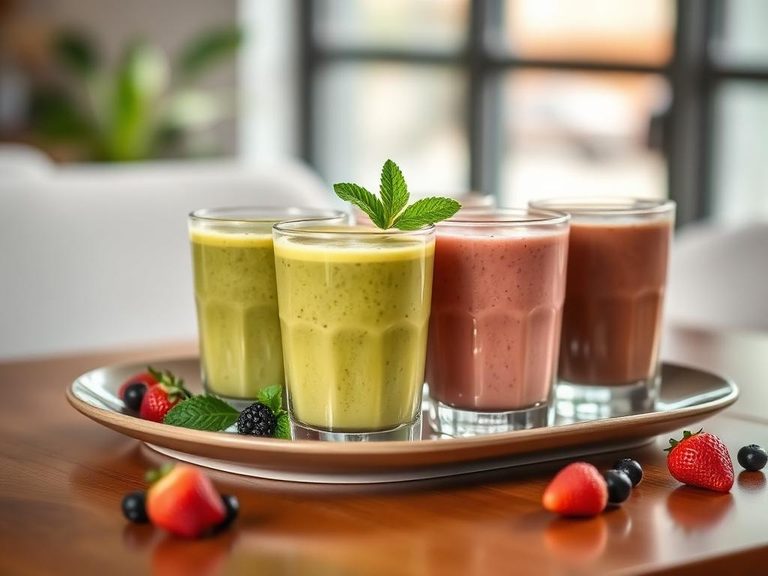

🌍 Where it's eaten
💡 Did you know?
Chia seeds can absorb up to 12 times their weight in liquid, forming a gel that was historically used by Aztec runners and warriors as a portable, hydrating energy source.
Full nutrition (USDA data · scales with serving)
| Water | 5.8 g |
| Energy | 486 kcal |
| Energy | 2034 kj |
| Protein | 16.5 g |
| Total lipid (fat) | 30.7 g |
| Ash | 4.8 g |
| Carbohydrate, by difference | 42.1 g |
| Fiber, total dietary | 34.4 g |
| Calcium, Ca | 631 mg |
| Iron, Fe | 7.7 mg |
| Magnesium, Mg | 335 mg |
| Phosphorus, P | 860 mg |
| Potassium, K | 407 mg |
| Sodium, Na | 16.0 mg |
| Zinc, Zn | 4.6 mg |
| Copper, Cu | 0.92 mg |
| Manganese, Mn | 2.7 mg |
| Selenium, Se | 55.2 ug |
| Vitamin C, total ascorbic acid | 1.6 mg |
| Thiamin | 0.62 mg |
| Riboflavin | 0.17 mg |
| Niacin | 8.8 mg |
| Folate, total | 49.0 ug |
| Folate, food | 49.0 ug |
| Vitamin B-12 | 0.00 ug |
| Vitamin A, IU | 54.0 iu |
| Vitamin E (alpha-tocopherol) | 0.50 mg |
Fat & fatty acid profile (per 100g)
| Fatty acids, total saturated | 3.3 g |
| SFA 14:0 | 0.03 g |
| SFA 15:0 | 0.03 g |
| SFA 16:0 | 2.2 g |
| SFA 17:0 | 0.06 g |
| SFA 18:0 | 0.91 g |
| SFA 20:0 | 0.09 g |
| SFA 22:0 | 0.03 g |
| Fatty acids, total monounsaturated | 2.3 g |
| MUFA 14:1 | 0.03 g |
| MUFA 16:1 | 0.03 g |
| MUFA 17:1 | 0.00 g |
| MUFA 18:1 | 2.2 g |
| MUFA 20:1 | 0.05 g |
| Fatty acids, total polyunsaturated | 23.7 g |
| PUFA 18:2 | 5.8 g |
| PUFA 18:2 n-6 c,c | 5.8 g |
| PUFA 18:3 | 17.8 g |
| PUFA 18:3 n-3 c,c,c (ALA) | 17.8 g |
| Fatty acids, total trans | 0.14 g |
| Cholesterol | 0.00 mg |
Amino acid profile (per 100g)
| Tryptophan | 0.44 g |
| Threonine | 0.71 g |
| Isoleucine | 0.80 g |
| Leucine | 1.4 g |
| Lysine | 0.97 g |
| Methionine | 0.59 g |
| Cystine | 0.41 g |
| Phenylalanine | 1.0 g |
| Tyrosine | 0.56 g |
| Valine | 0.95 g |
| Arginine | 2.1 g |
| Histidine | 0.53 g |
| Alanine | 1.0 g |
| Aspartic acid | 1.7 g |
| Glutamic acid | 3.5 g |
| Glycine | 0.94 g |
| Proline | 0.78 g |
| Serine | 1.0 g |
FAQ
Do I need to grind chia seeds to get their benefits?
No. While grinding can make some nutrients slightly more accessible, whole chia seeds are well-digested by most people and their gel-forming property is a key benefit. Soaking or adding them to liquid foods is sufficient.
How do I make chia pudding?
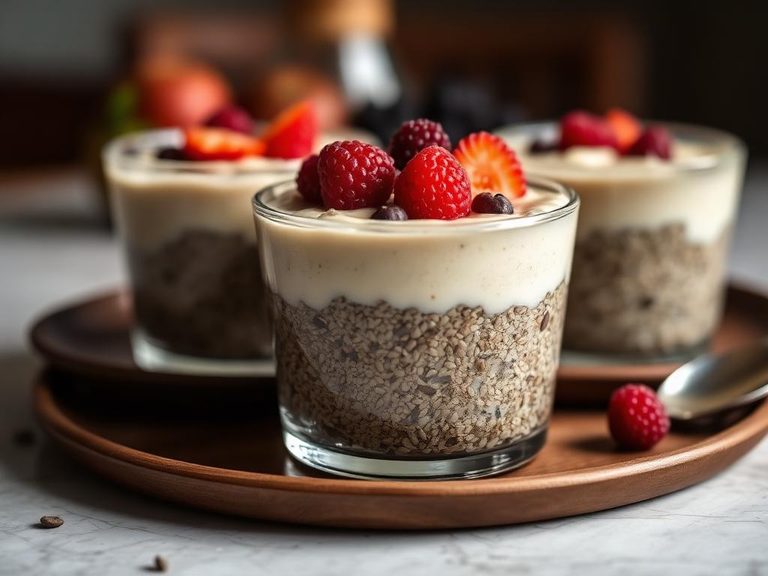
A basic ratio is 3 tablespoons of chia seeds to 1 cup of liquid (like milk or a plant-based alternative). Stir well, let sit for 5 minutes, stir again to prevent clumping, then refrigerate for at least 2 hours or overnight until a pudding-like gel forms.
Can chia seeds help with hydration?
Yes. Their water-absorbing capacity can help maintain hydration. They are often added to sports drinks or consumed in puddings to help sustain fluid balance during prolonged activity.
Nutrient density (calculated · NRF9.3)
Nutrient Rich Foods index: beneficial nutrients (protein, fiber, vitamins, minerals) minus saturated fat, added sugar & sodium, per 100 kcal.
NRF9.3 index — Fulgoni, Keast & Drewnowski, 2009. Computed from USDA nutrients.
Weight-loss friendliness (composite index)
Energy density 4.86 kcal/g · 14% calories from protein · 34.4 g fiber · 0.0 g sugar per 100 g.
Composite of energy density (Rolls et al., 1999), protein & fiber satiety, minus sugar. A calculated heuristic — ranks satiety-per-calorie, not a clinical measure.
Dietary load (calculated from USDA values)
Potential renal acid load. Positive = acid-forming, negative = alkaline-forming.
Sodium-to-potassium ratio: 0.04 (lower is better — aim for ≤ 1)
Sodium:potassium per WHO potassium guidance. Computed from USDA nutrients.