

Sauce, pizza, canned, ready-to-serve
Whole food · Soups, Sauces, and Gravies
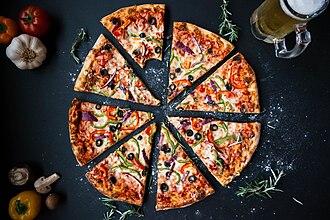
Photo: Wikipedia
This is a smooth, savory, ready-to-use tomato-based sauce, typically seasoned with garlic, oregano, and basil, designed as the essential base for a classic pizza. Its texture is pourable but with enough body to coat the dough, offering a balanced tangy-sweet flavor profile. Nutritionally, it's a low-calorie, high-fiber ingredient that provides a solid dose of lycopene from cooked tomatoes.
Calorie split: 16% protein · 64% carbs · 19% fat
↓ Full nutrition💚 Why it's loved
People love it for its unmatched convenience and role as the flavor foundation of pizza, instantly evoking comfort and nostalgia. Its versatility allows it to be used far beyond pizza, as a dip, pasta sauce, or soup base.
⚠️ Watch-outs & how to enjoy it better
The primary concern is often high sodium content in canned versions, which can contribute to water retention and elevated blood pressure. To mitigate this, look for 'low-sodium' varieties or rinse the sauce lightly if texture allows. It can also contain added sugars, so checking labels and pairing it with protein-rich toppings like chicken or legumes helps stabilize blood sugar response.
Key benefits
- Low in calories and fat, supporting weight management.
- Good source of dietary fiber for digestive health.
- Rich in lycopene, a powerful antioxidant from tomatoes.
- Provides a convenient, flavorful base for quick meals.
- Contains natural vitamins A and C from tomato content.
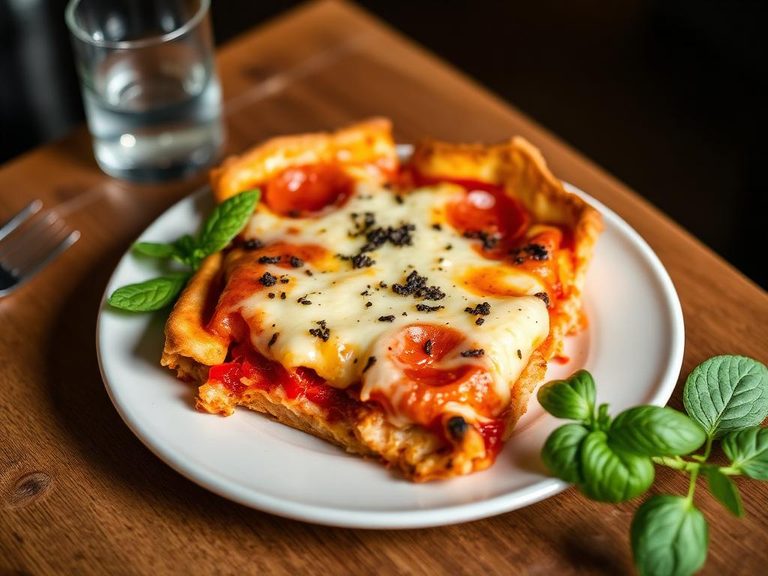
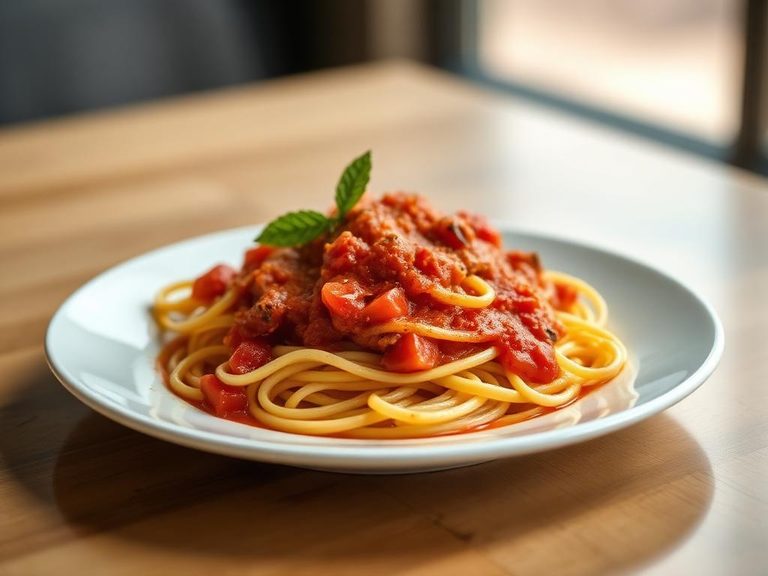
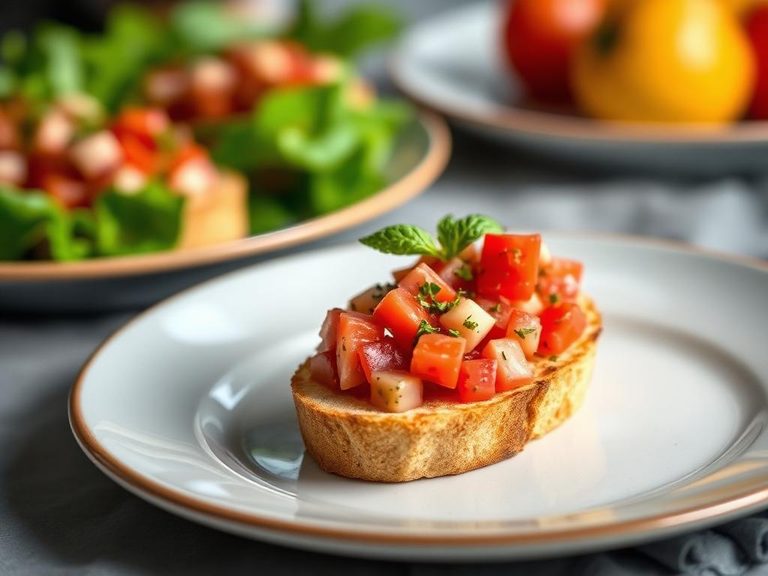
🍽️ Popular dishes
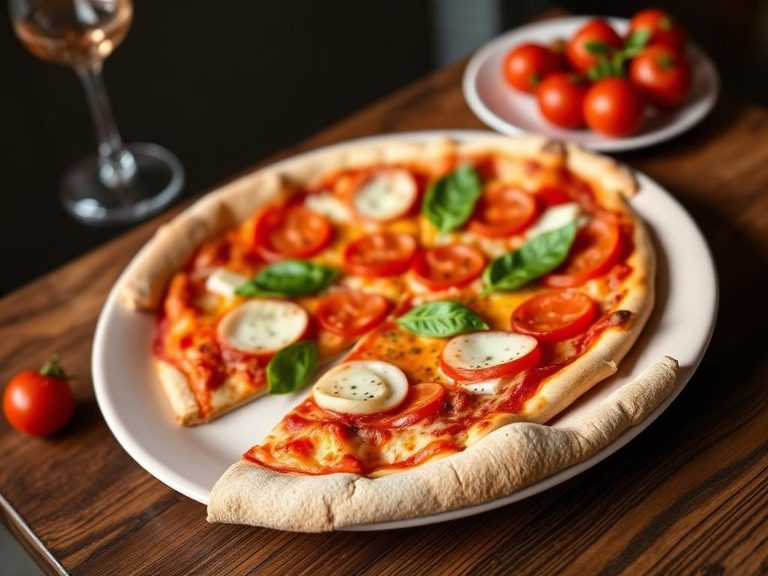
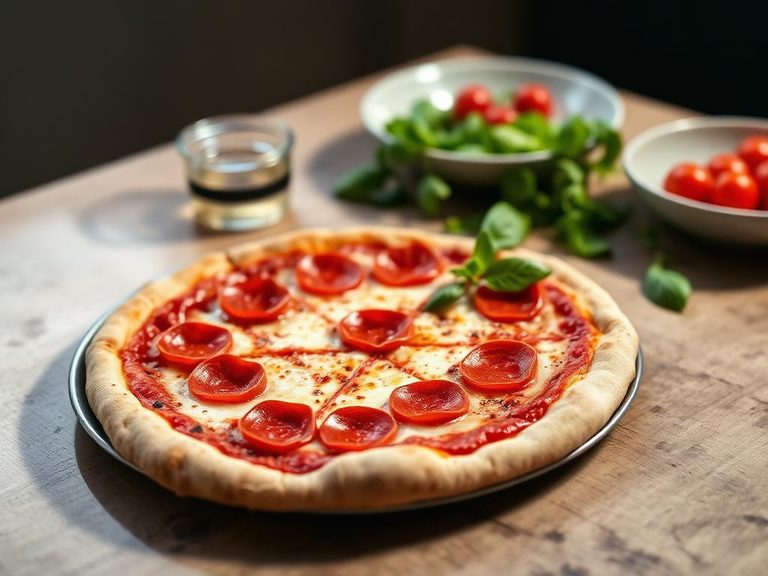
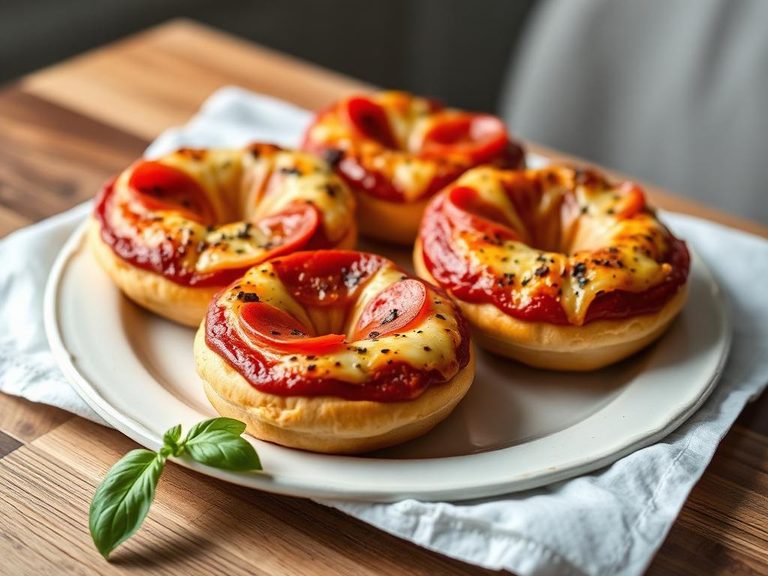
🌍 Where it's eaten
💡 Did you know?
The modern pizza sauce as we know it—canned, seasoned, and ready-to-serve—was largely popularized in the United States in the 1950s and 60s, coinciding with the boom in home pizza ovens and frozen pizza.
Full nutrition (USDA data · scales with serving)
| Water | 86.7 g |
| Energy | 54.0 kcal |
| Energy | 226 kj |
| Protein | 2.2 g |
| Total lipid (fat) | 1.1 g |
| Ash | 1.3 g |
| Carbohydrate, by difference | 8.7 g |
| Fiber, total dietary | 2.0 g |
| Total Sugars | 3.8 g |
| Calcium, Ca | 54.0 mg |
| Iron, Fe | 0.90 mg |
| Magnesium, Mg | 21.0 mg |
| Phosphorus, P | 50.0 mg |
| Potassium, K | 354 mg |
| Sodium, Na | 348 mg |
| Zinc, Zn | 0.25 mg |
| Copper, Cu | 0.14 mg |
| Manganese, Mn | 0.22 mg |
| Vitamin C, total ascorbic acid | 11.3 mg |
| Thiamin | 0.06 mg |
| Riboflavin | 0.05 mg |
| Niacin | 1.4 mg |
| Pantothenic acid | 0.37 mg |
| Vitamin B-6 | 0.14 mg |
| Folate, total | 10.0 ug |
| Folate, food | 10.0 ug |
| Vitamin B-12 | 0.02 ug |
| Vitamin A, IU | 667 iu |
| Alcohol, ethyl | 0.00 g |
Fat & fatty acid profile (per 100g)
| Fatty acids, total saturated | 0.46 g |
| SFA 4:0 | 0.03 g |
| SFA 6:0 | 0.01 g |
| SFA 8:0 | 0.01 g |
| SFA 10:0 | 0.02 g |
| SFA 12:0 | 0.02 g |
| SFA 14:0 | 0.07 g |
| SFA 16:0 | 0.22 g |
| SFA 18:0 | 0.07 g |
| Fatty acids, total monounsaturated | 0.46 g |
| MUFA 16:1 | 0.01 g |
| MUFA 18:1 | 0.43 g |
| MUFA 20:1 | 0.00 g |
| MUFA 22:1 | 0.00 g |
| Fatty acids, total polyunsaturated | 0.10 g |
| PUFA 18:2 | 0.08 g |
| PUFA 18:3 | 0.01 g |
| PUFA 18:4 | 0.00 g |
| PUFA 20:4 | 0.00 g |
| PUFA 20:5 n-3 (EPA) | 0.00 g |
| PUFA 22:5 n-3 (DPA) | 0.00 g |
| PUFA 22:6 n-3 (DHA) | 0.00 g |
| Fatty acids, total trans | 0.00 g |
| Cholesterol | 0.00 mg |
Amino acid profile (per 100g)
Estimated from Sauce, homemade, white, medium — USDA does not publish this profile for Sauce.
| Tryptophan | 0.04 g |
| Threonine | 0.14 g |
| Isoleucine | 0.19 g |
| Leucine | 0.30 g |
| Lysine | 0.24 g |
| Methionine | 0.08 g |
| Cystine | 0.03 g |
| Phenylalanine | 0.15 g |
| Tyrosine | 0.15 g |
| Valine | 0.20 g |
| Arginine | 0.11 g |
| Histidine | 0.08 g |
| Alanine | 0.10 g |
| Aspartic acid | 0.23 g |
| Glutamic acid | 0.64 g |
| Glycine | 0.07 g |
| Proline | 0.30 g |
| Serine | 0.17 g |
FAQ
How is pizza sauce different from pasta sauce?
Pizza sauce is typically uncooked before being put on the pizza and is smoother and more concentrated in flavor. Pasta sauce is usually pre-cooked and may have a chunkier texture and different herb profile.
Can I use pizza sauce for other dishes?
Absolutely! It works well as a quick base for pasta, a dip for breadsticks, a sauce for baked chicken or fish, or even as a flavorful addition to soups and stews.
Is canned pizza sauce healthy?
It can be a healthy part of a diet, offering lycopene and fiber. The key is to check labels for added sugars and sodium, and to use it as part of a balanced meal with plenty of vegetables and lean protein.
Nutrient density (calculated · NRF9.3)
Nutrient Rich Foods index: beneficial nutrients (protein, fiber, vitamins, minerals) minus saturated fat, added sugar & sodium, per 100 kcal.
NRF9.3 index — Fulgoni, Keast & Drewnowski, 2009. Computed from USDA nutrients.
Weight-loss friendliness (composite index)
Energy density 0.54 kcal/g · 16% calories from protein · 2.0 g fiber · 3.8 g sugar per 100 g.
Composite of energy density (Rolls et al., 1999), protein & fiber satiety, minus sugar. A calculated heuristic — ranks satiety-per-calorie, not a clinical measure.
Dietary load (calculated from USDA values)
Potential renal acid load. Positive = acid-forming, negative = alkaline-forming.
Sodium-to-potassium ratio: 0.98 (lower is better — aim for ≤ 1)
Sodium:potassium per WHO potassium guidance. Computed from USDA nutrients.