

Pork, fresh, composite of trimmed retail cuts (leg, loin, shoulder, and spareribs), separable lean and fat, raw
Whole food · Pork Products
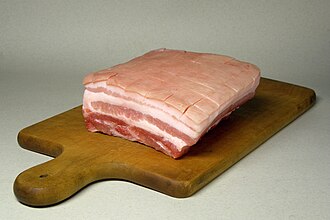
Photo: Wikipedia
This is a composite of raw, trimmed retail cuts from the leg, loin, shoulder, and spareribs, representing the most common fresh pork found in grocery stores. It features a balanced marbling of lean meat and fat, offering a mild, slightly sweet flavor and a tender, juicy texture when cooked properly. Nutritionally, it's a powerhouse of high-quality protein with a significant portion of its calories coming from fat.
Calorie split: 36% protein · 0% carbs · 64% fat
↓ Full nutrition💚 Why it's loved
People love it for its incredible versatility—it can be the star of a slow-braised comfort dish, a quick stir-fry, or a smoky barbecue. Its mild flavor acts as a perfect canvas for a world of seasonings, from simple salt and pepper to complex spice rubs and marinades.
⚠️ Watch-outs & how to enjoy it better
The significant fat content, particularly saturated fat, means it should be enjoyed in moderation by those monitoring heart health or calorie intake. To counteract this, practice portion control, trim excess visible fat before cooking, and pair it with high-fiber vegetables or legumes to balance the meal. Ensure it's cooked to a safe internal temperature (145°F/63°C with a 3-minute rest) to avoid foodborne illness.
Key benefits
- Excellent source of complete, high-quality protein for muscle maintenance.
- Rich in essential B vitamins, particularly thiamine (B1) and niacin (B3).
- Provides key minerals like selenium, zinc, and phosphorus.
- The fat content contributes to satiety and carries fat-soluble vitamins.
- A versatile base protein for a vast array of global cuisines.
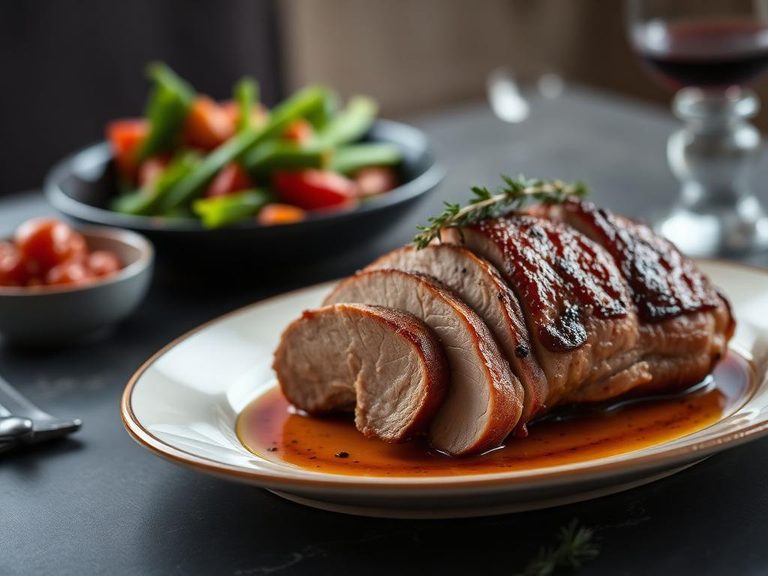
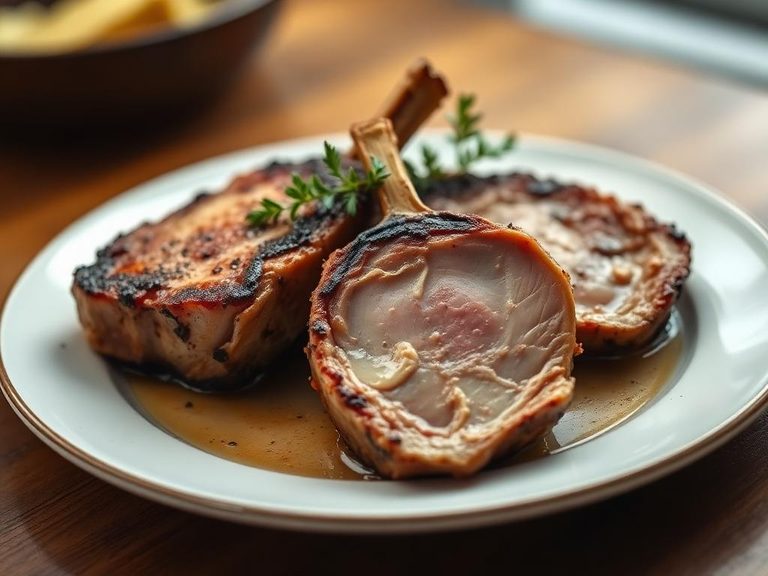
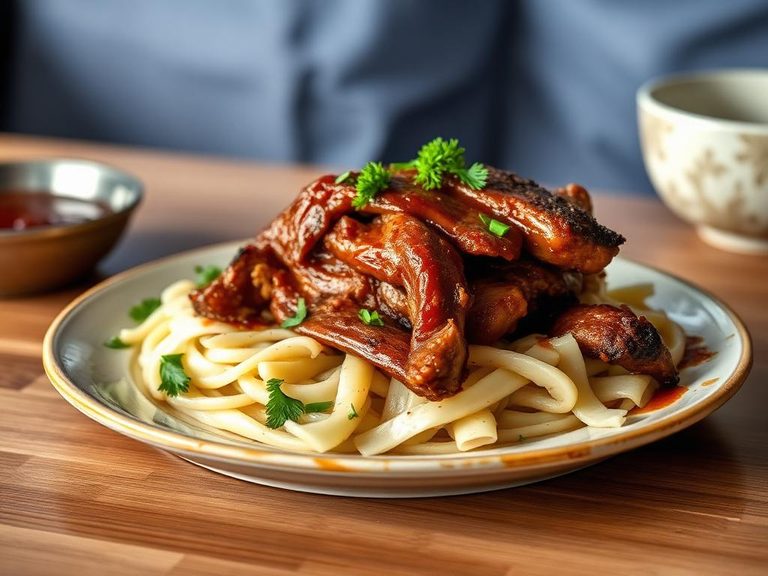
🍽️ Popular dishes
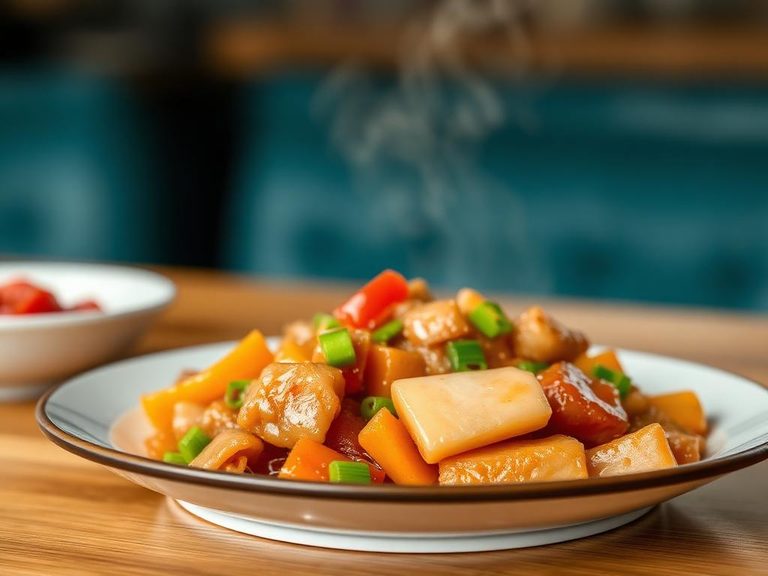
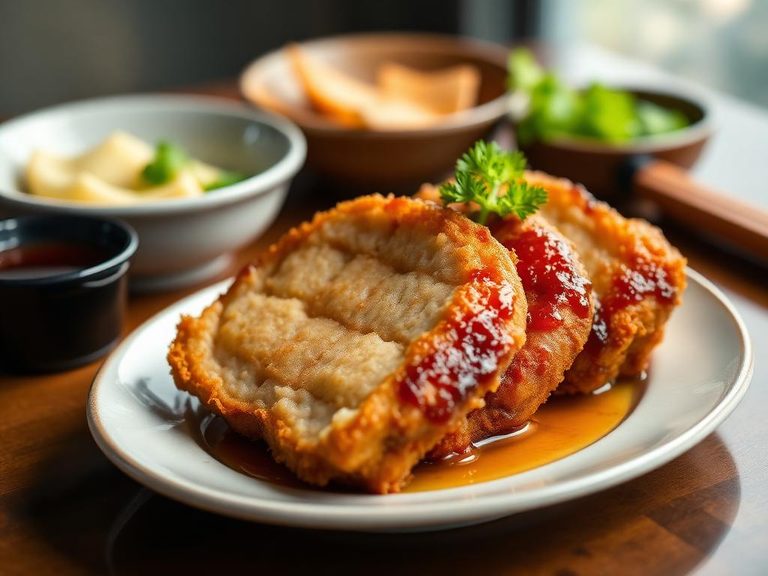

🌍 Where it's eaten
💡 Did you know?
Pork is the most widely consumed meat in the world, accounting for about 36% of global meat intake.
Full nutrition (USDA data · scales with serving)
| Water | 65.1 g |
| Energy | 216 kcal |
| Energy | 904 kj |
| Protein | 18.9 g |
| Total lipid (fat) | 14.9 g |
| Ash | 0.94 g |
| Carbohydrate, by difference | 0.00 g |
| Fiber, total dietary | 0.00 g |
| Calcium, Ca | 19.0 mg |
| Iron, Fe | 0.86 mg |
| Magnesium, Mg | 21.0 mg |
| Phosphorus, P | 200 mg |
| Potassium, K | 335 mg |
| Sodium, Na | 55.0 mg |
| Zinc, Zn | 2.0 mg |
| Copper, Cu | 0.06 mg |
| Manganese, Mn | 0.01 mg |
| Selenium, Se | 28.4 ug |
| Vitamin C, total ascorbic acid | 0.50 mg |
| Thiamin | 0.84 mg |
| Riboflavin | 0.25 mg |
| Niacin | 4.5 mg |
| Pantothenic acid | 0.73 mg |
| Vitamin B-6 | 0.45 mg |
| Folate, total | 5.0 ug |
| Folic acid | 0.00 ug |
| Folate, food | 5.0 ug |
| Folate, DFE | 5.0 ug |
| Vitamin B-12 | 0.66 ug |
| Vitamin A, RAE | 2.0 ug |
| Retinol | 2.0 ug |
| Vitamin A, IU | 7.0 iu |
Fat & fatty acid profile (per 100g)
| Fatty acids, total saturated | 5.3 g |
| SFA 10:0 | 0.01 g |
| SFA 12:0 | 0.01 g |
| SFA 14:0 | 0.18 g |
| SFA 16:0 | 3.3 g |
| SFA 18:0 | 1.7 g |
| Fatty acids, total monounsaturated | 6.6 g |
| MUFA 16:1 | 0.41 g |
| MUFA 18:1 | 6.1 g |
| MUFA 20:1 | 0.11 g |
| Fatty acids, total polyunsaturated | 1.6 g |
| PUFA 18:2 | 1.3 g |
| PUFA 18:3 | 0.09 g |
| PUFA 20:4 | 0.08 g |
| Cholesterol | 67.0 mg |
Amino acid profile (per 100g)
| Tryptophan | 0.23 g |
| Threonine | 0.85 g |
| Isoleucine | 0.87 g |
| Leucine | 1.5 g |
| Lysine | 1.7 g |
| Methionine | 0.49 g |
| Cystine | 0.24 g |
| Phenylalanine | 0.75 g |
| Tyrosine | 0.65 g |
| Valine | 1.0 g |
| Arginine | 1.2 g |
| Histidine | 0.74 g |
| Alanine | 1.1 g |
| Aspartic acid | 1.7 g |
| Glutamic acid | 2.9 g |
| Glycine | 0.98 g |
| Proline | 0.81 g |
| Serine | 0.78 g |
FAQ
What's the difference between this composite cut and specific cuts like tenderloin or belly?
This is a USDA composite category representing an average of common retail cuts. Specific cuts like tenderloin are very lean, while belly is extremely fatty. This composite gives a mid-range nutritional profile.
How does the nutrition change when cooked?
Cooking renders out some fat, so the calorie and fat content per 100g of the cooked meat will typically be higher than the raw value, as water is lost and nutrients concentrate.
Is this a good choice for a low-carb diet?
Yes, absolutely. With 0g of carbohydrates, it fits perfectly into low-carb, keto, and carnivore dietary patterns.
Nutrient density (calculated · NRF9.3)
Nutrient Rich Foods index: beneficial nutrients (protein, fiber, vitamins, minerals) minus saturated fat, added sugar & sodium, per 100 kcal.
NRF9.3 index — Fulgoni, Keast & Drewnowski, 2009. Computed from USDA nutrients.
Weight-loss friendliness (composite index)
Energy density 2.16 kcal/g · 35% calories from protein · 0.0 g fiber · 0.0 g sugar per 100 g.
Composite of energy density (Rolls et al., 1999), protein & fiber satiety, minus sugar. A calculated heuristic — ranks satiety-per-calorie, not a clinical measure.
Dietary load (calculated from USDA values)
Potential renal acid load. Positive = acid-forming, negative = alkaline-forming.
Sodium-to-potassium ratio: 0.16 (lower is better — aim for ≤ 1)
Sodium:potassium per WHO potassium guidance. Computed from USDA nutrients.