

Pie, pecan, prepared from recipe
Whole food · Baked Products

Photo: Wikipedia
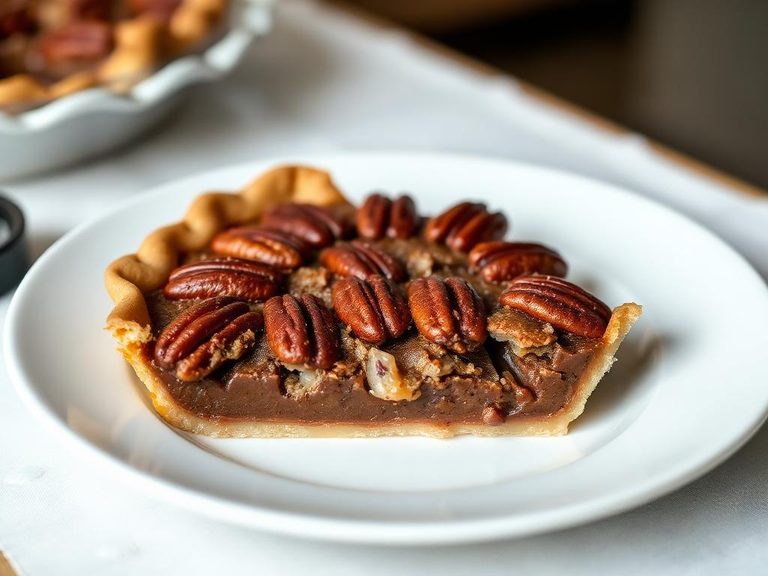
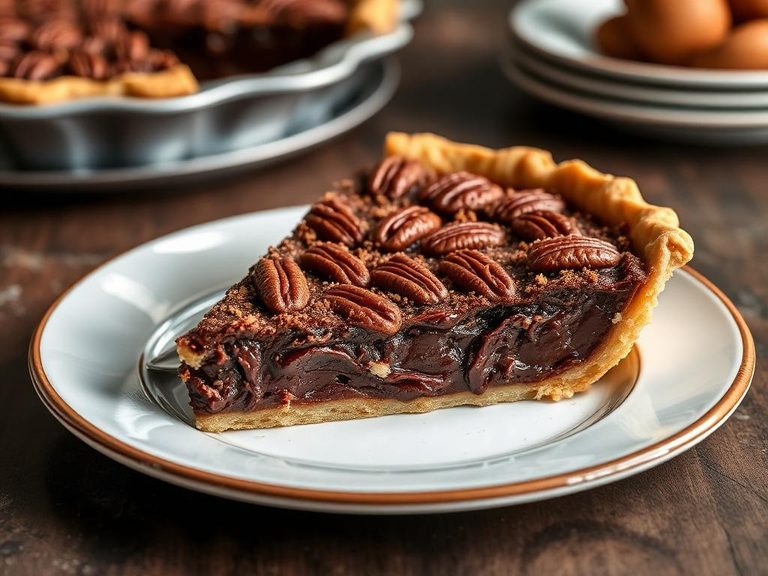
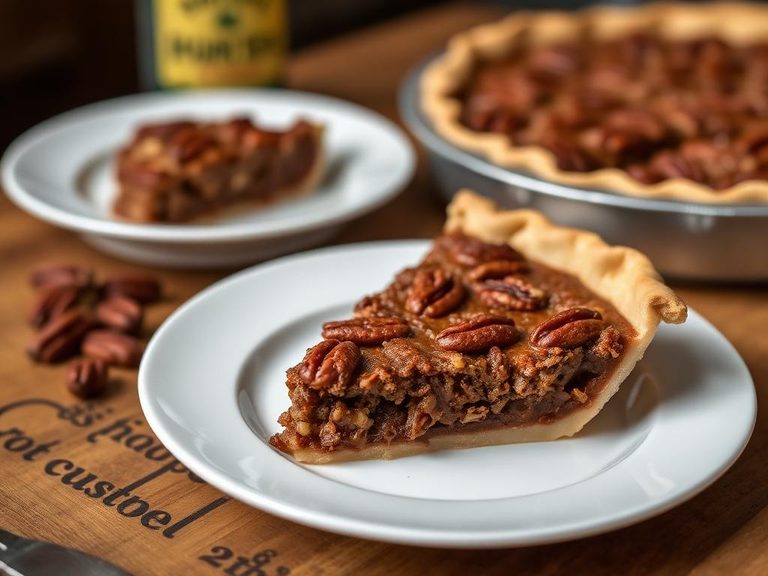
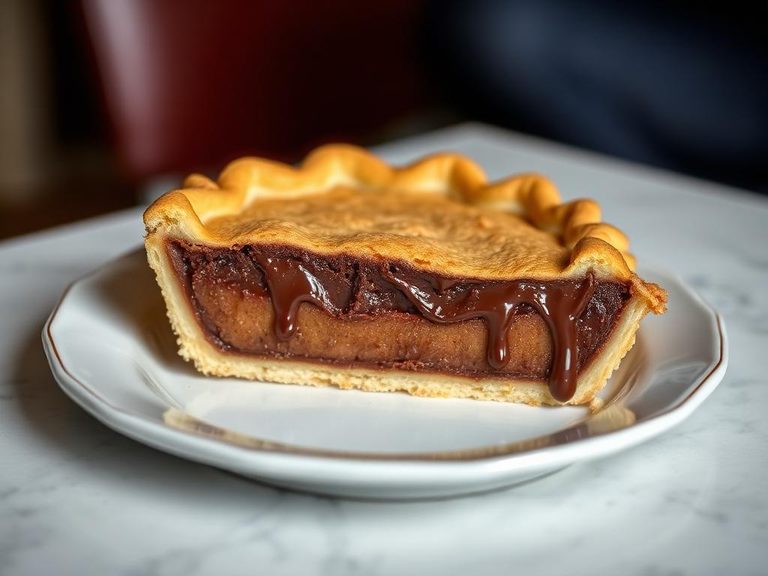
A rich, sweet pie featuring a gooey, caramelized filling packed with whole pecans atop a flaky, buttery crust. Each bite delivers a satisfying crunch from the nuts, a smooth, sugary interior, and a buttery finish. It is a calorie-dense dessert, providing a significant energy boost primarily from fats and carbohydrates.
Calorie split: 5% protein · 49% carbs · 47% fat
↓ Full nutrition💚 Why it's loved
People adore it for the irresistible combination of sweet, buttery, and nutty flavors, along with its luxurious, satisfying texture. It holds deep cultural significance as a classic American dessert, especially during Thanksgiving and Christmas.
⚠️ Watch-outs & how to enjoy it better
Its high sugar and fat content can cause rapid blood-sugar spikes and is a concern for those managing calorie intake or diabetes. To enjoy it more mindfully, practice strict portion control (a small slice) and pair it with a source of protein or fat, like a dollop of unsweetened Greek yogurt or a handful of nuts, to slow sugar absorption. Those with tree nut allergies must avoid it entirely.
Key benefits
- Provides a quick source of energy from carbohydrates and fats.
- Contains pecans, which offer plant-based protein and healthy monounsaturated fats.
- A traditional centerpiece for holiday gatherings and celebrations.
- Can be made with whole, unprocessed nuts for added texture and nutrients.
🍽️ Popular dishes
🌍 Where it's eaten
💡 Did you know?
The gooey, custard-like filling in a traditional pecan pie is primarily created by the chemical reaction between corn syrup (or sugar) and eggs when baked, not by a large amount of milk or cream.
Full nutrition (USDA data · scales with serving)
| Water | 19.5 g |
| Energy | 412 kcal |
| Energy | 1724 kj |
| Protein | 4.9 g |
| Total lipid (fat) | 22.2 g |
| Ash | 1.1 g |
| Carbohydrate, by difference | 52.2 g |
| Calcium, Ca | 32.0 mg |
| Iron, Fe | 1.5 mg |
| Magnesium, Mg | 26.0 mg |
| Phosphorus, P | 94.0 mg |
| Potassium, K | 133 mg |
| Sodium, Na | 262 mg |
| Zinc, Zn | 1.0 mg |
| Copper, Cu | 0.21 mg |
| Manganese, Mn | 0.71 mg |
| Selenium, Se | 12.0 ug |
| Vitamin C, total ascorbic acid | 0.20 mg |
| Thiamin | 0.19 mg |
| Riboflavin | 0.18 mg |
| Niacin | 0.85 mg |
| Pantothenic acid | 0.48 mg |
| Vitamin B-6 | 0.06 mg |
| Folate, total | 26.0 ug |
| Folic acid | 12.0 ug |
| Folate, food | 14.0 ug |
| Folate, DFE | 34.0 ug |
| Vitamin B-12 | 0.17 ug |
| Vitamin A, RAE | 82.0 ug |
| Retinol | 77.0 ug |
| Carotene, beta | 60.0 ug |
| Vitamin A, IU | 357 iu |
Fat & fatty acid profile (per 100g)
| Fatty acids, total saturated | 4.0 g |
| SFA 4:0 | 0.00 g |
| SFA 6:0 | 0.00 g |
| SFA 8:0 | 0.00 g |
| SFA 10:0 | 0.00 g |
| SFA 12:0 | 0.00 g |
| SFA 14:0 | 0.05 g |
| SFA 16:0 | 2.5 g |
| SFA 18:0 | 1.4 g |
| Fatty acids, total monounsaturated | 11.2 g |
| MUFA 16:1 | 0.10 g |
| MUFA 18:1 | 11.0 g |
| MUFA 20:1 | 0.06 g |
| MUFA 22:1 | 0.00 g |
| Fatty acids, total polyunsaturated | 5.7 g |
| PUFA 18:2 | 5.4 g |
| PUFA 18:3 | 0.27 g |
| PUFA 18:4 | 0.00 g |
| PUFA 20:4 | 0.03 g |
| PUFA 20:5 n-3 (EPA) | 0.00 g |
| PUFA 22:5 n-3 (DPA) | 0.00 g |
| PUFA 22:6 n-3 (DHA) | 0.01 g |
| Cholesterol | 87.0 mg |
Amino acid profile (per 100g)
| Tryptophan | 0.07 g |
| Threonine | 0.19 g |
| Isoleucine | 0.22 g |
| Leucine | 0.37 g |
| Lysine | 0.25 g |
| Methionine | 0.13 g |
| Cystine | 0.11 g |
| Phenylalanine | 0.25 g |
| Tyrosine | 0.18 g |
| Valine | 0.26 g |
| Arginine | 0.33 g |
| Histidine | 0.12 g |
| Alanine | 0.22 g |
| Aspartic acid | 0.39 g |
| Glutamic acid | 0.97 g |
| Glycine | 0.18 g |
| Proline | 0.30 g |
| Serine | 0.30 g |
FAQ
Why does pecan pie have a gooey filling?
The signature gooey texture comes from a custard made of eggs, sugar (often corn syrup), and butter that sets as it bakes. The high sugar content prevents the eggs from fully solidifying, resulting in a soft, sticky interior.
Can I make pecan pie without corn syrup?
Yes. Common substitutes include maple syrup, honey, or a homemade syrup of brown sugar and water. Each will slightly alter the flavor and texture, but the pie will still be delicious.
How do I prevent my pecan pie from being runny?
Ensure it is baked long enough for the edges to set but the center still jiggles slightly like gelatin. It will continue to set as it cools completely. Using the correct ratio of eggs and sugar is also critical for the proper structure.
Nutrient density (calculated · NRF9.3)
Nutrient Rich Foods index: beneficial nutrients (protein, fiber, vitamins, minerals) minus saturated fat, added sugar & sodium, per 100 kcal.
NRF9.3 index — Fulgoni, Keast & Drewnowski, 2009. Computed from USDA nutrients.
Weight-loss friendliness (composite index)
Energy density 4.12 kcal/g · 5% calories from protein · 0.0 g fiber · 0.0 g sugar per 100 g.
Composite of energy density (Rolls et al., 1999), protein & fiber satiety, minus sugar. A calculated heuristic — ranks satiety-per-calorie, not a clinical measure.
Dietary load (calculated from USDA values)
Potential renal acid load. Positive = acid-forming, negative = alkaline-forming.
Sodium-to-potassium ratio: 1.97 (lower is better — aim for ≤ 1)
Sodium:potassium per WHO potassium guidance. Computed from USDA nutrients.