

Mollusks, scallop, mixed species, cooked, breaded and fried
Whole food · Finfish and Shellfish Products

Photo: Wikipedia
Golden, crispy, and satisfyingly crunchy, breaded and fried scallops are a beloved seafood treat where tender, sweet mollusk meat is encased in a savory, fried crust. The cooking method adds a significant calorie and fat boost compared to steamed or grilled scallops, making them a rich indulgence. A 100g serving delivers a solid 18g of protein, ideal for muscle maintenance, but the breading contributes over 10g of carbohydrates.
Calorie split: 34% protein · 19% carbs · 47% fat
↓ Full nutrition💚 Why it's loved
People adore the irresistible contrast between the shatteringly crisp, savory coating and the sweet, tender, almost buttery scallop inside. It's a versatile crowd-pleaser, perfect as a luxurious appetizer, a hearty main course, or a star ingredient in tacos and salads.
⚠️ Watch-outs & how to enjoy it better
The deep-frying process significantly increases the fat and calorie content, which can be a concern for heart health or calorie management. The breading can cause a rapid blood sugar spike, and the dish is often high in sodium. As a common shellfish, it is a major allergen. To mitigate, pair with a large, fiber-rich salad or steamed vegetables to slow digestion, practice strict portion control, and opt for homemade versions where you can control the salt and oil quality.
Key benefits
- Excellent source of complete protein for muscle repair.
- Contains essential minerals like selenium and zinc.
- Provides B vitamins, particularly B12 for nerve function.
- Offers a quick energy source from the carbohydrate-rich breading.
- A palatable way to increase seafood intake for those who enjoy fried foods.
🍽️ Popular dishes
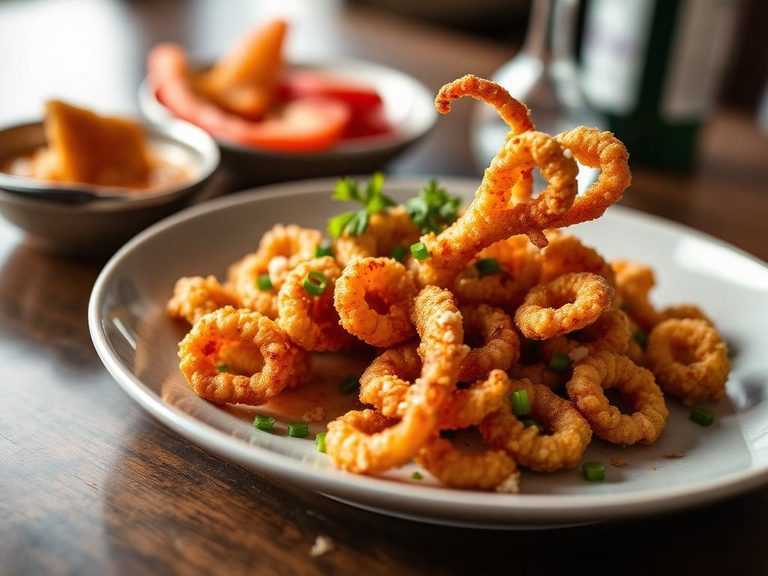
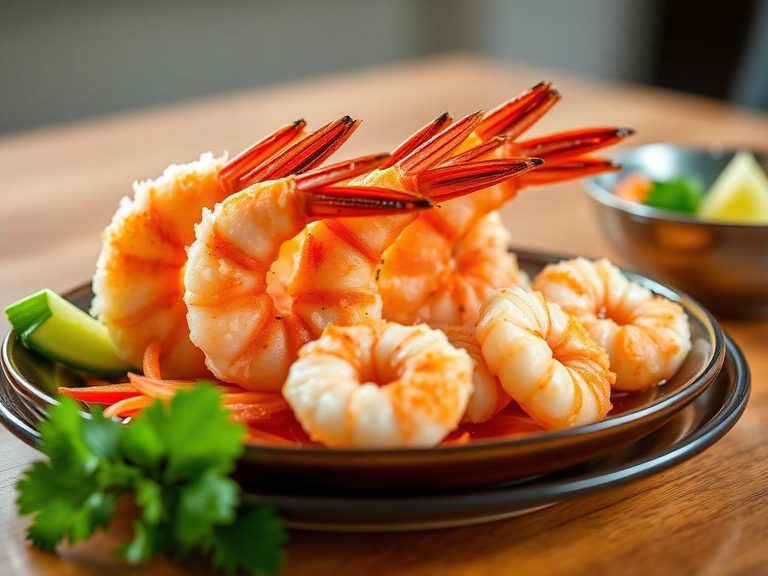
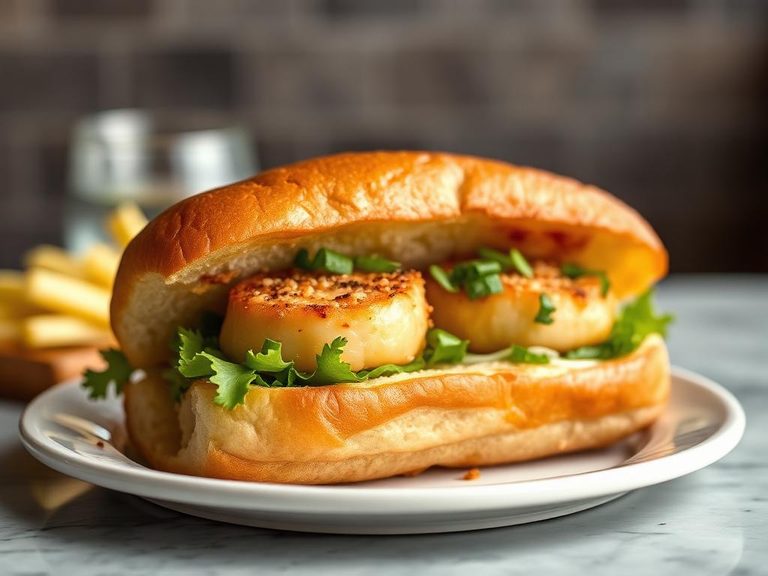
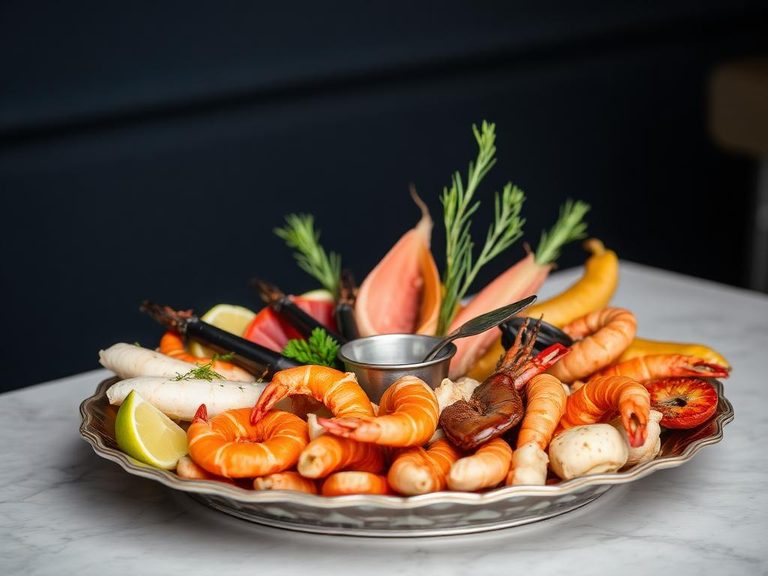
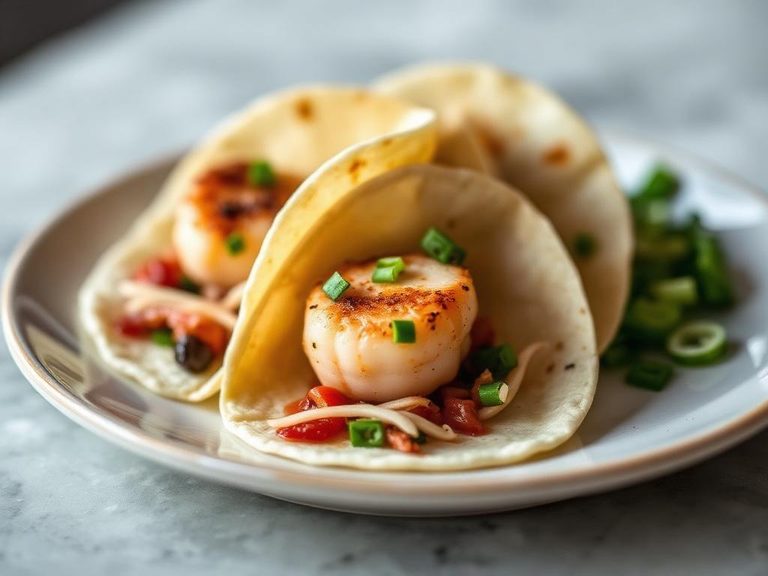
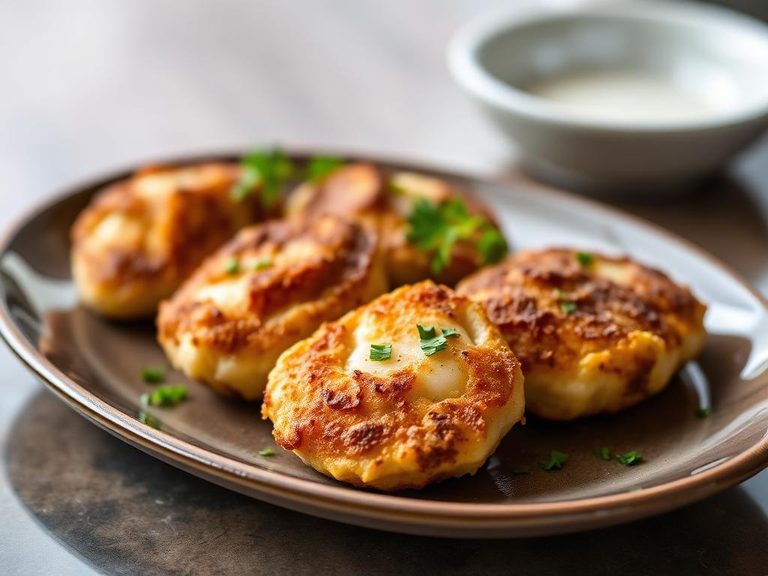
🌍 Where it's eaten
💡 Did you know?
Scallops are one of the few mollusks that can actively 'swim' by rapidly clapping their shells together to jet-propel themselves through water.
Full nutrition (USDA data · scales with serving)
| Water | 58.4 g |
| Energy | 216 kcal |
| Energy | 902 kj |
| Protein | 18.1 g |
| Total lipid (fat) | 10.9 g |
| Ash | 1.8 g |
| Carbohydrate, by difference | 10.1 g |
| Calcium, Ca | 42.0 mg |
| Iron, Fe | 0.82 mg |
| Magnesium, Mg | 59.0 mg |
| Phosphorus, P | 236 mg |
| Potassium, K | 333 mg |
| Sodium, Na | 464 mg |
| Zinc, Zn | 1.1 mg |
| Copper, Cu | 0.08 mg |
| Manganese, Mn | 0.14 mg |
| Selenium, Se | 26.9 ug |
| Vitamin C, total ascorbic acid | 2.3 mg |
| Thiamin | 0.04 mg |
| Riboflavin | 0.11 mg |
| Niacin | 1.5 mg |
| Pantothenic acid | 0.20 mg |
| Vitamin B-6 | 0.14 mg |
| Folate, total | 37.0 ug |
| Folic acid | 19.0 ug |
| Folate, food | 18.0 ug |
| Folate, DFE | 50.0 ug |
| Vitamin B-12 | 1.3 ug |
| Vitamin A, RAE | 22.0 ug |
| Vitamin A, IU | 75.0 iu |
Fat & fatty acid profile (per 100g)
| Fatty acids, total saturated | 2.7 g |
| SFA 14:0 | 0.06 g |
| SFA 16:0 | 1.5 g |
| SFA 18:0 | 1.1 g |
| Fatty acids, total monounsaturated | 4.5 g |
| MUFA 16:1 | 0.03 g |
| MUFA 18:1 | 4.5 g |
| MUFA 20:1 | 0.01 g |
| Fatty acids, total polyunsaturated | 2.9 g |
| PUFA 18:2 | 2.4 g |
| PUFA 18:3 | 0.16 g |
| PUFA 18:4 | 0.01 g |
| PUFA 20:4 | 0.03 g |
| PUFA 20:5 n-3 (EPA) | 0.09 g |
| PUFA 22:5 n-3 (DPA) | 0.02 g |
| PUFA 22:6 n-3 (DHA) | 0.10 g |
| Cholesterol | 54.0 mg |
Amino acid profile (per 100g)
| Tryptophan | 0.21 g |
| Threonine | 0.77 g |
| Isoleucine | 0.80 g |
| Leucine | 1.3 g |
| Lysine | 1.3 g |
| Methionine | 0.41 g |
| Cystine | 0.25 g |
| Phenylalanine | 0.69 g |
| Tyrosine | 0.59 g |
| Valine | 0.82 g |
| Arginine | 1.3 g |
| Histidine | 0.35 g |
| Alanine | 1.1 g |
| Aspartic acid | 1.7 g |
| Glutamic acid | 2.8 g |
| Glycine | 1.1 g |
| Proline | 0.85 g |
| Serine | 0.85 g |
FAQ
Are breaded and fried scallops healthy?
While scallops themselves are a lean, nutrient-dense protein, the breading and deep-frying add significant calories, fat, and refined carbohydrates. They are best enjoyed occasionally as part of a balanced diet, rather than as a regular health food.
How can I make a lighter version at home?
You can achieve a crispy texture by baking or air-frying. Use whole-wheat panko or crushed nuts for the coating, and lightly spray with olive oil before cooking to reduce the overall fat content significantly.
What's the difference between fried scallops and fried calamari?
Fried calamari (squid) has a firmer, chewier texture, while fried scallops are notably more tender and sweet. The flavor profile is distinct, with scallops being milder and more delicate.
Nutrient density (calculated · NRF9.3)
Nutrient Rich Foods index: beneficial nutrients (protein, fiber, vitamins, minerals) minus saturated fat, added sugar & sodium, per 100 kcal.
NRF9.3 index — Fulgoni, Keast & Drewnowski, 2009. Computed from USDA nutrients.
Weight-loss friendliness (composite index)
Energy density 2.16 kcal/g · 33% calories from protein · 0.0 g fiber · 0.0 g sugar per 100 g.
Composite of energy density (Rolls et al., 1999), protein & fiber satiety, minus sugar. A calculated heuristic — ranks satiety-per-calorie, not a clinical measure.
Dietary load (calculated from USDA values)
Potential renal acid load. Positive = acid-forming, negative = alkaline-forming.
Sodium-to-potassium ratio: 1.39 (lower is better — aim for ≤ 1)
Sodium:potassium per WHO potassium guidance. Computed from USDA nutrients.