

Meat extender
Whole food · Legumes and Legume Products

Photo: Wikipedia
Meat extender is a textured, plant-based protein product, often made from soy or wheat gluten, designed to mimic the texture of ground meat. It has a neutral, savory flavor and a firm, chewy texture that readily absorbs seasonings and sauces. Nutritionally, it's a powerhouse of protein and fiber with very little fat.
Calorie split: 50% protein · 42% carbs · 8% fat
↓ Full nutrition💚 Why it's loved
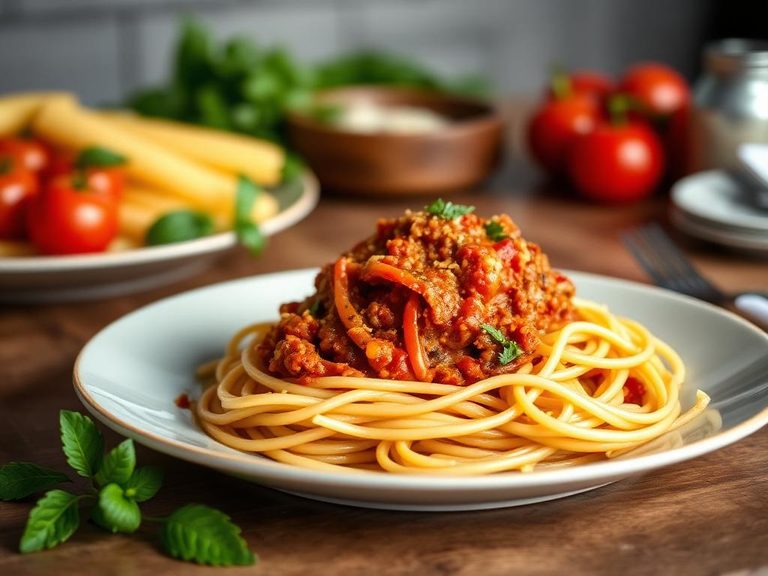
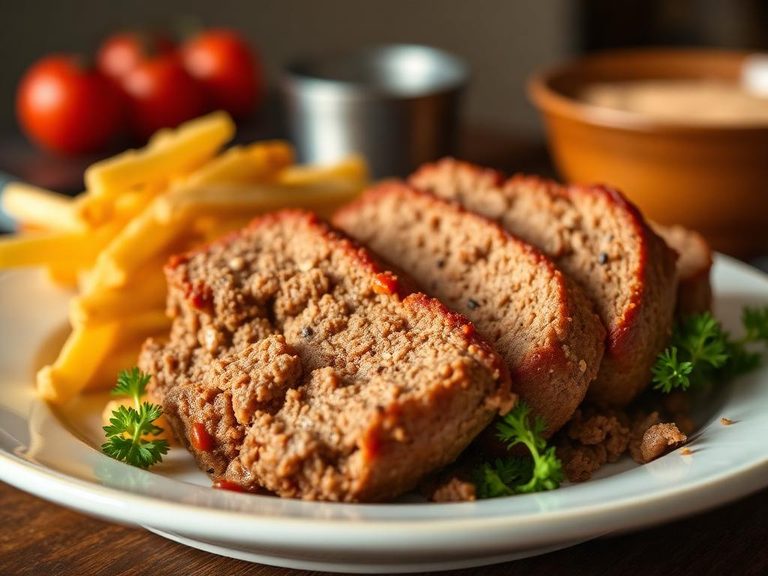
People love meat extender for its remarkable ability to stretch ground meat dishes, adding bulk and nutrition without altering the familiar flavor profile. Its neutral taste makes it a seamless, protein-rich addition to everything from tacos to spaghetti sauce.
⚠️ Watch-outs & how to enjoy it better
Some find its texture can become overly dry or spongy if overcooked, and it may contain soy or wheat, common allergens. To counteract dryness, always rehydrate it in flavorful broth or sauce before cooking, and ensure it's fully incorporated into moist dishes.
Key benefits
- Excellent source of plant-based protein
- High in dietary fiber for digestive health
- Very low in fat and sugar-free
- Cost-effective way to increase meal volume
- Versatile for absorbing flavors in dishes
🍽️ Popular dishes




🌍 Where it's eaten
💡 Did you know?
During WWII, textured soy protein was developed and used as a meat extender to address food shortages, earning it the early nickname 'war meat'.
Full nutrition (USDA data · scales with serving)
| Water | 7.5 g |
| Energy | 311 kcal |
| Energy | 1301 kj |
| Protein | 41.7 g |
| Total lipid (fat) | 3.0 g |
| Ash | 13.1 g |
| Carbohydrate, by difference | 34.7 g |
| Fiber, total dietary | 17.5 g |
| Calcium, Ca | 204 mg |
| Iron, Fe | 12.0 mg |
| Magnesium, Mg | 216 mg |
| Phosphorus, P | 639 mg |
| Potassium, K | 1902 mg |
| Sodium, Na | 10.0 mg |
| Zinc, Zn | 2.2 mg |
| Copper, Cu | 0.30 mg |
| Manganese, Mn | 0.27 mg |
| Selenium, Se | 7.4 ug |
| Vitamin C, total ascorbic acid | 0.00 mg |
| Thiamin | 0.70 mg |
| Riboflavin | 0.89 mg |
| Niacin | 22.0 mg |
| Pantothenic acid | 1.5 mg |
| Vitamin B-6 | 1.3 mg |
| Folate, total | 198 ug |
| Folic acid | 0.00 ug |
| Folate, food | 198 ug |
| Folate, DFE | 198 ug |
| Vitamin B-12 | 6.0 ug |
| Vitamin A, RAE | 2.0 ug |
| Retinol | 0.00 ug |
| Vitamin A, IU | 32.0 iu |
| Vitamin D (D2 + D3), International Units | 0.00 iu |
| Vitamin D (D2 + D3) | 0.00 ug |
Fat & fatty acid profile (per 100g)
| Fatty acids, total saturated | 0.42 g |
| SFA 14:0 | 0.01 g |
| SFA 16:0 | 0.31 g |
| SFA 18:0 | 0.10 g |
| Fatty acids, total monounsaturated | 0.65 g |
| MUFA 16:1 | 0.01 g |
| MUFA 18:1 | 0.64 g |
| Fatty acids, total polyunsaturated | 1.7 g |
| PUFA 18:2 | 1.5 g |
| PUFA 18:3 | 0.20 g |
| Fatty acids, total trans | 0.00 g |
| Cholesterol | 0.00 mg |
Amino acid profile (per 100g)
| Tryptophan | 0.57 g |
| Threonine | 1.6 g |
| Isoleucine | 2.0 g |
| Leucine | 3.3 g |
| Lysine | 2.6 g |
| Methionine | 0.52 g |
| Cystine | 0.63 g |
| Phenylalanine | 2.2 g |
| Tyrosine | 1.4 g |
| Valine | 2.1 g |
| Arginine | 3.1 g |
| Histidine | 1.1 g |
| Alanine | 1.8 g |
| Aspartic acid | 4.7 g |
| Glutamic acid | 8.7 g |
| Glycine | 1.7 g |
| Proline | 2.3 g |
| Serine | 2.2 g |
FAQ
What is meat extender made of?
It's typically made from defatted soy flour or wheat gluten (seitan) that is processed into a textured, granular, or flaky form.
How do I use it in cooking?
Rehydrate it first in hot water or broth for 5-10 minutes, then drain and add it to your recipe when you would normally add ground meat.
Is it healthy?
It's a very healthy option, being high in protein and fiber while low in fat and calories. It's an excellent choice for increasing nutrient density in meals.
Nutrient density (calculated · NRF9.3)
Nutrient Rich Foods index: beneficial nutrients (protein, fiber, vitamins, minerals) minus saturated fat, added sugar & sodium, per 100 kcal.
NRF9.3 index — Fulgoni, Keast & Drewnowski, 2009. Computed from USDA nutrients.
Weight-loss friendliness (composite index)
Energy density 3.11 kcal/g · 54% calories from protein · 17.5 g fiber · 0.0 g sugar per 100 g.
Composite of energy density (Rolls et al., 1999), protein & fiber satiety, minus sugar. A calculated heuristic — ranks satiety-per-calorie, not a clinical measure.
Dietary load (calculated from USDA values)
Potential renal acid load. Positive = acid-forming, negative = alkaline-forming.
Sodium-to-potassium ratio: 0.01 (lower is better — aim for ≤ 1)
Sodium:potassium per WHO potassium guidance. Computed from USDA nutrients.