

Jellies, no sugar (with sodium saccharin), any flavors
Whole food · Sweets

Photo: Wikipedia
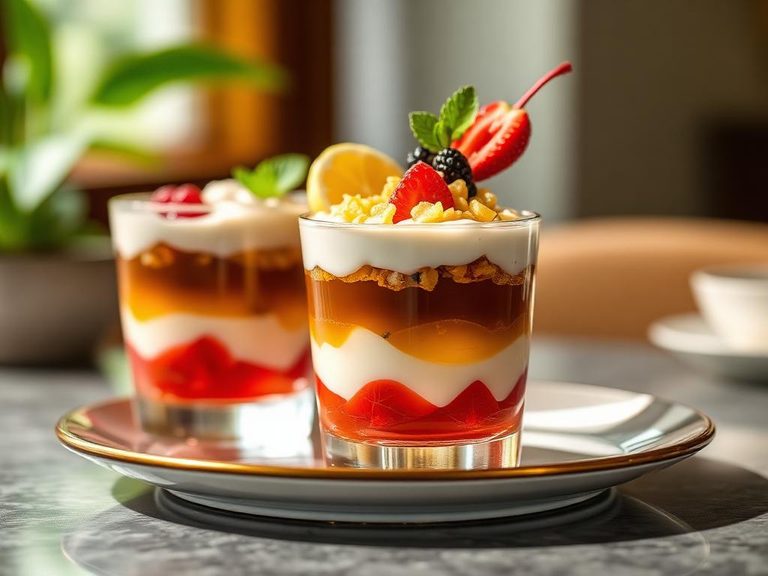
This is a translucent, wobbly dessert made from gelatin or plant-based gelling agents, offering a clean, sweet burst of flavor in every spoonful. With a light, smooth texture that melts on the tongue, it's a zero-fat treat that provides a quick energy boost from its carbohydrate content. It's a classic, refreshing choice for a light snack or a playful addition to a meal.
Calorie split: 2% protein · 98% carbs · 0% fat
↓ Full nutrition💚 Why it's loved
People love it for its vibrant, customizable flavors and the satisfying, bouncy texture that makes it a fun, nostalgic treat for all ages. Its versatility allows it to be a standalone dessert, a salad component, or a decorative element in elaborate layered dishes.
⚠️ Watch-outs & how to enjoy it better
The primary sweetener, sodium saccharin, can leave a bitter aftertaste for some, and the high carbohydrate content may cause rapid blood sugar spikes in sensitive individuals. To counteract this, enjoy it in moderation and pair it with a source of protein or healthy fat, like a handful of nuts or a dollop of yogurt, to slow sugar absorption.
Key benefits
- Provides quick energy from carbohydrates
- Zero fat content
- Low in protein
- Often used as a low-calorie dessert option
- Can be a source of dietary fiber depending on the base
🍽️ Popular dishes
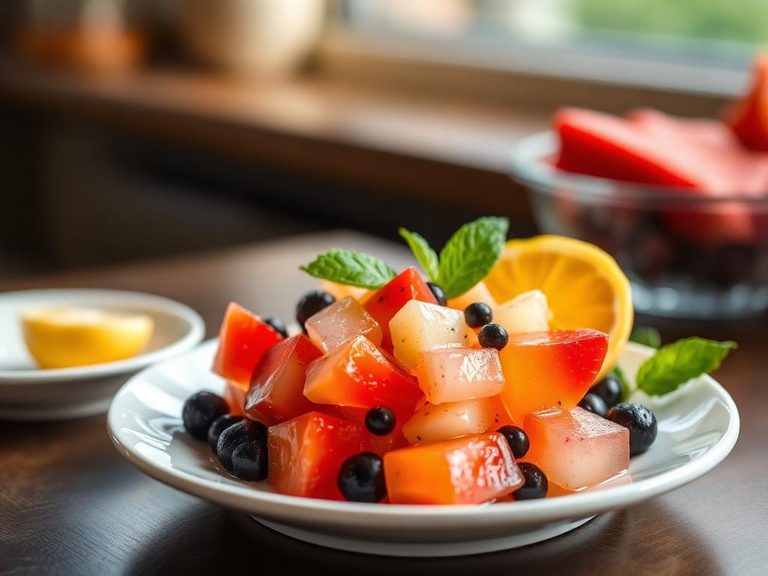

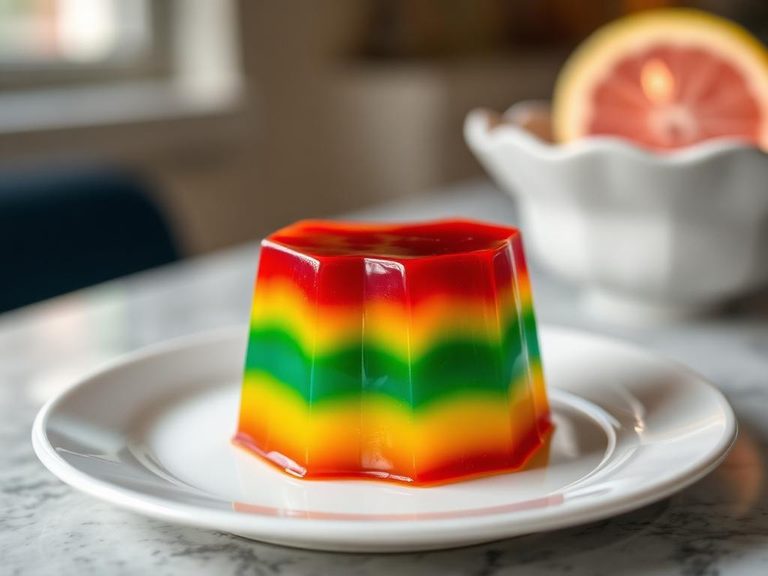
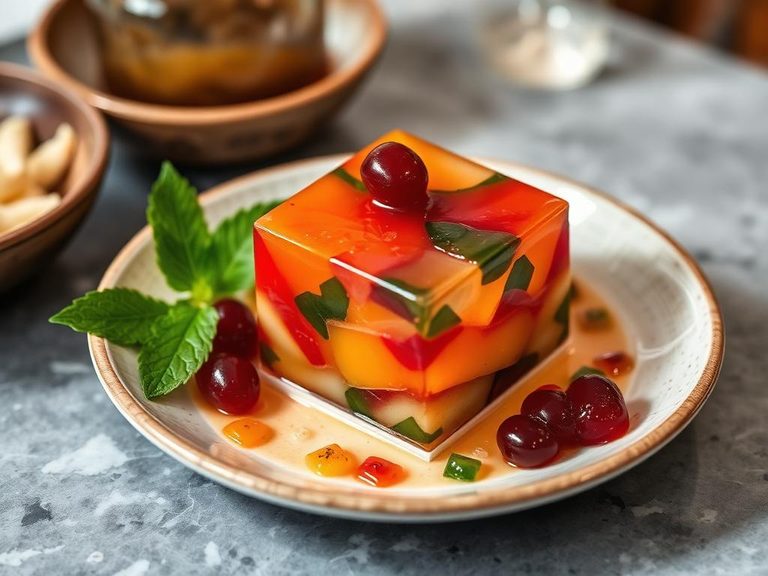
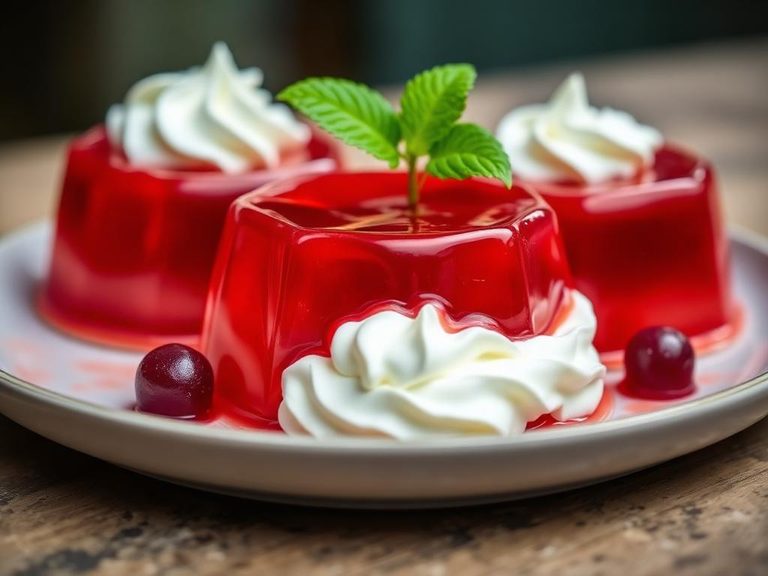
🌍 Where it's eaten
💡 Did you know?
The first commercially flavored gelatin dessert was developed in 1897 by Pearle Bixby Wait, a cough syrup manufacturer, who patented a gelatin dessert he called 'Jell-O'.
Full nutrition (USDA data · scales with serving)
| Water | 69.5 g |
| Energy | 121 kcal |
| Energy | 505 kj |
| Protein | 0.55 g |
| Total lipid (fat) | 0.00 g |
| Ash | 0.32 g |
| Carbohydrate, by difference | 29.6 g |
| Fiber, total dietary | 2.2 g |
| Total Sugars | 3.4 g |
| Calcium, Ca | 31.0 mg |
| Iron, Fe | 0.15 mg |
| Magnesium, Mg | 4.0 mg |
| Phosphorus, P | 9.0 mg |
| Potassium, K | 96.0 mg |
| Sodium, Na | 3.0 mg |
| Zinc, Zn | 0.07 mg |
| Copper, Cu | 0.03 mg |
| Manganese, Mn | 0.03 mg |
| Selenium, Se | 0.00 ug |
| Vitamin C, total ascorbic acid | 0.00 mg |
| Thiamin | 0.01 mg |
| Riboflavin | 0.01 mg |
| Niacin | 0.22 mg |
| Pantothenic acid | 0.09 mg |
| Vitamin B-6 | 0.02 mg |
| Folate, total | 3.0 ug |
| Folic acid | 0.00 ug |
| Folate, food | 3.0 ug |
| Folate, DFE | 3.0 ug |
| Choline, total | 1.0 mg |
| Vitamin B-12 | 0.00 ug |
| Vitamin B-12, added | 0.00 ug |
| Vitamin A, RAE | 35.0 ug |
| Retinol | 0.00 ug |
| Carotene, beta | 402 ug |
| Carotene, alpha | 7.0 ug |
| Cryptoxanthin, beta | 38.0 ug |
| Vitamin A, IU | 707 iu |
| Lycopene | 0.00 ug |
| Lutein + zeaxanthin | 33.0 ug |
| Vitamin E (alpha-tocopherol) | 0.33 mg |
| Vitamin E, added | 0.00 mg |
| Vitamin D (D2 + D3), International Units | 0.00 iu |
| Vitamin D (D2 + D3) | 0.00 ug |
| Vitamin K (phylloquinone) | 1.2 ug |
| Alcohol, ethyl | 0.00 g |
| Caffeine | 0.00 mg |
| Theobromine | 0.00 mg |
Fat & fatty acid profile (per 100g)
| Fatty acids, total saturated | 0.00 g |
| SFA 4:0 | 0.00 g |
| SFA 6:0 | 0.00 g |
| SFA 8:0 | 0.00 g |
| SFA 10:0 | 0.00 g |
| SFA 12:0 | 0.00 g |
| SFA 14:0 | 0.00 g |
| SFA 16:0 | 0.00 g |
| SFA 18:0 | 0.00 g |
| Fatty acids, total monounsaturated | 0.00 g |
| MUFA 16:1 | 0.00 g |
| MUFA 18:1 | 0.00 g |
| MUFA 20:1 | 0.00 g |
| MUFA 22:1 | 0.00 g |
| Fatty acids, total polyunsaturated | 0.00 g |
| PUFA 18:2 | 0.00 g |
| PUFA 18:3 | 0.00 g |
| PUFA 18:4 | 0.00 g |
| PUFA 20:4 | 0.00 g |
| PUFA 20:5 n-3 (EPA) | 0.00 g |
| PUFA 22:5 n-3 (DPA) | 0.00 g |
| PUFA 22:6 n-3 (DHA) | 0.00 g |
| Cholesterol | 0.00 mg |
| Phytosterols | 7.0 mg |
FAQ
Is this jelly suitable for a vegan diet?
It depends on the gelling agent. Traditional gelatin is animal-derived. Look for products specifically labeled as 'vegan' or 'plant-based,' which use agar-agar, carrageenan, or pectin.
Why does it have zero fat?
The base ingredients—water, sweetener, flavoring, and gelling agents—contain no fat. It's a naturally fat-free food unless fat-based ingredients like cream are added later.
How does the fiber content compare to fruit?
The 2.2g of fiber per 100g is likely from added fruit puree or fiber supplements. It's lower than most whole fruits but contributes to the daily intake.
Nutrient density (calculated · NRF9.3)
Nutrient Rich Foods index: beneficial nutrients (protein, fiber, vitamins, minerals) minus saturated fat, added sugar & sodium, per 100 kcal.
NRF9.3 index — Fulgoni, Keast & Drewnowski, 2009. Computed from USDA nutrients.
Weight-loss friendliness (composite index)
Energy density 1.21 kcal/g · 2% calories from protein · 2.2 g fiber · 3.4 g sugar per 100 g.
Composite of energy density (Rolls et al., 1999), protein & fiber satiety, minus sugar. A calculated heuristic — ranks satiety-per-calorie, not a clinical measure.
Dietary load (calculated from USDA values)
Potential renal acid load. Positive = acid-forming, negative = alkaline-forming.
Sodium-to-potassium ratio: 0.03 (lower is better — aim for ≤ 1)
Sodium:potassium per WHO potassium guidance. Computed from USDA nutrients.