

Mosaic Jelly
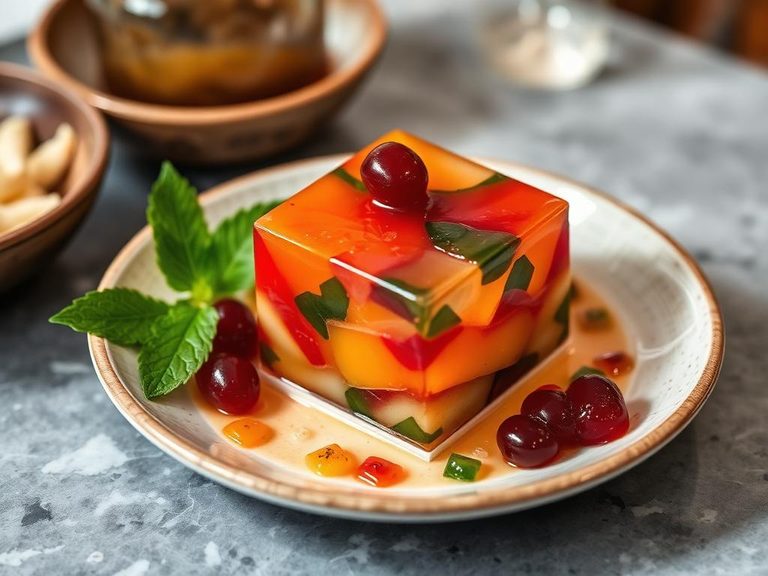
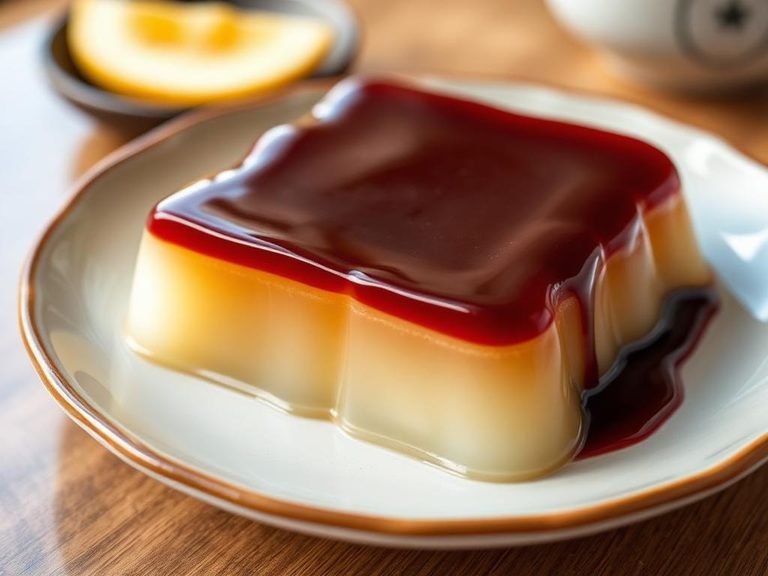
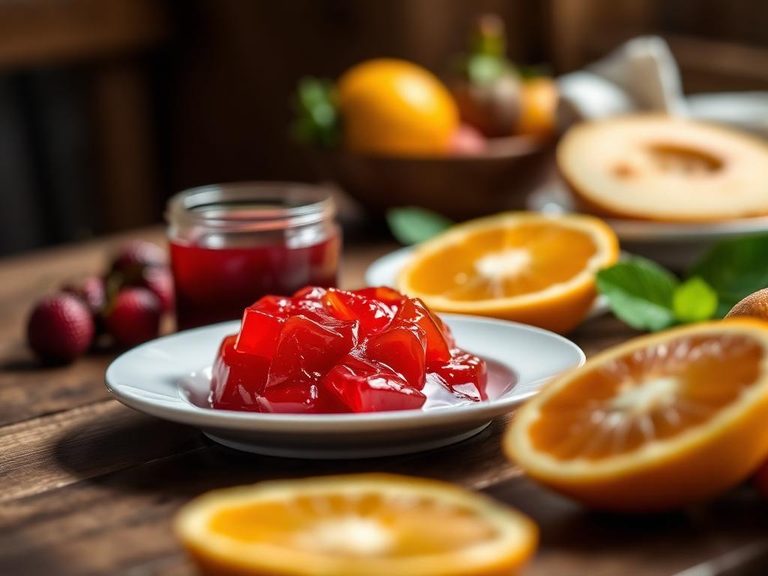
Mosaic Jelly, also known as stained glass dessert, is a vibrant, layered gelatin dessert featuring colorful cubes of fruit-flavored jelly suspended in a creamy, opaque base, often made with condensed milk or coconut milk. It is a popular treat in many Asian countries, particularly in Southeast Asia and East Asia, where it is enjoyed for its refreshing texture and eye-catching appearance.
🍳 View the full Mosaic Jelly recipe →
🍽️ Nutrition at a glance
This dessert is typically high in carbohydrates due to the sugar in the jelly and sweetened base, with minimal protein or fat unless dairy is used. A single serving can range from 150 to 250 calories, providing quick energy but limited essential nutrients beyond hydration.
Nutrition breakdown
| Calories | 150 kcal |
| Protein | 2 g |
| Carbs | 35 g |
| Fat | 0.5 g |
| Fiber | 0 g |
| Sugar | 30 g |
| Sodium | 50 mg |
| Potassium | 30 mg |
| Calcium | 15 mg |
| Magnesium | 5 mg |
| Phosphorus | 10 mg |
| Vitamin C | 2 mg |
| Vitamin B6 | 0.02 mg |
| Folate | 5 mcg |
| Iron | 0.3 mg |
Per 1 cup (240 g) · estimated, varies by recipe
💡 What's interesting
Mosaic Jelly is culturally celebrated for its visual appeal, often served at festive gatherings and parties as a symbol of creativity and joy. Its unique combination of textures—bouncy jelly cubes in a smooth, creamy matrix—makes it a fun, interactive dessert that appeals to both children and adults.
🍽️ Related dishes


AI estimate may be inaccurate · Terms