Agar-agar jelly
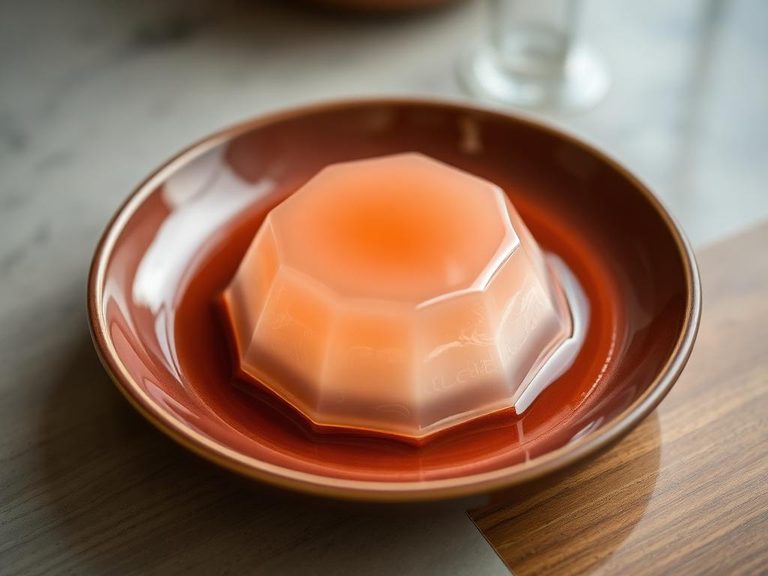
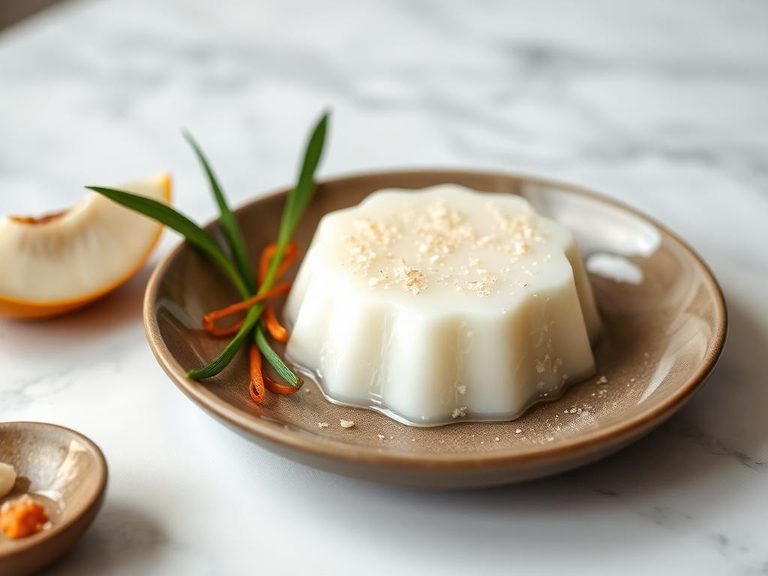
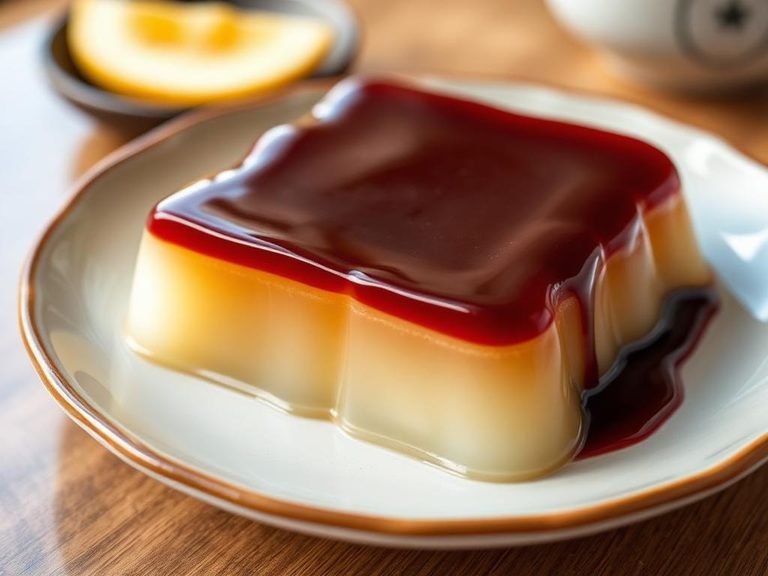
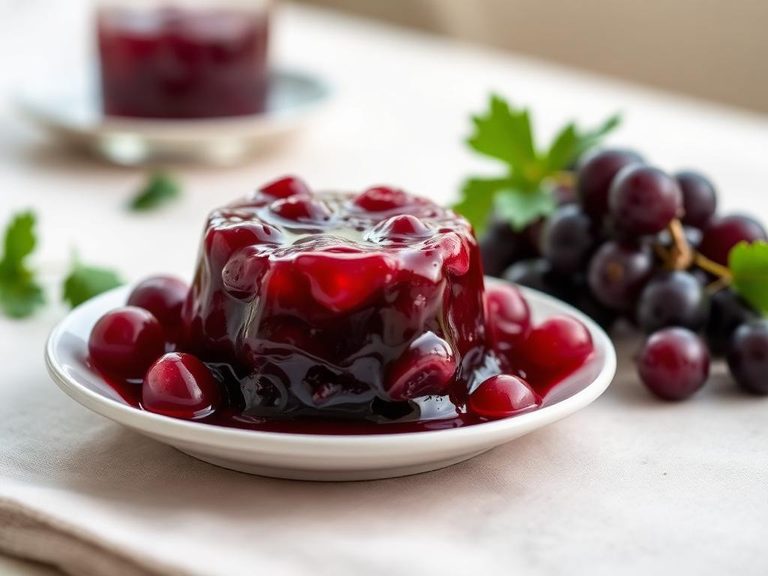
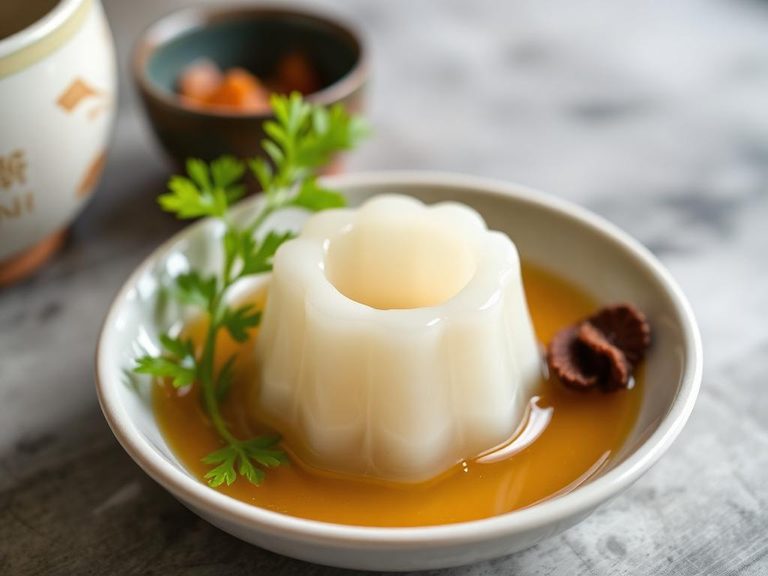
Agar-agar jelly is a popular, refreshing dessert in Chinese and broader Asian cuisines, known for its unique, firm yet bouncy texture. It's typically made from seaweed-derived agar powder or strips, sweetened with sugar, and often infused with fruit juices, coconut milk, or pandan for flavor and color.
🍳 View the full Agar-agar jelly recipe →
🍽️ Nutrition at a glance
This dessert is generally low in fat and protein, with most of its calories coming from carbohydrates, primarily from added sugars. It is a source of dietary fiber from the agar itself and can provide small amounts of minerals like iron and calcium, with a typical serving ranging from 100 to 200 calories.
Nutrition breakdown
| Calories | 120 kcal |
| Protein | 0.5 g |
| Carbs | 30 g |
| Fat | 0 g |
| Fiber | 1.5 g |
| Sugar | 25 g |
| Sodium | 15 mg |
| Calcium | 20 mg |
| Iron | 0.5 mg |
| Potassium | 30 mg |
| Magnesium | 10 mg |
| Manganese | 0.3 mg |
| Phosphorus | 15 mg |
| Copper | 0.1 mg |
| Zinc | 0.2 mg |
Per 1 cup (240 g) · estimated, varies by recipe
💡 What's interesting
Culturally, agar-agar jelly is a staple in festive and everyday desserts across Southeast Asia and China, often served in intricate molds or as a base for fruit cocktails. Nutritionally, it's valued as a plant-based, vegan alternative to gelatin and is known for being a good source of soluble fiber, which can aid digestion.