

Fruit Jam or Jelly
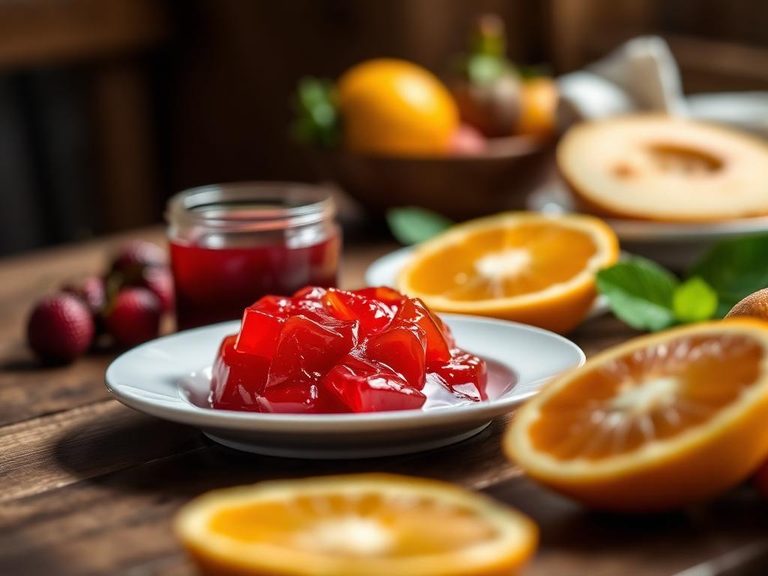
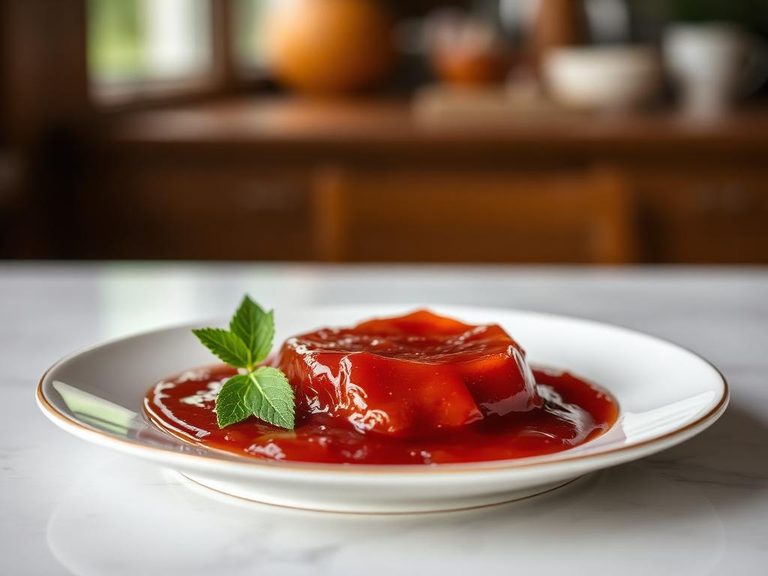
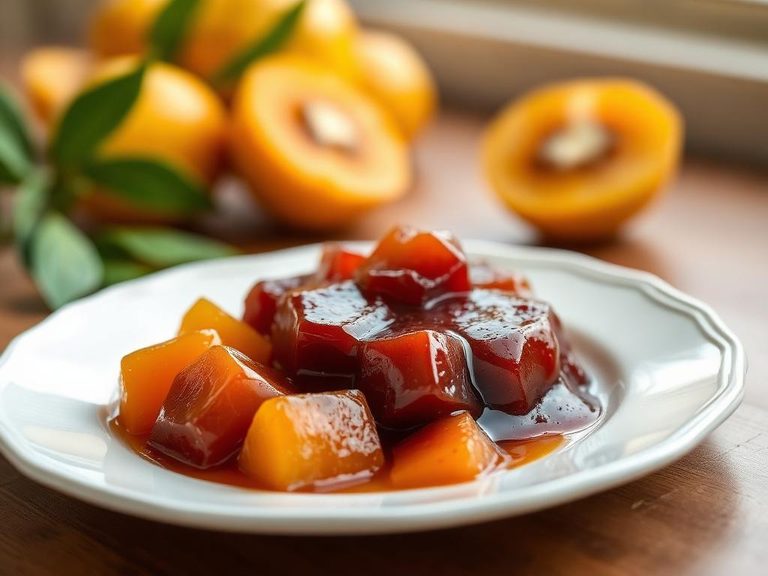
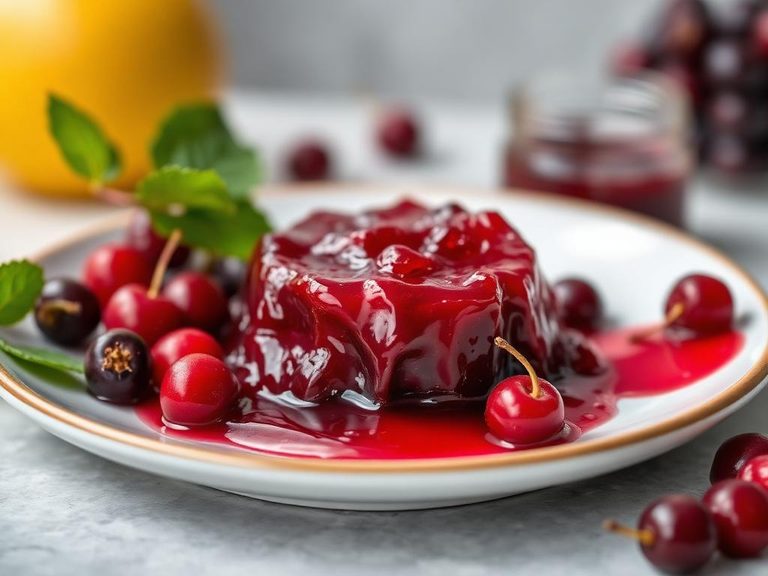
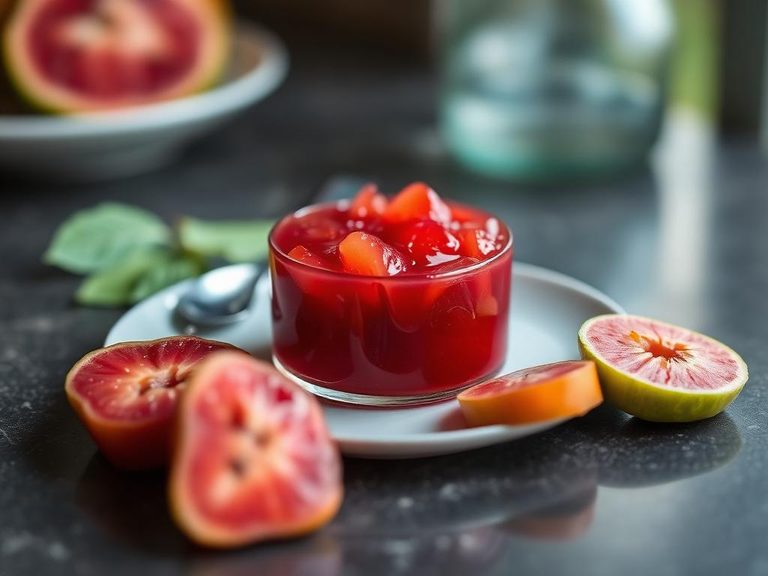
Fruit jam or jelly is a sweet, spreadable preserve made by cooking fruit or fruit juice with sugar and often pectin, a natural thickener. Originating in ancient civilizations as a way to preserve seasonal harvests, it's now a global pantry staple enjoyed on bread, pastries, and in desserts.
🍳 View the full Fruit Jam or Jelly recipe →
🍽️ Nutrition at a glance
It is primarily a source of carbohydrates from natural fruit sugars and added sugar, with negligible fat or protein. A typical 1-tablespoon serving provides a quick energy boost and small amounts of vitamins like vitamin C, along with about 50 calories.
Nutrition breakdown
| Calories | 50 kcal |
| Protein | 0 g |
| Carbs | 13 g |
| Fat | 0 g |
| Fiber | 0 g |
| Sugar | 12 g |
| Sodium | 10 mg |
| Potassium | 20 mg |
| Iron | 0.1 mg |
| Magnesium | 2 mg |
| Vitamin C | 1 mg |
| Niacin (B3) | 0.1 mg |
| Vitamin B6 | 0.01 mg |
| Copper | 0.02 mg |
| Manganese | 0.05 mg |
Per 1 tablespoon (20 g) · estimated, varies by recipe
💡 What's interesting
Culturally, jam-making traditions vary worldwide, from European marmalades to Middle Eastern fruit cheeses. Nutritionally, it's unique as a concentrated fruit product that retains some antioxidants and fiber, especially in less-processed varieties.
🍽️ Related dishes

AI estimate may be inaccurate · Terms